Video: stitching head wound of rescued orangutan

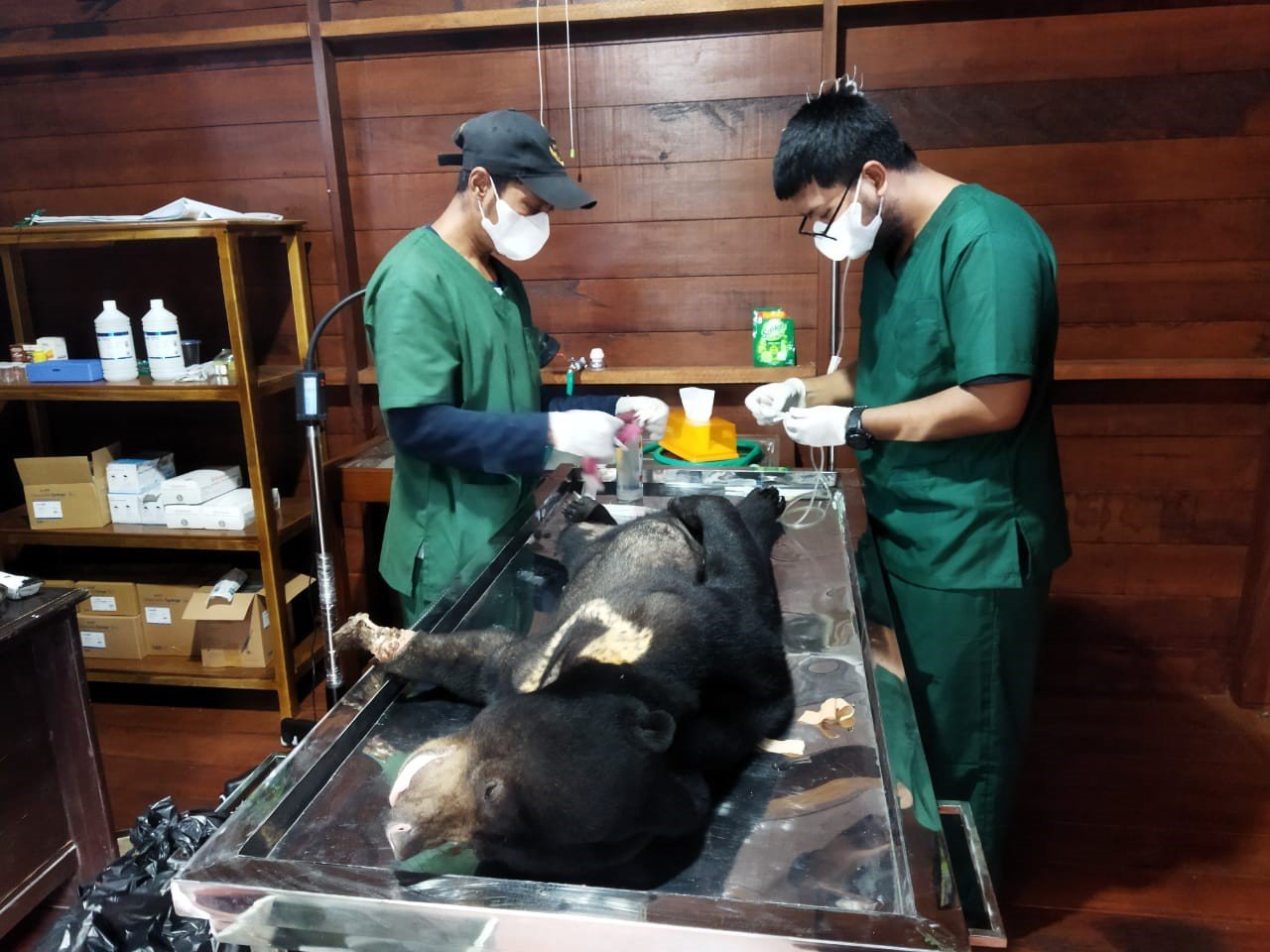
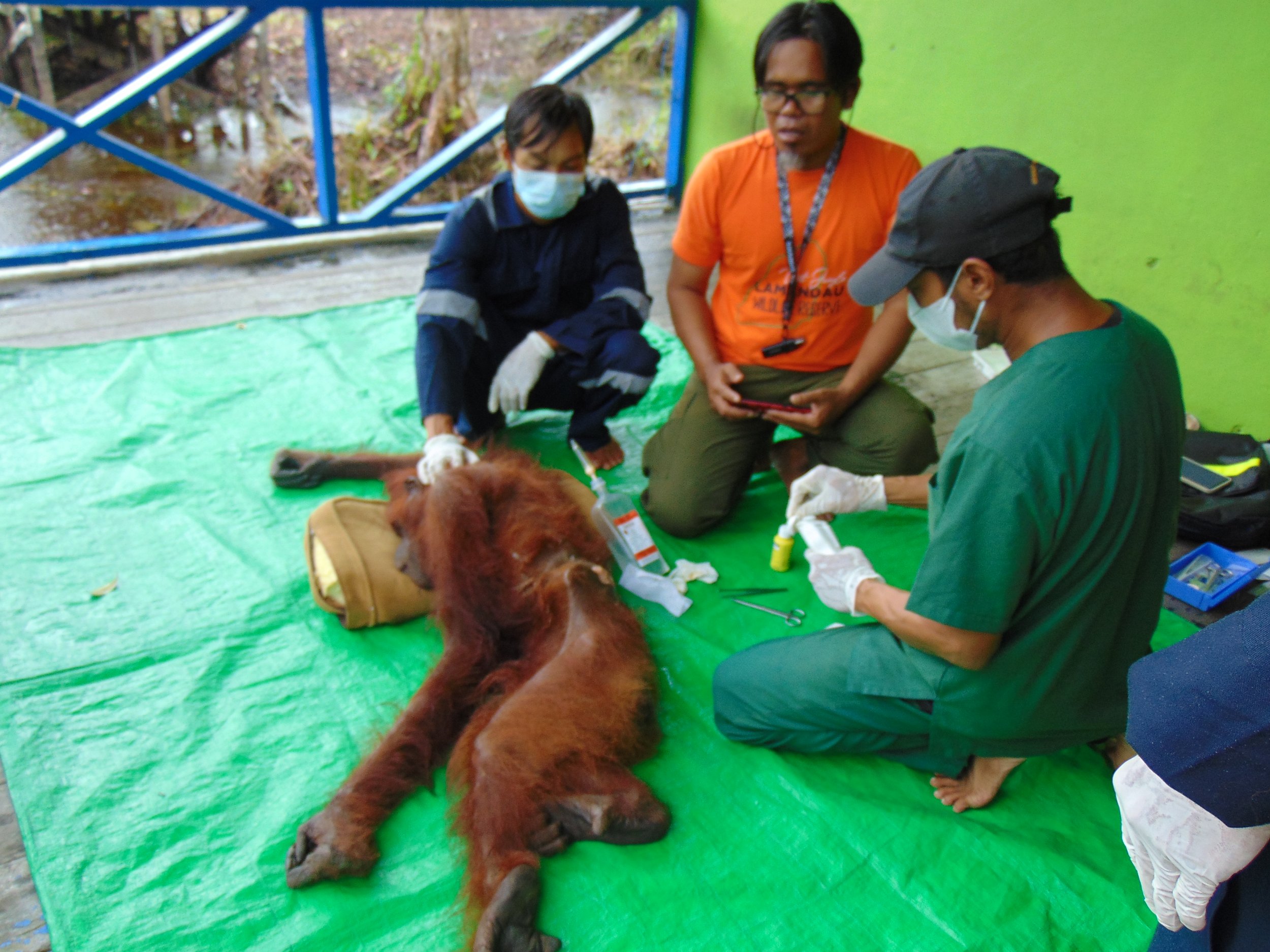
Below is the video clip of our vet, Dr Wawan, stitching Melan’s head wound for the second time.  It is quite gory so not for the faint-hearted.

This week Dr Wawan sent an update on Melan saying that her wound still looks wide, but there is tissue growth which is starting to cover the bone. Iodine, rivanol (antiseptic) and antibiotic powder will be applied until it is fully recovered. He is hopeful that it will heal.

Thank you for your support.

Orangutan Foundation

Injured orangutan rescued from oil palm plantation

Here is an update from our vet, Dr Wawan, on a young orangutan rescued in April.  Ashley Leiman, the Orangutan Foundation’s director, returned from a visit to Indonesia last week. Ashley managed to get some video footage, of the orangutan having her head stitched, during her visit to the Lamandau River Wildlife Reserve (Central Kalimantan, Indonesian Borneo). We will share this with you shortly but for now, over to Wawan, who has written this post.

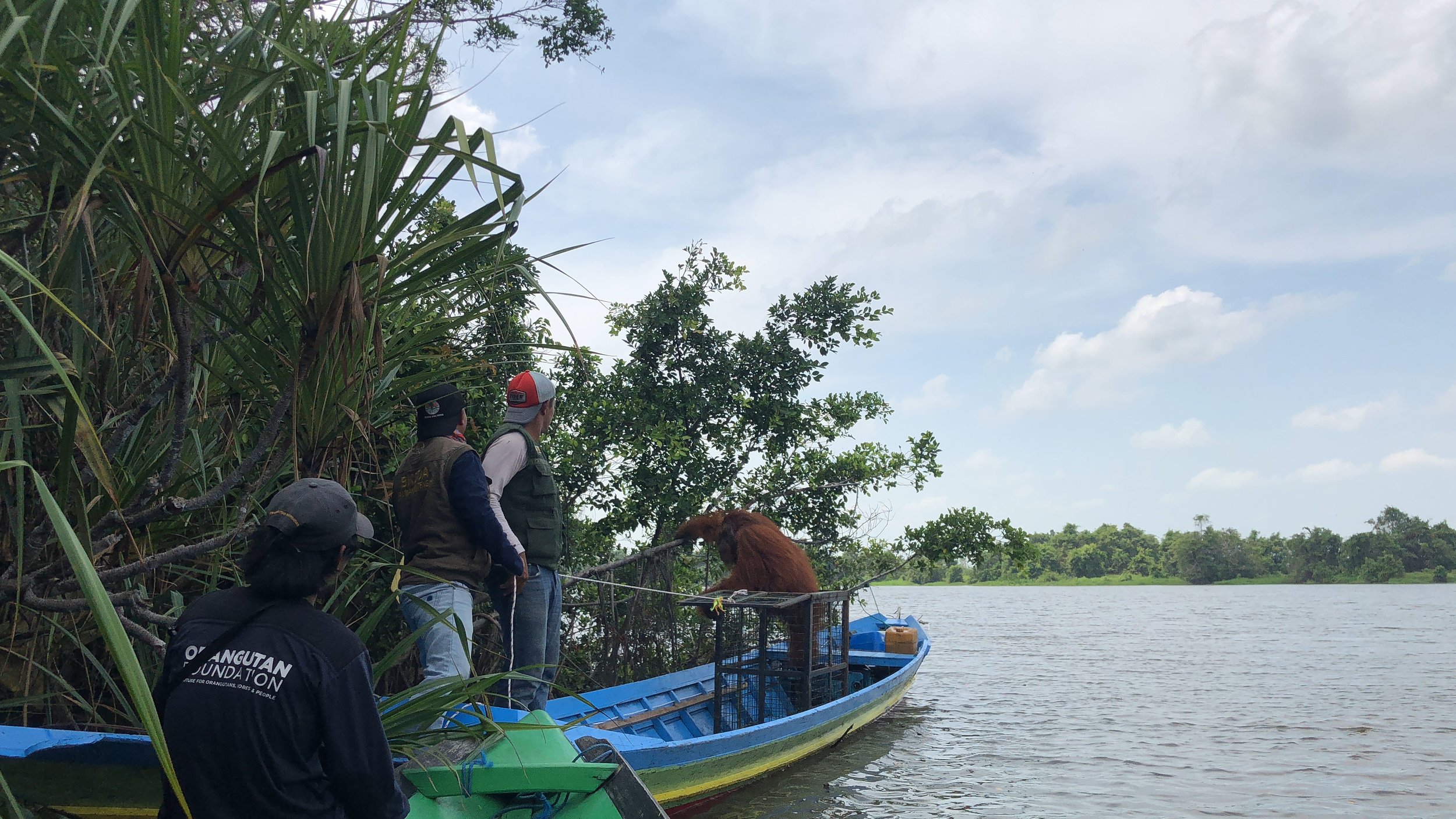
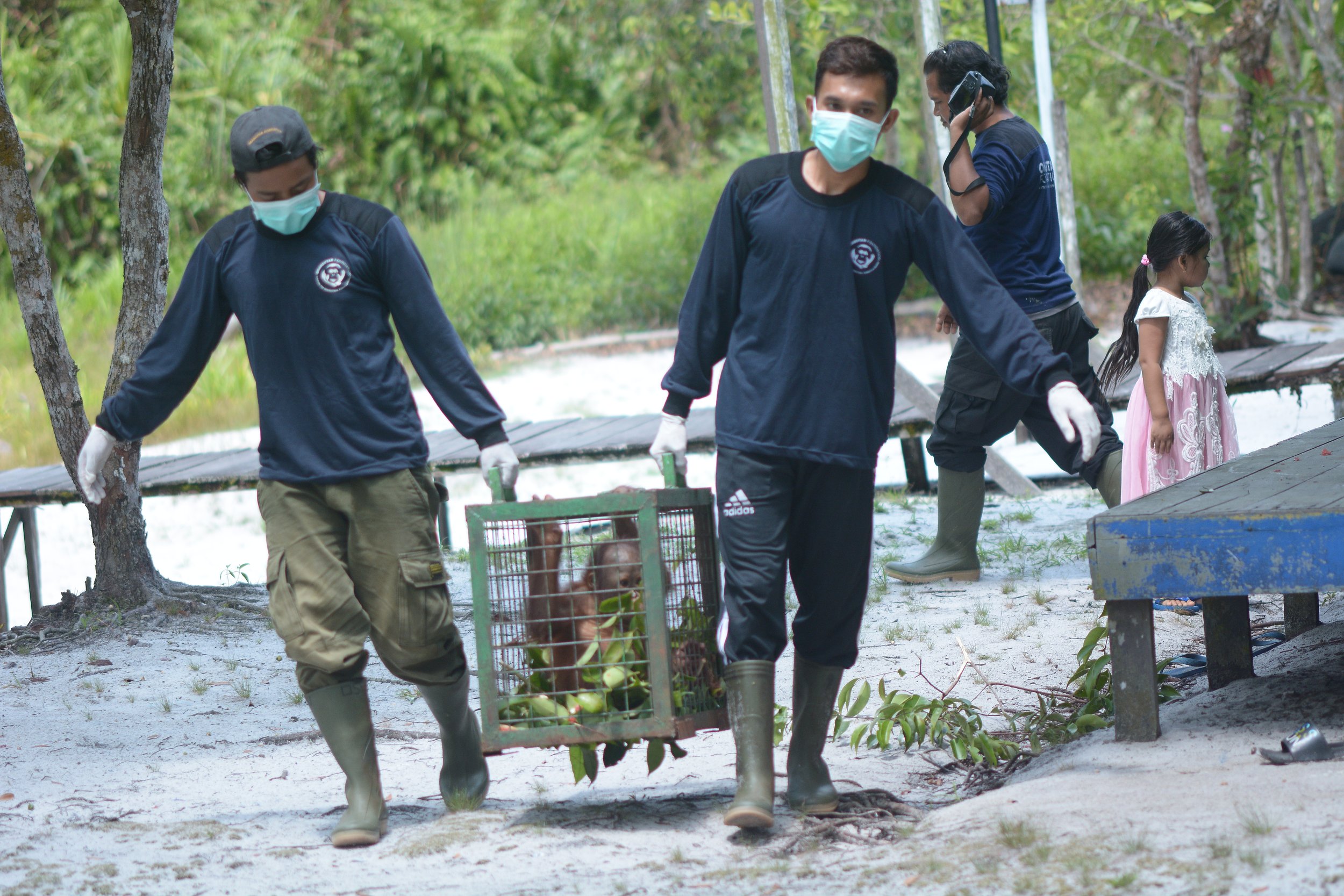
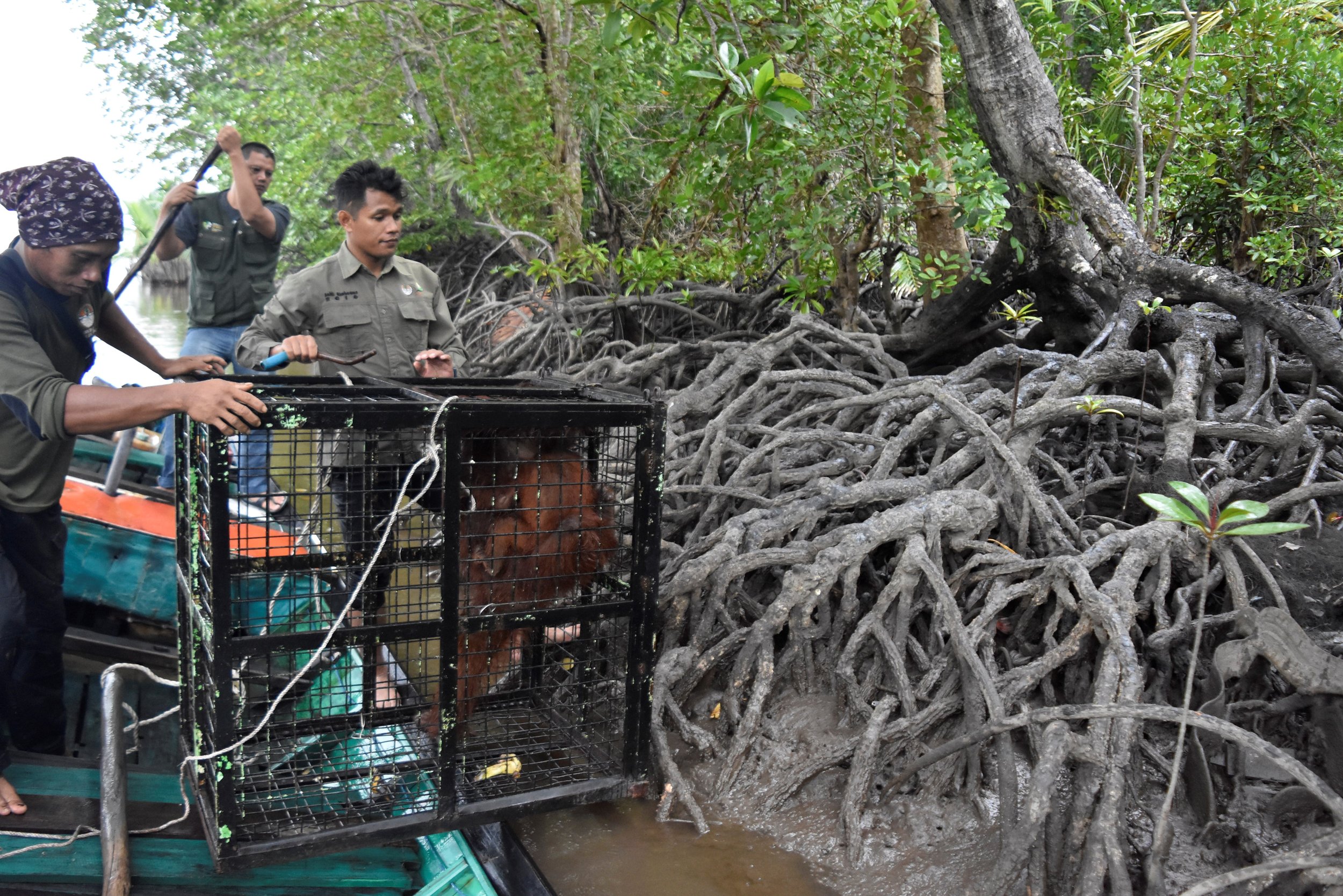
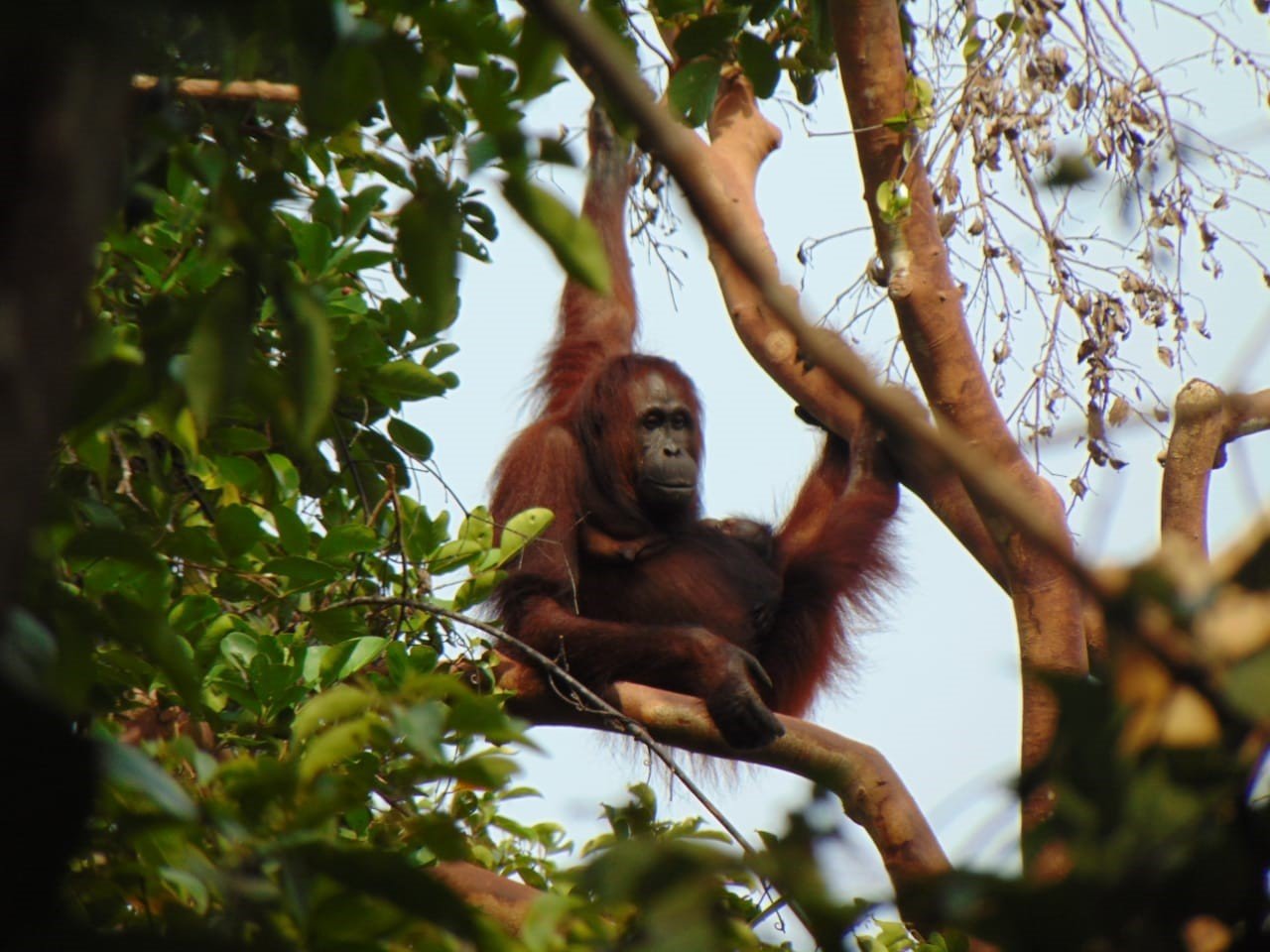
‘Melan, she is an orangutan that caught by villagers in an oil palm plantation area in Natai Raya village, close to the town of Pangkalan bun, Kalimantan Tengah Province. BKSDA (Conservation and Natural Resources Authority) rescued her from the village in with the Orangutan Foundation’s help.

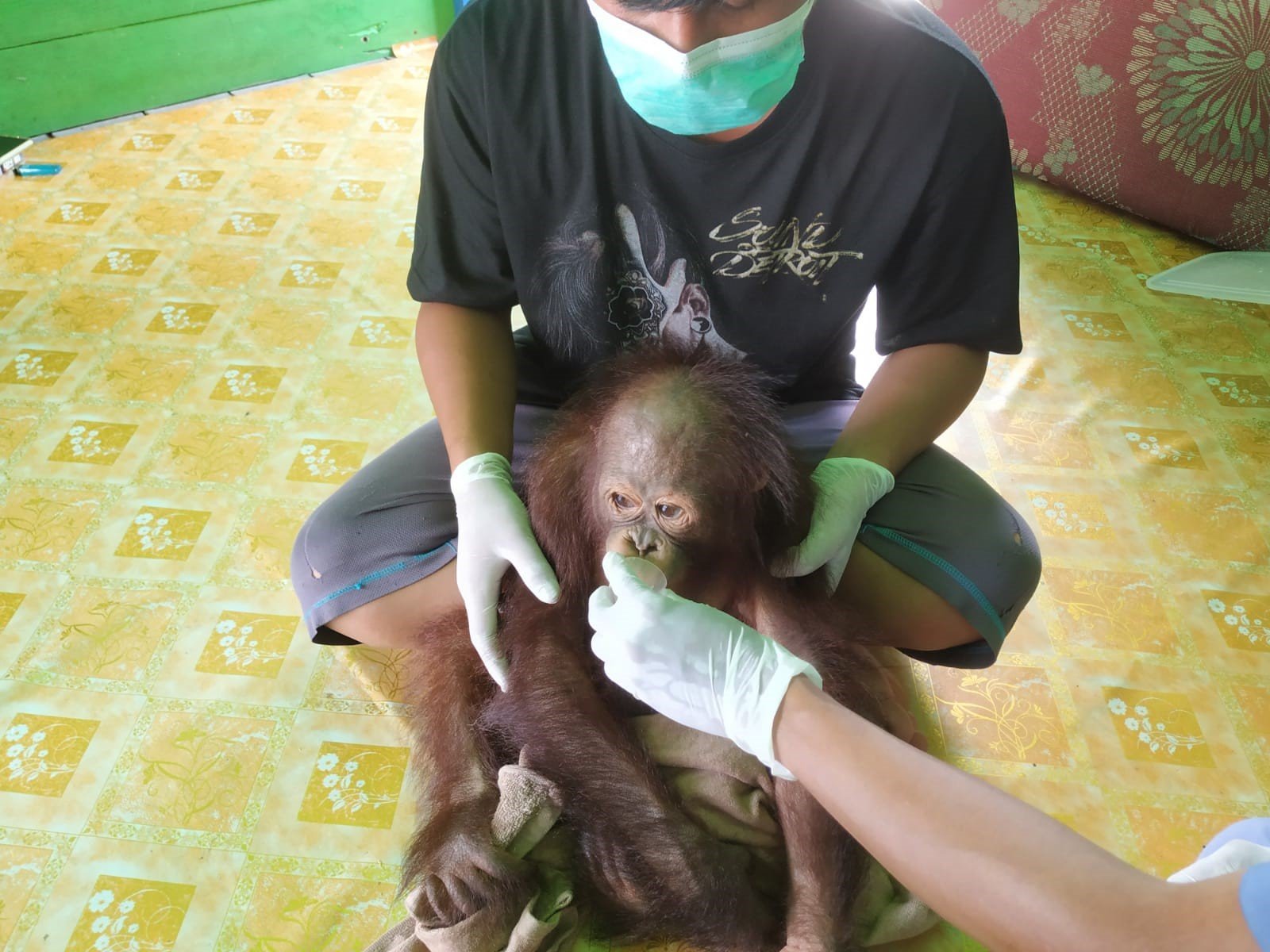
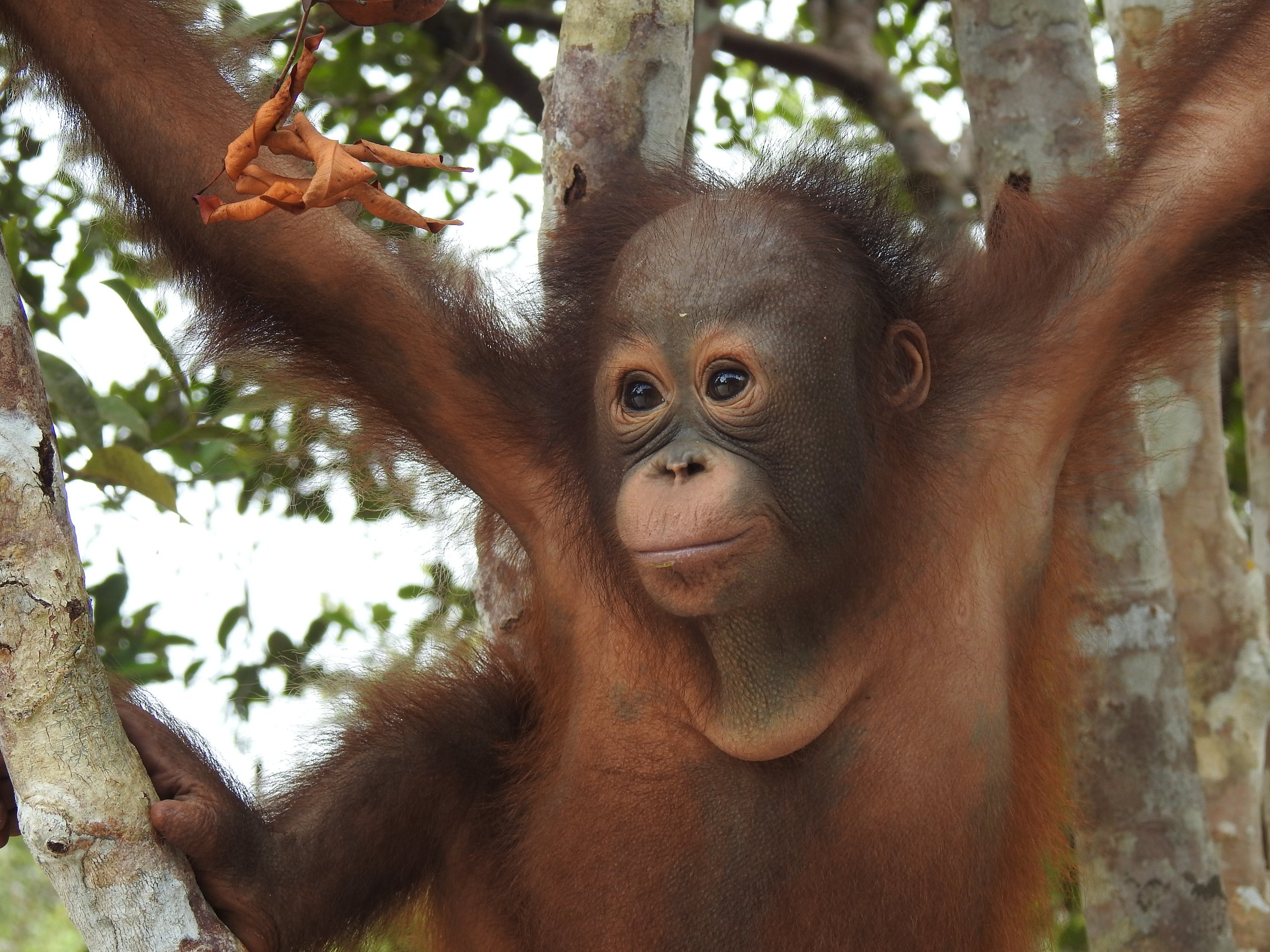
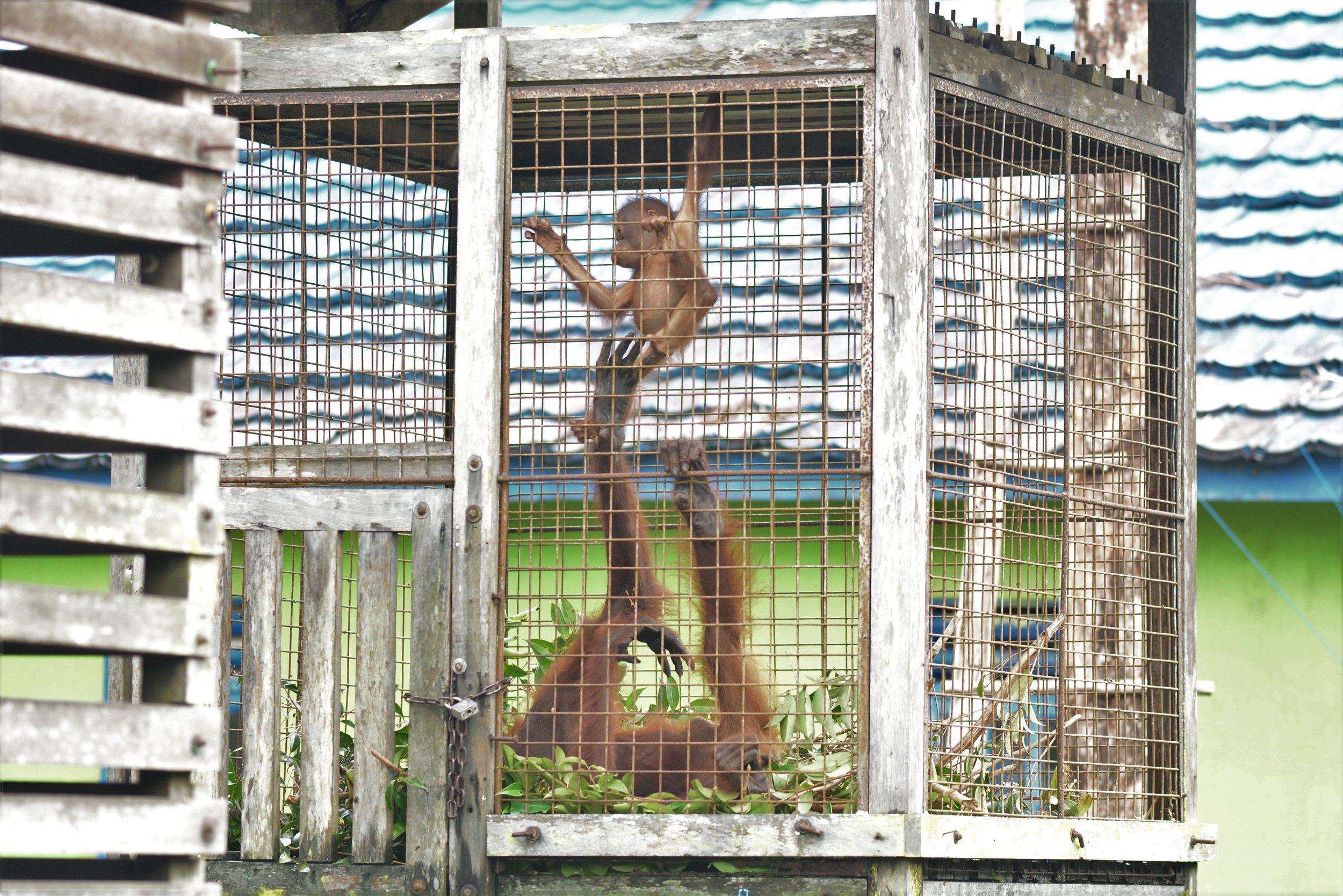
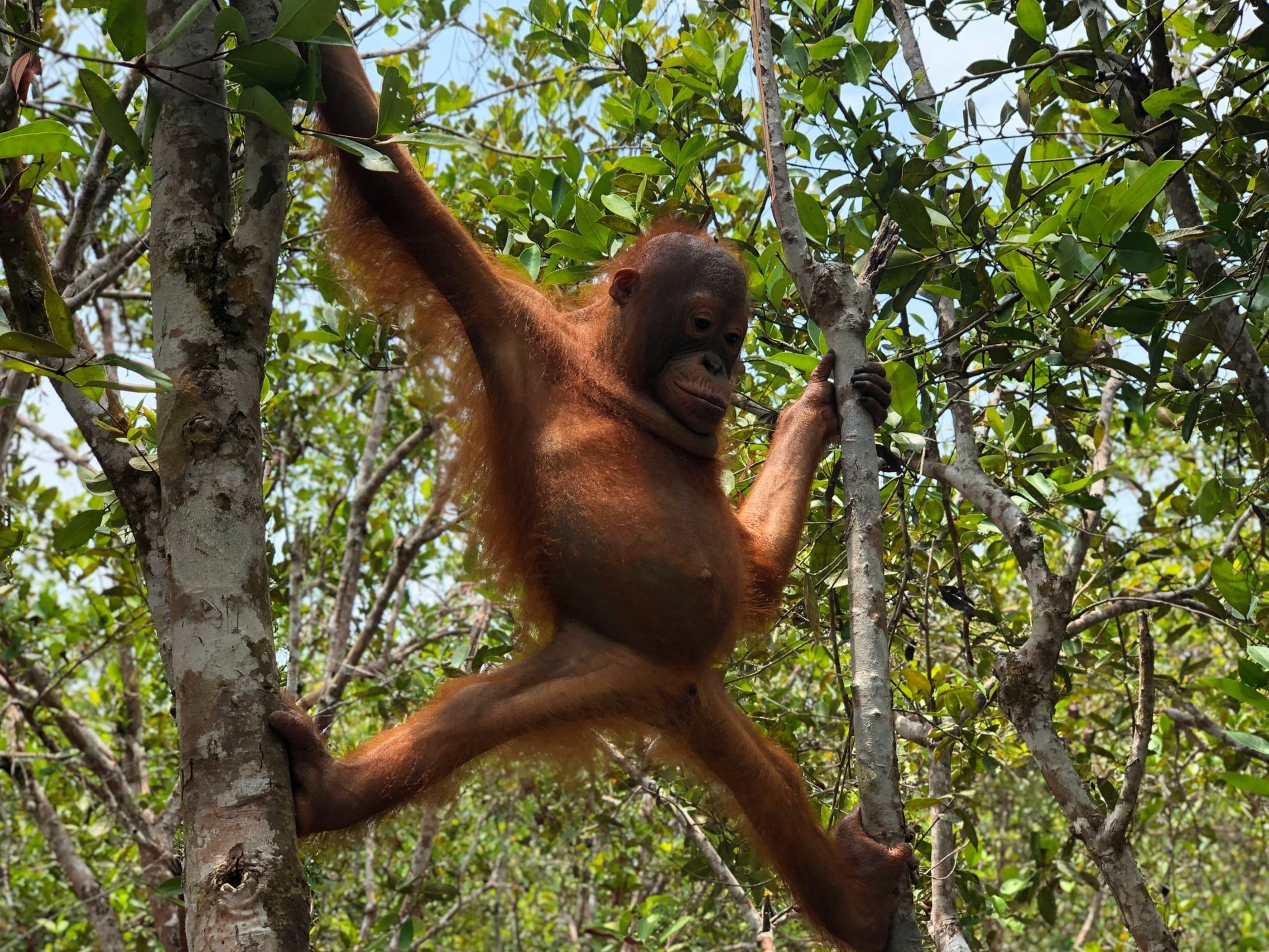
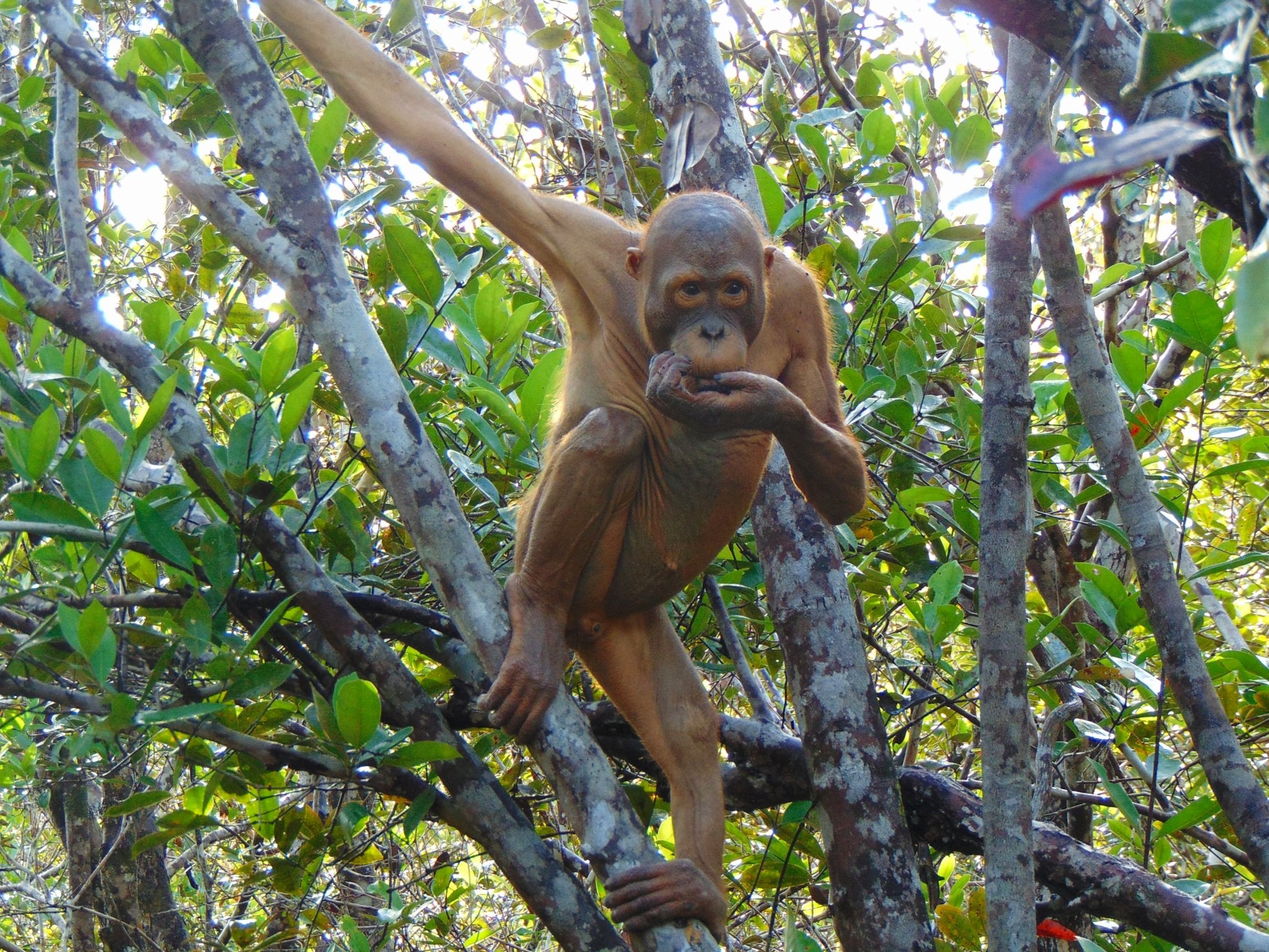
Unfortunately she have a big wound in her head, like she has been sliced by knife or any other sharp object. We could see her skull because the wound is wide open, very pity little Orangutan. She is maybe 3 years old female orangutan.
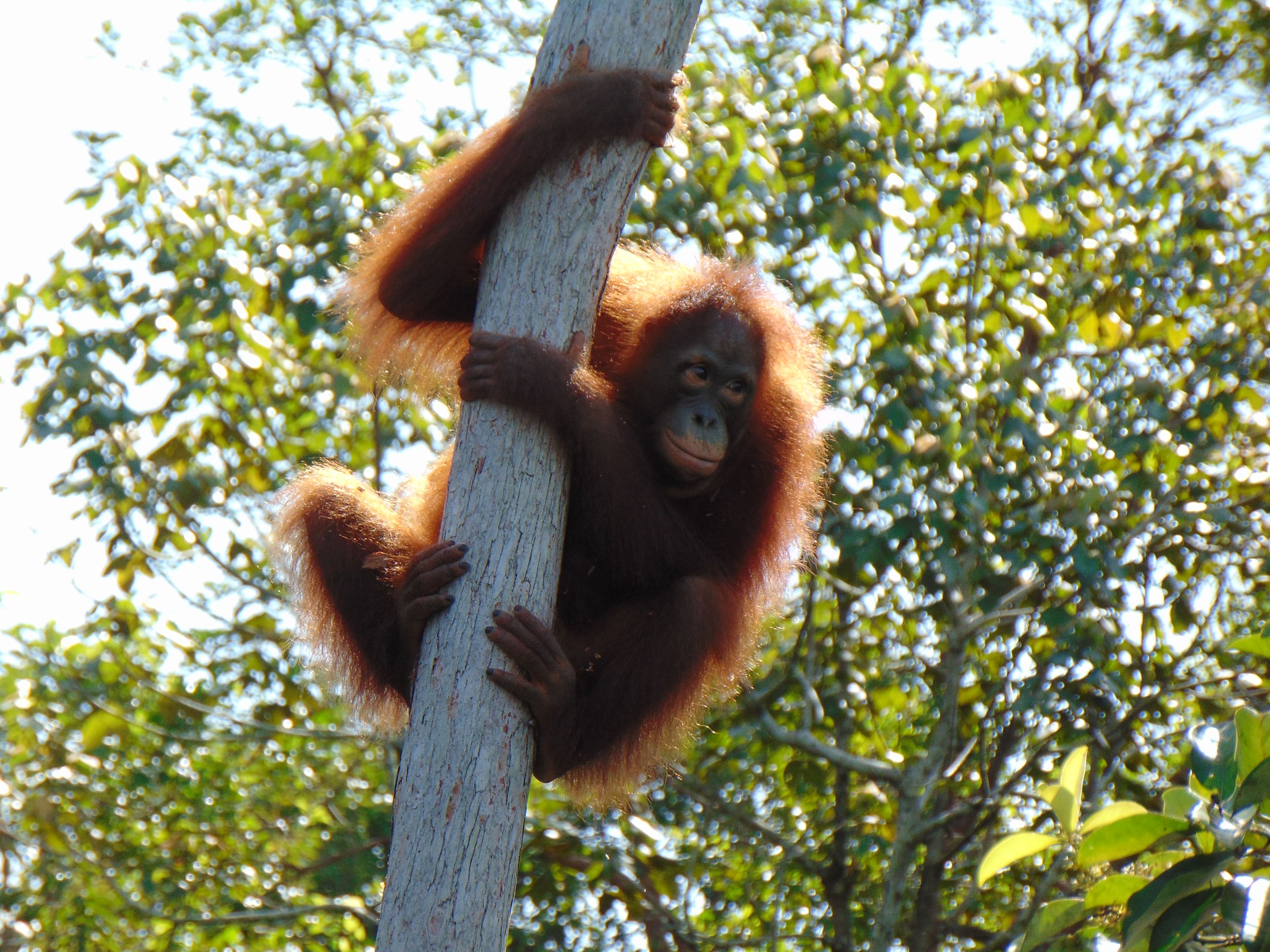
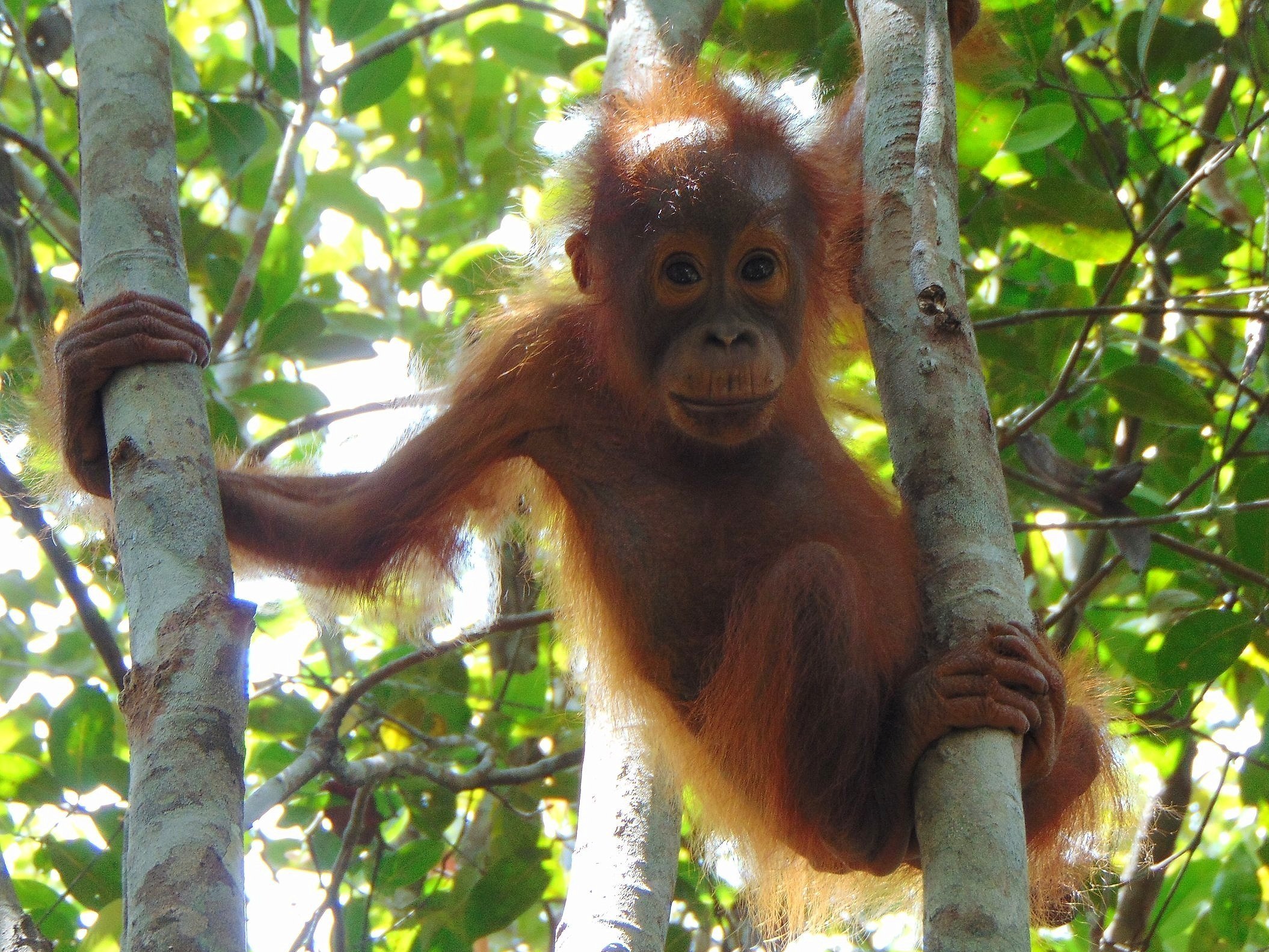
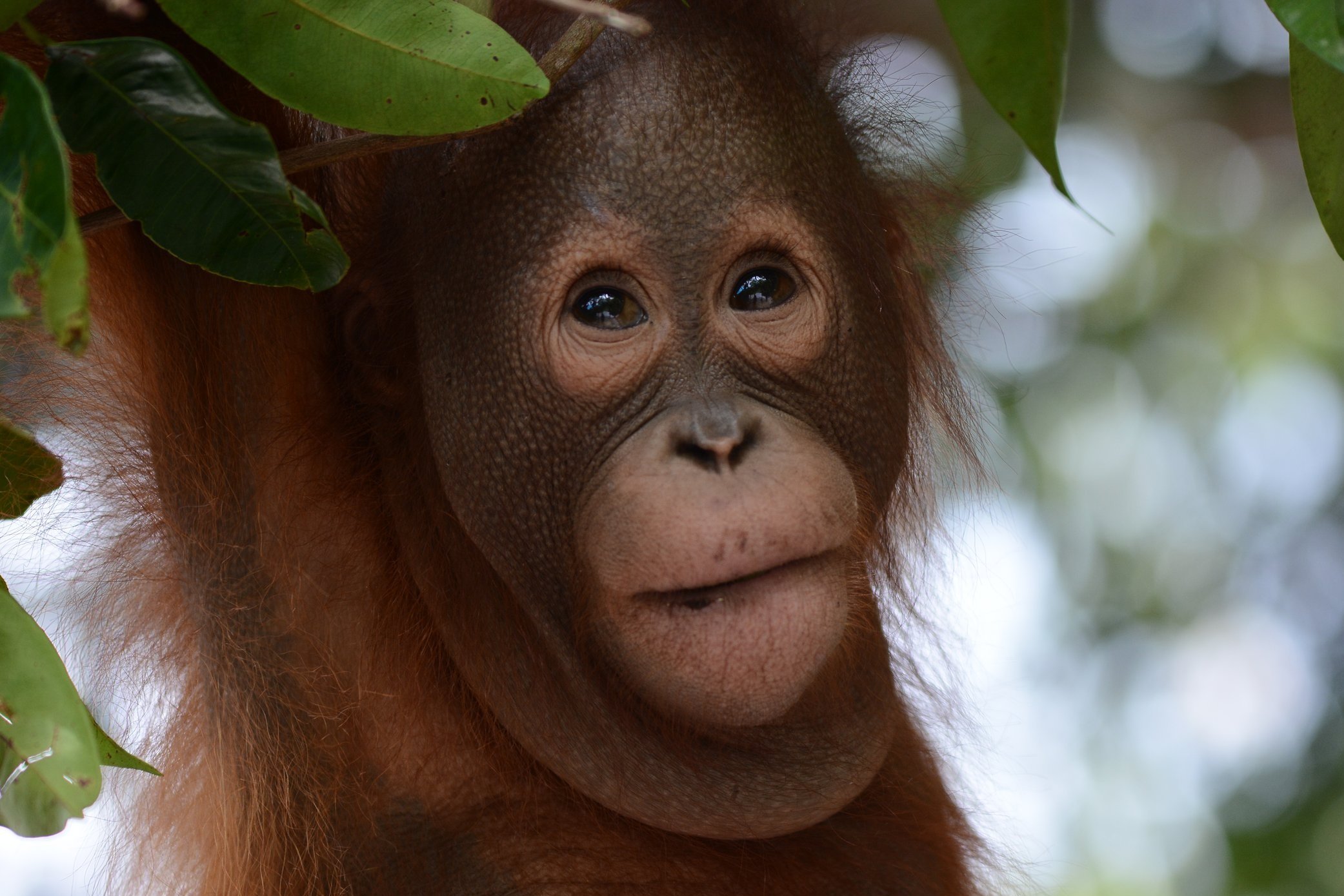
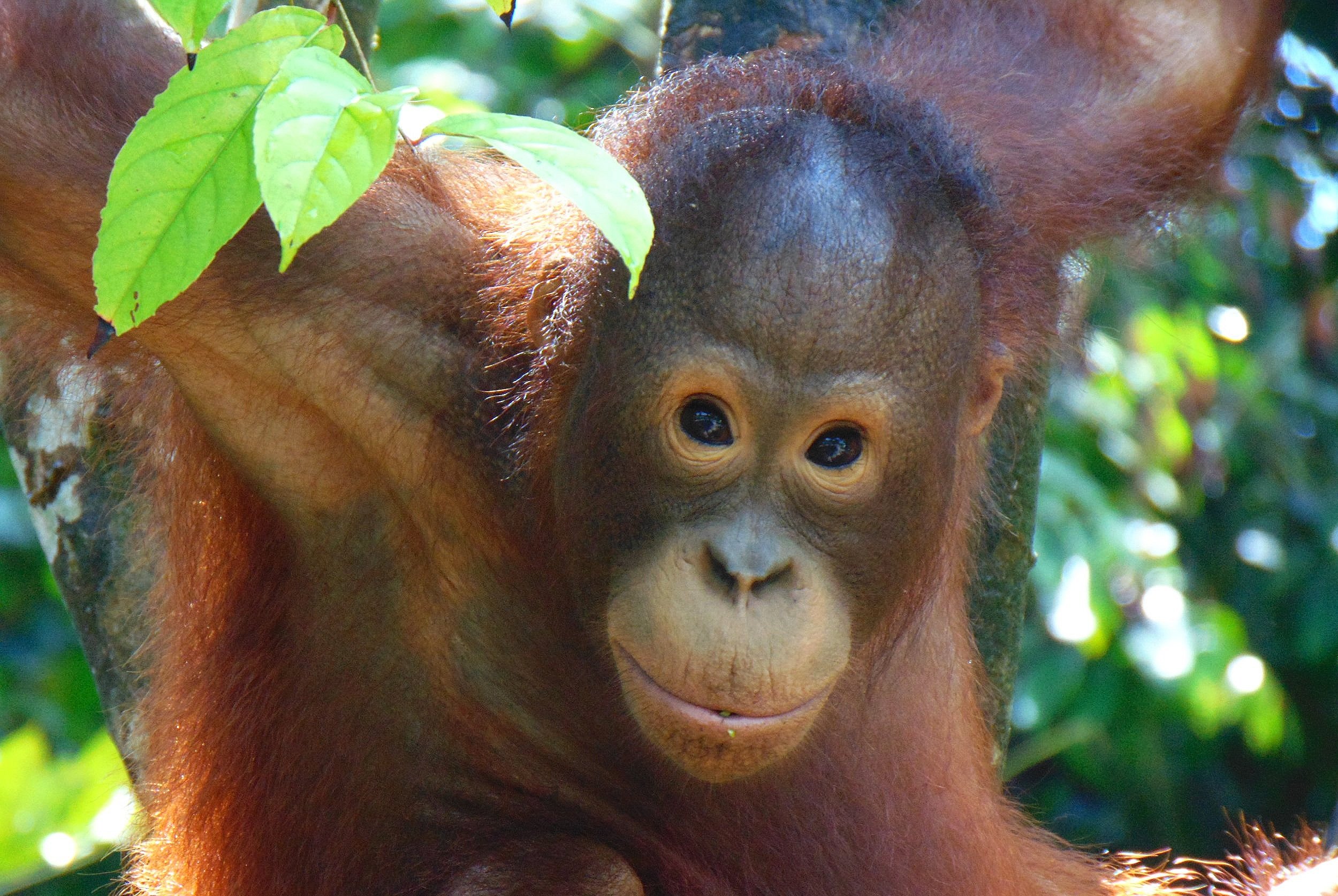
Melan young Bornean orangutan. First stitching
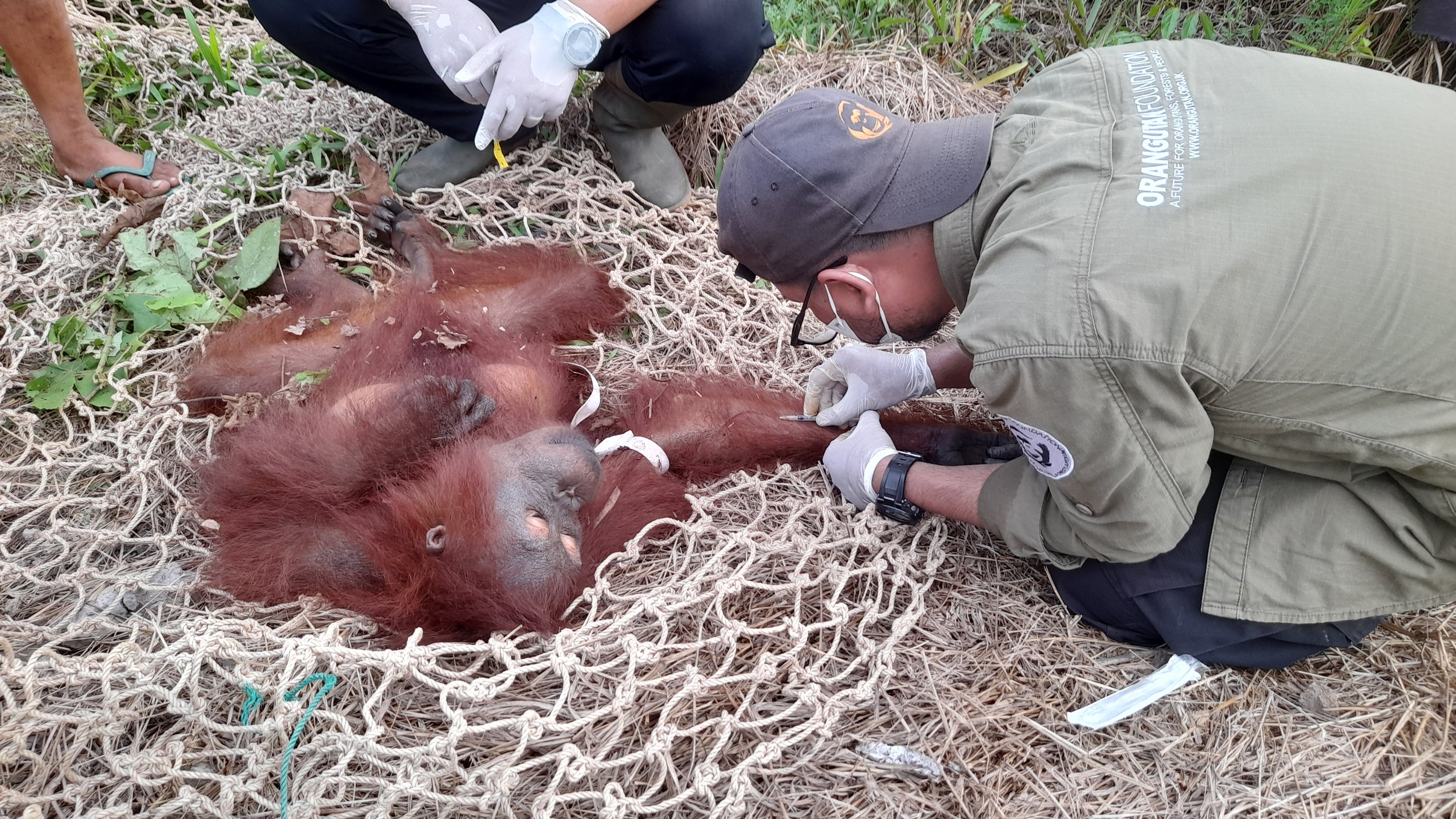
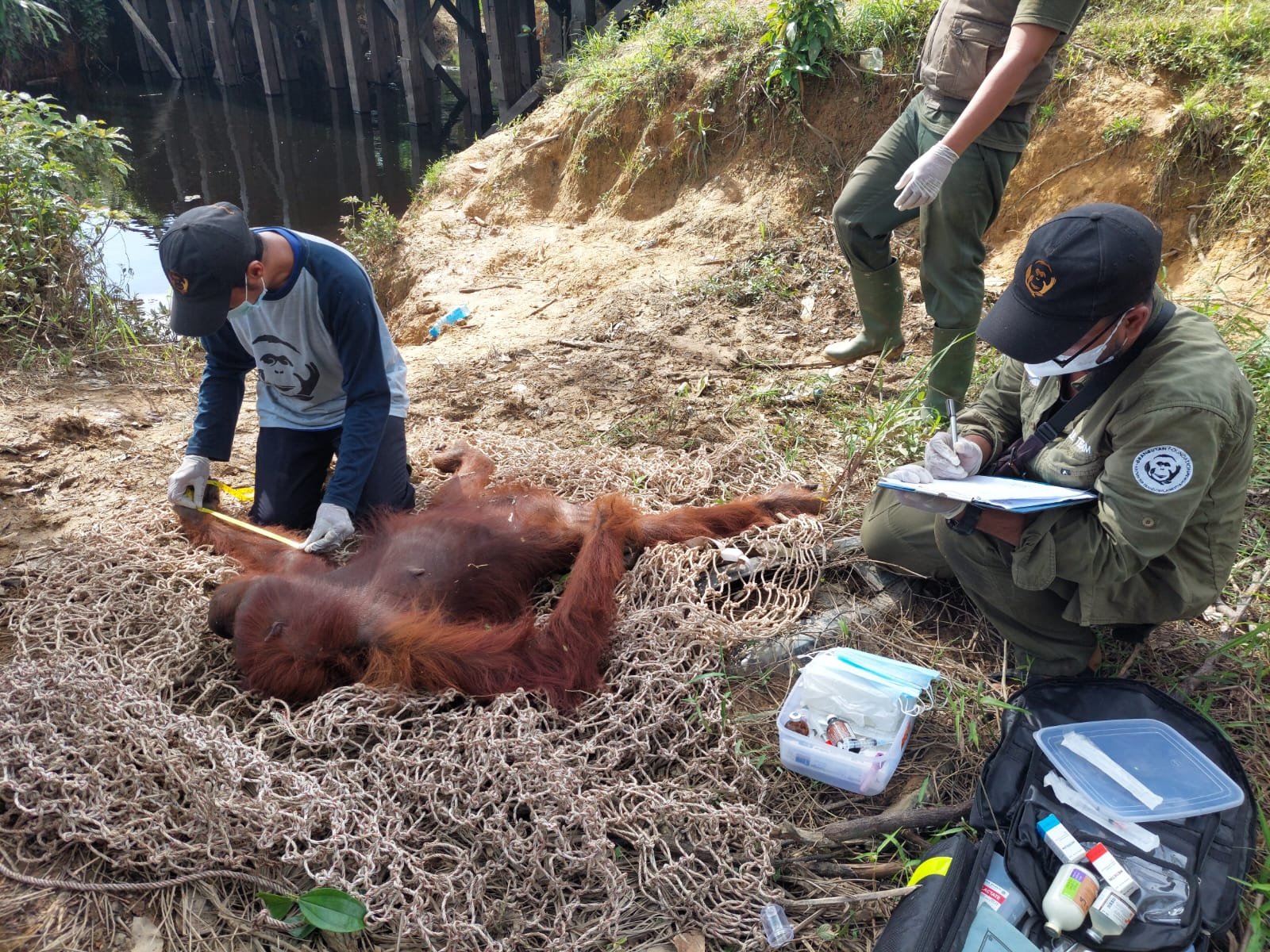
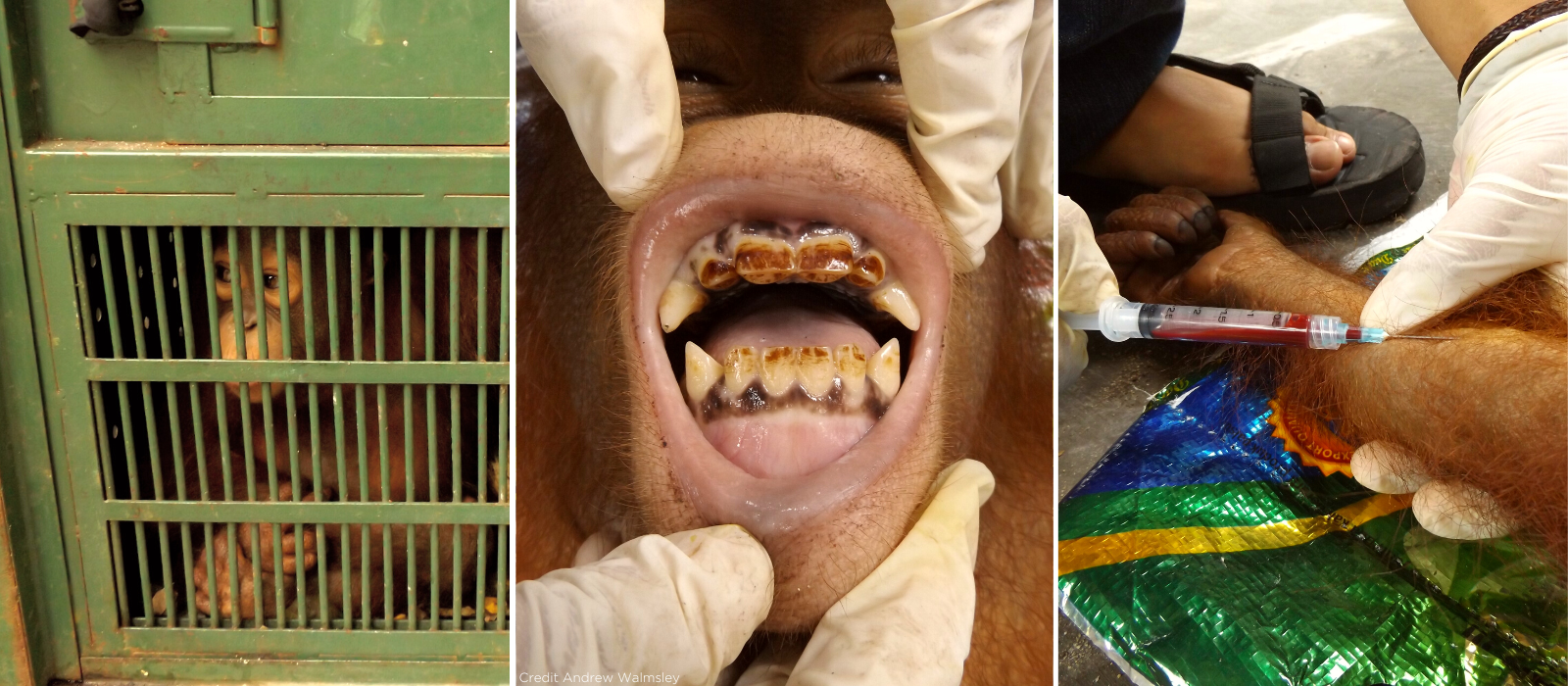
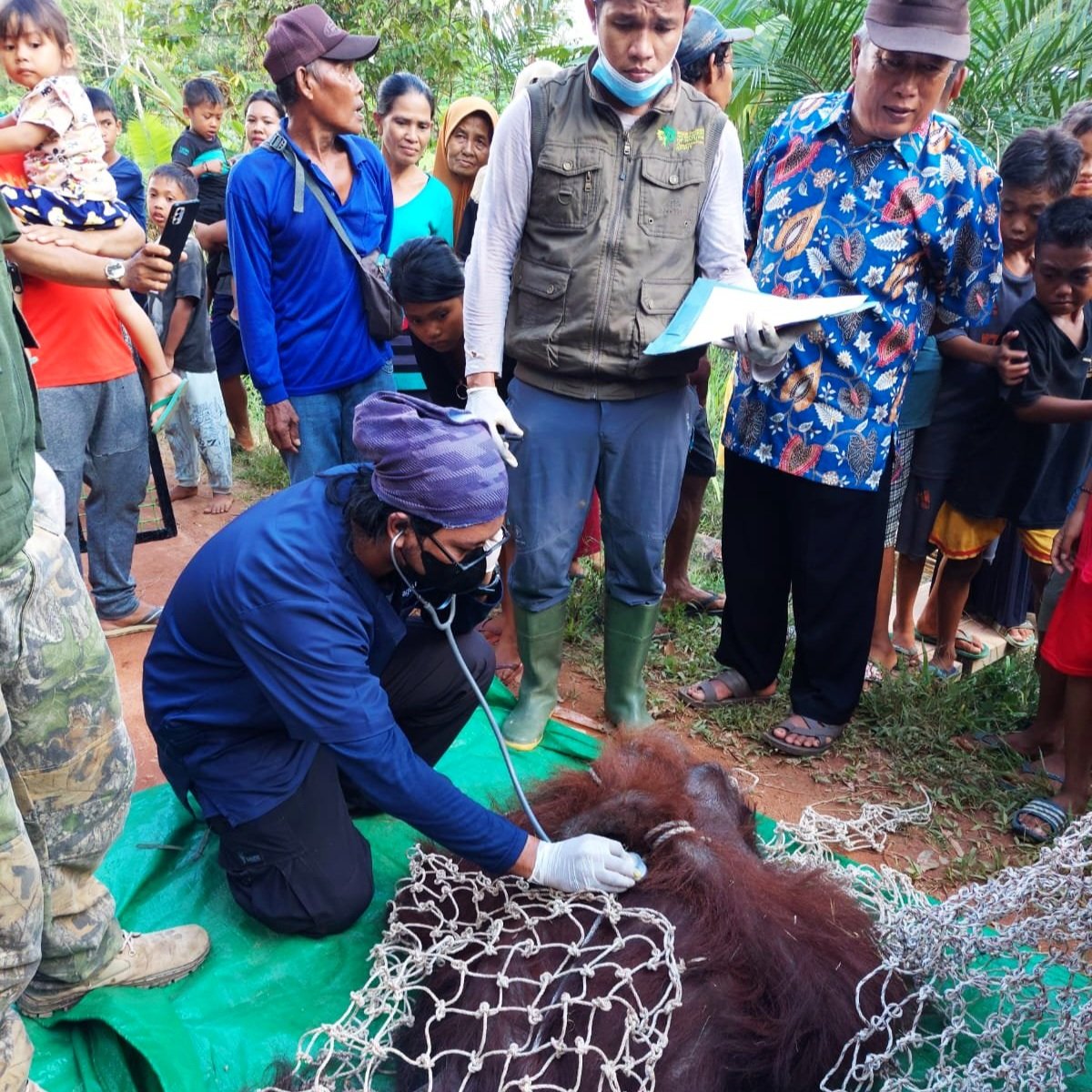
I decide to clean and stitch the wound. I give her anaesthetic and I try to clean the wound with an Iodine solution and make it clearer from her hairs. After 30 minutes she woke up very suddenly. She is put in her cage at BKSDA office. I see the stitching is good enough and I give suggestion to keep watching on her whether she will scratch and or pull the stitches.


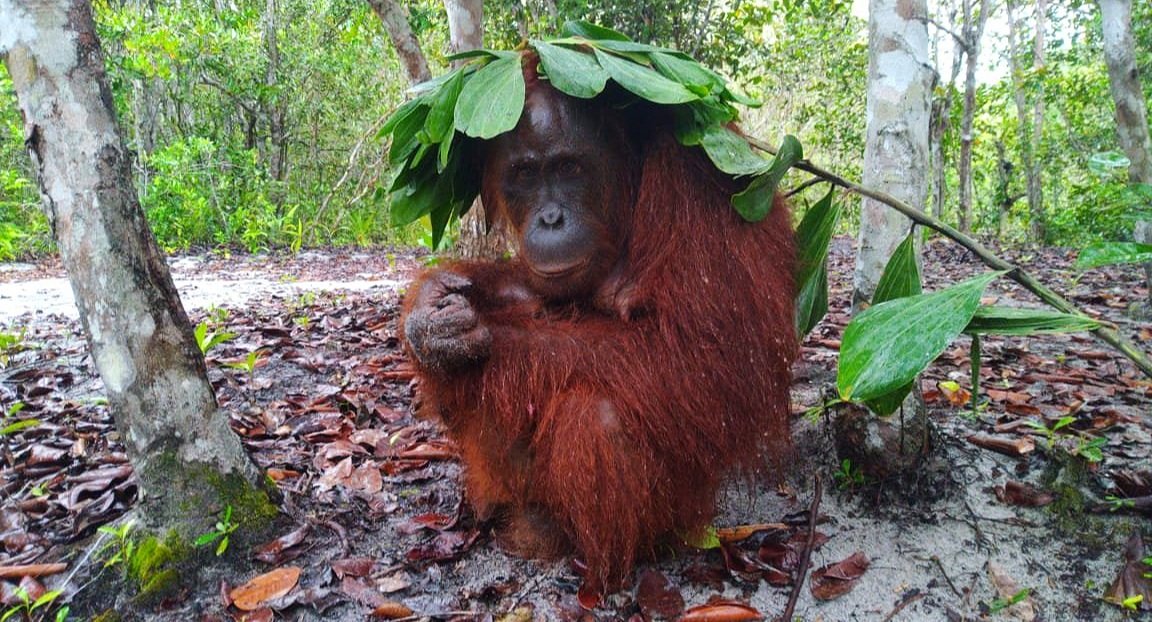
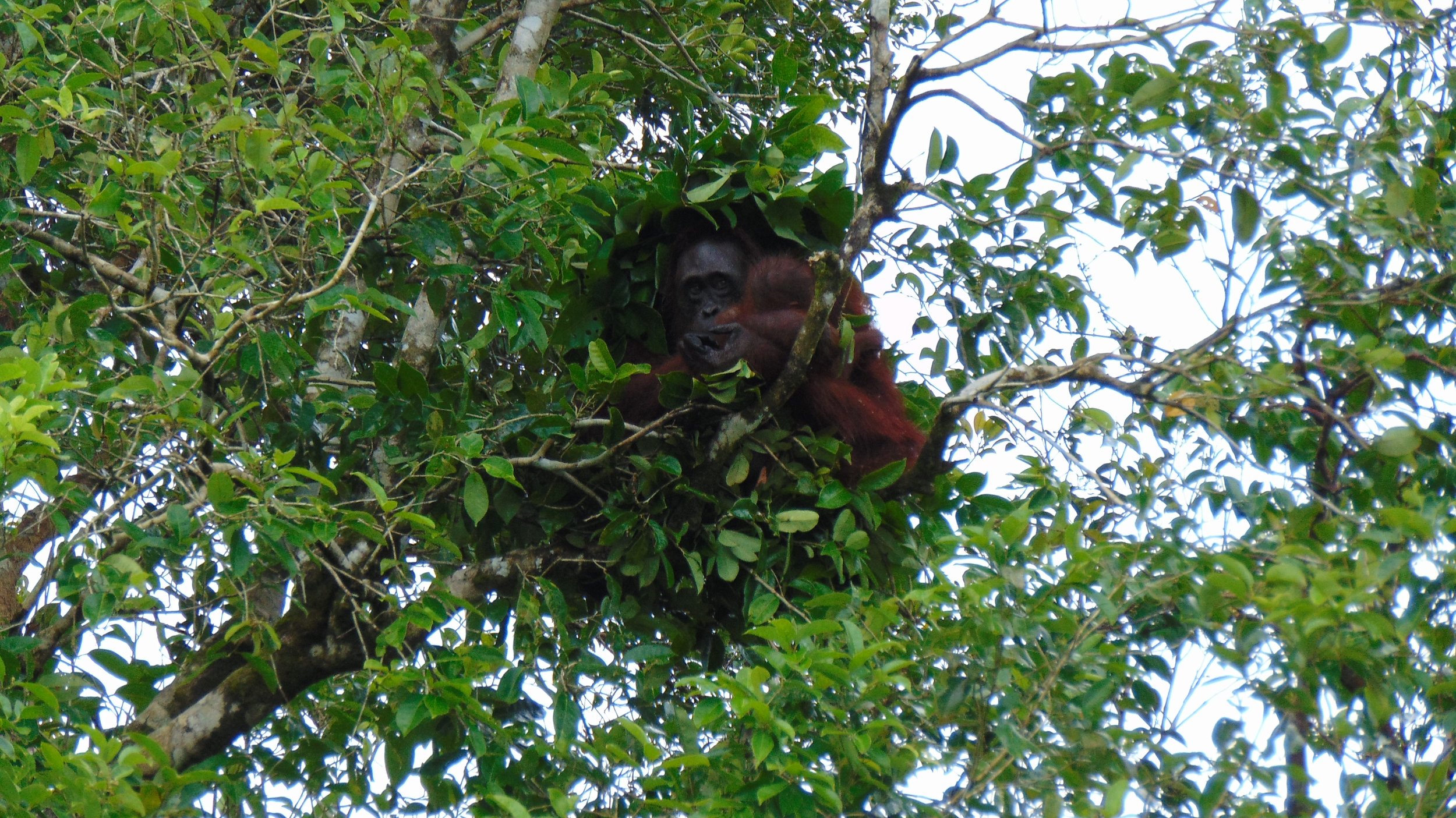
Melan using leaves to cover her wound

For a moment she is looks good by not scratch it hard, maybe just a gently touching, and some time she use leaves to cover her head to avoid flies come over. I think it is good and hope she will get well by a week.

Then 8 days after the stitching I saw unexpected thing!

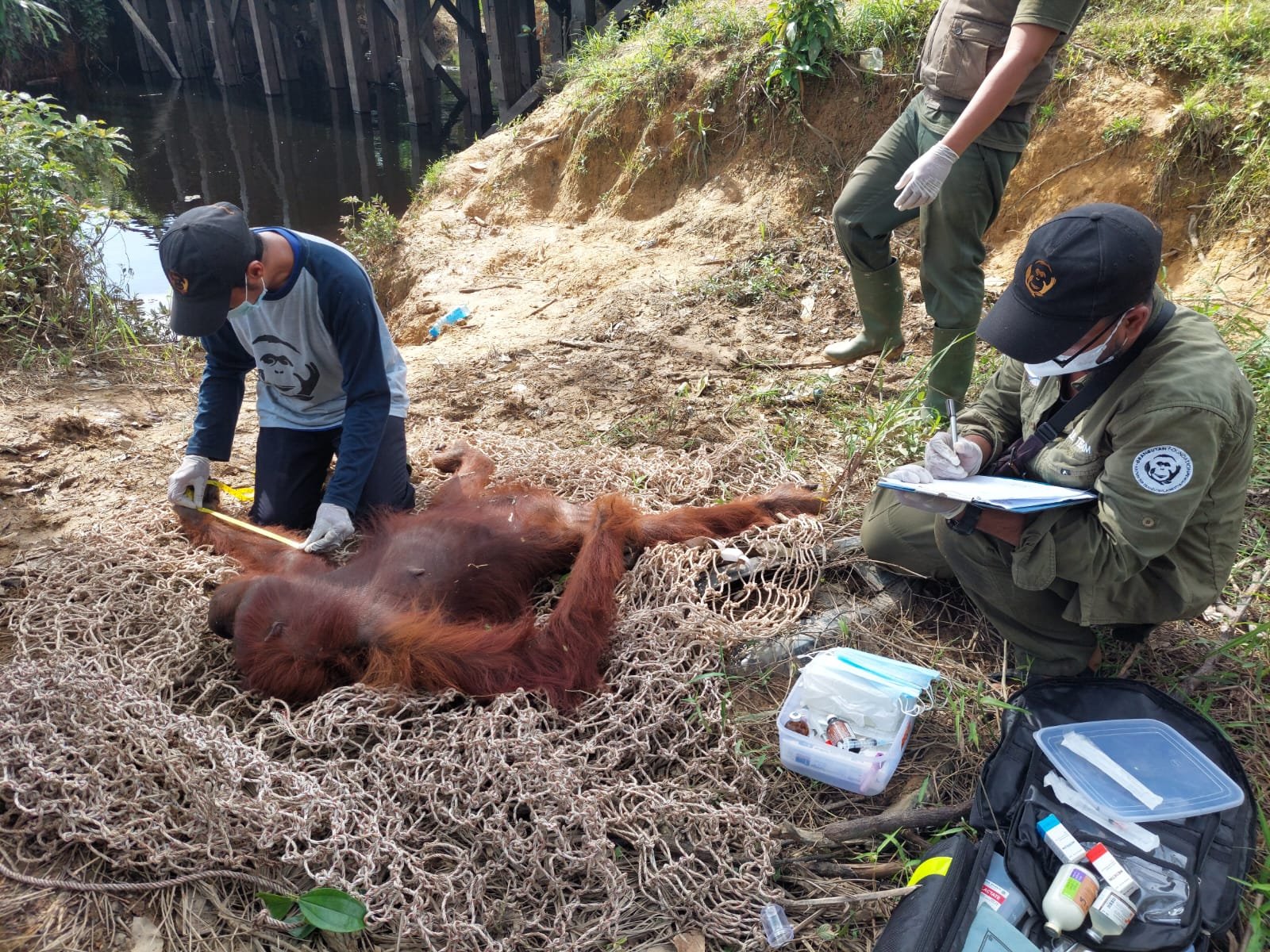
Trying to prise the skin together on a head wound on a young orangutan

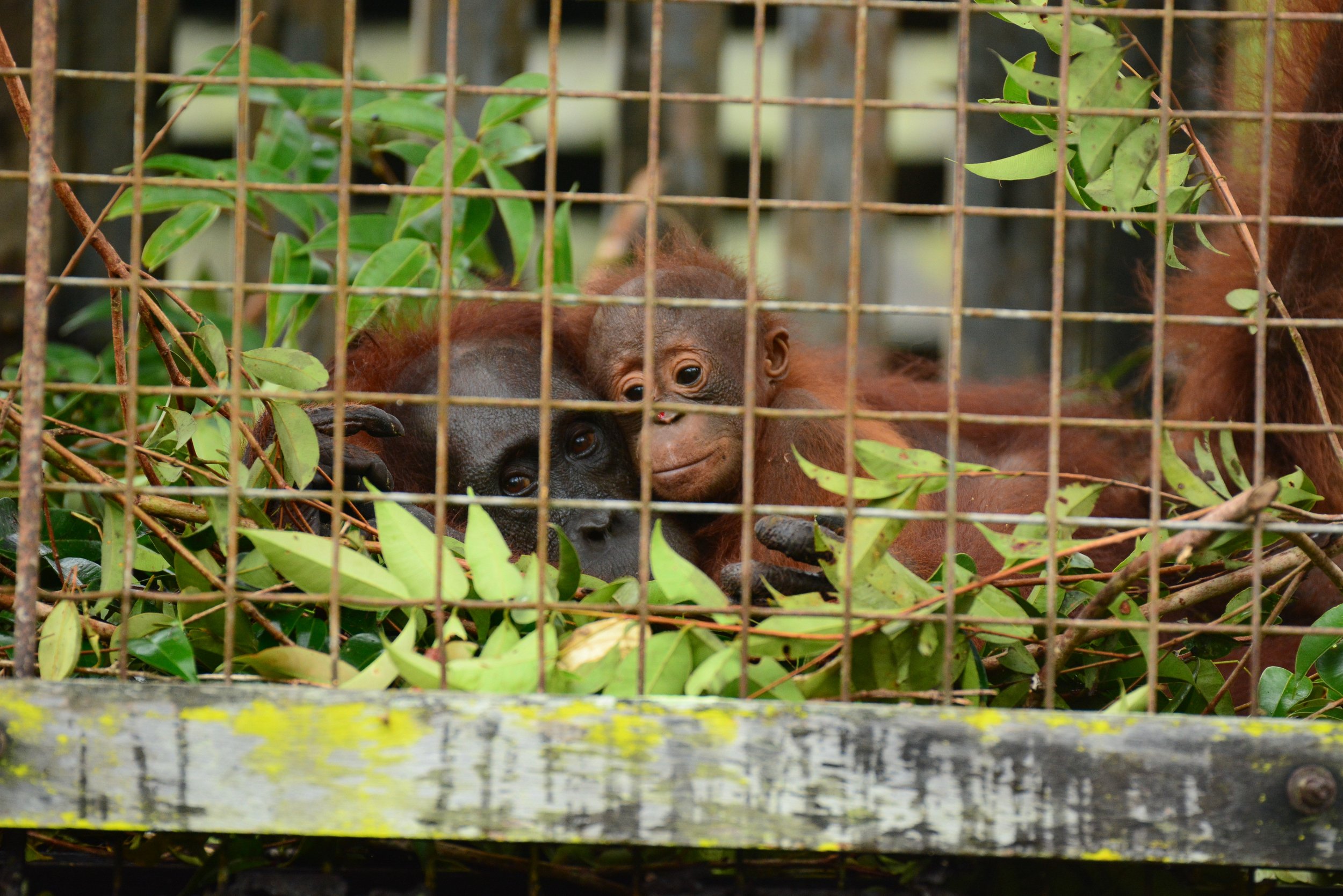
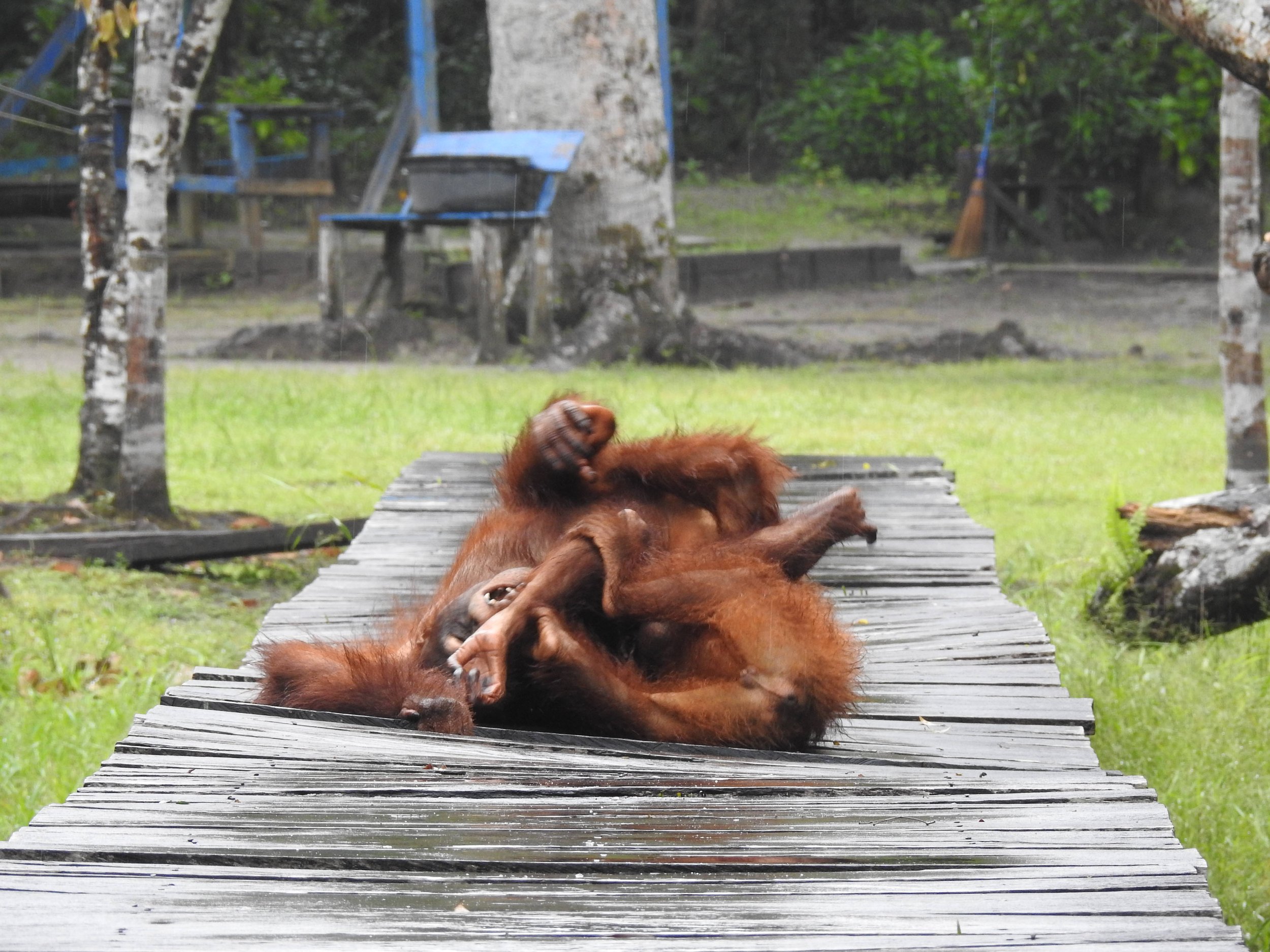
The wound become wide open again and wider than before I think. She is in the cage with another Orangutan, I see they were happy keep playing and playing. I suspect because of their playing intensity, they shouldn’t put in the cage together. BKSDA decide to move Melan to Lamandau River Wildlife Reserve, Camp JL. The following day I re-stitched her wound once she was at Camp JL.

I gave her another anaesthetic but his time is was harder as the skin was stronger now and its very hard to pull. But I have one good assistant to help and he keep pulling the skin while I was stitching. That second stitching took 30 minute but looks better and also I give such strong glue with the stitching to make the skin stay together.

Get well soon Melan…We will keep you updated with her progress,

Wawan (Bambang Setyawan)

Orangutan Foundation Vet

Please consider making a donation and support our essential work. Thank you.

Borneo’s beautiful barking deer

It has been a while since we’ve shared our news from the field. Arif, the manager of Pondok Ambung Tropical Forest Research Station situated in Tanjung Puting National Park (Central Kalimantan, Indonesian Borneo), describes his encounter and attempts to photograph the Bornean red muntjac, otherwise know as the barking deer.

‘Finally, my curiosity with the barks that I often hear, have paid off. In the morning, when I was walking not far from the camp, after passing through bush-land bordering the forest, suddenly I saw two mammals walking and foraging. Wow, this is the bark voice that made me curious so far, the barking deer, the scientific name is Muntiacus muntjac. An elusive and very sensitive mammal. I held my breath, and directing my camera among the bush.

Crek .. crek ..

Noise of shutter of non professional camera, made the deers pay attention on it for a moment.

Bornean Red Muntjac or barking deer taken in Tanjung Puting National Park (Orangutan Foundation)

My heartbeat is getting faster and still I hold my breath. I moved my body for a little to get the best angle. Oops …the shy deer ran off with the barking voice. Hem, sometimes we need camouflage costum or maybe a professional camera with smooth shutter noise!’

Thanks Arif and what a fantastic photo!

More news soon!

Orangutan Foundation

Join us today and support our essential work – thank you!


Go Body Shop Trekkers!

Follow the second week of adventure at www.facebook.com/thebodyshopfoundation as Body Shop staff and volunteers trek through the Sumatran jungle in aid of our work. All money raised from the trek will go towards our work, conserving the Lamandau River Wildlife Reserve and its precious orangutan population.

Why not show your support of the trek and adopt Sumatran orangutan, Wenda. She is being cared for by our partners, Sumatran Orangutan Conservation Programme (SOCP).  Eventually Wenda will be returned to the wild. You can read more about the rehabilitation process on SOCP’s website.

Thank you Body Shop trekkers for your determination to raise funds and awareness for orangutans!

Orangutan Foundation


Terry Pratchett Facing Extinction – BBC2 9pm 27 March 2013

Please see our press release below about our Trustee’s new film, Terry Pratchett Facing Extinction, showing tonight on BBC2 at 9pm.

PRESS RELEASE

Terry Pratchett Facing Extinction

BBC2 9pm Wednesday 27 March 2013

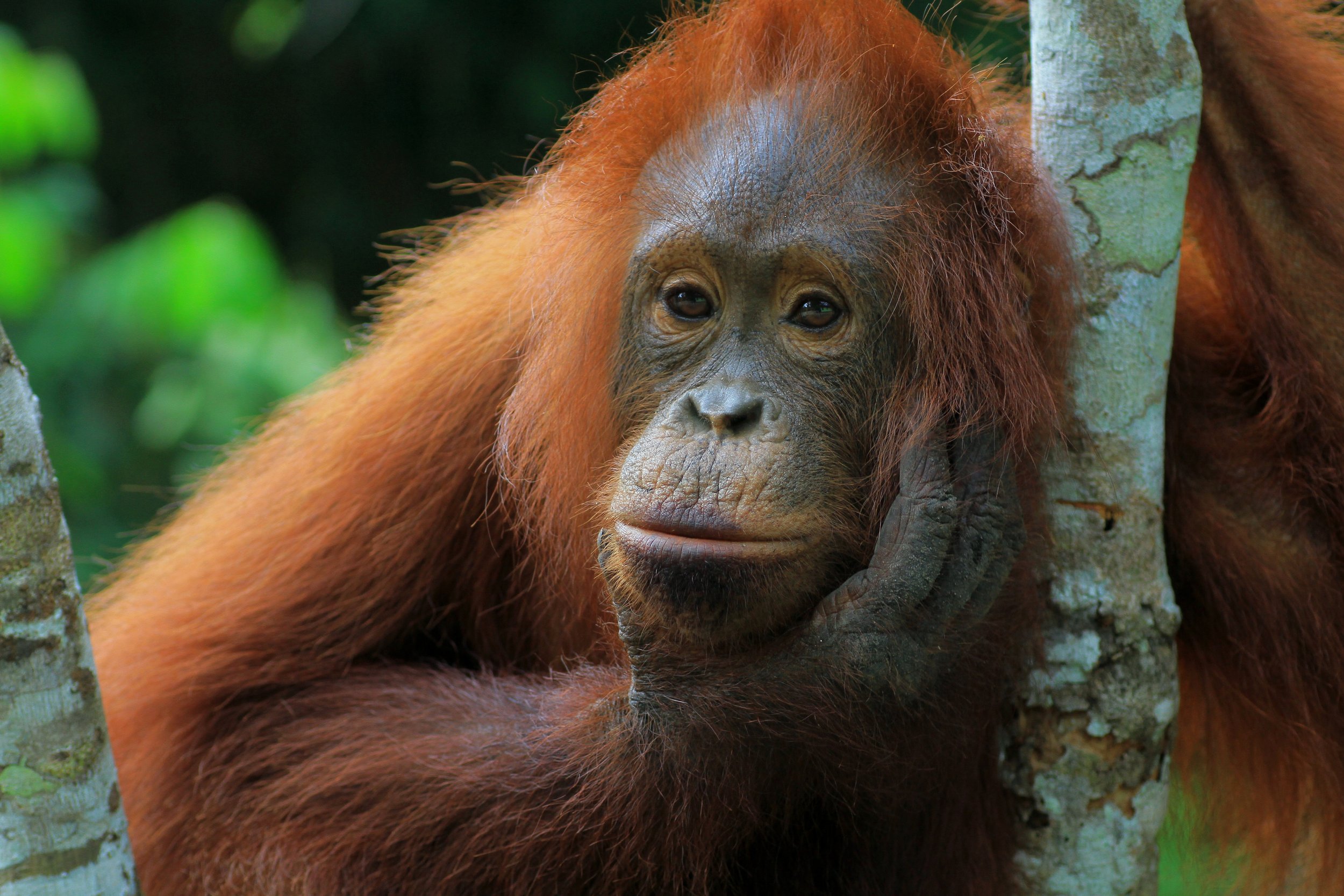
Terry Pratchett hears the orangutans’ long call

Sir Terry Pratchett, fantasy author and Trustee of the Orangutan Foundation, returns to the forests of Borneo to see what hope there is for the endangered orangutan whilst facing his own personal challenges.

Sir Terry Pratchett encountered wild orangutans for the first time in 1994 whilst filming Terry Pratchett’s Jungle Quest.  One ape, Kusasi, who was the dominant male “king of the jungle” at the time, left a lasting impression that would, almost two decades later, entice Terry back to Borneo.   In his latest film, Terry Pratchett Facing Extinction, to be aired on BBC2 9pm on 27 March, Terry explores not only the fate of the endangered orangutan but also his own fate as he battles with a rare form of  Alzheimer’s.

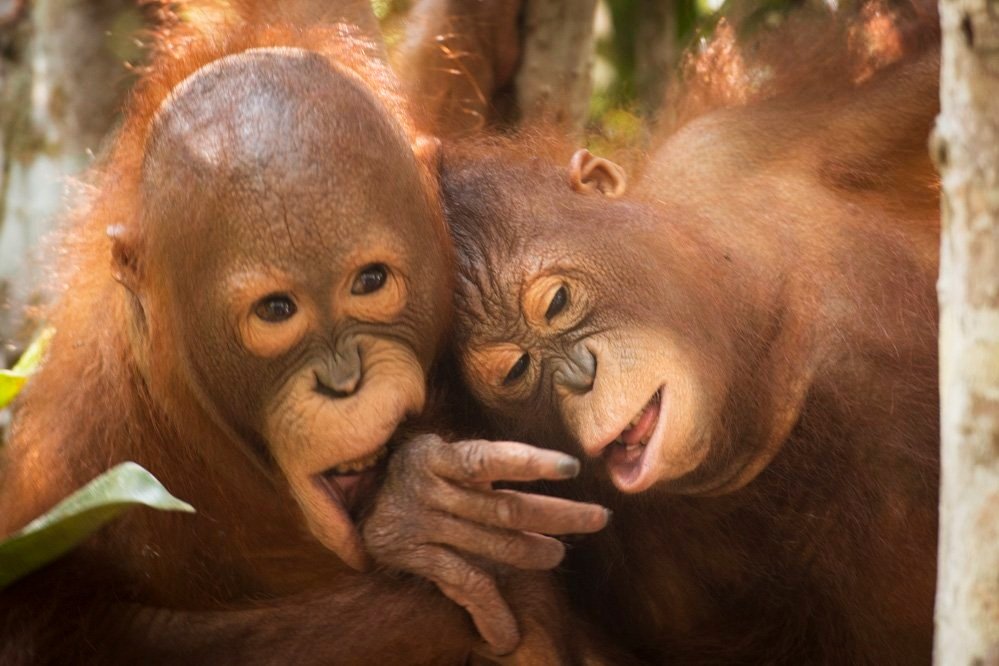
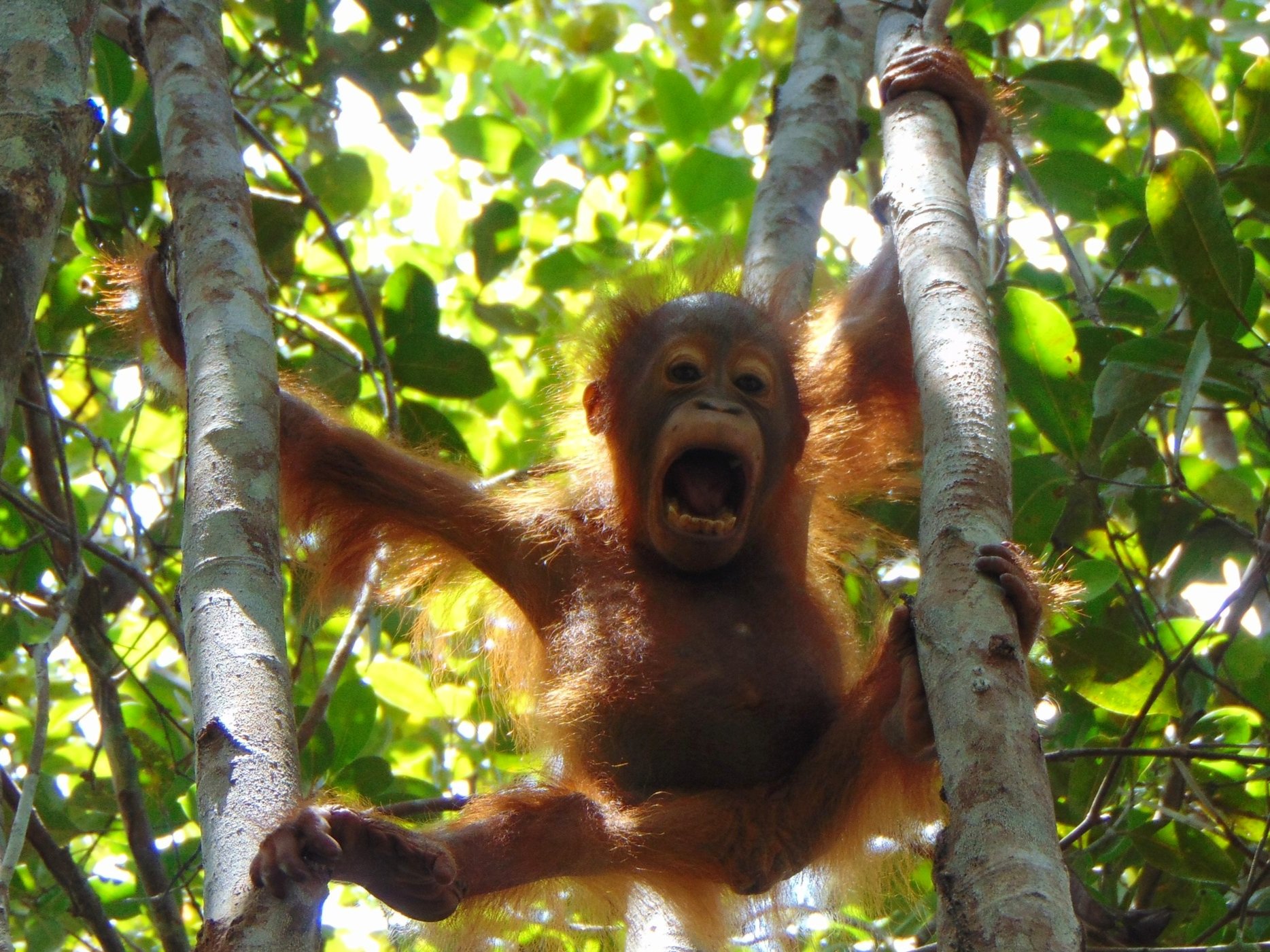
Terry Pratchett is best known for his hugely popular Discworld novels, a fantasy series, which feature the Discworld character The Librarian, who was transformed into an orangutan. This prompted Terry’s curiosity about the great red ape, which he has described as “having a face like a surprised coconut”, and led to his long-term support of the Orangutan Foundation, a UK charity, of which he is a Trustee.
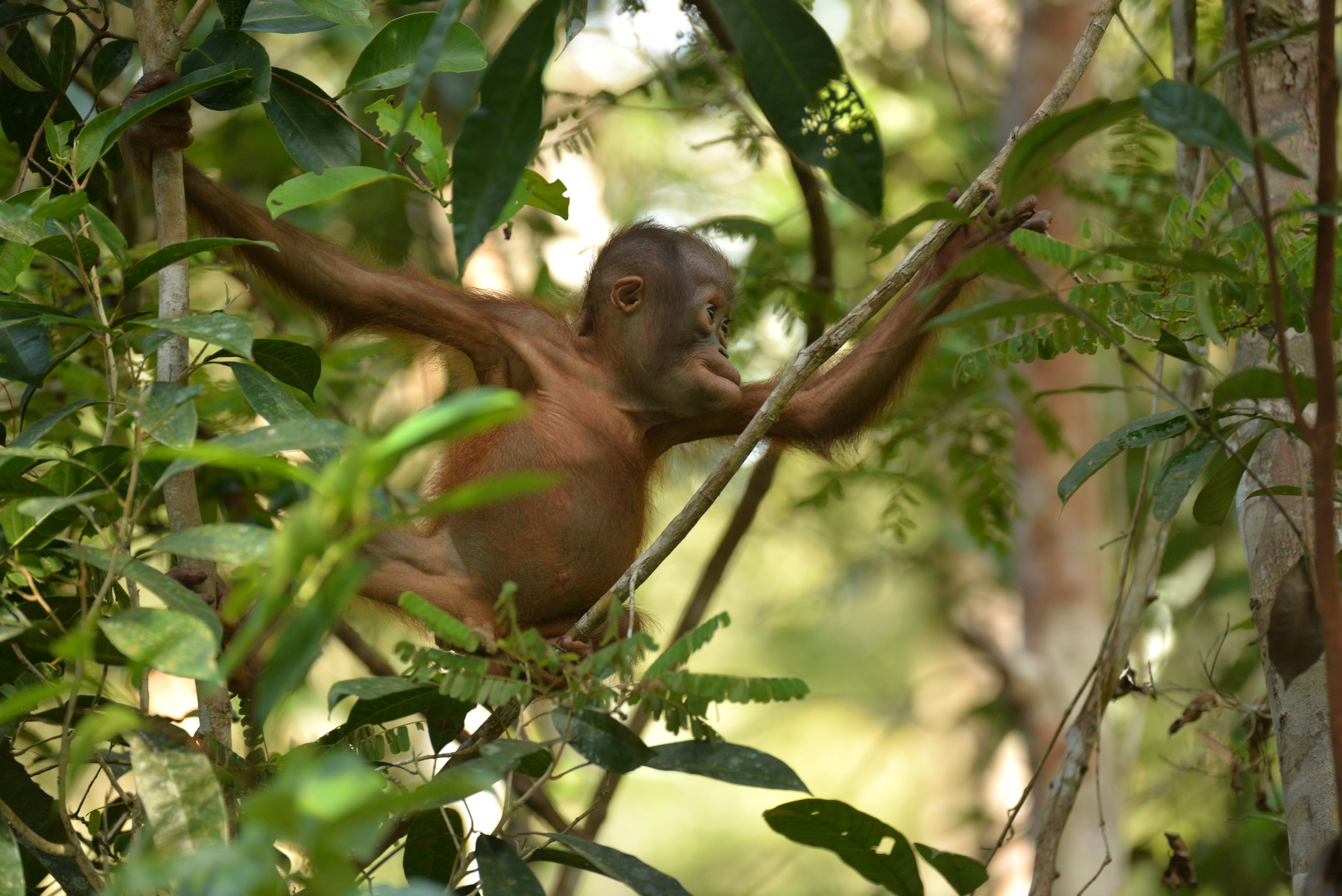
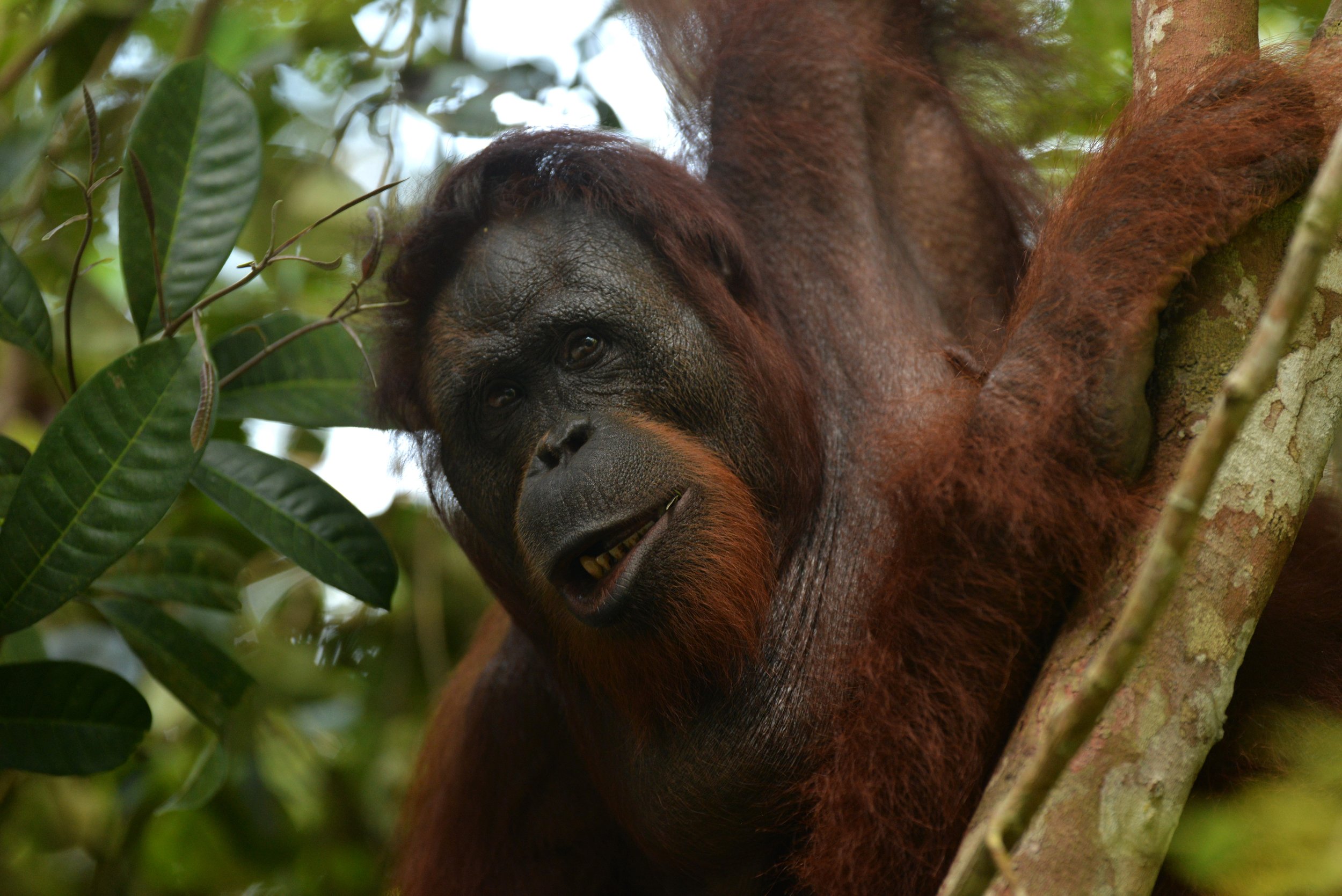
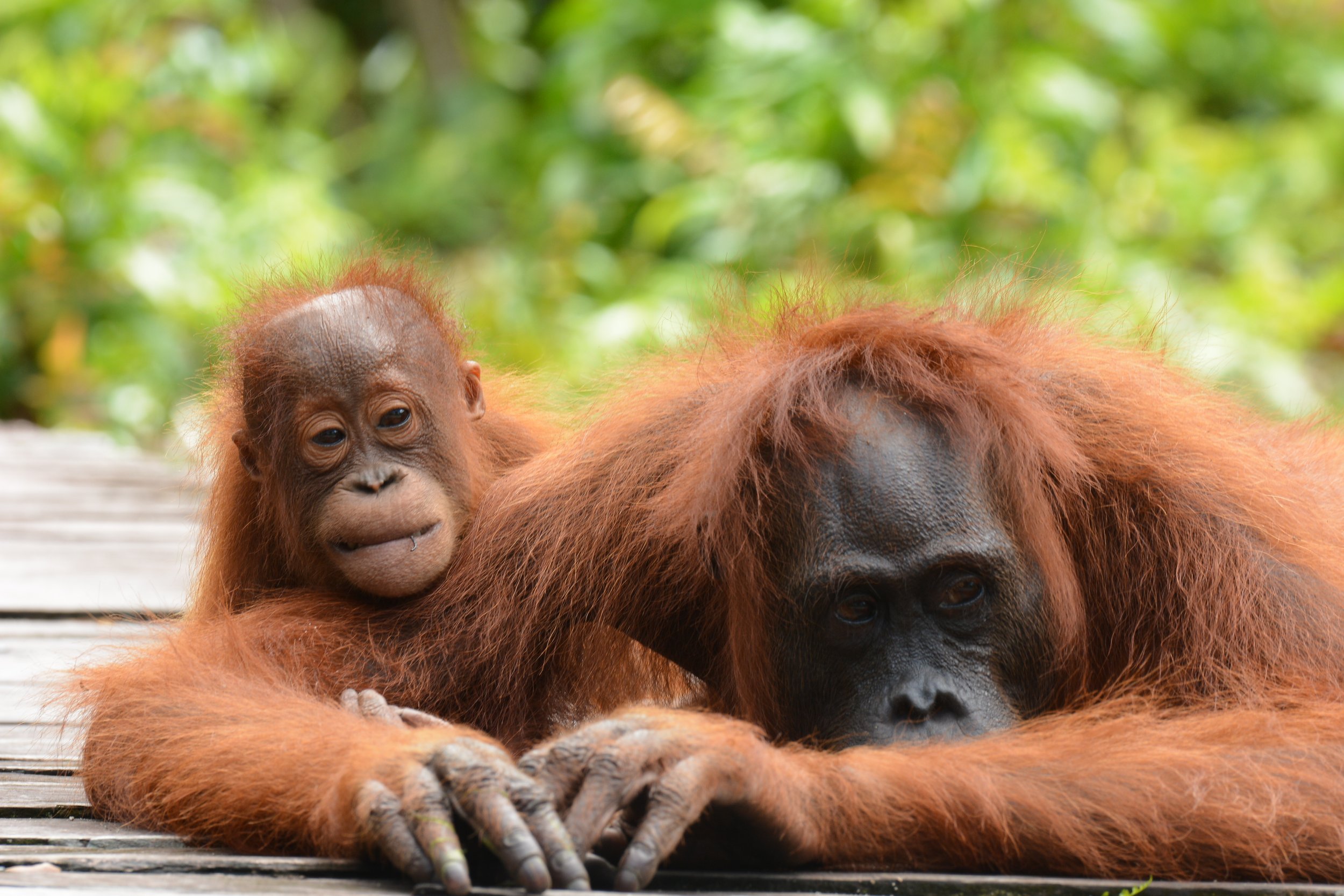
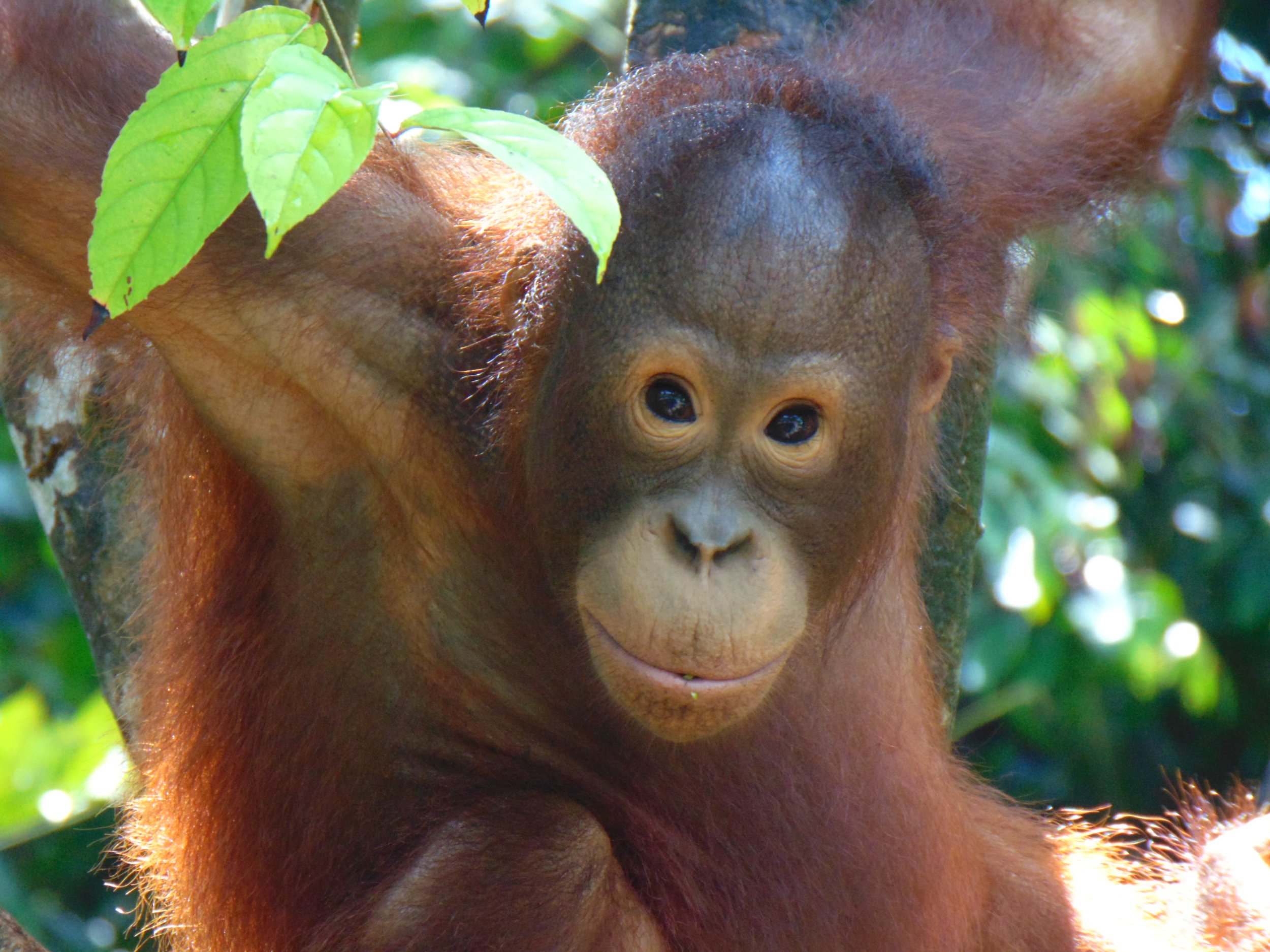
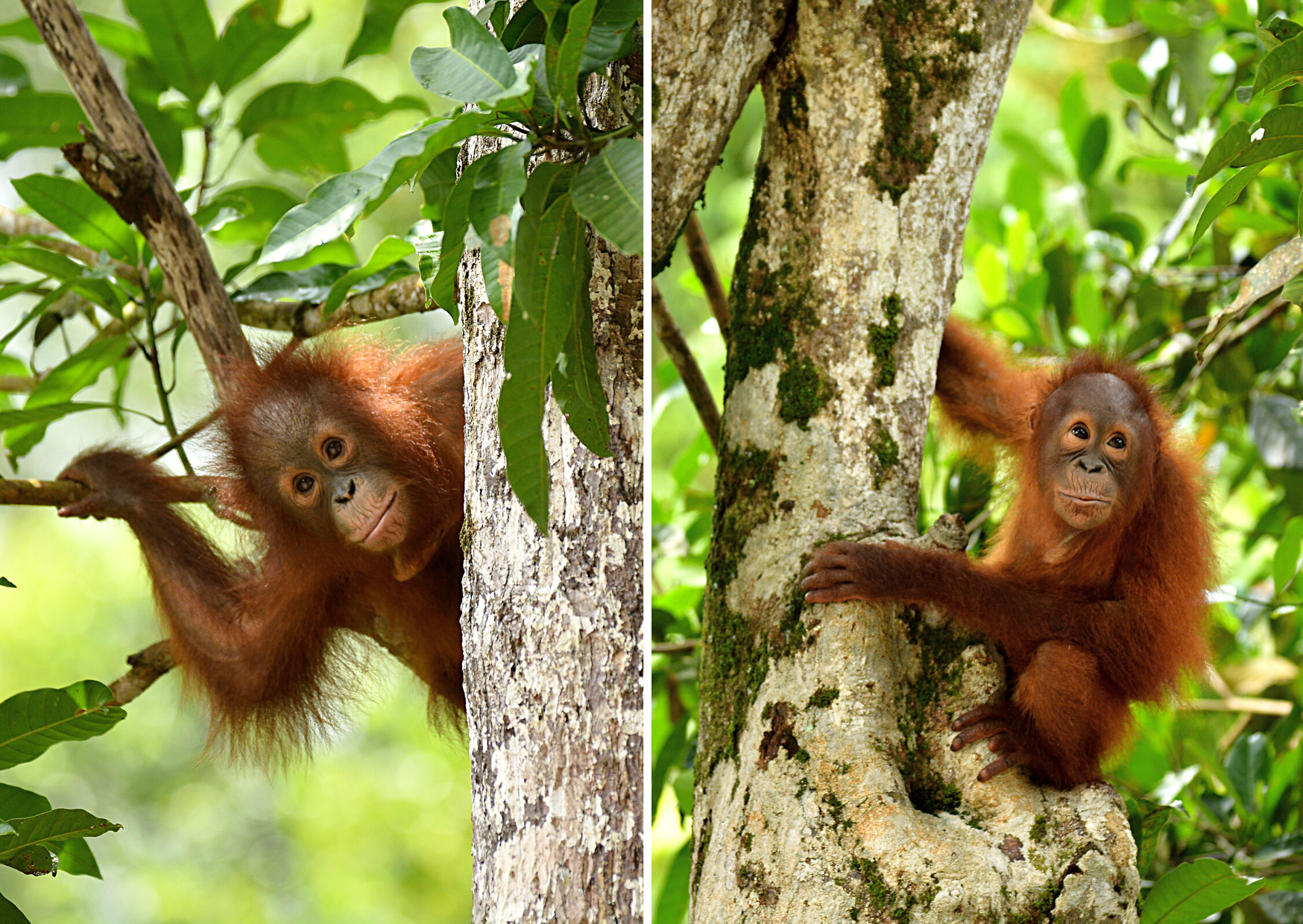
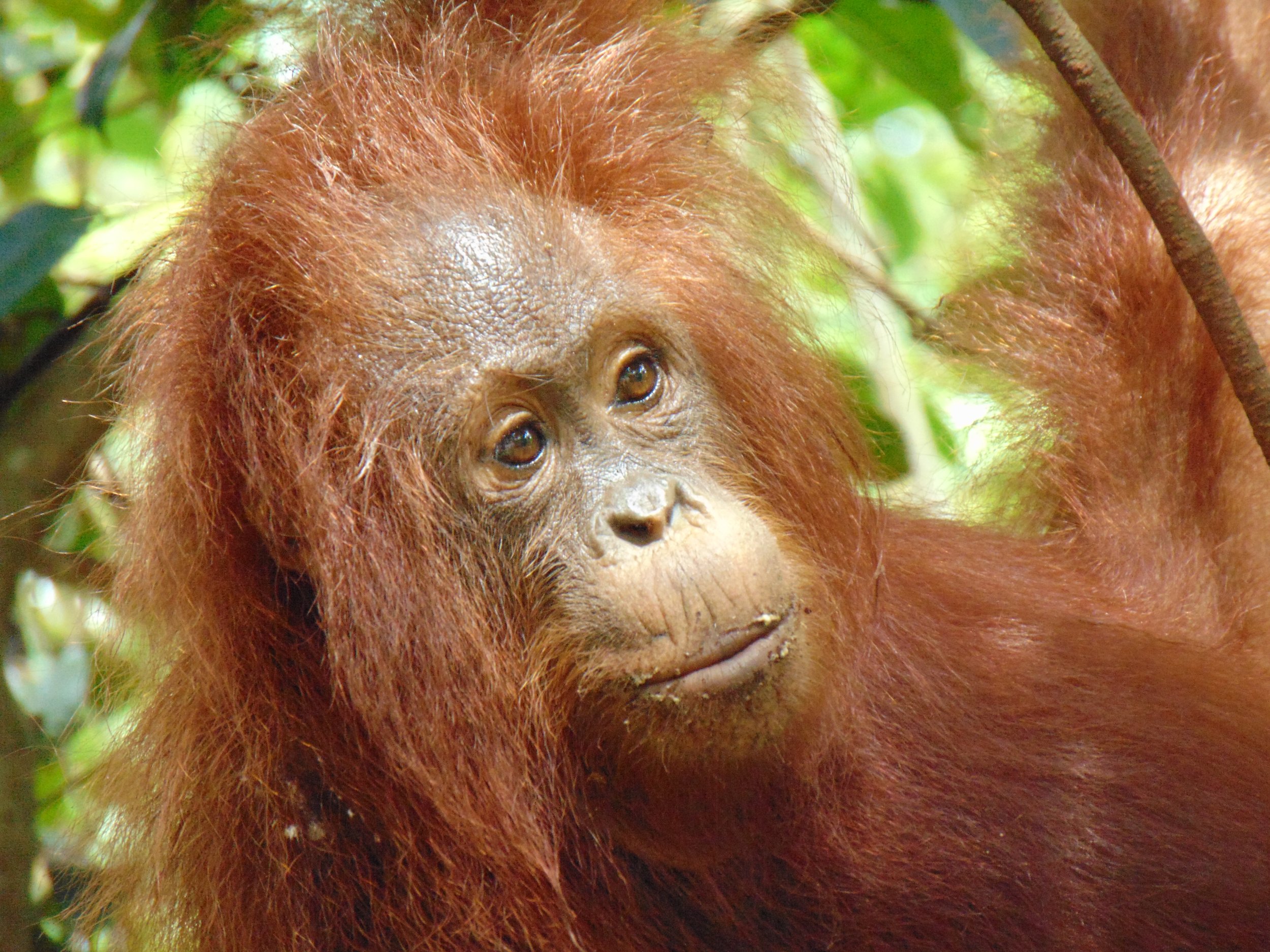
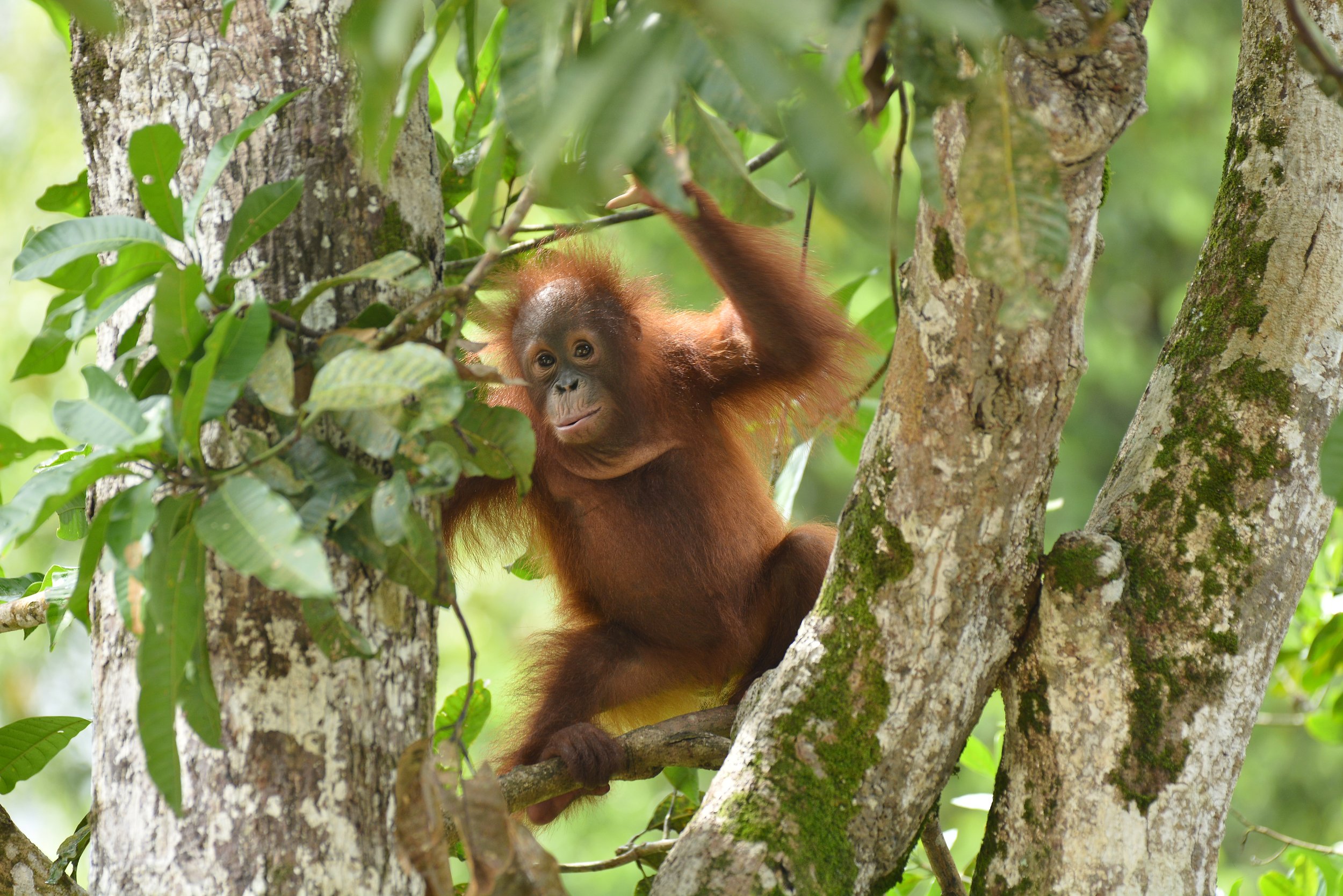
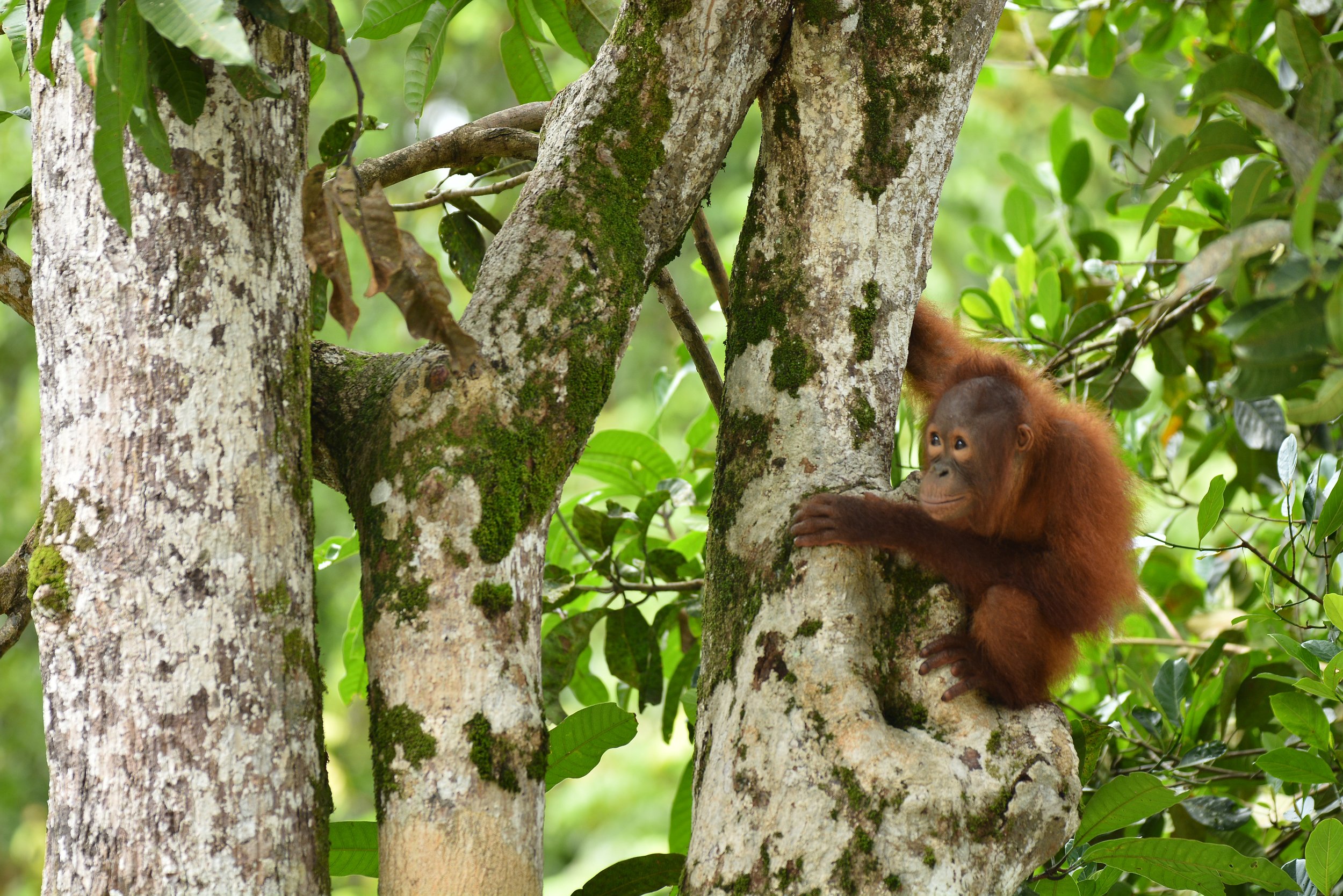
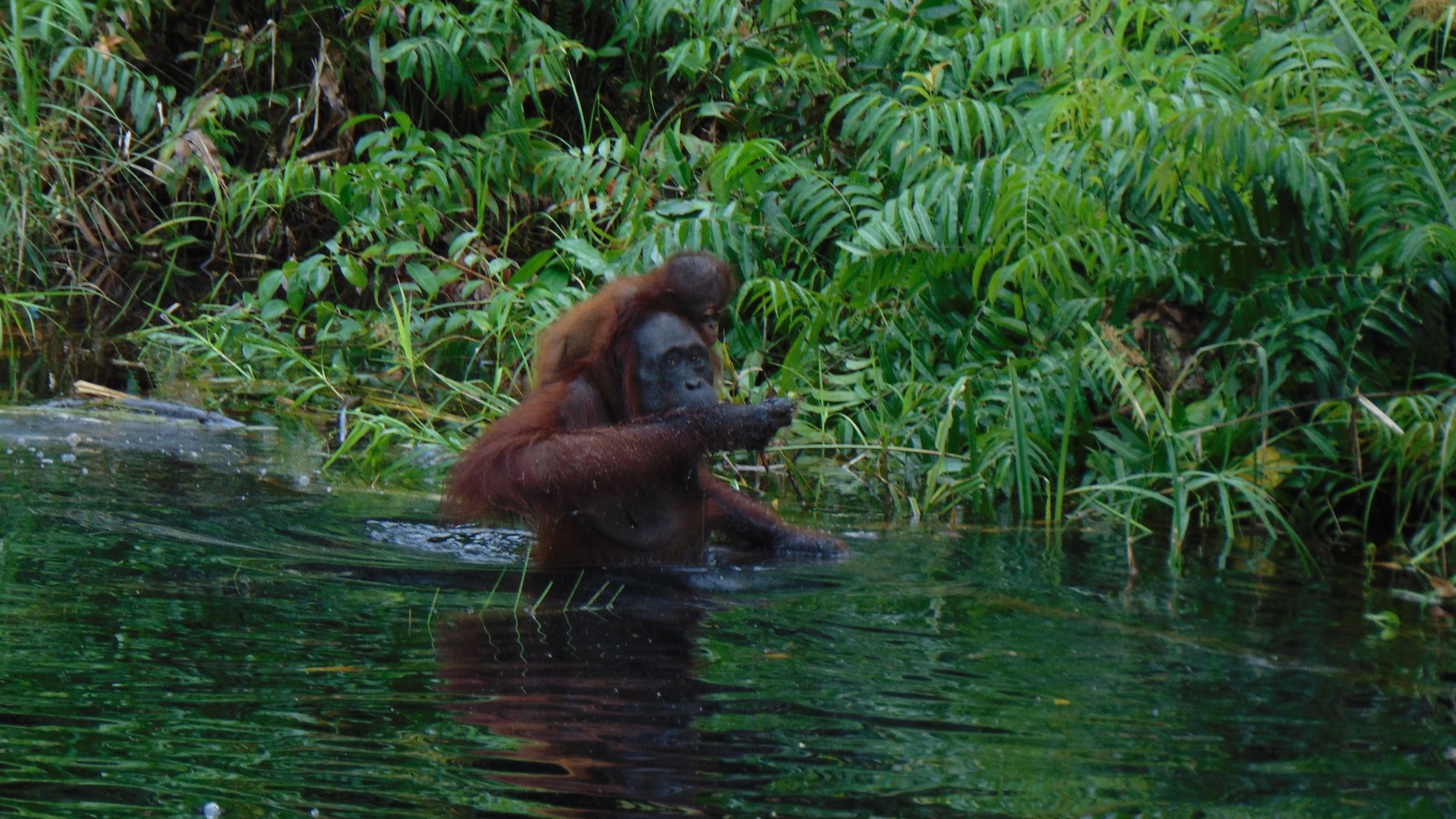
Young Bornean orangutan "face like a surprised coconut" by Ian Wood

Whilst filming Terry Pratchett Facing Extinction last year, Ashley Leiman OBE, the Orangutan Foundation’s Director, invited Terry and the film crew to accompany the charity’s vet and rescue team to a proposed oil palm plantation, where an adult male orangutan was reported to be crop-raiding.  The devastating threat of oil-palm plantation expansion to the endangered orangutan’s habitat required little explanation.

Terry Pratchett with Ashley Leiman in Borneo 1994 by Ralph Arbus

Ashley, who was also on Terry’s first adventure to Borneo, recounted “Back then, the chainsaw was our enemy. This time, we were confronted with the real threat: oil-palm plantations had replaced swathes of forest – the orangutans’ home. We drove for more than three hours through unrelenting monoculture. There was nothing but oil palm”.

The Orangutan Foundation increasingly has to rescue stranded or injured orangutans. Only last year, a female orangutan, considered a pest, was shot over 100 times. She miraculously survived but was left permanently blind and will never return to the wild.  To address this escalating issue the charity is working on a new project Mitigation of Human-Orangutan Conflicts in Central Kalimantan, Indonesian Borneo which is bringing together local government, oil palm growers and farmers to find a solution.

The Orangutan Foundation’s Director Ashley Leiman is positive about the future for orangutans “I felt privileged to be part of Terry’s latest film but I recognise that when faced with the stark reality of the situation, stranded orangutans and such forest loss, it can be hard to remain positive. Yet Terry visited some local communities who, with our assistance, are finding alternative ways to generate an income without having to destroy the forest.  There is active local support for conservation in Borneo but as we know it only takes the actions of a few to undo the good work.   I hope Terry recognises that his generous support over the past years has made a difference and that all is not lost.”

For more information or for interviews, please call Ian Redmond, Orangutan Foundation Trustee, on 01453 765228 or email ele@globalnet.co.uk or info@orangutan.org.uk

Notes to Editors:

High resolution photos and additional images are available here: http://bit.ly/XB5iyE

Further details about the Orangutan Foundation its activities are available on the Foundation’s website www.orangutan.org.uk

The Orangutan Foundation works in Indonesian Borneo and Sumatra to protect endangered orangutans by protecting their tropical forest habitat, working with local communities and promoting research and education. It recognises that orangutan habitat is unique in its richness of biodiversity and is crucial for local communities, who are as dependant on the forest as is the orangutan.
The Orangutan Foundation work in areas of critical orangutan habitat in Central Kalimantan, in the Indonesia part of Borneo. Additionally, In collaboration with the Indonesian government’s local Nature Conservation department (PHKA), the Orangutan Foundation runs a release site for rehabilitated and translocated wild orangutans in the Lamandau River Wildlife Reserve.

Sir Terry Pratchett, Trustee of the Orangutan Foundation, is one of the most popular authors writing today. He is best known for his hugely popular Discworld novels, a fantasy series, which feature the Discworld character The Librarian, who was transformed into an orangutan. This prompted Terry Pratchett’s curiosity about orangutans and his long-term support of the Orangutan Foundation. In 1995 Terry visited Indonesian Borneo with Orangutan Foundation to see orangutans in the wild and film Terry Pratchett’s Jungle Quest for a Channel 4 television documentary and he returned in 2012 to film Terry Pratchett Facing Extinction for BBC2. Terry has won numerous literary awards, has received four honorary doctorates, was appointed OBE for services to literature in 1998 and he was knighted in the 2009 New Year Honours.
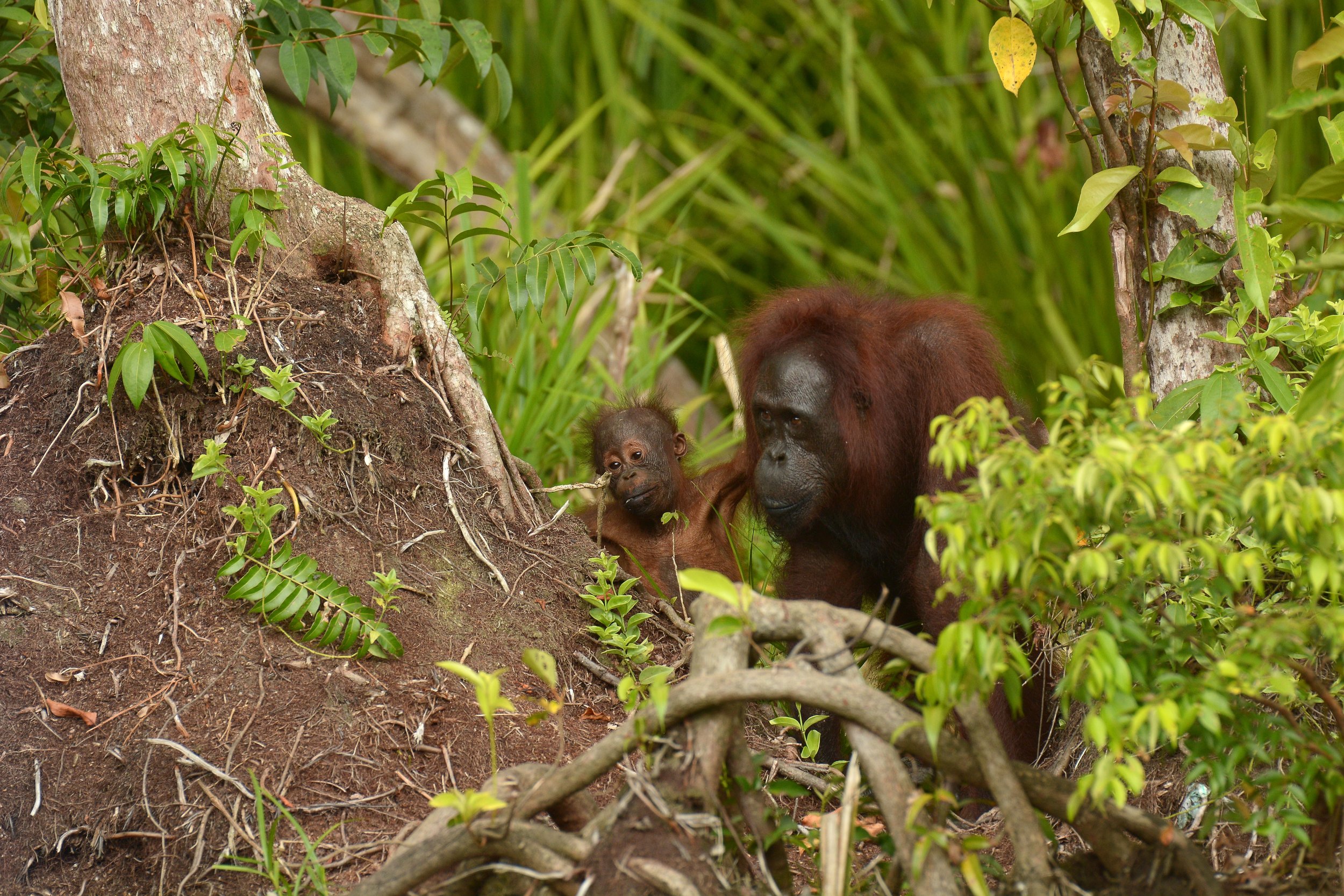
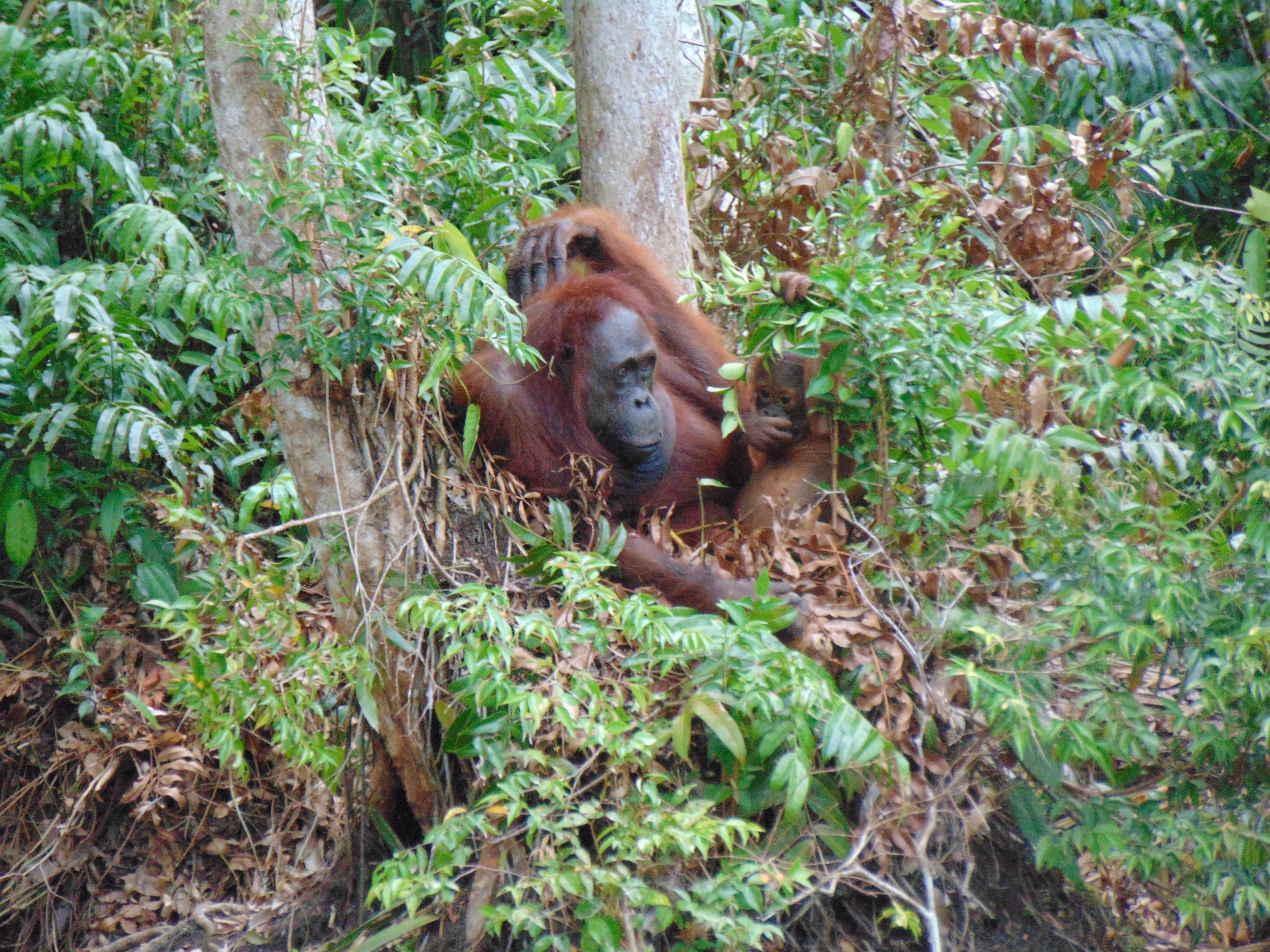
Ms Ashley Leiman OBE is Director and Trustee of the Orangutan Foundation, which she founded in 1990. Ashley has been actively involved in Asian conservation for over 30 years. Her initial involvement was with the Natural History Society and Conservation Society in Hong Kong. In 1985 she was on the organising committee of the New York Rainforest Alliance. In 1986, after spending time in Tanjung Puting National Park, Indonesian Borneo,  Ashley set about establishing the Orangutan Foundation in the UK. In 2006 Ashley was appointed OBE for her services to Orangutan Conservation. Ashley is also a member of the Executive Committee of the UNEP’s Great Apes Survival Project (GRASP).
Threats to orangutans

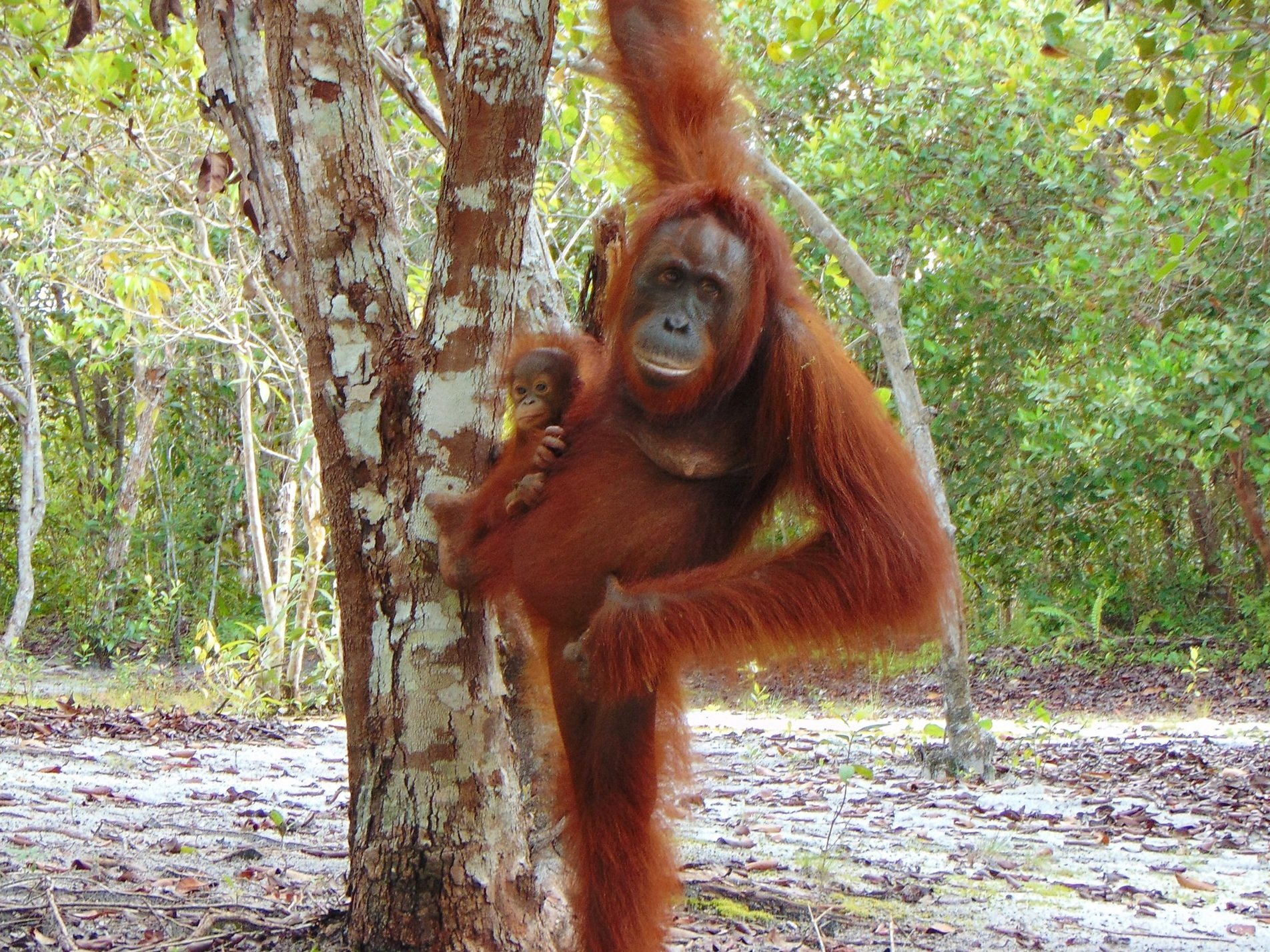
The biggest threat to orangutans is habitat loss. Orangutan habitat is being destroyed and degraded by oil palm plantations, illegal logging, acacia plantations, fire, mining and small-scale shifting cultivation.

The destruction of tropical forests affects the global climate and is one of the world’s most pressing environmental concerns. For orangutans the situation is critical.

The principle cause of habitat loss is the conversion of forests to agriculture, especially  vast monoculture oil palm plantations.

Palm oil is produced from the kernel of the oil palm plant and is the world’s most popular vegetable oil, primarily produced in Indonesia and Malaysia. Often labelled  as just vegetable oil, palm oil  is a hidden ingredient found in up to half of packaged food products across Europe, it is also used in cosmetics and increasingly as a biofuel.  A new EU regulation, requiring all vegetable oils to be labelled individually, will come into force in 2015.

Oil palm plantations expansion is not the only threat. Deforestation for mining (both legal and illegal) has the potential to be just as devastating. Illegal mining has been found within the boundaries of the Lamandau River Wildlife Reserve.  The Orangutan Foundation is protecting this area of critical orangutan habitat with guard posts and patrols.

Images – high resolution versions can be downloaded from the Orangutan Foundation Photo Gallery from this link http://bit.ly/XB5iyE

To donate to the Orangutan Foundation please click here or text  APES05 £X to 70070 and put whatever amount you would like to donate where the ‘X’ is. For example, to donate £20, text APES05 £20.  Thank you!

All in a days work at Orangutan Foundation

We are sad to say farewell to our vet Dr Fikri but we’d like to thank him for all his excellent hard work. Fortunately, Wawan, who already works for us, is a qualified vet and so he is on standby until we recruit a replacement. Wawan is normally based in the Orangutan Foundation office, in the town of Pangkalan Bun,  so last week he jumped at the chance to get out into the field. Here’s a short update from him and you’re in for a treat as he is a fantastic photographer!

A visit to Lamandau River Wildlife Reserve by Wawan

‘I went to Camp Siswoyo with Pak Tigor (manager of Orangutan Rescue and Release programme) to see wounded orangutan named Pablo. Based on field staff’s information he had fought in the jungle but no ones know whom with, whether other orangutan or another animal.

Injured orangutan Pablo. Photo by Wawan, Orangutan Foundation

Wounds on Pablo's back photo by Wawan, Orangutan Foundation

Wounds on Pablo's face. Photo by Wawan, Orangutan Foundation

Profile of Pablo's face. Photo by Wawan, Orangutan Foundation

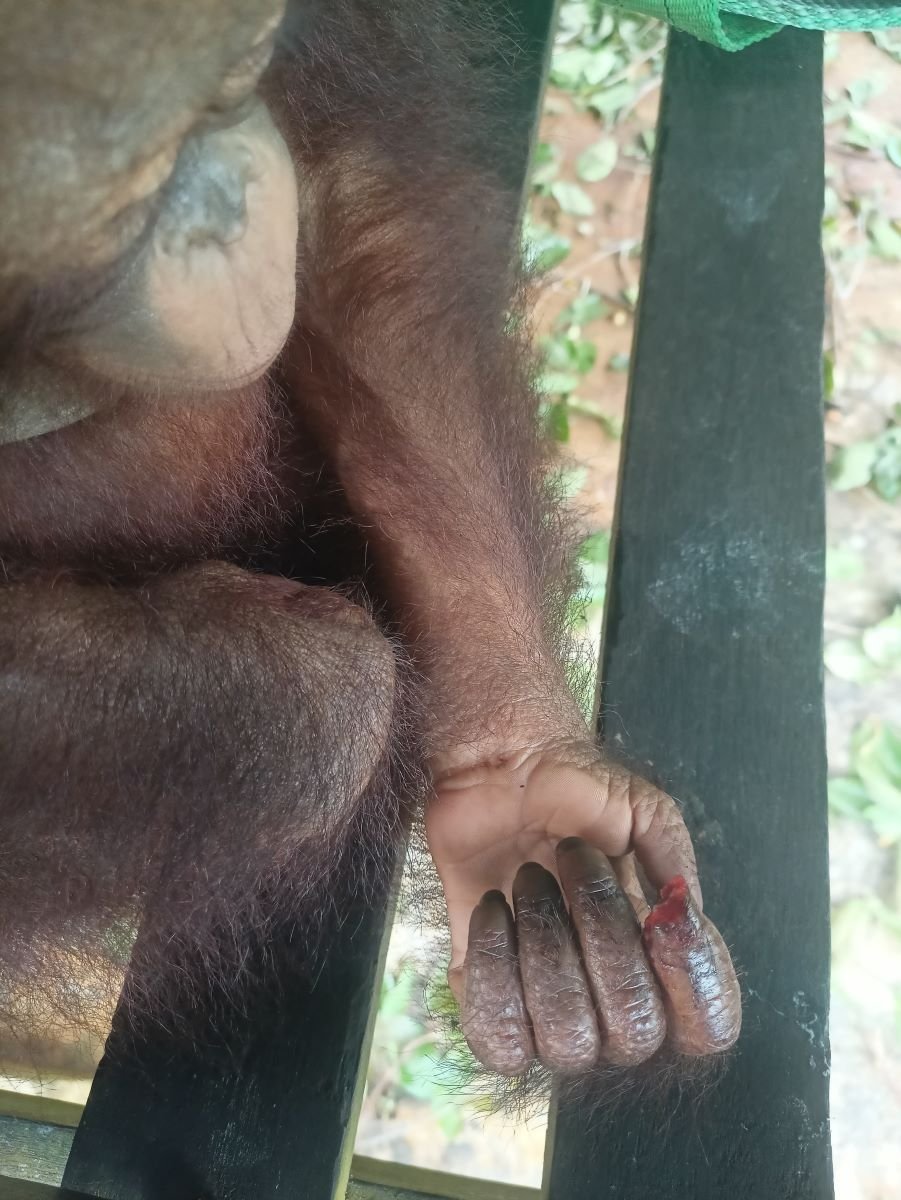
Insect on Pablo's fingers. Photo by Wawan, Orangutan Foundation

For several day before Pak Tigor already gave him medicines.  I think his wounds are already in process to recover and is going to cure so no worry with this. I advised the staff to keep the wound clean and on what treatment to give. Hopefully, in maybe one or two weeks, Pablo will be cured and could be free from the cage.

After seeing Pablo then I go Camp Gemini, our main camp, to see Aan in her new enclosure. Because Aan is blind she naturally seems worried when she hears someone approach.

Blind orangutan, Aan, in her enclosure at Camp Gemini. Photo by Wawan, Orangutan Foundation

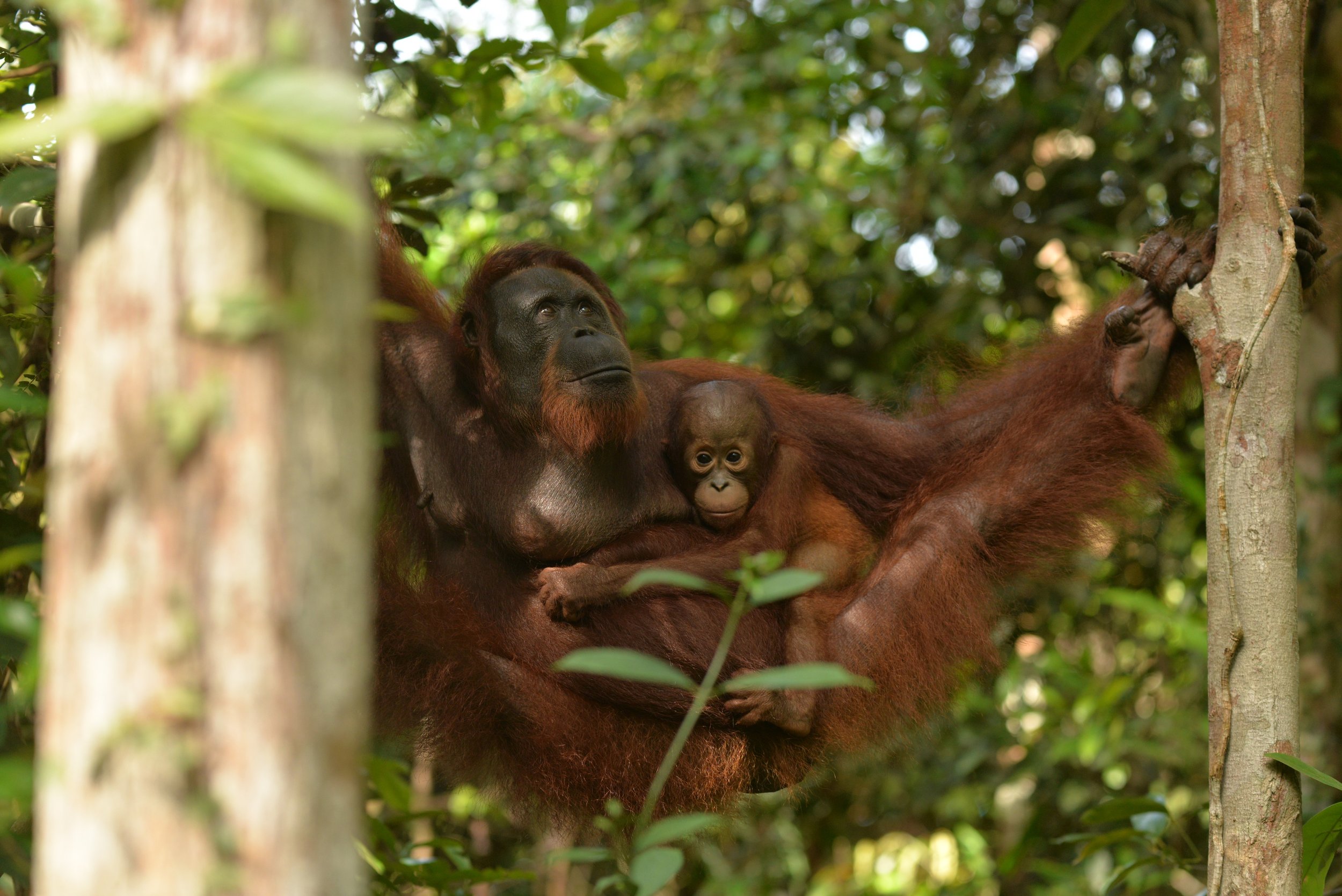
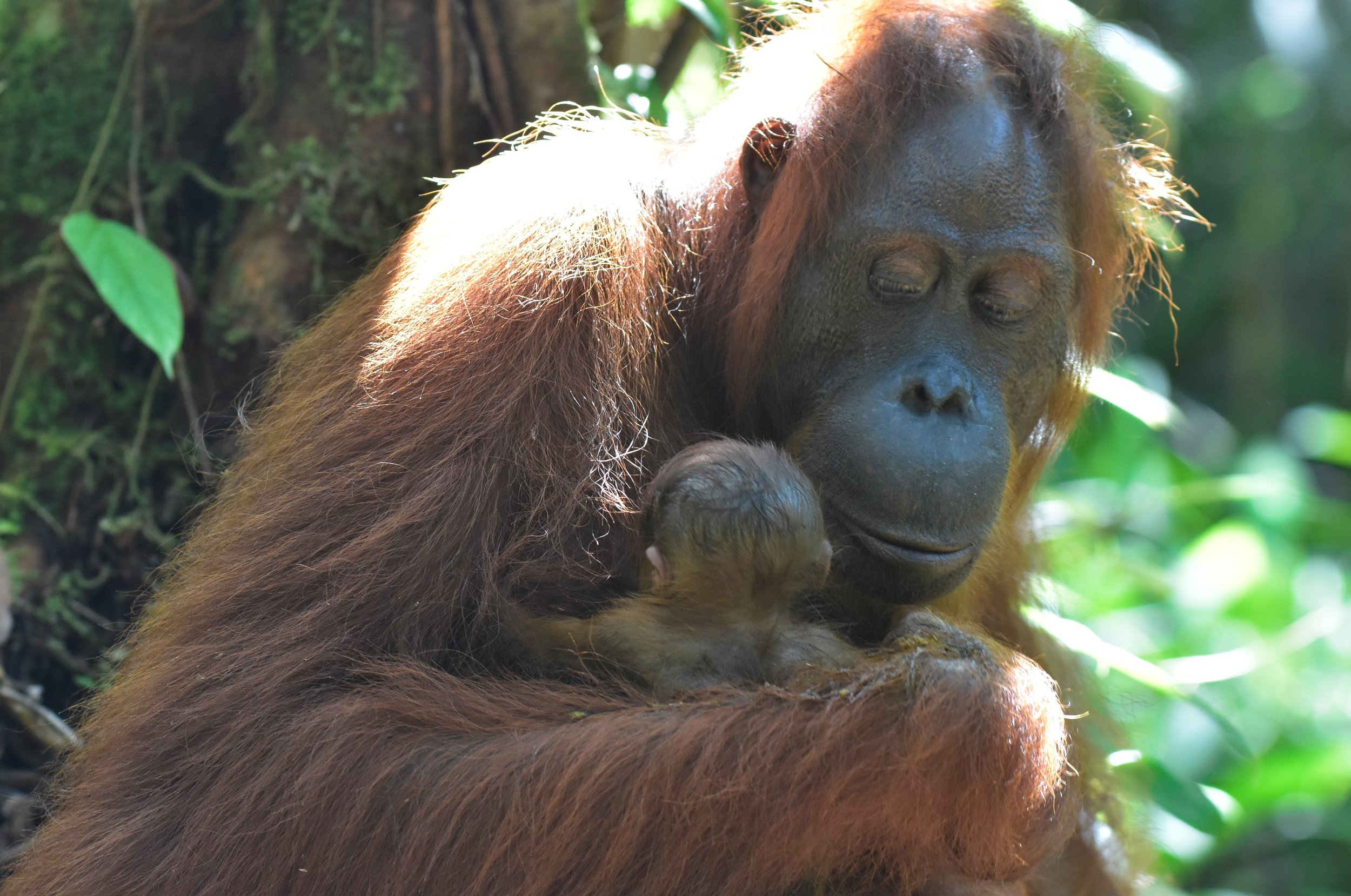
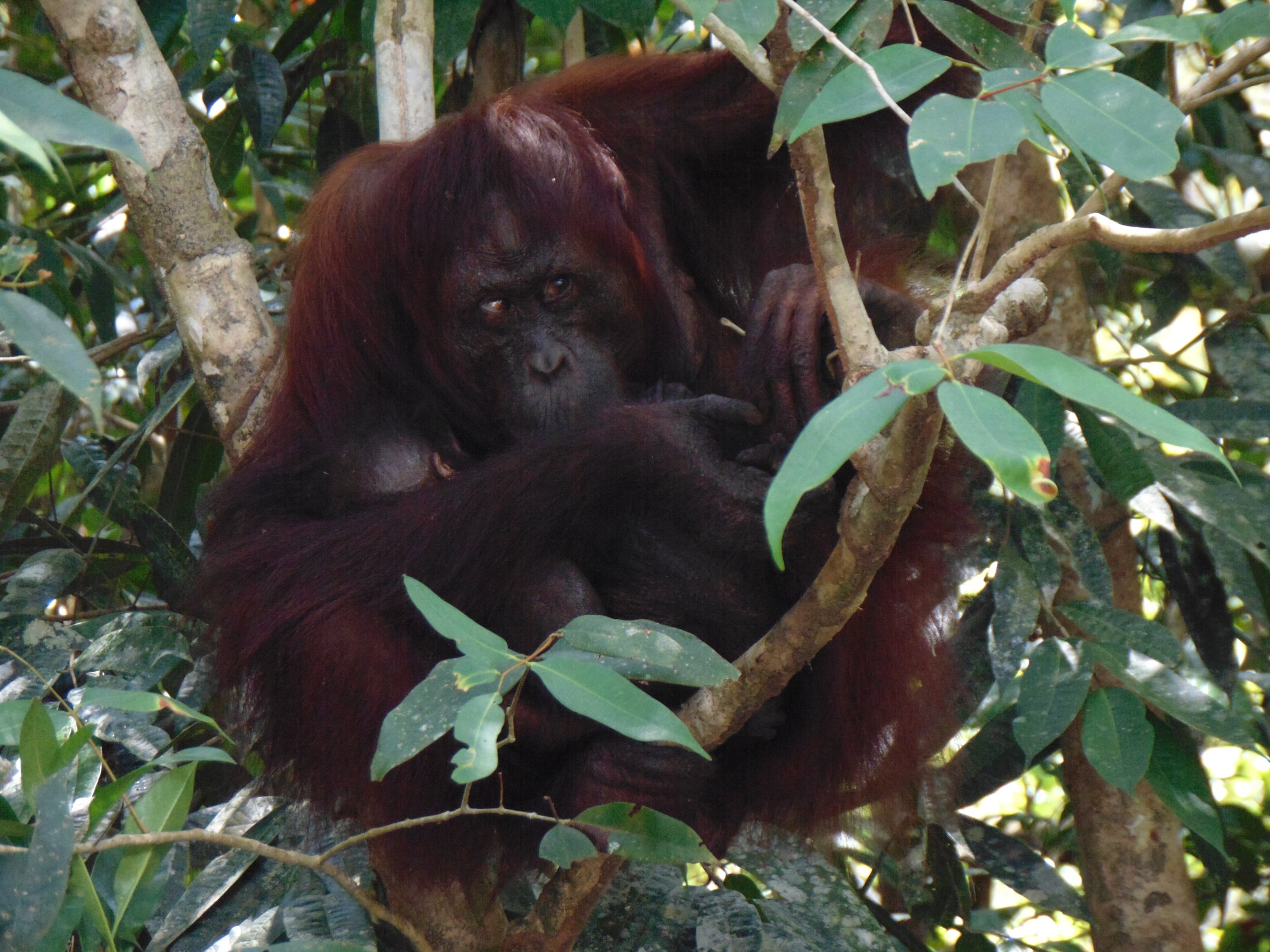
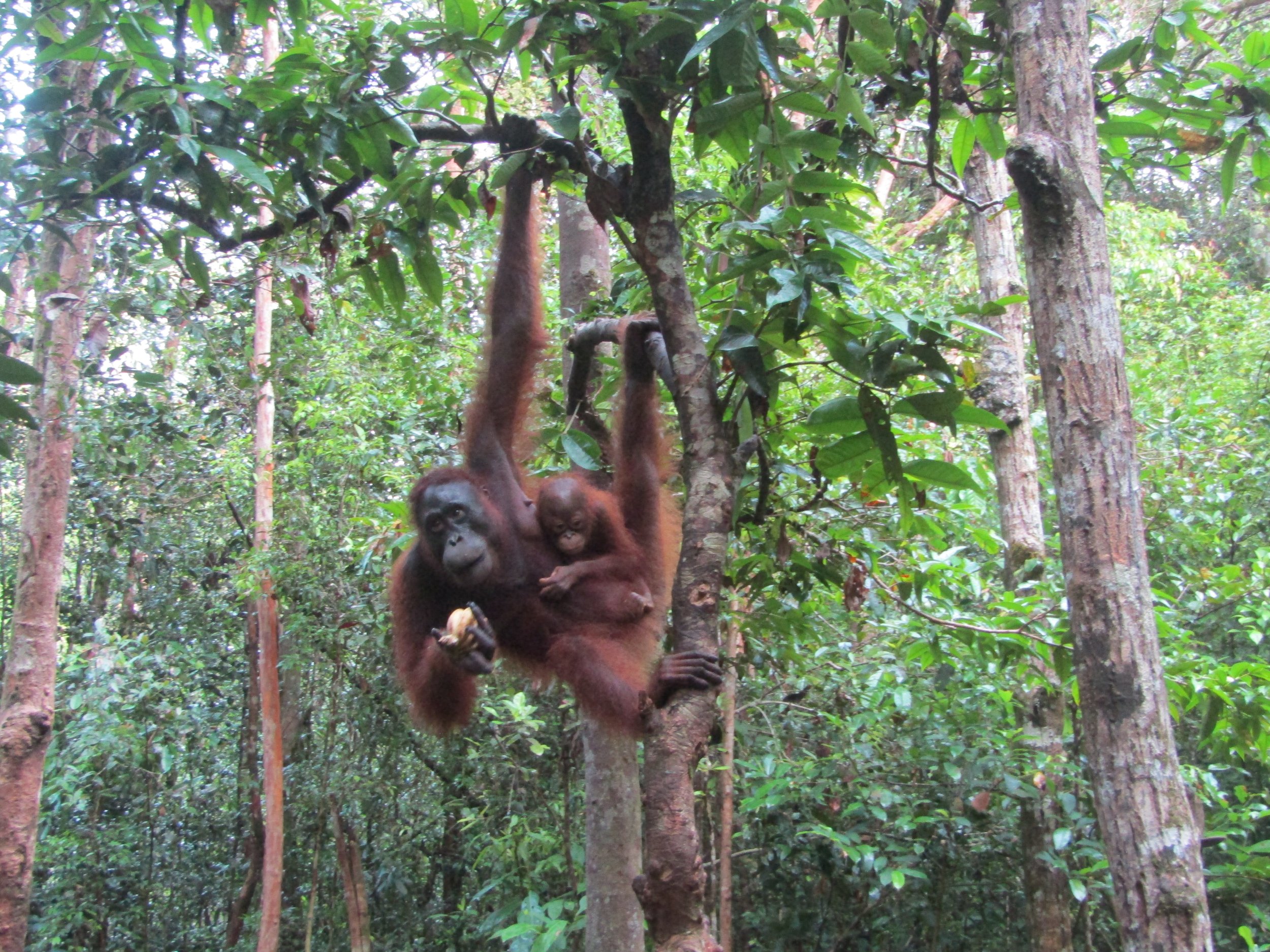
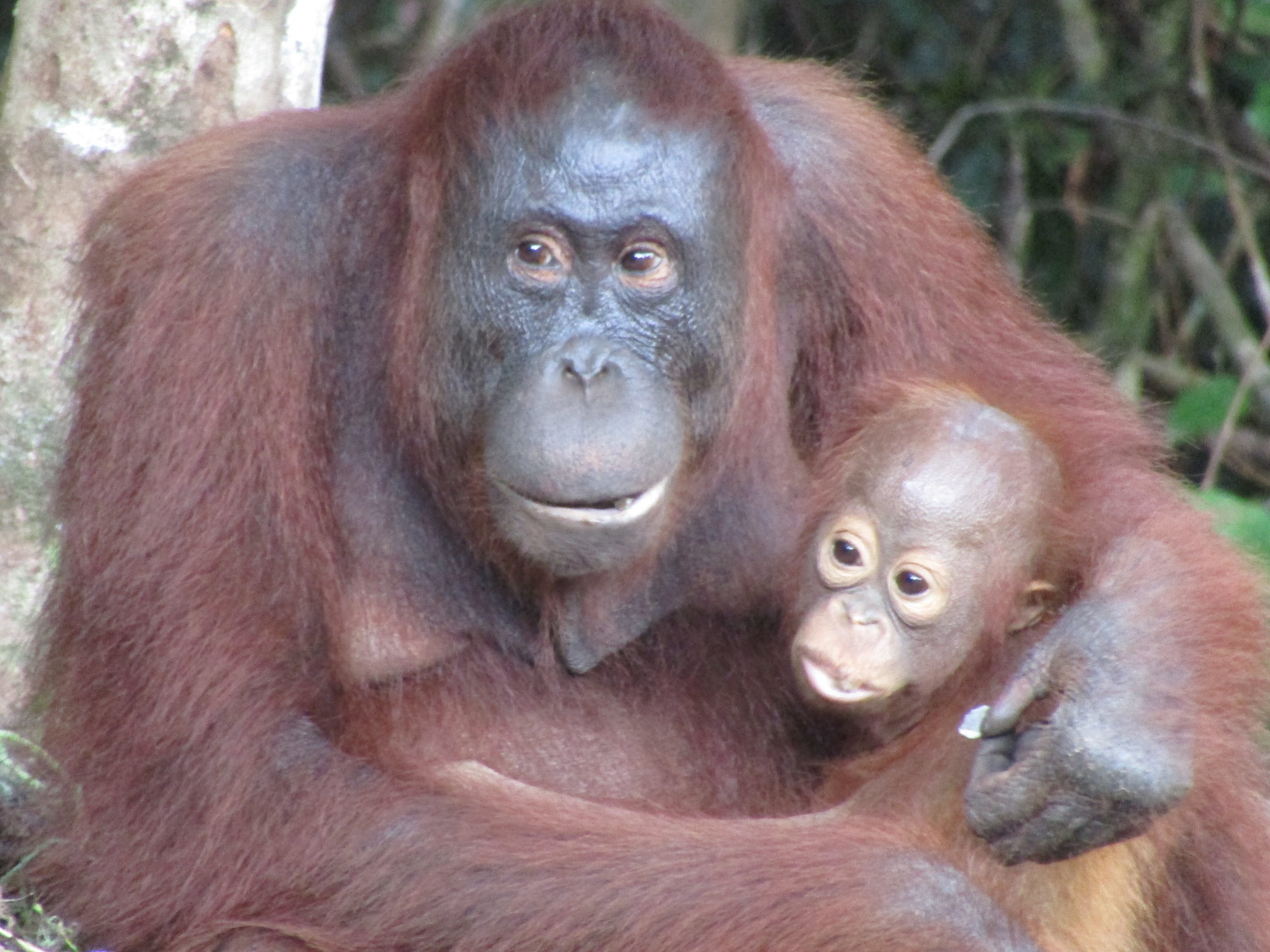
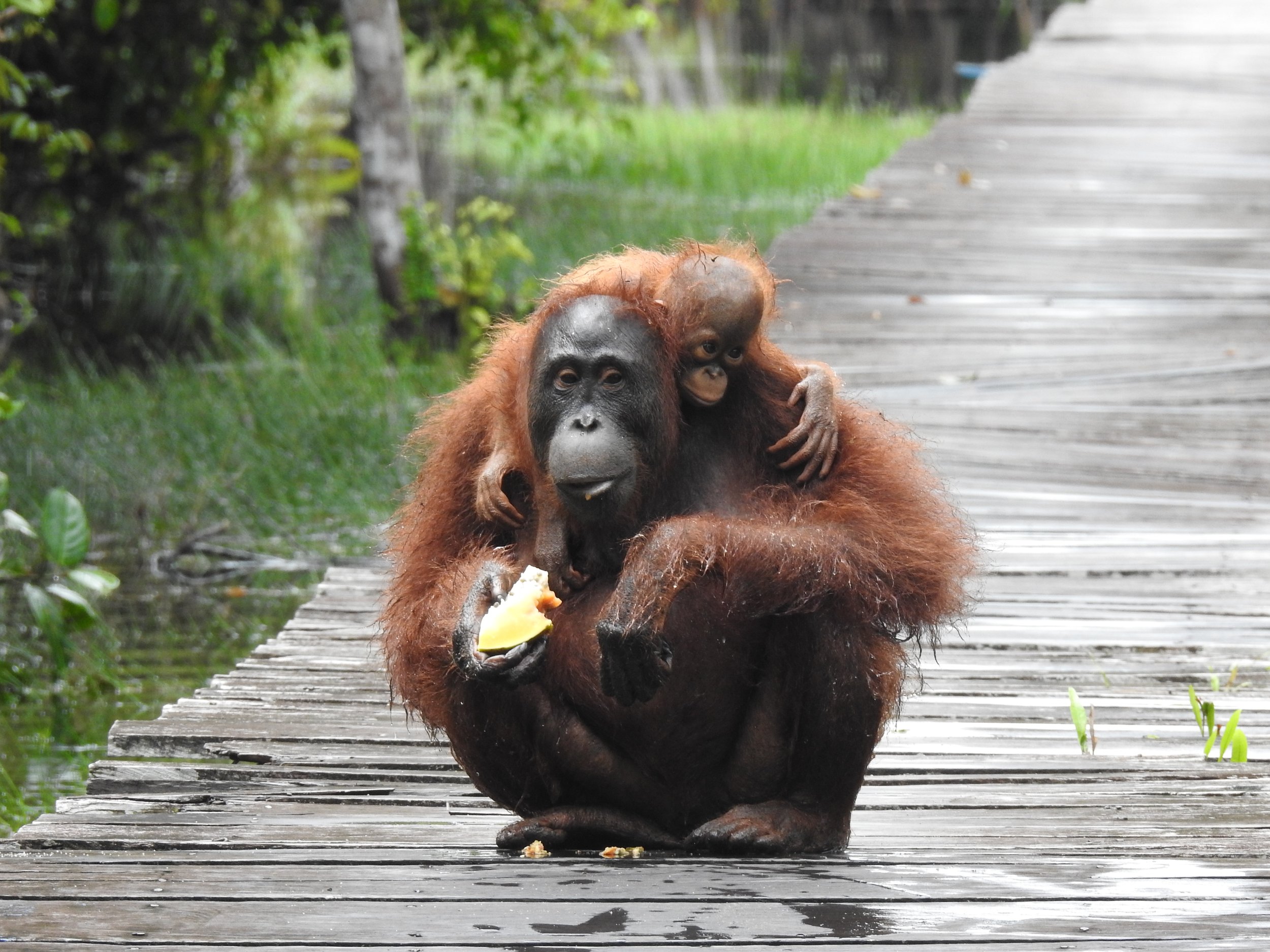
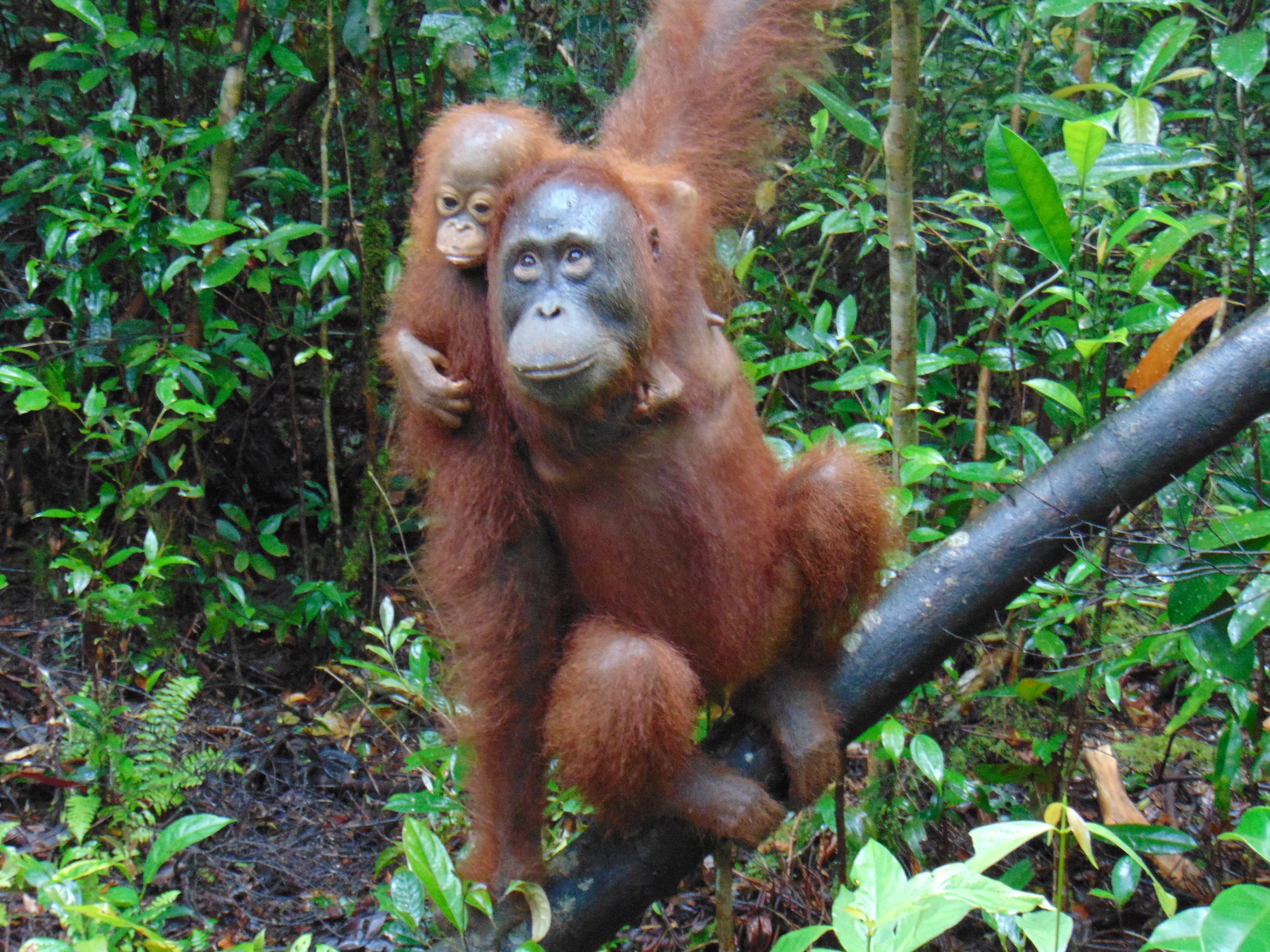
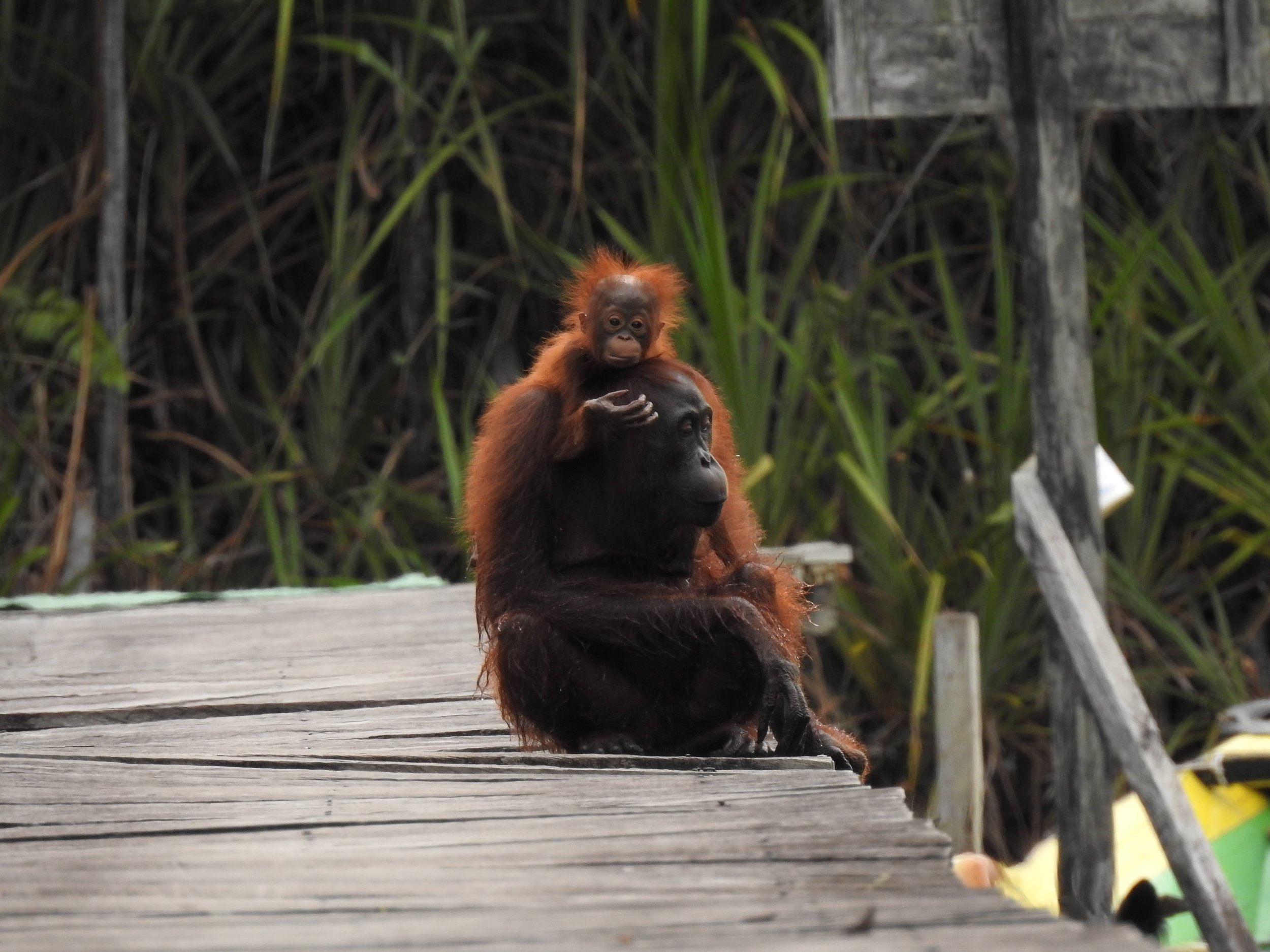
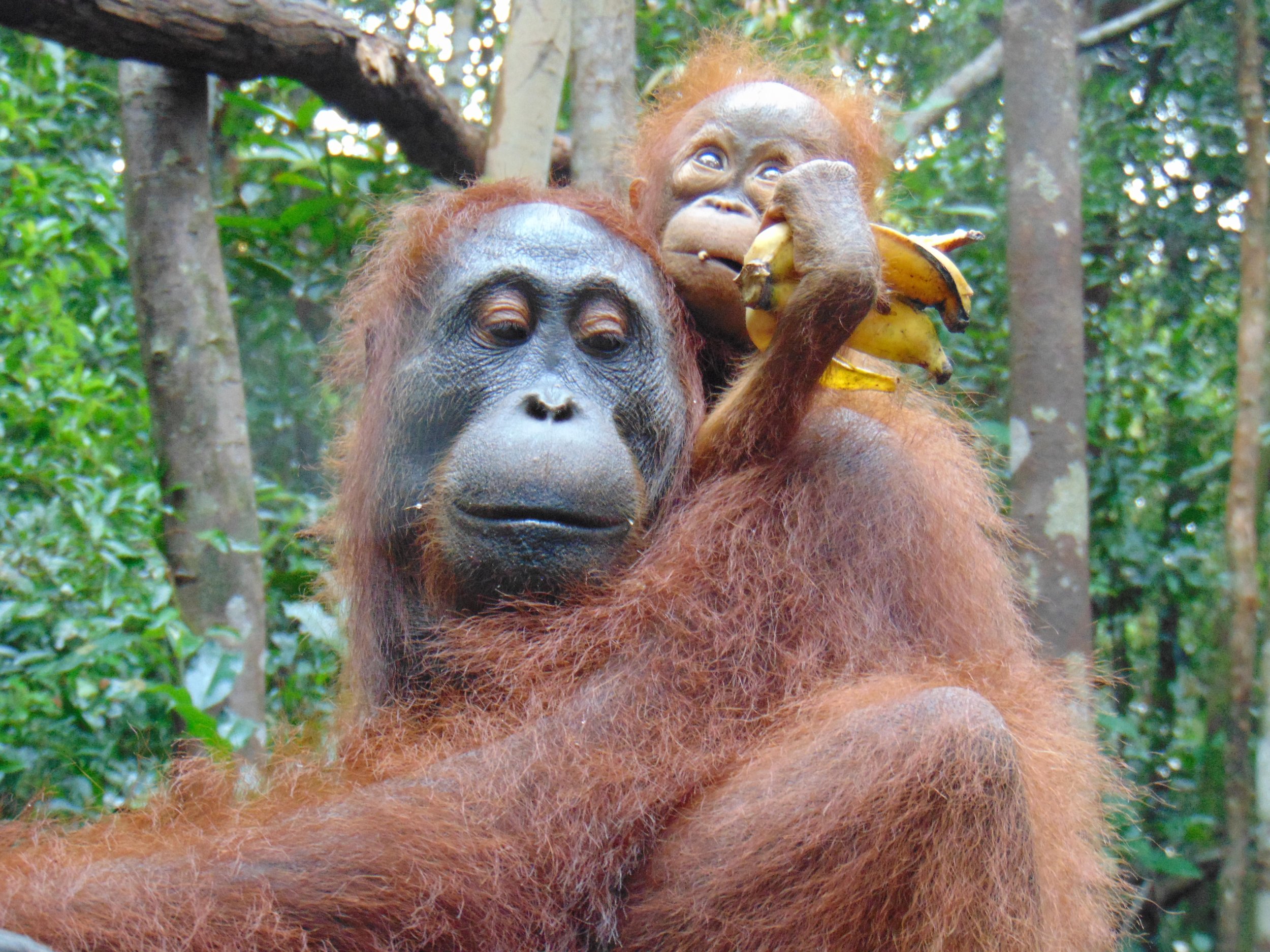
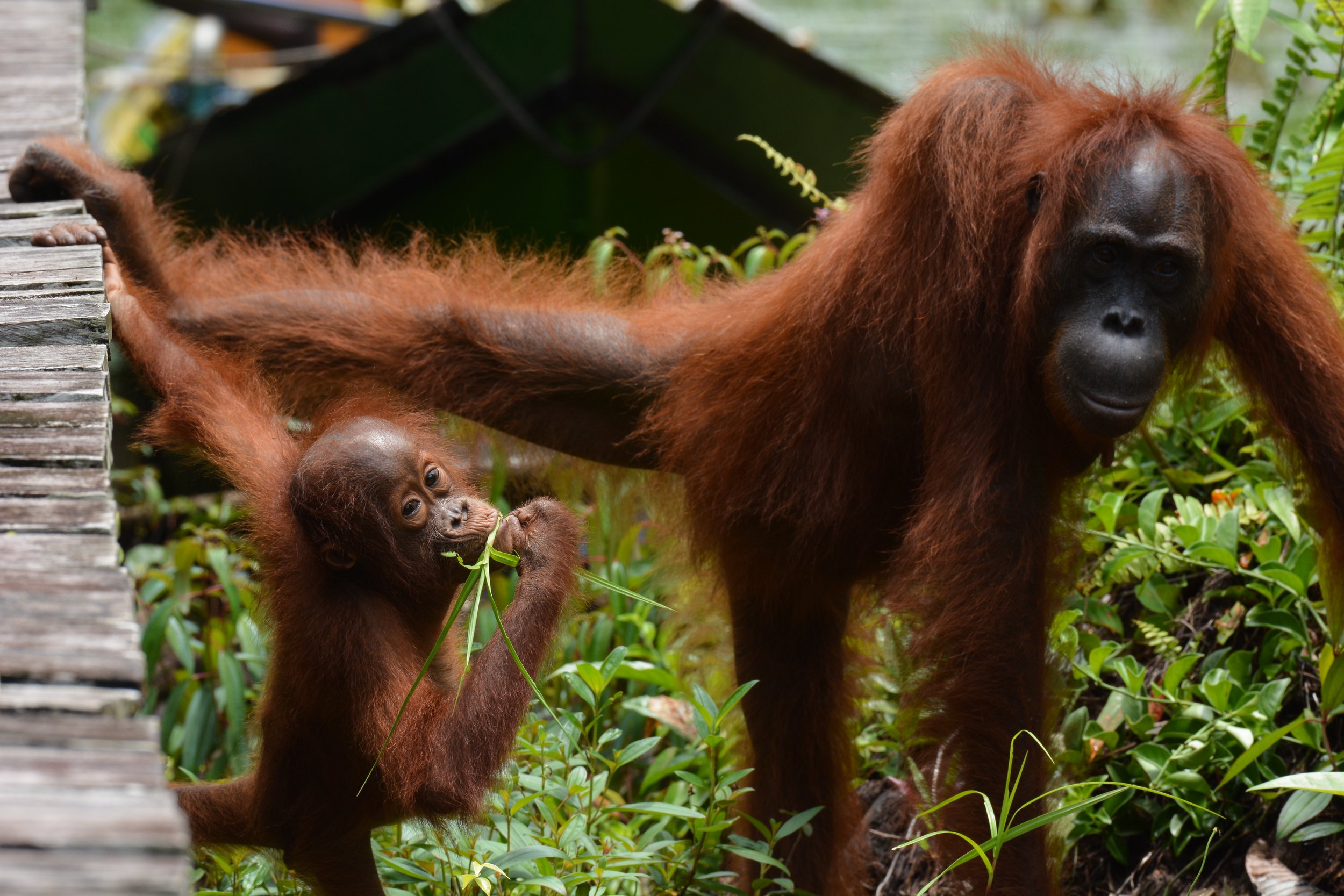
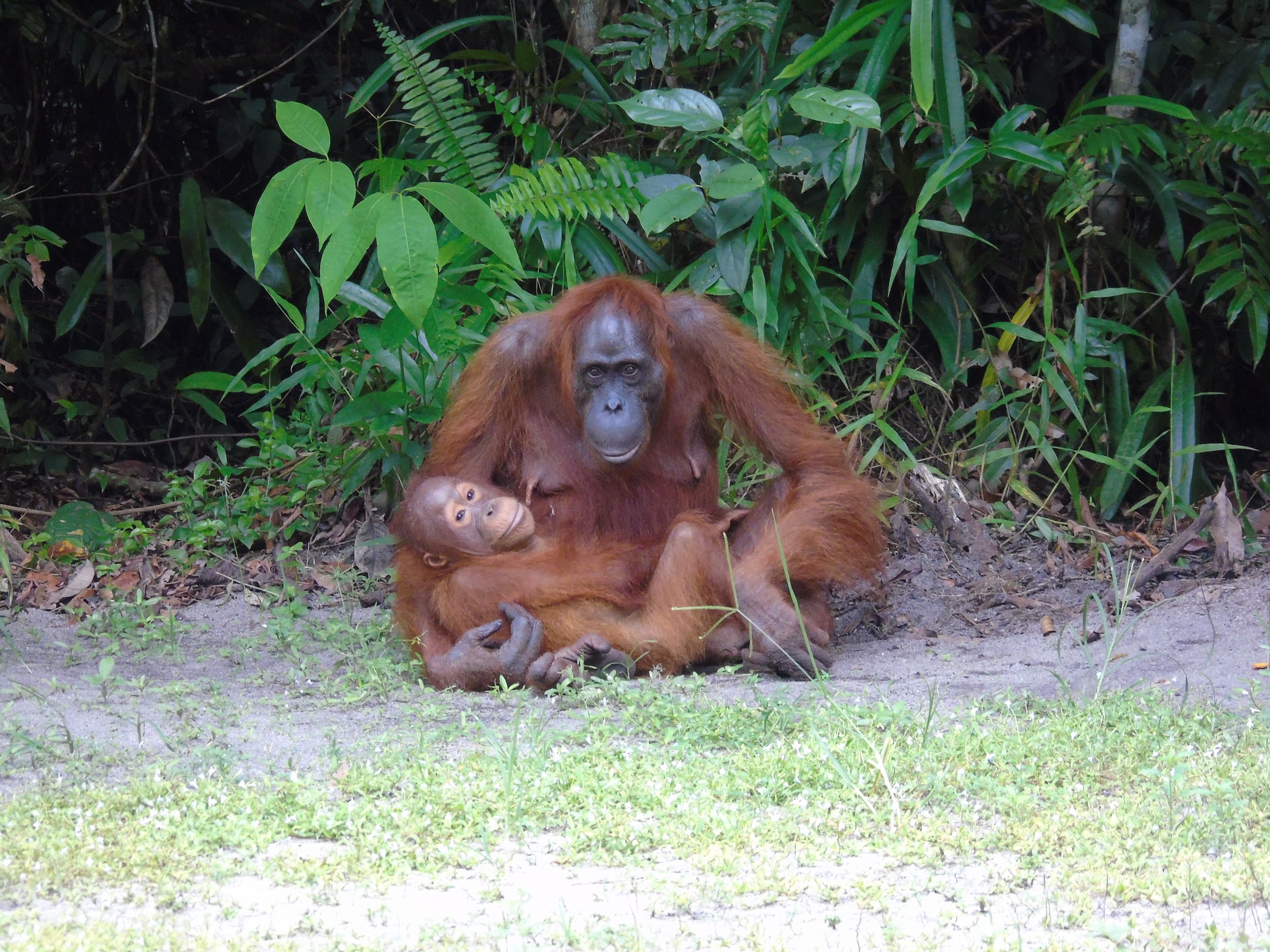
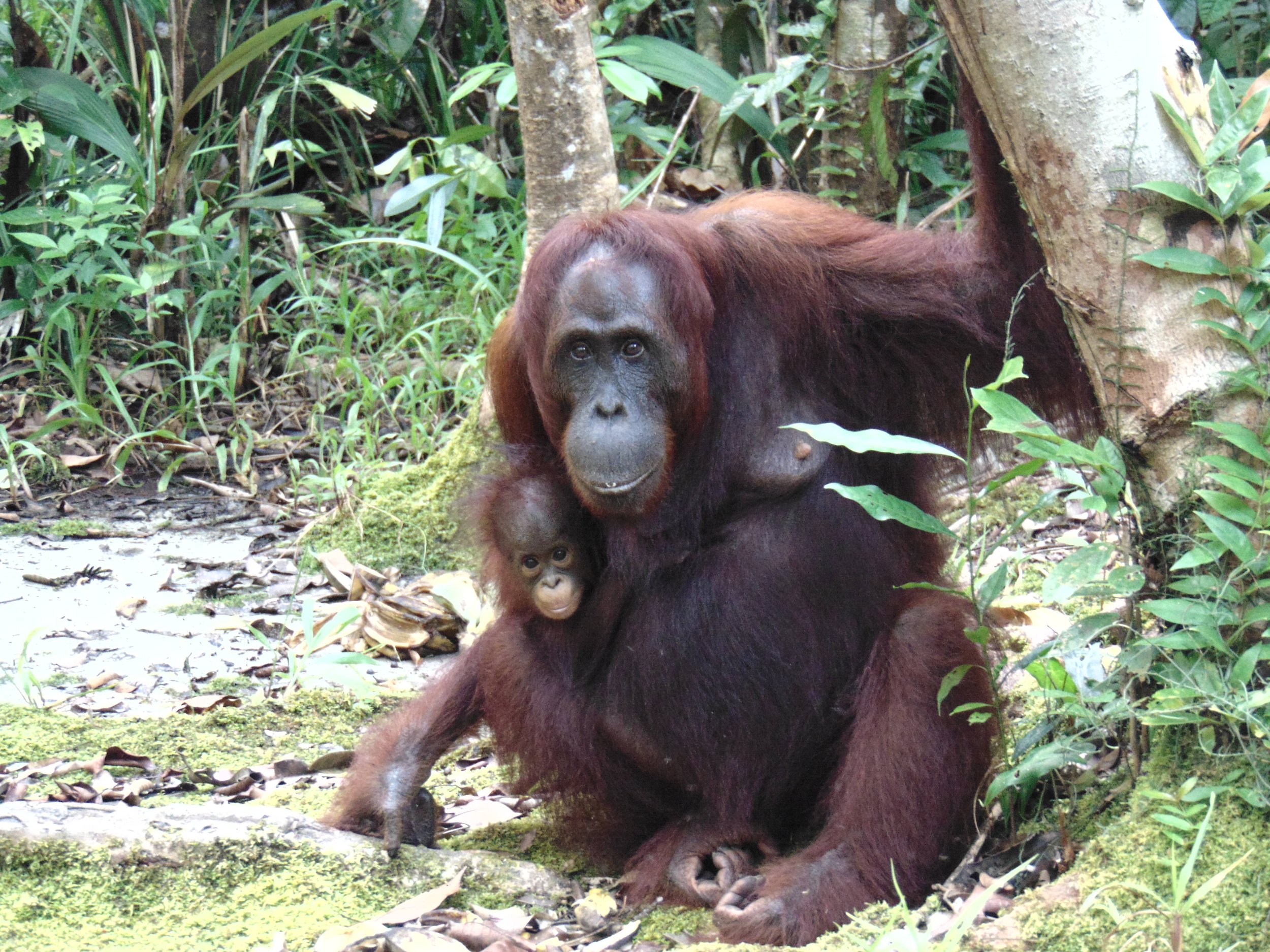
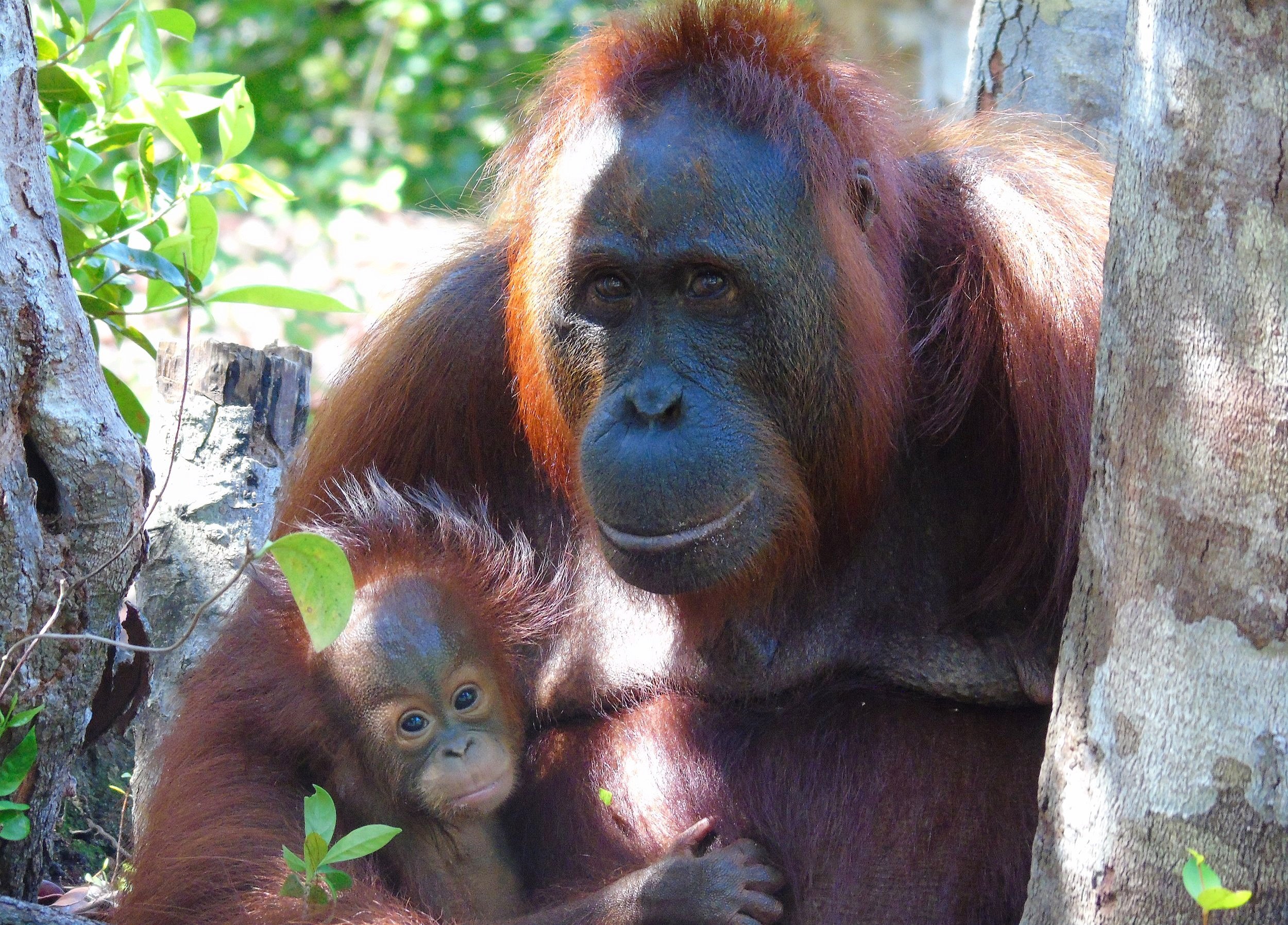
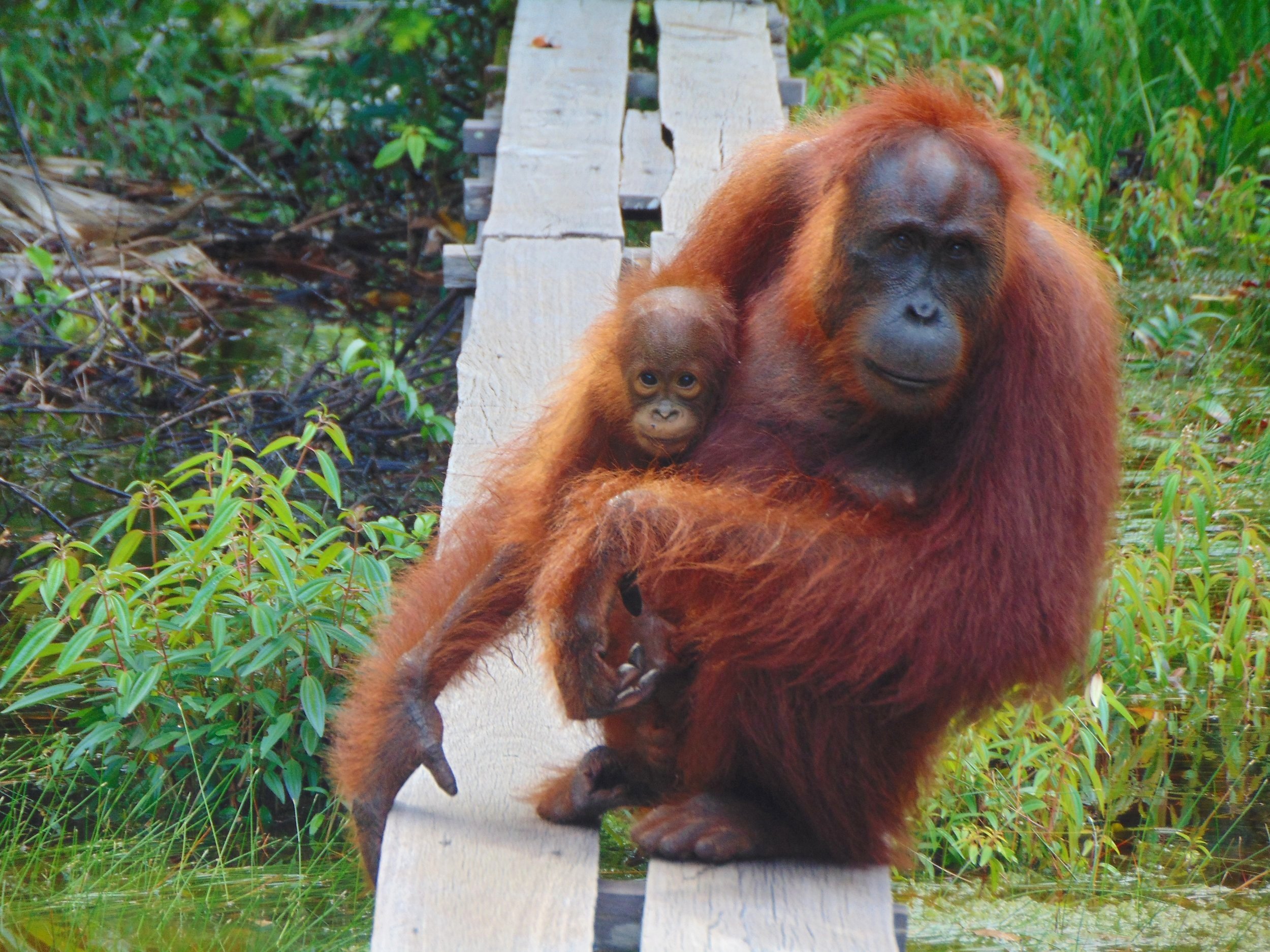
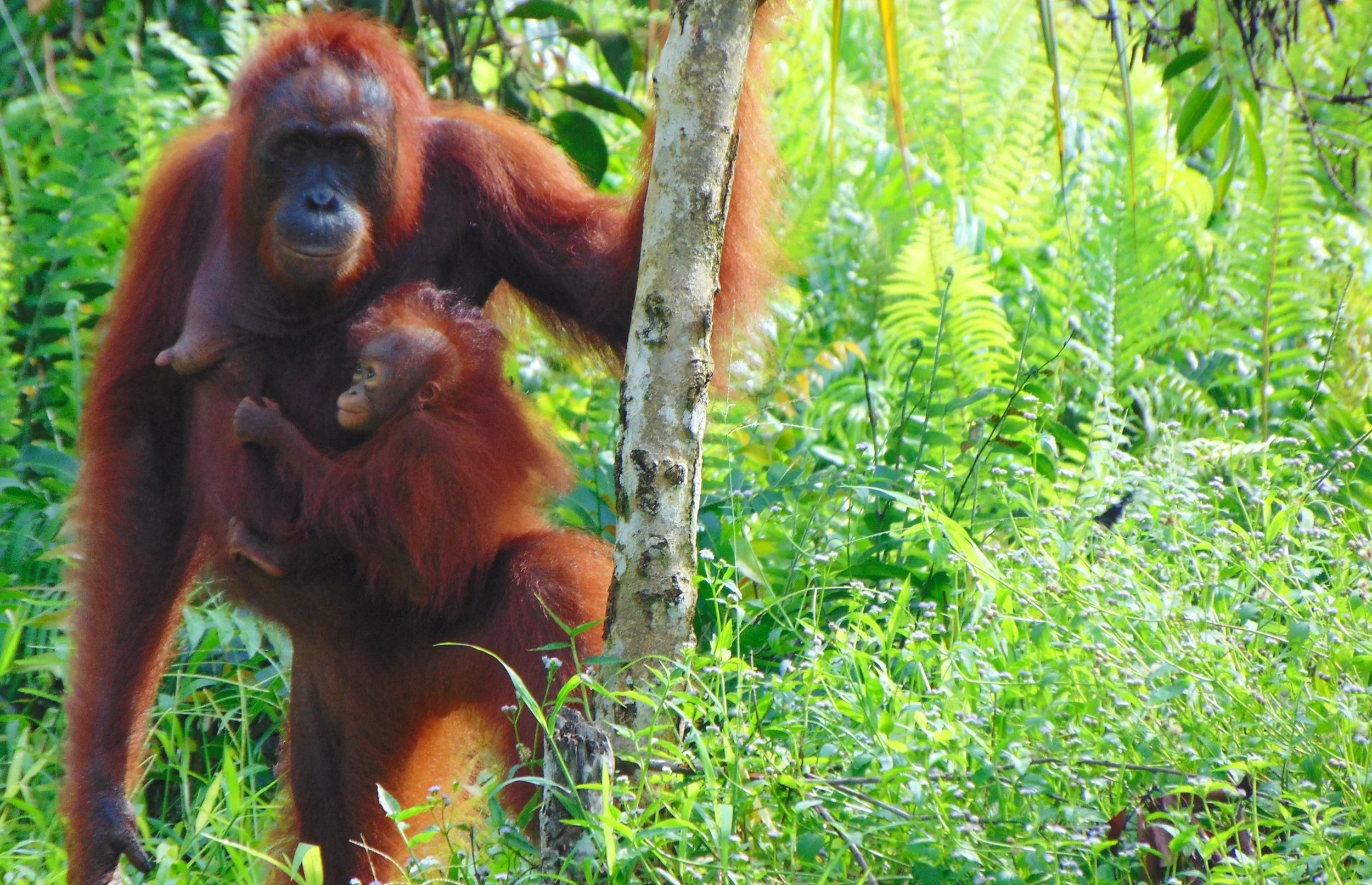
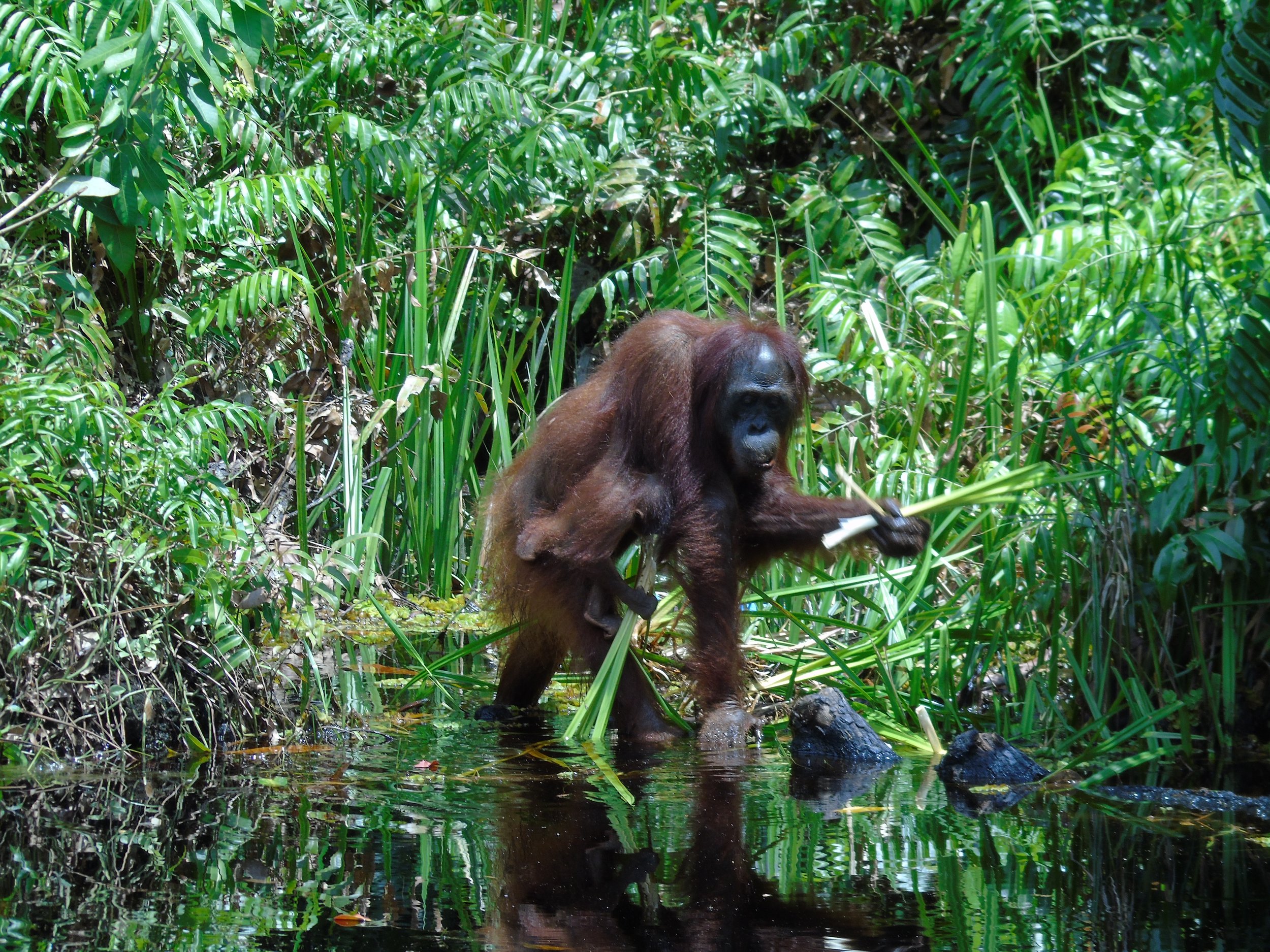
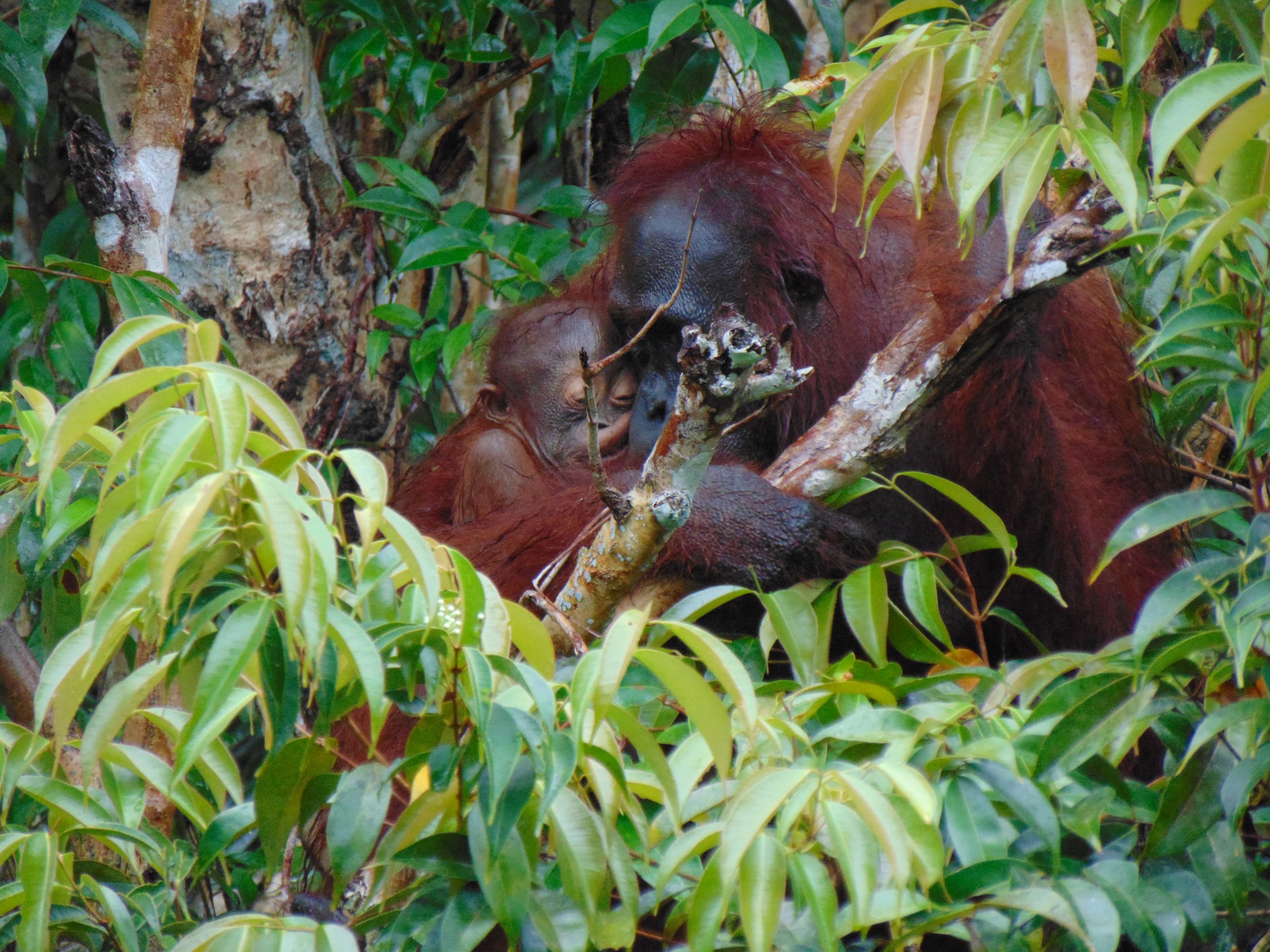
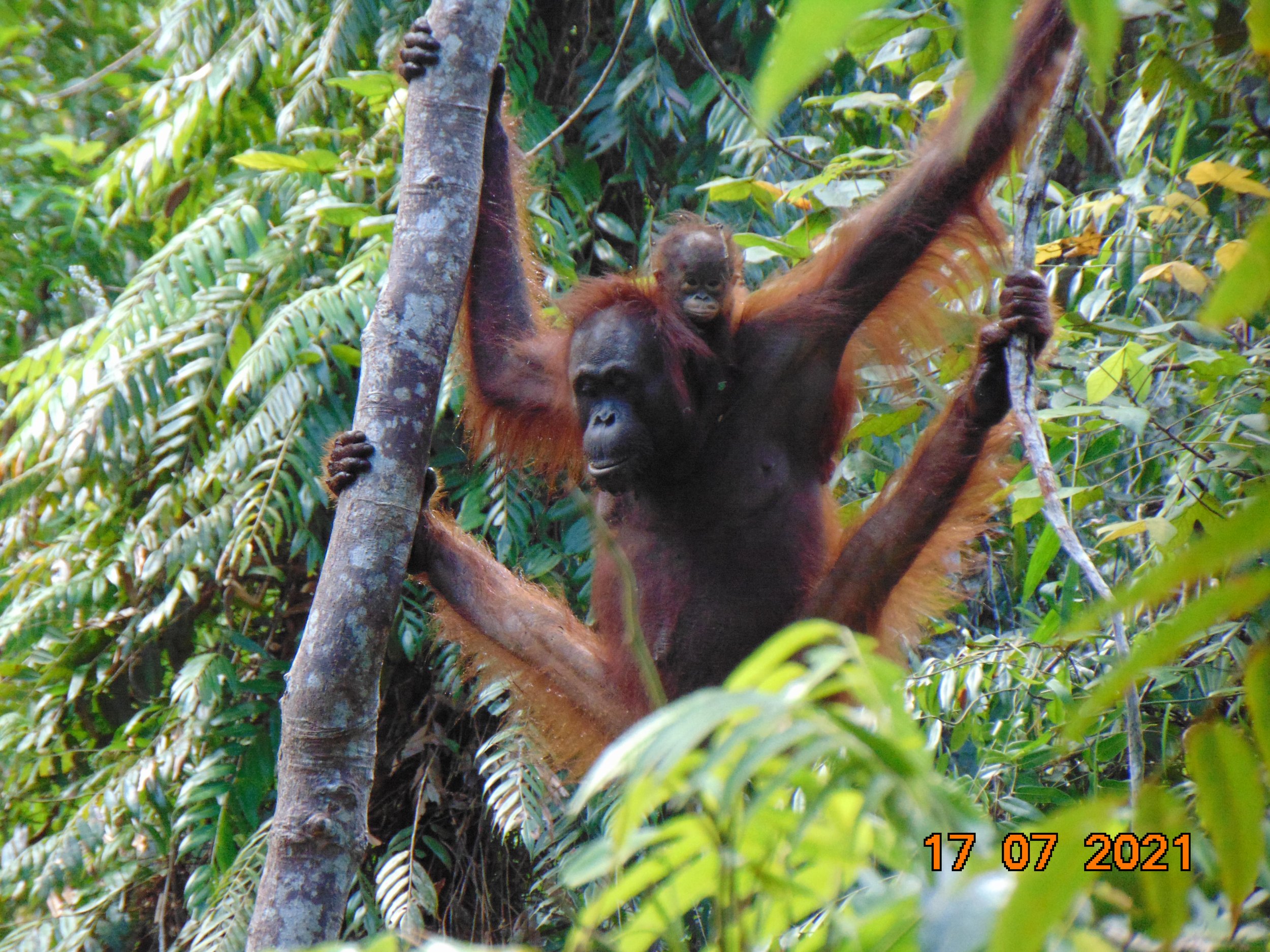
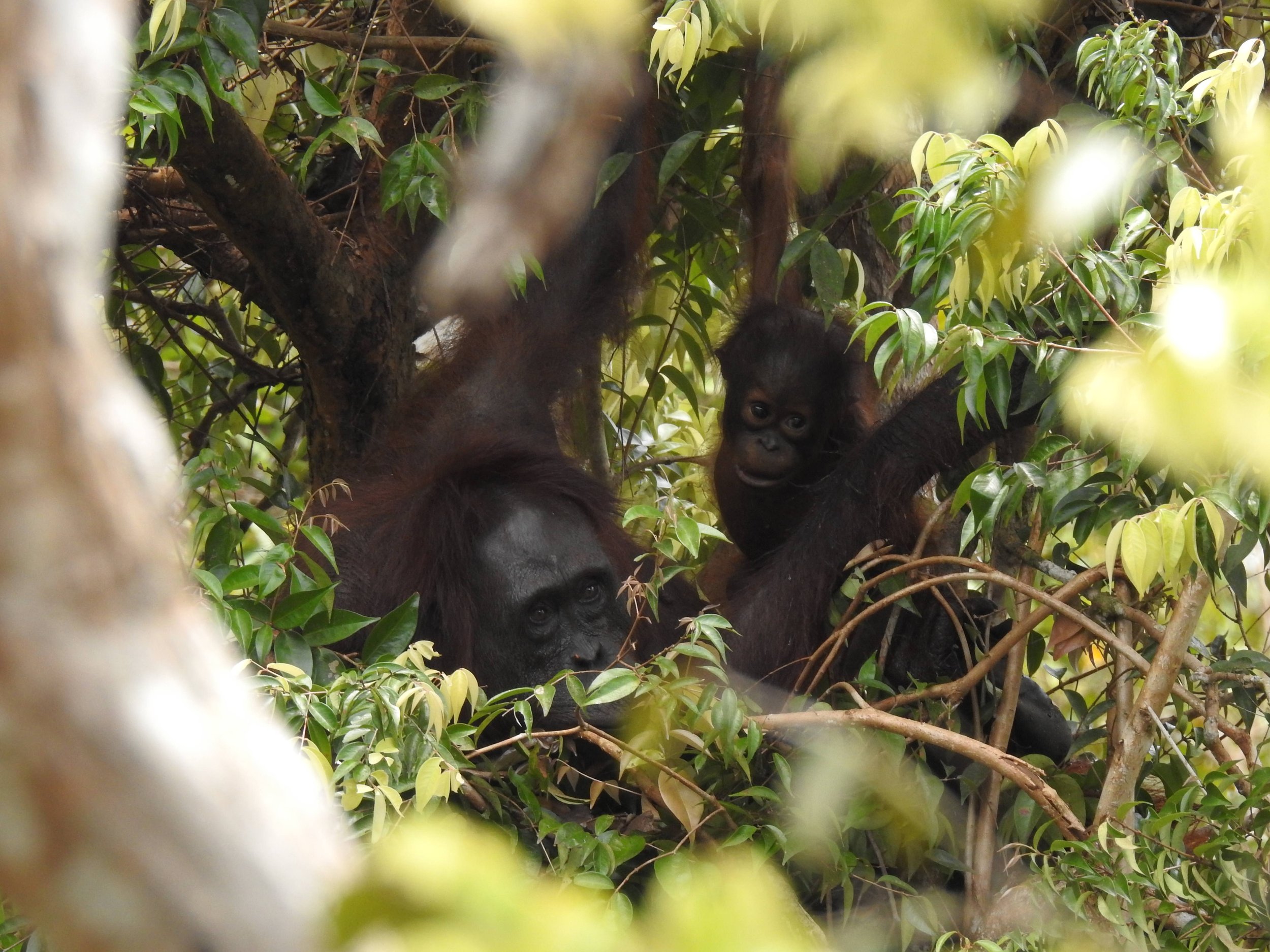
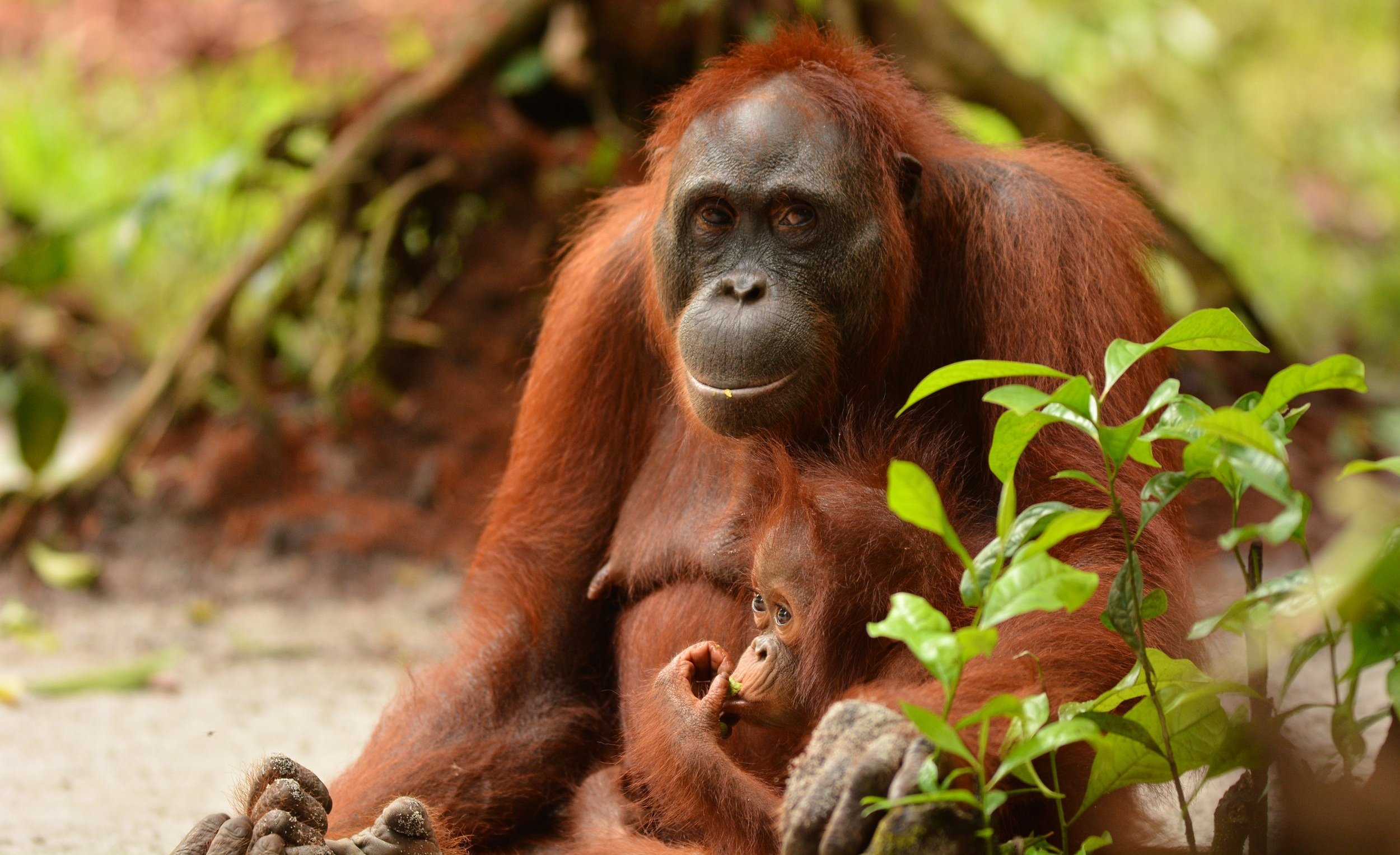
Curious orangutan Melon and her infant at Camp Gemini. Photo by Wawan, Orangutan Foundation

I also saw female orangutan, Melon, and her child at Camp Gemini, who came to see what was happening.’

Thank you Wawan for the beautiful photos.

More news soon!

Thank you, Orangutan Foundation

 Please consider a donation to support our work

Photos of orangutans’ rescue

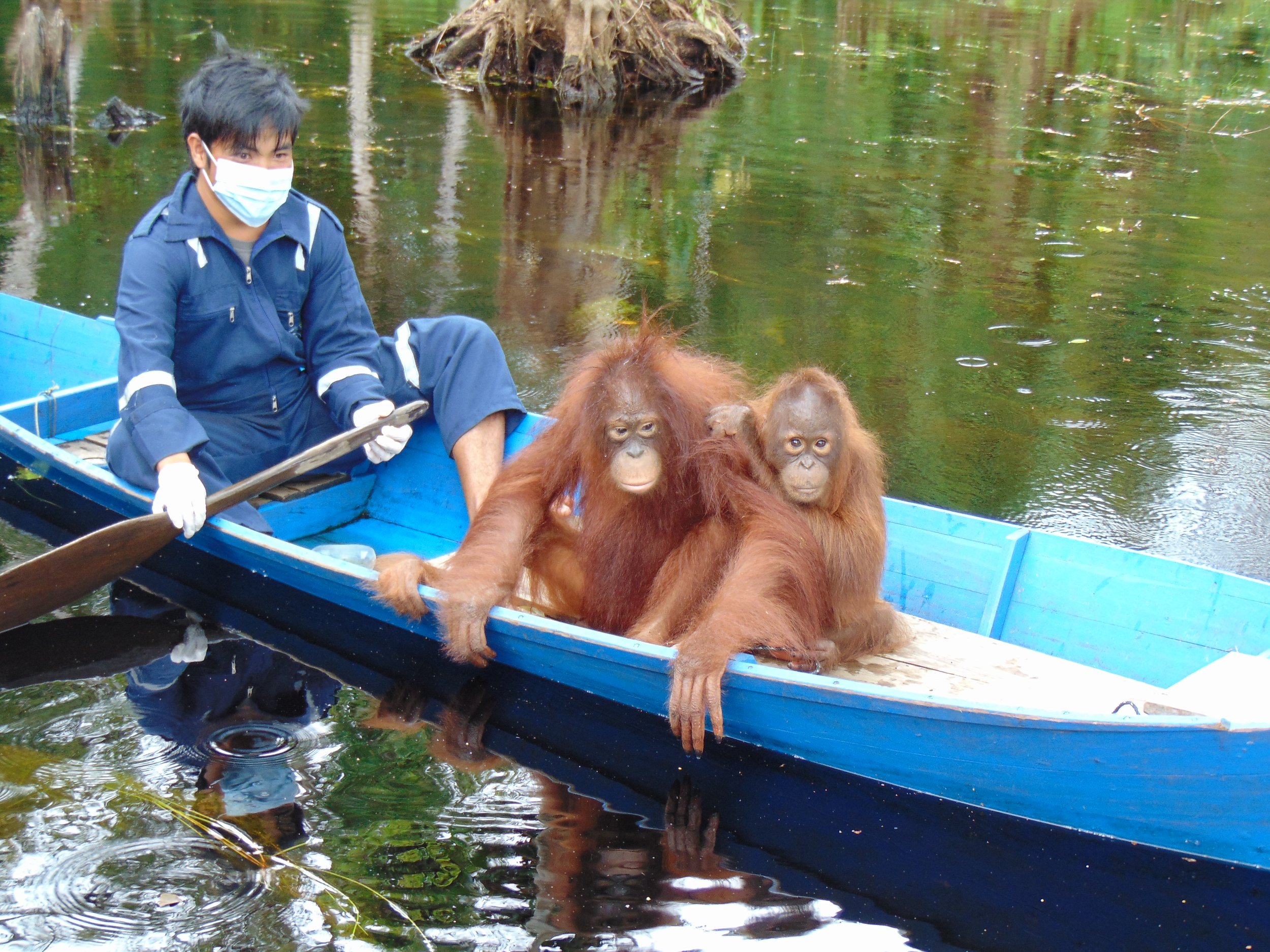
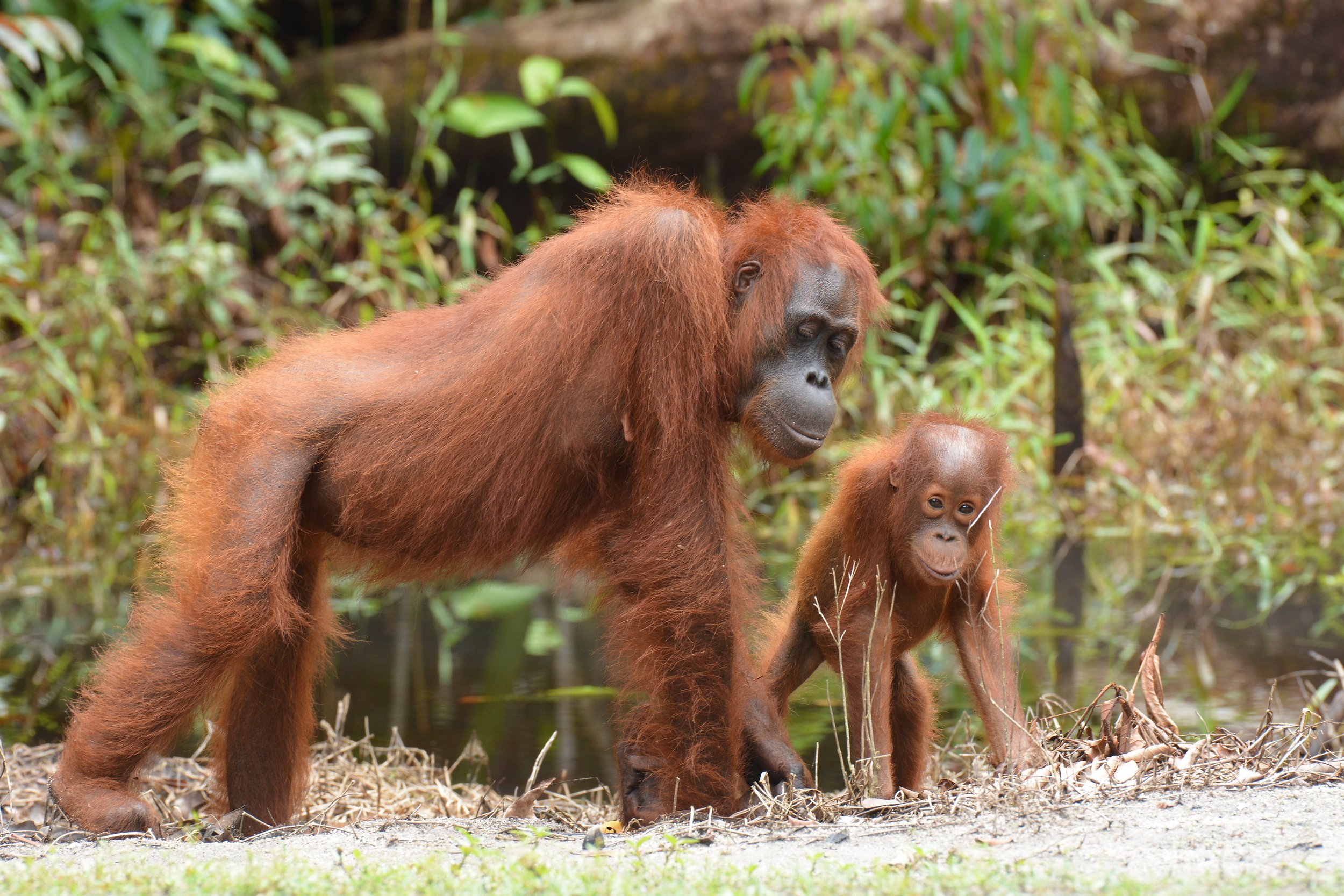
Here are the photos of the rescue, of a mother and infant, which we blogged about last month. Now, they are both safely in the Lamandau River Wildlife Reserve.

Female orangutan and her offspring before being rescued from Pendulangan Village in Indonesian Borneo

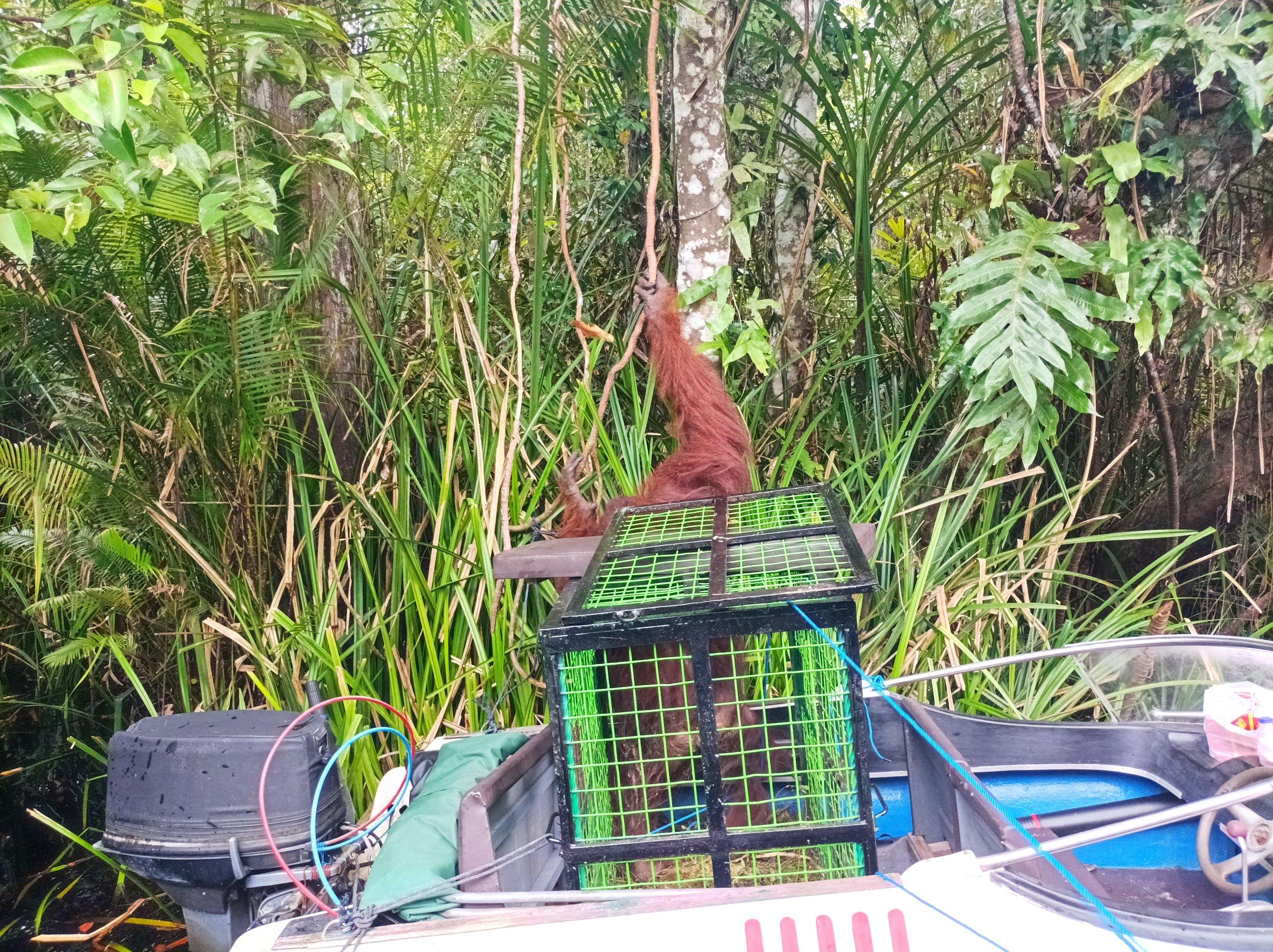
Orangutans being transported to the Wildlife Reserve by boat

Once in the wildlife reserve our vet checks the orangutans before release.


Pak Tigor, the Manager of the Orangutan Release Programme, opening the cage.

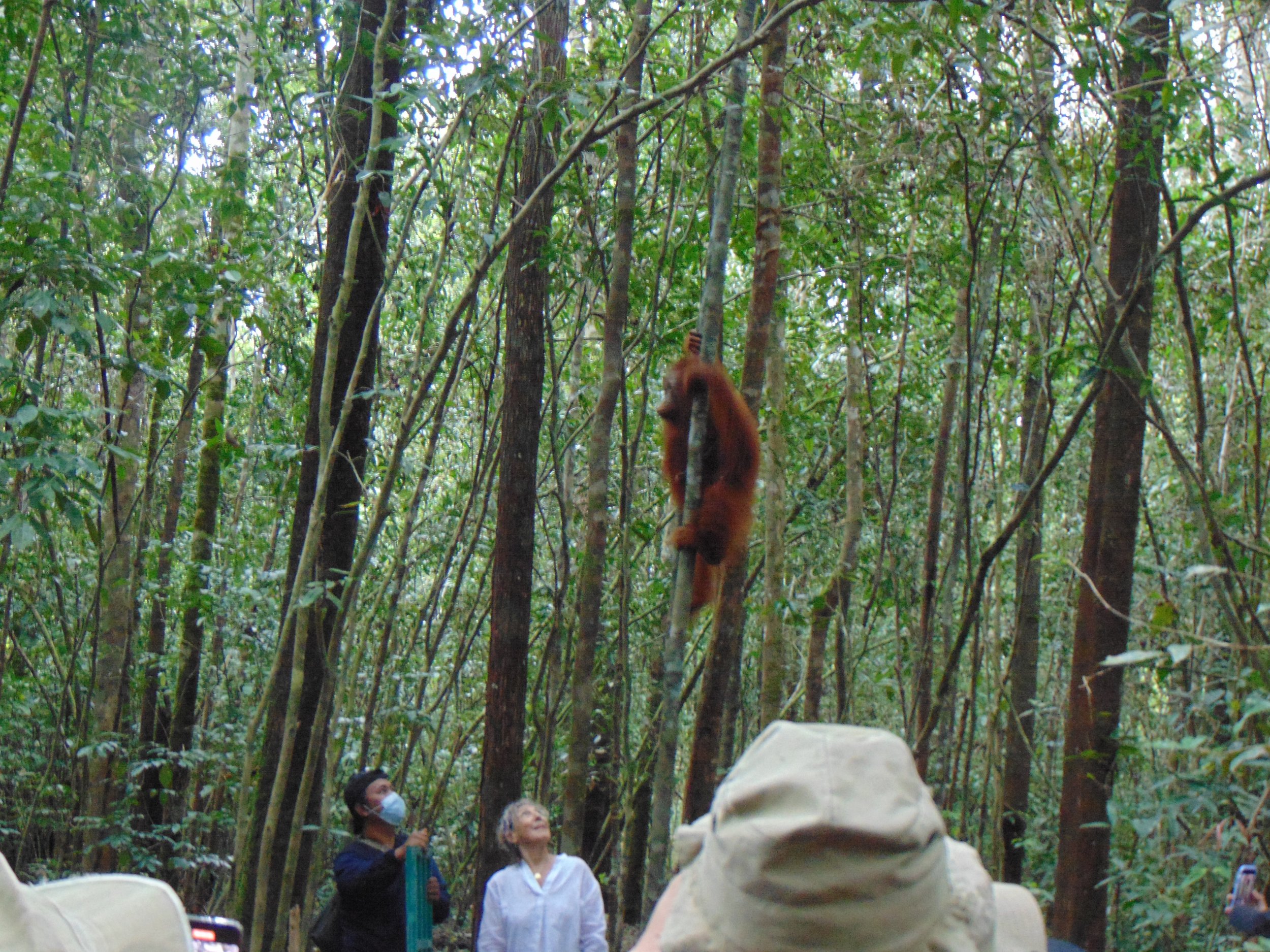
Both orangutans leave the cage as soon as they can and head for the trees

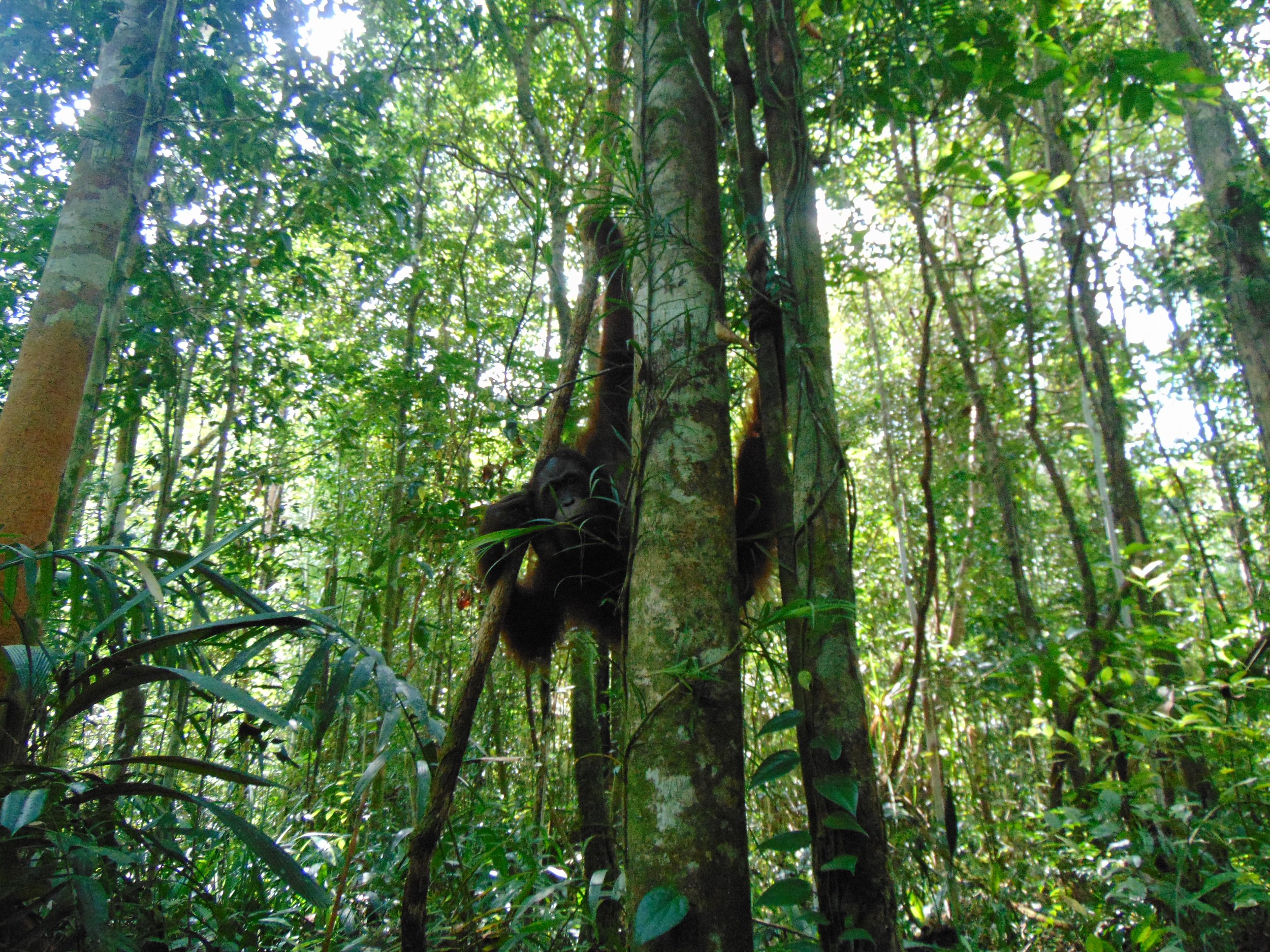
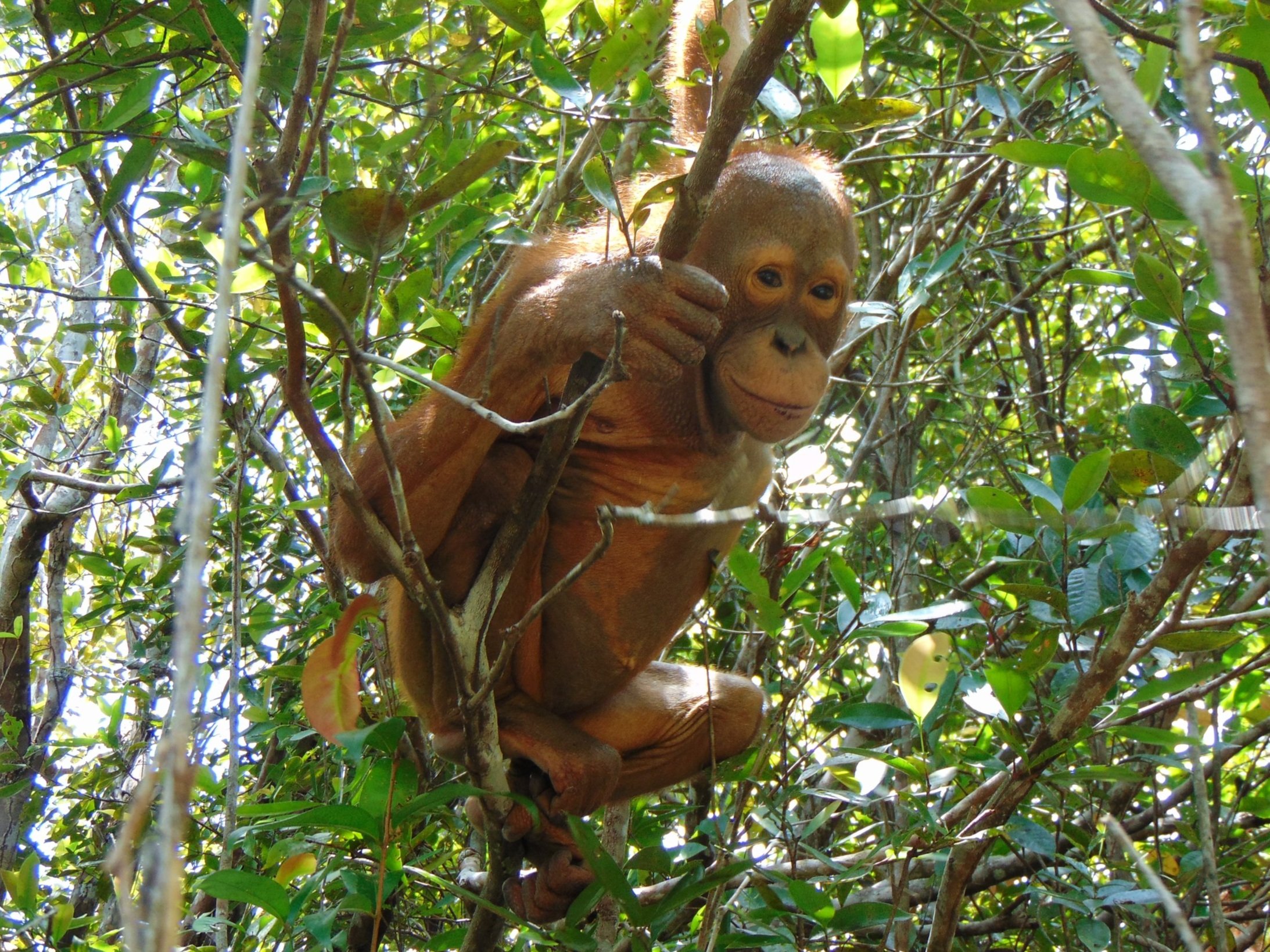
Back in the treetops of the wildlife reserve, where they belong.

Please consider a donation (donate here) to support our vital work.

Thank you,

Orangutan Foundation


Petition: Save Aceh’s forests – home to orangutans, tigers, rhinos and elephants

Over 1.2 million hectares of forest in Aceh, in the north of the island of Sumatra, are planned to be used for development (roads, mining, oil palm plantations and logging). These forests are home to orangutans, rhinos, elephants and tigers - critically endangered species. These forests are also vital for our own species’ future.

To find out more information and sign a petition - http://www.change.org/saveaceh

Thank you.


Birding in Borneo

This wonderful photo was taken by Arif, the manager of Pondok Ambung Tropical Forest Research Station, which is run by the Orangutan Foundation in cooperation with the head of Tanjung Puting National Park, (Indonesian Borneo).

Black Naped Monarch Flycatcher in nest taken at Pondok Ambung

The bird in the nest is the Black Naped Monarch Hypothymis azurea. It is a small species of flycatcher and the female is different in having a brown back.

The park authorities have invited stakeholders to work together to produce a book on the bird species found in the Park. The whole project will be a joint effort, from collecting photos to designing the layout. Arif attended the first meeting to share ideas and discuss the book’s content.

In 2009, we gave a research grant to Harri Purnomo (Bogor Agriculture University), an Indonesian student, whose study of the diversity of birds at Pondok Ambung Tropical Forest Research Station, found 107 species. It is thought that over 200 bird species are found within the Park. We will be helping to identify the different species of birds in photographs that are to be included in the book. Watch this space for news on the book.

Steppes Discovery are running Orangutan Conservation Tours to the National Park, which includes a visit to the Pondok Ambung Research Station. For more details about this once-in-a-lifetime trip click here.