Orangutans

Oil boom threatens the last orang-utans

This article was published in the Independent newspaper today and covers the urgent situation in the Tripa Swamps, Aceh Sumatra. Read the full article with photos 'Oil boom threatens the last orang-utans'. 'A famous British company, Jardines, is profiting as the lowland forest – which shelters the few remaining orang-utans – is razed to make way for massive palm oil plantations, reports Kathy Marks in Tripa, Indonesia.

Tuesday, 23 June 2009

Perched halfway up a tree near a bend in the Seumayan River, a young orang-utan lounges on a branch, eating fruit. In the distance, smoke rises from an illegal fire, one of dozens lit to wipe out the virgin rainforest and replace it with oil palm plantations.

It's burning season on Indonesia's Sumatra island, where vast tracts of vegetation are being torched and clear-felled to meet the soaring global demand for palm oil. The pace is especially frenzied in the peat swamp forests of the Tripa region, one of the final refuges of the critically endangered orang-utan – and a company owned by one of Britain's most venerable trading groups is among those leading the destructive charge.

Prized for its productiveness and versatility, palm oil is used in everything from lipstick and detergent to chocolate, crisps and biofuels. Indonesia and Malaysia are the world's biggest palm oil producers – but they also shelter the last remaining orang-utans, found only on Sumatra and Borneo islands in the same lowland forests that are being razed to make way for massive plantations.

In Indonesia, one of the largest palm oil companies is Astra Agro Lestari, a subsidiary of Astra International, a Jakarta-based conglomerate which is itself part of Jardine Matheson, a 177-year-old group that made a fortune from the Chinese opium trade and is still controlled by a Scottish family, the Keswicks, descendants of the original founders.

Conservation groups are targeting supermarkets in Britain to alert consumers to the effects of the palm oil explosion. But The Independent can reveal that Jardines, registered in Bermuda and listed on the London Stock Exchange, is implicated through Astra Agro in ripping out the final vestiges of orang-utan habitat.

Environmentalists are dismayed by the activities of Astra Agro, one of the main companies operating in Tripa under permits that were awarded during the 1990s by the notoriously corrupt Suharto government. They point out that Tripa belongs to the nominally protected Leuser Eco-System, renowned for its exceptional biodiversity, and claim that the plantation businesses are contravening a logging moratorium as well as engaging in illegal practices including burning land.

Greenpeace UK says: "It's scandalous that a British company is bankrolling the destruction of Indonesia's rainforests and peatlands. We need to see big firms like Jardines withdrawing investment from companies involved in rainforest clearance."

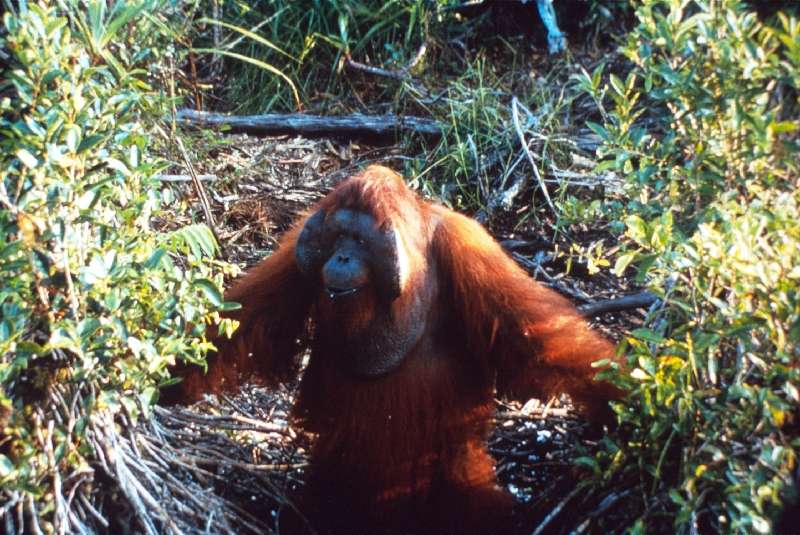
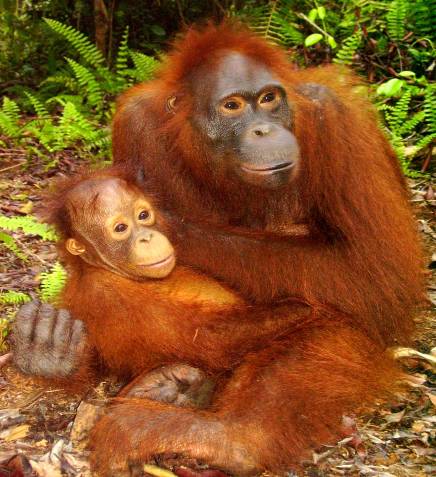
Orang-utans are vanishing at an alarming rate in Borneo but in Sumatra their situation is even more precarious. The Sumatran orang-utan – more intelligent and sociable than its Borneo cousin and with a unique culture of tool use – is likely to be the first great ape species to go extinct.

There are believed to be just 6,600 individuals left, mostly living in unprotected areas of Aceh province. Their lowland forests remained relatively undisturbed during the long-running separatist war in Aceh, but since a peace agreement was signed in 2005, it has been open season.

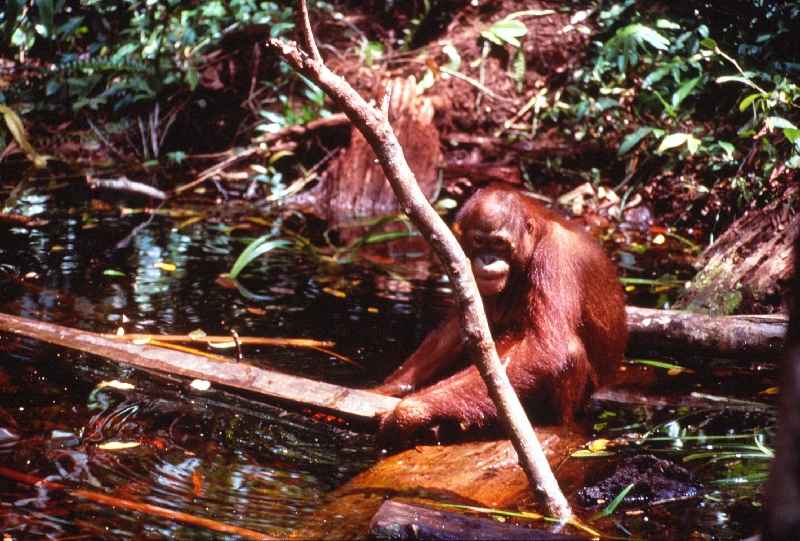
The primates are now splintered across 11 pockets of jungle, with only three populations considered viable. Another three, including Tripa, are borderline viable. Elsewhere, the orang-utans – which use sticks to extract insects from trees and seeds from fruit – are effectively extinct. As their territory shrinks, along with their food supplies, the apes are increasingly coming into conflict with humans. Farmers shoot those caught raiding crops; babies are captured and sold as pets. Adults discovered in oil palm plantations may be hacked to death with machetes.

In Tripa, more than half of the 62,000 hectares of ancient forest has gone. As well as being home to endangered species including the sun bear and clouded leopard, the peat swamps acted as a protective buffer during the 2004 tsunami. They also hold gigantic carbon stocks which are now being released, exacerbating climate change. "If you can't save Tripa, what can you save?" asks Denis Ruysschaert, forest co-ordinator for PanEco, a Swiss environmental organisation.

Sumatra is a beautiful island, with jungle-clad mountains and picturesque villages where long-horned water buffalo wander. But it is difficult not to be shocked by the colonisation of the landscape by one short, stumpy tree: oil palm. The monoculture is a desolate sight, stretching for miles, relieved only by charred hillsides dotted with tree stumps – cleared land awaiting yet more oil palms. Trucks rattle past, laden with the prickly red fruit from which oil is extracted. In Aceh, they call it the "golden plant" – the cash crop that is lifting the province out of poverty and helping it rebuild after the tsunami. "Recently there's a frenzy to plant oil palm," says Fransisca Ariantiningsih, who works for Yayasan Ekosistem Lestari (Yel), an Indonesian conservation group.

On Sumatra's west coast, a small-time farmer, Raluwan, is nursing his seedlings. Ten families, he explains, have logged and burnt 100 hectares of land. Each hectare will yield four tonnes of fruit, fetching 800 Rupiah (47 pence) a kilo."I used to grow chilli, but palm oil is a very economical crop," he declares. "You don't need much pesticide or fertiliser." Raluwan knows orang-utans live in the nearby forests. "I don't care," he says. "I've got to feed my family."

However, many are missing out as the industry grows to meet demand from Europe, the US, China and India. Most plantation workers are migrants from Java and in Tripa, communities that depend on the swamps for water, fish and medicinal plants are suffering.

Kuala Seumayan is hemmed in by plantations. Villagers say they no longer have space even to bury their dead. "Since the forest has been chopped down, it's difficult to get food," says one elder, Darmizi. In the Seumayan River, youngsters dive for freshwater clams while children squeal and splash in the placid brown waters. It's an idyllic scene, but something is missing: the sights and sounds of the forest. The only wildlife consists of a hornbill and two long-tailed macaques. Indrianto, a forestry manager, says: "This used to be all peat swamp, with many trees and animals. Now it's all oil palm. Before, I heard animal calls. Now I hear only chainsaws."

By chance, we spot an orang-utan in a solitary tree. Tripa has just 280 apes left. The young male, its fur glowing in the afternoon sun, curls one arm lazily over an upper branch.

A black slick floats on the water: sludge from one of many canals dug to drain the swamps. The arduous procedure is considered preferable to planting on fallow land, which would require negotiations with landowners. This way, the companies also get to sell the timber. As you fly over Tripa, the scale of destruction becomes clear. The green tangle of the forest, in all its riotous variety, abruptly gives way to giant rectangles, laid out with geometrical precision and studded with thousands of palms.

Riswan Zen, a spatial analyst for Yel, last flew over in 2007. "So much forest gone, and all in two years, my God," he says, gesticulating at a satellite imaging map. "If nothing is done, there'll be no forest left in one to two years."

Tripa, designated a priority conservation site by the UN, could hold 1,500 orang-utans if the forest was allowed to regenerate. Prospects seem slim, although Indonesia – one of the world's biggest emitters of greenhouse gases, thanks to deforestation – claims to be committed both to saving the orang-utan and combating climate change.

Fewer than a quarter of Indonesian producers have joined the Roundtable on Sustainable Palm Oil, a global organisation promoting sustainable practices. (Astra Agro is not among them.) Even in Aceh, where Governor Irwandi Yusuf, a former rebel leader, has proclaimed a "Green Vision", authorities seem unwilling to crack down on the powerful oil palm companies.

So far, Jardines, whose colourful history inspired a series of novels by James Clavell, has resisted pressure to rein in its Indonesian subsidiary. In a statement to The Independent, Jardines – whose interests include the Mandarin Oriental hotels and Asian branches of Starbucks and IKEA – said Astra Agro's plantations "function in full compliance with ... environmental impact studies".

Astra Agro says it plans to develop only half of its 13,000 hectares in Tripa because of conservation concerns, and it denies any illegal activity.

Ian Singleton, a Briton who heads PanEco's Sumatran Orang-utan Conservation Programme, has no doubt that oil palm is the biggest threat to the orang-utan: "I see the orang-utan as a test case. Are we serious about trying to conserve the planet's eco-systems? If we are, let's prove it by saving a species like the orang-utan. We know where the orang-utans are; all we have to do is protect the forests. If we're serious about conservation, this is where we start."

At a glance: Jardine Matheson

*Founded by two Scottish traders in Canton, China in 1832, it was the first British trading company to smash the East India Company's Asian monopoly.

*Founder William Jardine was known as "the iron-headed old rat" for his toughness and asperity.

*The company's fortunes were founded on smuggling huge quantities of opium into China, creating millions of addicts.

*When the Chinese fought back, Jardine persuaded the British government to launch the First Opium War against China.

*Astra Agro, a subsidiary of the company, claims that "concern for the environment" is "an integral part of all the company's activities".

Orangutan’s Broken Arm

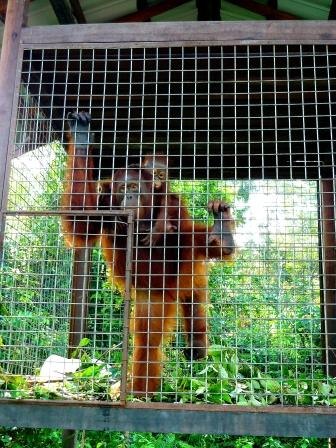
On the 19th of May, 2009, the staff of Camp Rusak, Lamandau Wildlife Reserve noticed something funny about one of the orangutans in their area – Lady Di seemed to be dragging her arm, and not using it at all. They were very concerned, particularly since she is still caring for her young infant, and so immediately informed our vet via radio call. When Dr. Fiqri arrived, Lady Di went up to him, as if to say, “I have a broken arm, could you please fix it?” She then clambered voluntarily onto his back for the walk back to the Camp. Orangutan Lady Di - left forearm broken

Lady Di and her infant in a holding cage, Camp Rusak. Note her left arm hanging down. Photo Orangutan Foundation.

Indeed her left arm was broken, and Dr. Fiqri initially tried to keep the arm in place with plaster.

Bornean Orangutan - Lady Di (left forearm in plaster) and her infant.

Lady Di and her infant, Camp Rusak, Lamandau. Photo: Orangutan Foundation

However Lady Di had other plans for the plaster. Dr. Fiqri had a shock when he saw Lady Di later with bits of plasters all over her mouth, thinking that she was foaming at the mouth!

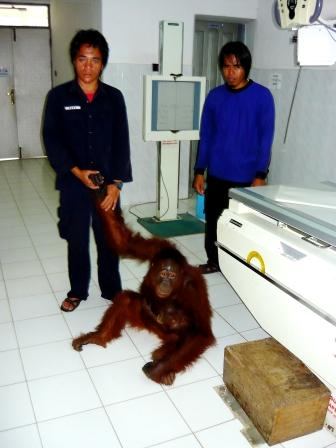
It was clear that they needed to get her arm x-rayed to ascertain the damage. Lady Di was taken into the Pangkalan Bun hospital, x-rayed, and under Dr. Fiqri’s supervision, later had her arm bandaged.

Orangutan Lady Di - being reassured by Pak Dian

Pak Dian, Camp Rusak Manager (in blue), reassuring Lady Di. Photo:Orangutan Foundation

Orangutan, Lady Di awaiting x-ray of broken arm

Lady Di at Pangkalan Bun hospital for an x-ray of her arm. Camp Rusak manager, Pak Dian and camp assistant with her. Photo: Orangutan Foundation

She was then brought back to Camp Rusak, where our staff are keeping an attentive watch on her.

It is likely that she had broken her arm by grabbing a branch that was not strong enough for her weight. Indeed she had some superficial cuts on her forehead that possibly supports this hypothesis. Thankfully, her infant was not harmed in any way, and aside from a broken arm that is well on the mend, Lady Di is doing very well.

Help us to look after these orangutans – please contribute anyway you can via Wildlife Direct. Thank you so much!

June

Programmes Manager

Reforesting Orangutan Wildlife Reserve

Recently I accompanied a logistic run to one of our guard posts, Pos Danau Burung (or Bird Lake Guard Post - where the the recent fires were), in the Lamandau Wildlife Reserve. Logistics run to guard post

Getting supplies to Pos Danau Burung

We also had a surprise for them - lots of cake, from our previous meeting with government officials at nearby town of Sukamara. They were very happy with the impromptu tea!

Plant Nursery at Lamandau Wildlife Reserve

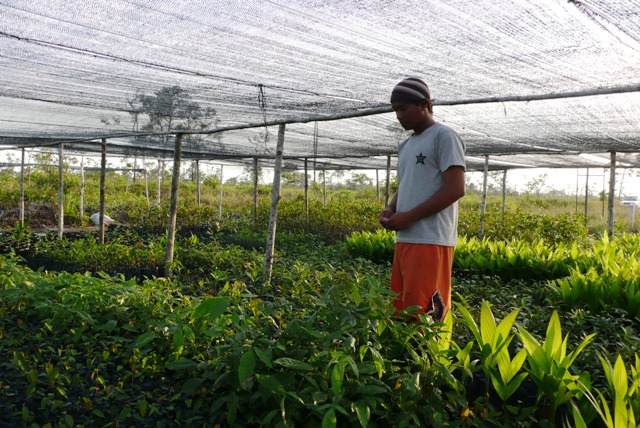
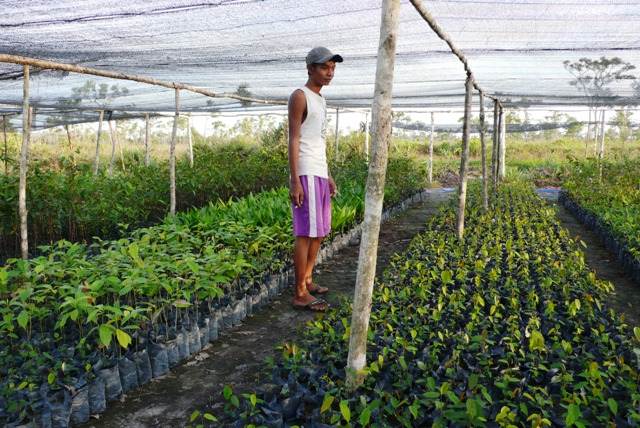
Post Danau Burung also happens to be one of our plant nurseries for reforestation at the Reserve. Our Reforestation Manager, Pak Isem, recently bought more seedlings from local villagers, totalling to about 20 different indigenous species of plants, including fruiting trees that will eventually help feed the orangutans and other wildlife in Lamandau.

Nursery Lamandau Wildlife Reserve

As you can see from the photos, the seedlings are doing very well. Currently, we are waiting for the wet season so we can plant these seedlings.

As well, we do need your support to help run our various programmes in Lamandau. With only US$15, you ensure that our field assistants are well-equipped. A donation of US$30 strengthens morale in our camps, with staff uniforms. Take a look at our donation box, and see what you would like to support! Thank you very much Matthew K, Brigitta S and Tal B for your monthly donations.

Thank you,

June

Compost and Forests - both important to our life cycles!

Meet Pak Roji. Pak Roji - Community Liaison and expert composter!

Pak Roji at the market

He works on the Education Team for our Lamandau Ecosystem Conservation Partnership, as our Community Liaison. Pak Roji’s passionate about all things mouldy, and organic!

He’s our compost expert, with a background in chemistry, and at least a decade of farming experience in Java. He currently works with the farmers collectives in four villages by the Western boundary of the Lamandau Reserve, to help improve their crops by applying compost. Earlier in the week I visited Pak Roji in Sukamara, with the Head of our Education Team, Eddie, and our Liaison Officer, Astri, to meet up with local government officials to discuss about our plans to commence a compost project in the town.

Eddie -Head of Education Team

Eddie rescues some seedlings that would have been burnt along with the garbage, to be planted at our office in Sukamara.

You may wonder how compost ties into orangutan conservation – and I’d say that wildlife conservation overall is holistic: assisting local communities to find alternative sustainable livelihoods that are still culturally relevant, is vital in obtaining their continuing support for the Reserve. The sandy soils that these farmers work on are nutritionally-poor, and organic composts help increase the yield of crops, while decreasing pressure on the local dump-site. Working one on one with farmers at the Western boundary of the Reserve have yielded small successes, and we hope to see this grow.

So far, the response has been encouraging, and we have received a lot of comments and advice from respective government officers from various fields. Our hopes for this project is that it is community-driven, with farmers benefitting from the harvest.

Eddie and village head discussing land options

Eddie, our Education Team Leader, discusses land options with the Village Head of Natai Sedawak, Pak Nadi

We also met up with the village head from Natai Sedawak, to discuss possibilities on where the compost project could take place. He took us to various sites, including the local garbage dump that reminded us why this project is crucial!

Astri - Liaison Officer

Astri, our Liaison Officer, demonstrates the height of the garbage pile

I believe everybody in his or her lifetime, needs to visit their local dumpsite and understand how our daily consumption affects the rest of the community, and the world.

Pak Roji at work

Pak Roji hard at work!

I’ll keep you in touch on how this project develops over time, but rest assured, Pak Roji continues to churn the soil to keep all organic waste wonderful and mouldy!

Thanks,

June

Lamandau’s orangutans - meet Amoi and her adopted son, Richard.

Amoi, female Bornean orangutan, was released into the Lamandau Wildlife Reserve at Camp Siswoyo on July 14 2004. Recently Amoi is found in the vicinity of Camp Gemini, with her adopted son, Richard. Perhaps Amoi fancied a change of scenery or different companions! Amoi has a very tame nature and when the Camp staff order her to leave camp and go to the forest, Amoi replies with a sound similar to a man crying “hink….hink…hink…”.

Bornean Orangutan Amoi and her adopted son, Richard

Amoi and her adopted son, Richard.

Last year Amoi “adopted” a three-year-old male orangutan called Richard. Richard’s mother Ruta died in February 2008. Camp staff tried to find an appropriate mother for Richard and the job fell to Amoi. Initially Amoi rejected Richard but the camp staff continued to present Richard to Amoi and eventually Amoi accepted him. Since March 2008 she has become his new mother.

Thank you,

Dr Fiqri

“If you had to know about me” by June Rubis (Orangutan Foundation’s Programme Manager)

The blog powers-to-be, who with an iron fist, gently encourages me to update on a regular basis, has informed me that a blog post featuring myself would be ‘interesting’. Alas, dear readers, because our vet has been busy in the field, and has not written new blog posts for a few weeks (which reminds me, I need to show him my own iron fist), and Stephen has left, leaving a vacuum of wrestling with crocodiles and dancing with orangutans blog posts, you now have to learn more about me. Born and raised in Malaysian Borneo, I was fortunate to have parents who encouraged a love of reading. We had subscriptions to the National Geographic, Asiaweek, etc, all of which opened my mind to various global points-of-views. This was vital after all, I was living in a very government-controlled media, and the internet was still birthing. In the early 90’s, western environmentalists descended upon Sarawak to protest against logging. They chained themselves to tractors, they waved banners, and told us to save our rainforests. The local media mocked them, and made comments about their ‘obese size’. I, in return, was fascinated by the non-rebuttal the local media had, against these westerner’s claims.

I knew early on in my teens, that I wanted a career in conservation. If you would ask me what my defining moment was, I would say that it would be the early 90’s furore of early environmentalism, of the world’s spotlight onto Sarawak and its logging practices, and treatment of indigenous peoples, particularly the Penans.

After my BSc. studies (in Biological Sciences) from Simon Fraser University, I was fortunate to be selected for a summer internship at the Smithsonian Natural History Museum in Washington, D.C. I missed my graduation for this opportunity and have no regrets! However, I knew then that I wanted to return home and work in conservation, particularly orangutan conservation.

When I returned to Sarawak, I started working for Wildlife Conservation Society (WCS) Malaysia, as a field assistant, and working my way up to full-time researcher. I worked for WCS for over seven years, of which most of those years was spent surveying wild orangutans in Batang Ai National Park and Lanjak-Entimau Wildlife Sanctuary. Orangutan Foundation UK by the way, was responsible in giving my first grant to survey wild orangutans! I am grateful in coming full circle with this organization.

I was also very interested in the human face of conservation, other than wildlife research, so spent those same years, volunteering for a local nature society. Over time however, I became more sympathetic of the indigenous peoples struggles to save their lands from encroachment, and often being displayed as the bad guy by both sides! It was also personal because my peoples are the Krokong Bidayuh, which is a very small minority of Sarawak’s ethnic groups. My family’s continuing work to help preserve our culture through documentation, inspired me to seek other conservation opportunities, where there is a sincere collaboration with the local peoples.

I’ve always kept an eye on the Orangutan Foundation (OF), and its growth over the years. One thing that intrigued me was its close partnership with a strong local community organization, Yayorin. I value that OF recognizes its strengths, but also acknowledges that it can’t do all well hence entrusting the community work to a strong, committed organization. Believe me, Yayorin is a wholly equal partner to the work that we do, and I am fascinated that despite the seemingly clashing differences (i.e. conservation and locals people's needs), OF and Yayorin are able to work as one, for similar goals. This was the opportunity I was searching for after I left WCS Malaysia (a wonderful and strong research organization by the way), and am thusly very grateful.

These last couple of months with OF have been very fulfilling and educational, and although I haven’t had the chance to jump in crocodile-infested rivers (although according to my culture, the crocodile is one of our ancestors so technically, I ought to be ok) or have other exciting field stories (current work demands my time at the OF office, and government offices), I promise perhaps one day, I'll tell you about the time I was chased by a sunbear and came face-to-face with a 3 metre albino python. Or the time where I was less than a metre away on being grabbed by a wild male adult orangutan in the wilds of Lanjak-Entimau, Sarawak. The time I almost danced with an orangutan.

The Great Ape Debate

Please see below a summary of a press release by The Linnean Society of London and the World Land Trust.

On the 30th April 2009 at 18.00-19.00 British time, the World Land Trust and Linnean Society of London will host the widely anticipated ‘Great Ape Debate’. The debate will be streamed live onto the organisation's websites allowing a huge public audience for what is expected to be a lively and informative debate.

The destruction of huge areas of orangutan habitat is now seriously threatening the species with extinction and leading conservationists in the field hold conflicting views on how best to ensure the survival of “the person of the forest”.

This debate will focus on the controversy surrounding Orangutan conservation and whether rehabilitation and reintroduction of rescued captive animals is a viable way of conserving Orangutans or would resources be better spent on the purchase, protection and recreation of their natural habitats? Experts are divided in their opinions, and this forum, consisting of conservation experts and scientists , will pool their views and open the debate to the floor in what should prove to be an intriguing and lively discussion. The issues raised will also be relevant to the conservation of other species.

The debate will be chaired by The Earl of Cranbrook, and making up the panel will be:

Dr Marc Ancrenaz - Director of Kinabatangan Orang-utan Conservation Project

Mr John A Burton, FLS - Founder and CEO of World Land Trust

Dr David J. Chivers, FLS - University Reader in Primate Biology and Conservation, Veterinary Anatomy Programme and Head Wildlife Research Group at Cambridge University.

Ms Ashley Leiman, OBE - Founder and Director of Orangutan Foundation (UK)

Mr Ian Redmond, OBE - Ambassador, UN Year of the Gorilla and Chief Consultant, GRASP – UNEP/UNESCO Great Ape Survival Project.

The link for the debate is http://www.worldlandtrust.org/videos/great-ape-debate.htm or www.linnean.org.

Lamandau and Flat-headed Cat Photographed in Danum, Borneo

Chris and Maina in answer to your question about Lamandau's carry capacity. Surveys took place in 1997/8, when Lamandau was gazetted, revealing an insignificant wild orangutan population. The Lamandau camp managers have always kept a record of every orangutan sighted and based on what we know we believe Lamandau has the capacity to take at least another 100 released orangutans. This may be of interest to some readers. The Bornean Wild Cat and Clouded Leopard Project blogged yesterday that they have obtained their first photograph of a flat-headed cat.

'This is the first time this species has been photographed within the Ulu Segama Forest Reserve and this record means that the Ulu Segama is the first known forest on Borneo where there is definitive evidence of the existence of the entire 5-species Bornean felid guild.'

To follow their blog please click on this link http://borneanwildcat.blogspot.com/2009/04/flat-headed-cat-photographed-in-danum.html

Supermarket Sweep!

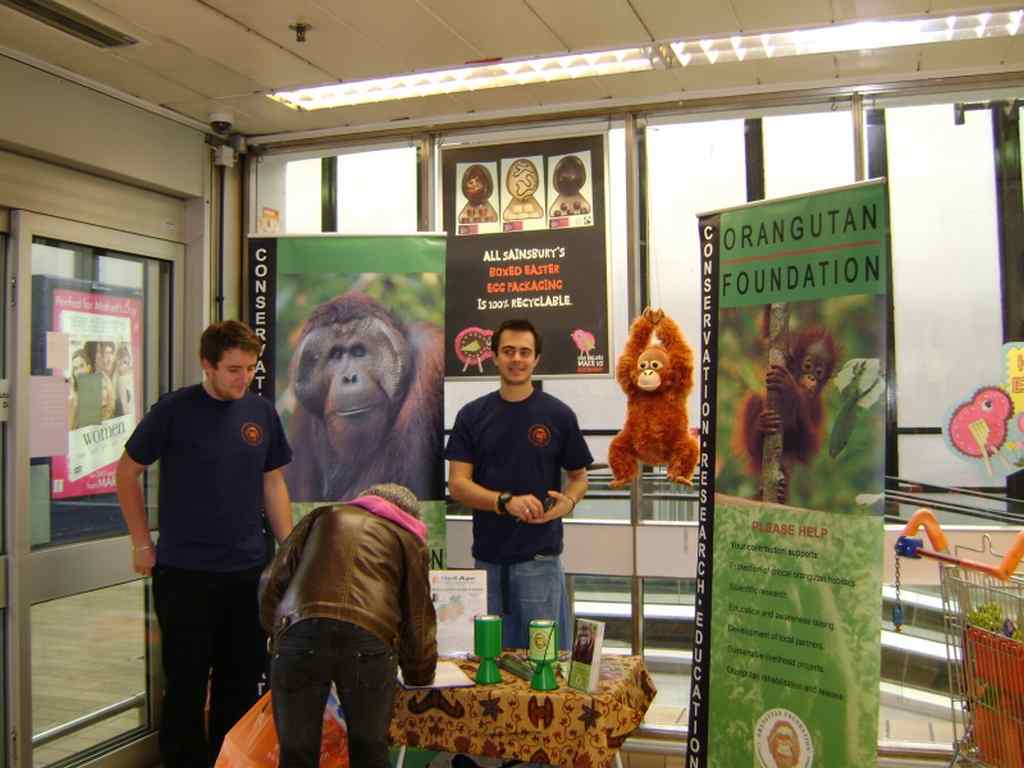
Last Saturday afternoon, the foyer of a Brighton-based branch of Sainsbury's supermarket played host to my first awareness & fundraiser day for the Orangutan Foundation. Myself (a past field volunteer and now intern for the Foundation), Dan (a past field volunteer and subsequently Co-ordinator for the 2008 Volunteer Programme) and my two very kind and willing friends Grace and Vikki, set up stall and spent the day taking turns donning Nick, the Foundation's orangutan suit. Volunteers & Nick the orangutan

Sam is on the left and Dan on the right.

UK volunteers

Sainsburys very kindly let us into the store to wander the aisles and drum up a bit of a buzz... and that we did to everyones amusement.

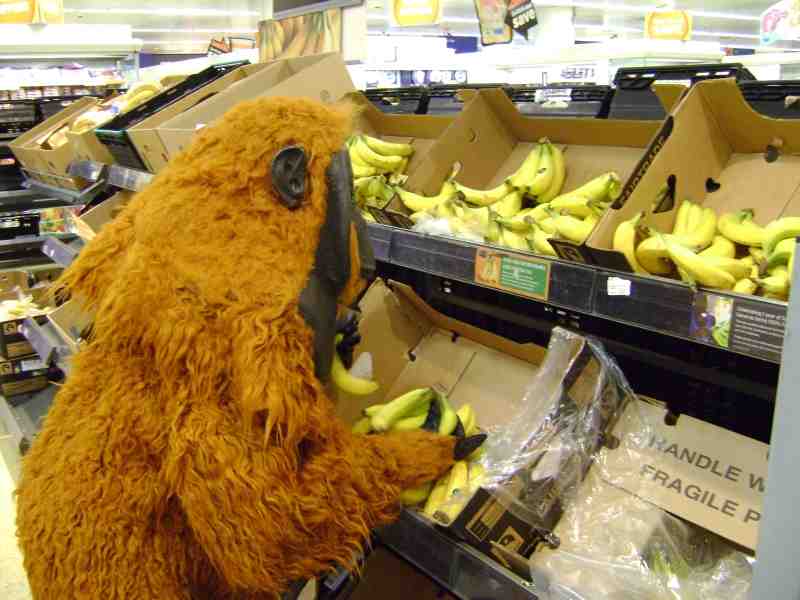
Nick buying bananas

Nick buying bananas

Bar the few terrified children and check-out girl who I made scream, fun was had by all and we raised just shy of £250 and hundreds of our leaflets were taken by interested shoppers. The day, whilst a trial run, was very succesful. If any one is interested in helping out on future fun days like this, or would like to set up their own, then don't hesitate to contact us on info@orangutan.org.uk.

Thanks,

Sam

Your questions about Lamandau and its orangutans

Many thanks for your excellent questions and comments. Here's the answers to some of your questions. Sheryl you asked about illegal burning - most of the illegal burning occurs at the southwestern side of Lamandau where it is prone to fires (vandals tend to set fires as to encourage new grass to flourish, and thus attract deer). Fire-fighting is one of our more important operations in Lamandau that we take seriously, and all our guardposts are equipped with fire-fighting equipment.

Maina you asked how many orangutans are in Lamandau. Since 1998, 160 orangutans have been released in Lamandau Wildlife Reserve. As well, it is estimated there are a few hundred wild orangutans found in the Reserve.

Hope to post some photos from Stephen's farewell party tomorrow.

Thanks,

June

Orangutan gaining weight

Dr. Fikri, our new vet who works specifically for the released orangutans in Lamandau Wildlife Reserve, put orangutan Zidane on a special weight gain diet last month. We are happy to tell you that Zidane has gained 3 kg and he is getting stronger each day. Our on-going protection for Lamandau continues with regular patrols, and this month, the patrol team led by Pak Jak (Patrol Manager of Lamandau Ecosystem Conservation Partnership) installed billboards on all the Lamandau guard posts to help enforce no-burning in the Reserve. (This short update was sent by June Rubis, who is taking over from Stephen this month)

Matthew K, thanks as always for your monthly donation.

Many thanks,

Cathy - Orangutan Foundation

Saving orangutans in Indonesia

Orangutan Foundation and Yayorin recently hosted Jason Houston and William deBuys, photographer and writer for the conservation organisation RARE and below is a blog about their visit to Lamandau Wildlife Reserve, Kampung Konservasi and the surrounding village communities. http://www.rareconservation.org/blog/

Getting To Know Some Real Orangutan Characters!

Newman the orangutan was released at Camp Siswoyo however he currently prefers to hang around at a different camp in the Lamandau Wildlife Reserve, Camp Gemini. Bornean orangutan called Newman

Newman - Bornean orangutan

Newman is quite a “naughty” orangutan and camp staff have to be on their guard, especially around the door to the food supply. One morning Newman tried to open a closed door so the camp staff have affectionally nicknamed him “Kutu Camp” (in Indonesian 'kutu' means a fan or something you really like) for all his antics.

Currently every night, Newman sleeps around Camp Gemini, and early in the morning, he ambles after the staff for feeding. He knows that he’ll not get fed in camp, only at the feeding site. After the feeding, instead of heading off like the other orangutans, Newman then follows the staff back to camp to continue his daily routine, which includes annoying the camp staff! This is a light hearted story about one of the orangutans I have encountered so far, I hope to bring you some more soon.

Thank you,

Dr Fikri - Lamdandau Vet

Kampung Konservasi (March/April) - A new mobile library!

On Tuesday, 24 March 2009, Yayorin (Yayasan Orangutan Indonesia) received a wonderful donation of MOBIL BACA (mobile library) from PT Hino Motor Sales Indonesia (Hino) to support its education efforts, in areas close to orangutan habitat, in Central Kalimantan Indonesian Borneo. Bus - mobile educational unit and library

Mobil Baca - Kampung Konservasi's new bus.

Hino has already donated similar buses to other NGOs in Indonesia, and this year Yayorin was chosen as one of the recipients. The bus was specifically made to suit Yayorin’s need, and is equipped with seats in front and book shelves at the back.

The hand-over ceremony took place in Sampit, a bigger city, which is a four hour drive from Pangkalan Bun. Mrs. Aulia Reksoatmodjo, a board member of Yayorin and Togu Simorangkir, Yayorin Director attended the ceremony. Hino presented Yayorin with a symbolic key, while Yayorin showed its appreciation by giving Hino a carved orangutan wood statue.

Key Presentation

Presentation of the symbolic key to Yayorin.

Presentation parade

Presentation parade

The bus will hopefully start operating this month. We are looking forward to getting out on the road and distributing our conservation education message and materials to the local population.

Kampung Konservasi bus with Togu and Mrs. Aulia Reksoatmodjo

Mrs. Aulia Reksoatmodjo (on far left), a board member of Yayorin and Togu Simorangkir (far right), Yayorin Director.

Thank you,

Sally -Yayorin

Ambassadors For Orangutans

Part of the Orangutan Foundation's Education Programme in the UK involves us giving regular talks to schools, universities and social groups. As we are a small but very busy team it was decided to set up a network of local "ambassadors" who would be willing to speak about orangutans and our work on our behalf. Well, we were overwhelmed by the response that we received. 15 Orangutan Foundation members, from all over the country came to our London office on Saturday.

Briefing Day at OF office

Everybody was extremely knowledgeable about orangutans, the current situation and our work, with most people having visited where we work in Borneo either through a Discovery Initiatives Study Tour or the Volunteer Programme.

Orangutan Foundation Display

We spent the whole day arming our orangutan "ambassadors" with information, PowerPoint presentations and lots of other helpful materials.

Ambassador Day at Orangutan Foundation UK office

This blog is also an enormous help and useful resource for keeping people up to date. Six other people have also confirmed they want to be ambassadors but they couldn't make it to the briefing day, so in total we have 21 Orangutan Foundation Ambassadors!

It was a truly inspirational day for us at the office and we would like to thank everyone who came on Saturday.

Lisa B thank you very much for your recent donation ($50 to us and $20 to Wildlife Direct) it is much appreciated.

Reply to recent comments

Thank you for all your recent comments on this blog. Super, thank you Brigitta for translating the Rainforest Education Pack and Teacher's Notes. If you don't mind sending us a copy of the CD that would be great. Please can you send it to: Orangutan Foundation, 7 Kent Terrace, London, NW1 4RP, UK. As always Brigitta, many thanks!

Paula you asked about the global economic melt down. Yes, it is affecting us and everyone, everywhere or so it seems. However, in the spirit of ‘every cloud has a silver lining’ the slow down has reduced investment in the oil palm and mining sectors and, like other commodities, the price of oil palm has dropped. There is virtually no plantation development taking place in our area at the moment.

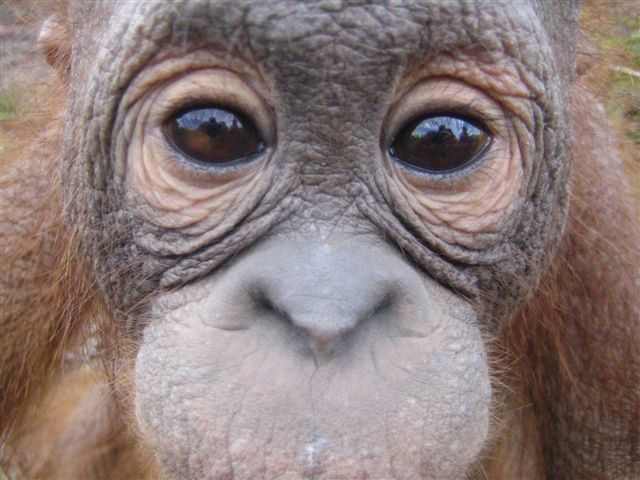
Sheryl you commented that "Zidane looks better but he still has this sorrowful look in his eyes". Many orangutans have that look; I personally think it is to do with their dark pupils and the wrinkles around their eyes. However, if you think “curious” rather than sorrowful I am sure you will be convinced that is what it actually is.
Rosa -orangutan eyes

orangutan eyes - curious or sorrowful? Photo by Rosa Garriga.

Thanks,

Stephen

Zidane, a hairier and healthier orangutan

On Sunday we were back at Camp Buluh, one of our orangutan release camps in the Lamandau Wildlife Reserve, where we caught up with the orangutan Zidane. He is still very thin but his hair is coming back and, most importantly, he was bright-eyed and very active. Zidane - male Bornean orangutan

Zidane - a healthier looking orangutan.

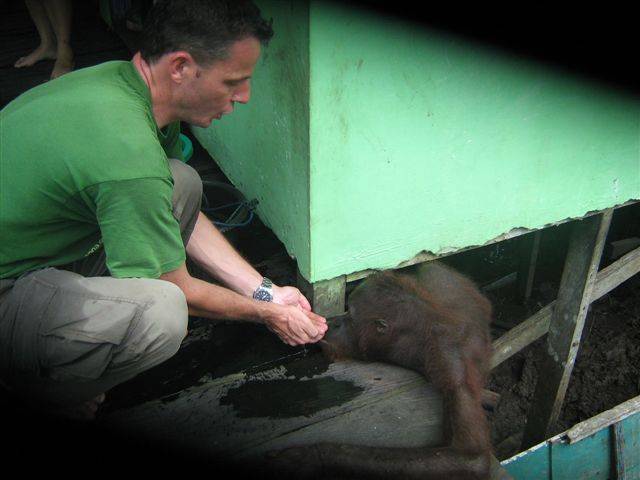
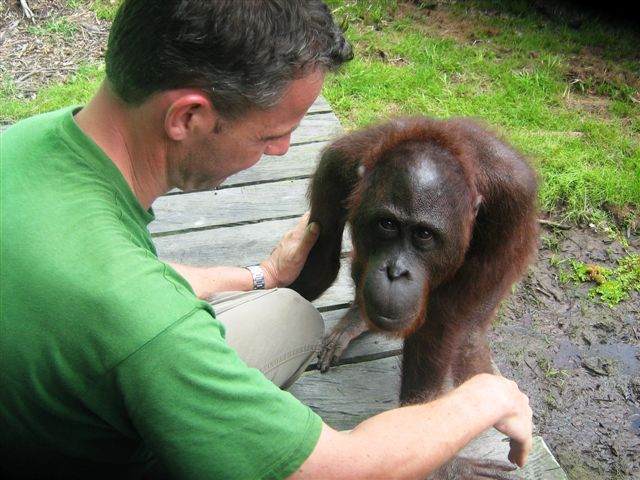
He watched me wash my hands and then sidled over for a drink. A more boisterous orangutan (like Barita who was watching from a distance) would have tried to snatch the bucket himself but not Zidane, he waited for the water to be scooped out and poured into his mouth.

Stephen Brend with Zidane

Zidane (orangutan) and Stephen.

Barita - Male Bornean Orangutan

Barita - the more bositerous orangutan.

Zidane - male Bornean orangutan

Sheryl asked what was involved in a “weight-gain” diet. Because Zidane readily drinks milk, Dr. Fikri has bought a supply of high-protein/high-carbohydrate formula. On top of that, the staff are making sure he eats whenever he wants to and so carry extra rations just for him. The trick is in balancing the amount of nutritious formula he receives against giving him too much, which will end up acting as an appetite suppressant. It is important that he keeps on eating.

If you can help us purchase digital cameras for Mr Tigor (Orangutan Reintroduction Programme Manager) and Dr Fikri (new Lamandau vet) we would be most grateful. I simply can not get into Lamandau often enough to monitor Zidane and the other orangutans' progress but, like I am sure you do to, I am keen to see how they are getting on.

Many thanks,

Stephen

Zidane watching as we leave. All photos by Astri Siregar

Zidane - male Bornean orangutan

Volunteer for orangutans

Recently we've received a few comments enquiring about volunteer work with orangutans or other great apes. The Orangutan Foundation's Volunteer Programme offers individuals the chance to become involved in conservation fieldwork and see ex-captive and, hopefully, wild orangutans. The work is of manual construction/ labouring nature but it is vital to our conservation work and carried out in orangutan habitat. There are still a couple of places remaining for this year's programme, which will be based in the Belantikan Arut region of Indonesian Borneo. The duration of the programme is six weeks. All participants must be a member of the Orangutan Foundation, at least 18 years of age, in good health and prepared to undertake manual work. Living conditions are basic and very remote. The cost of taking part in the programme is £730. This payment covers all accommodation, food, and materials for the duration of the programme but does not include international and internal travel to the project site. It should be noted that particpants will not have direct contact with orangutans. For more information on the programme please see our 2009 Volunteer Programme brochure on our website. If you have any further questions or would like to apply then please contact ELLY at the Orangutan Foundation office (elly@orangutan.org.uk or 0044 (0)207 724 2912) for more detailed information.

Megan, as you're 12 years old you are too young for our programme. Don't be disheartened though as there is still a lot you can do to help! Consider organising a fundraising or awareness event at your school, social club, or with your friends. Maybe you could ask a relative to foster an orangutan for you as birthday present. Become involved with a local conservation or wildlife charity who may have volunteer days you can become involved with. As we discovered with our Orange for Orangutan Day - every little act helps to make a difference. (For your diary: the next Orange for Orangutan Day is Thursday 12th November 2009 and information will be available on our website soon)