Orangutan Stories: How Epeng earnt his name

Deep in Borneo’s forests, a pair of tiny, grasping hands reach up for the branch above. With a firm grip and an air of confidence, little Epeng climbs a little higher - he is learning how to belong in his forest home once more.

Epeng climbing and foraging, Janaury 2026

Epeng arrived at Orangutan Foundation in mid-2025 when he was handed over from captivity. He was only twelve months old and, like many young orangutans rescued from difficult circumstances, he had reportedly been found alone in the forest. At his young age he is far too young to survive without his mother. Sadly, we will never know the full story of why he was orphaned. 

Epeng now lives at Camp JL in Lamandau Wildlife Reserve, where he is beginning his journey back into the wild alongside four other recently handed over infants. This project is our Soft-Release Programme, which cares for orphans whilst they learn critical survival skills for an orangutan: climbing, foraging and building nests. The end goal is their release into the wild which can take up to eight years. 

Epeng arriving at Orangutan Foundation in his transport cage, July 2025

Of the infants that share Camp JL with Epeng, he is without question the most energetic. With this energy comes bravery. When Epeng decides to move, nothing will slow him down - not even height. As he climbs, he is always looking to the top of the tree, not stopping until he reaches it.

The camp carers know what to expect when bringing the infants to the forest for their daily learning; whilst some pause or cling on to the staff, still apprehensive of their new surroundings, Epeng is already on the move. The trees call to him, and he answers with enthusiasm.

Epeng climbing, September 2025

It is wonderful to see a young orangutan with such an unfortunate start to life exploring the forest like a tiny adventurer. He samples tender young leaves, inspects unfamiliar fruits, and chews on twigs, learning to understand his home one step at a time. Nothing seems to escape his attention; each rustling leaf or dangling branch is an invitation to discover something new.

The name ‘Epeng’ carries a small story of its own. Derived from the word ‘empeng’, a Javanese term meaning “to suck for comfort.” The name was chosen because of a habit of the infant that quickly caught his carers attention... Epeng often sucks his index finger!

Much like humans, this behaviour is seen in many ape species as a form of self-soothing. When the forest becomes quiet and the excitement of the day fades, Epeng sometimes curls up and gently sucks his finger, finding a moment of calm.

Epeng in his sleeping enclosure with enrichment, August 2025

Perhaps, in those early days when Epeng was alone without his mother, this small habit helped him feel safe in a world. But Epeng is no longer alone. Each day in Borneo’s forests, he is learning what it means to be an orangutan. Step by step, branch by branch, Epeng is building the skills that will one day allow him to live independently in the wild, where he truly belongs.


Orangutan Stories: Labetty is pregnant... again!

As a tree-dwelling species, observing the re-introduced orangutans in Lamandau Wildlife Reserve is not always easy; with trees comes height and camouflage! Staff were therefore surprised when they noticed that Labetty was pregnant... her third time in six years!

Labetty, 2025

Orangutan pregnancies are not dissimilar to that of humans; there is a gestation period of around nine months, changes occur both physically and mentally, and behaviours become less strenuous, with more time spent sleeping. Though Labetty’s behavioural changes have been far from peaceful!

Mother and infant resting in Lamandau Wildlife Reserve

Labetty was born in the wild in 2007 to ex-captive Lady Di, who had sadly suffered from a miscarriage the year before. 19 years later, Labetty is now pregnant with her third offspring. Suspiscions arose about her pregnancy from physical indications and altered behaviours in the female, but her enlarged abdomen confirmed the news – and we are delighted!

During Labetty’s pregnancy, her behaviour has changed in its own way. Typically indifferent towards the staff around her, paying them little to no attention, Labetty has been spotted chasing visitors of Camp Rasak, where she has been spending much of her time resting.

Labetty with previous infant (Lego), 2025

Our four camps in Lamandau Wildlife Reserve are only accessible by boat; the team arrive each morning by speedboat to begin their day of work. Last week, staff arrived as normal to the soundtrack of birdsong and the stirring of the orangutan carers who sleep at the camp. As they disembarked the speed boat, walking down the jetty towards the call of camp responsibilities, the speedboat driver Anto took a moment to secure the boat.

Speedboat

Soon after, with the boat in place, Anto followed the team down the jetty... but an angry Labetty soon emerged behind him! Less familiar with Anto, Labetty who had been sleeping beneath the jetty began had clambered on top and began to chase Anto! Luckily, Anto noticed her and managed to get clear... a warning nonetheless from the pregnant female!

Labetty climbing aboard a longboat at camp

It is difficult to confirm the reason for Labetty’s aggression, but it is likely due to mood changes associated with her behaviour. All the team are very excited for Labetty’s birth; this will be the sixth wild birth in the past year!

Emergency funding sent to support Tapanuli orangutans threatened by Sumatra floods

With only 800 individuals left in the wild, the Tapanuli orangutan is the most endangered species of orangutan - and with recent floods in Sumatra many individuals have gone missing. Orangutan Foundation has sent emergency funding to Scorpion Foundation who work to conserve Tapanuli orangutans in Northern Sumatra, to help rebuild the facilities destroyed by the flood.

Orangutan Stories: Recent rescues and what they teach us

Each orangutan rescued or handed over to our care carries a story of struggle and recovery - and thankfully the chance for a new beginning.

Orangutan infants with carers

In the great rainforests of Kalimantan, the trees whisper tales, not only of wind and rain but of young lives interrupted and gently guided back home.


Throughout 2025, several orangutans crossed paths with humans outside of the forest, each carrying a different fate. What follows are their stories, told like forest fables about loss, hope and second chances.

Gunawan: The Little One Who Learned to Trust the Trees Again

Gunawan

Gunawan was still small when the forest went silent. Found alone with his mother nowhere to be seen, Gunawan was gently carried by human hands instead of clinging to hair.

At Camp JL in Lamandau Wildlife Reserve, each day Gunawan climbs a little higher and explores a little further. Sometimes, a second chance grows slowly, leaf by leaf.


Amel: The Long Road Back to Being Wild

Amel

Amel once lived behind walls instead of trees. Kept as a pet since 2014 on a diet of milk and porridge, Amel was refused the chance to learn the fruits of the forest.

After 12 years, Amel was handed over by her owners to BKSDA (government conservation agency) and Foundation staff last June. The forest that welcomed her was far a world away from her captive life… Amel was frightened, refusing to leave her sleeping enclosure.

With patience (and the lure of fruit!), in January 2026 Amel finally climbed her first tree! This was a huge milestone in her long journey towards the wild.

Amel’s story reminds us that healing takes time, and that even after more than a decade, the forest ape can settle back into its home.

Ehoy: The Wanderer Who Finally Returned

Ehoy being rescued from deforested land near village

Ehoy was not lost - he was searching. Driven by hunger, he wandered too close to human homes where coconut trees replaced the wild forest canopy.

Strong, calm, and fully grown, Ehoy was not afraid of being rescued. When the door of his transport cage opened in the safety of Lamandau Wildlife Reserve, he climbed up a tree as if he had never left.

Ehoy’s tale is short but powerful: sometimes, all a wild soul needs is a clear path back home.

Released into Lamandau WIldlife Reserve


Epeng: A Curious Heart Finding Its Place

Epeng with Dr. Dimas at time of rescue

Epeng was found alone by humans working in the forest. Too young to survive by himself, he was taken in before the forest could claim him.

Epeng was handed over to the Foundation and brought to Camp JL, where he soon discovered play. He ate eagerly and learnt the intricacies of branches and balance. Each day, Epeng’s confidence has grown, proof that even fragile beginnings can become strong with care.

Epeng’s story teaches us that rescue is not an end - it is the start of learning how to be wild again.

Epeng

Roni: The Brave One Found at the Edge

Roni

Roni was discovered at the edge of danger; he was near a deep excavation meant for water, not for life. Tiny and weighing just 3 kilograms, Roni carried courage far bigger than his body!

After receiving the care he needed from the Foundation’s veterinarians, Roni began to shine. He has been playing, climbing and exploring with bold curiosity.

Roni’s story demonstrates even the smallest life can grow into something magnificent.

Roni with Dr. Dimas


Kiki: Hope with Curious Eyes

Kiki arrived weak and thirsty, carrying scars that spoke of hardship. Yet behind his injuries lived an unbreakable curiosity.

Kiki using his ‘every-which-way’ (hypermobille) hips in his enclosure

As days passed, receiving care and treatment, Kiki’s spirit emerged. At Camp JL, he became more active, more daring - and more Kiki.

Kiki teaches us that curiosity is hope in motion, and that healing is strongest when paired with patience.

Kiki learning to climb


Kacong: Back to Where the Forest Breathes Deepest

Kacong

Kacong was a seasoned forest traveler; as an adult he was strong and experienced. This meant his rescue was not an easy one... trees became escape routes, and rescuers had to think quickly.

Though carrying old injuries, Kacong moved with confidence. He was successfully returned to the safety of the forest and when released, he did not hesitate. Kacong walked into the forest with ease, like someone reuniting with an old, comforting friend.

Kacong’s story tells us that freedom, once returned, is never forgotten.

Kacong being released

A Journey for the Second Chance

These orangutans are not statistics. They are stories of forests interrupted and restored, of hands that choose protection over possession.

Every rescue is a promise: that we can choose coexistence, that the forest still matters and that orangutans deserve a future written in leaves - not cages.


Orangutan Stories: Fantastic Four

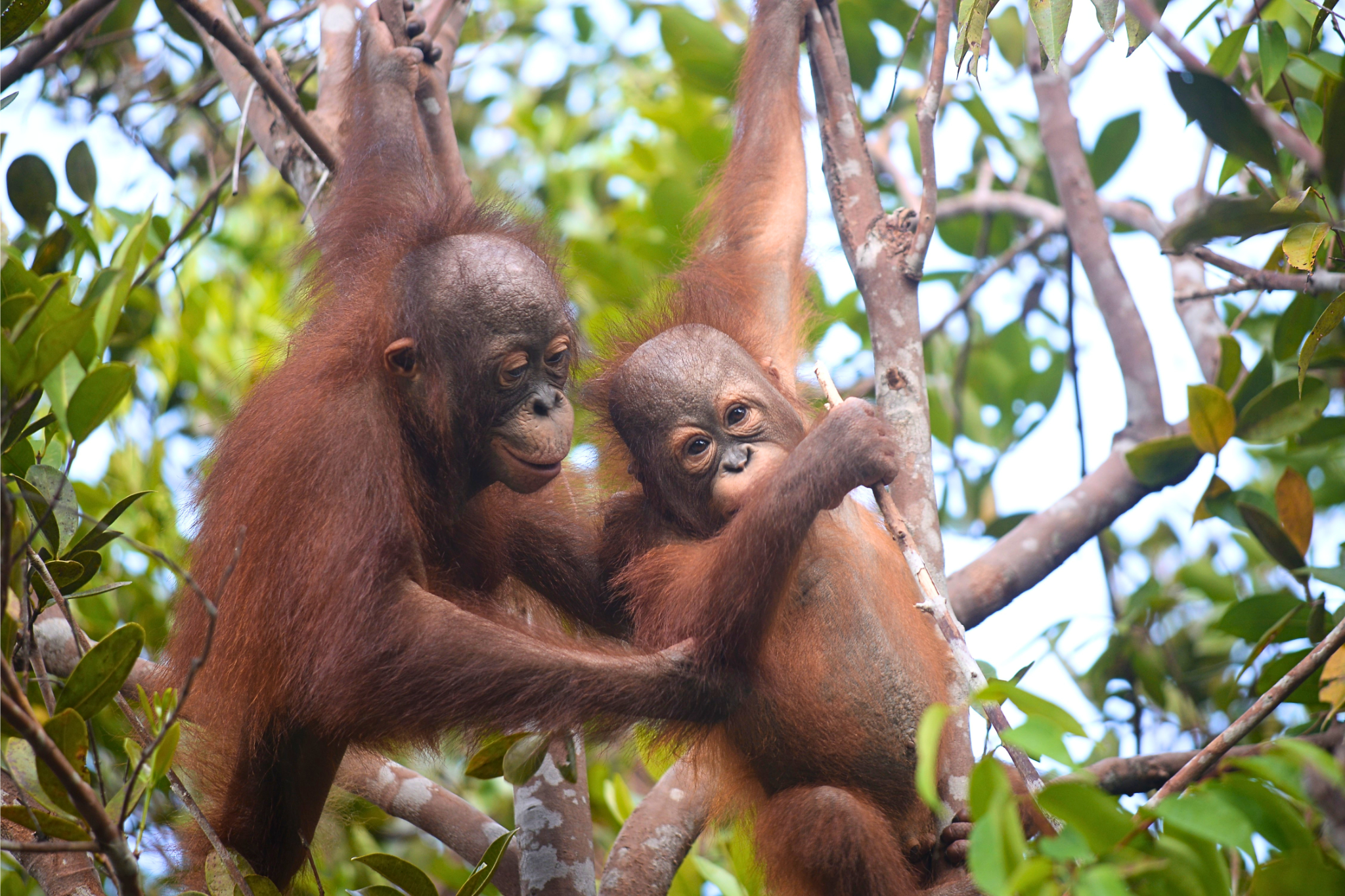
Four infants were recently handed over to our care to join the soft-release programme for orphaned orangutans. But one orangutan, Kiki, is very particular about who is friends with! Orangutans have personalities from a very young age - and can are very entertaining as they grow into themselves more and more.

In Conversation: From bottles to new beginnings – the orangutan carers

Have you ever wondered what it’s like to be an orangutan carer? In the depths of Borneo’s forests, our camps support orphaned orangutans on their journeys back into the wild - and it is the carers that are there for every step of the way. In this ‘In Conversation’, we catch up with the carers of latest release Mona.

Bornean bearded pigs nearly wiped out by African swine flu are slowly making a comeback

Bornean bearded pigs faced a massive decline from African swine flu, rarely seen in Tanjung Puting National Park since. However, recent footage from our camera traps has shown the species is slowly making a comeback!

Orangutan Stories: Gunawan‘s progress in the soft-release programme!

Gunawan in the soft-release programme is growing in confidence… on his first attempt at climbing, he is here to show that a life in the trees is instinctive for the forest ape.

Orangutan Stories: Epeng - new home, new hope

Epeng, recently handed over by his owners, has been settling in well to his first few weeks in the soft-release programme. Already climbing despite his young age, he truly is a testament to the resilience of the forest ape.

In Conversation: a day in the life of an Orangutan Foundation veterinarian

In Conversation: a day in the life of an Orangutan Foundation veterinarian

There is never a dull moment for an Orangutan Foundation veterinarian… from rescuing sun bears to midnight visits to the local hospital as to not alarm residents, in this ‘In Conversation’, we catch up with Dr. Wawan and Dr. Dimas.

Orangutan Stories: welcome to Amel – but what happens to the mothers of orphaned orangutans?

Kept in a small enclosure for eleven years, we hope it is not too late for twelve-year-old Amel to learn how to be an independent orangutan. But Amel’s story highlights a deeper issue - what truly happens to the mothers of orphaned orangutans?

Orangutan Stories: Sony lends a helping hand to his sibling!

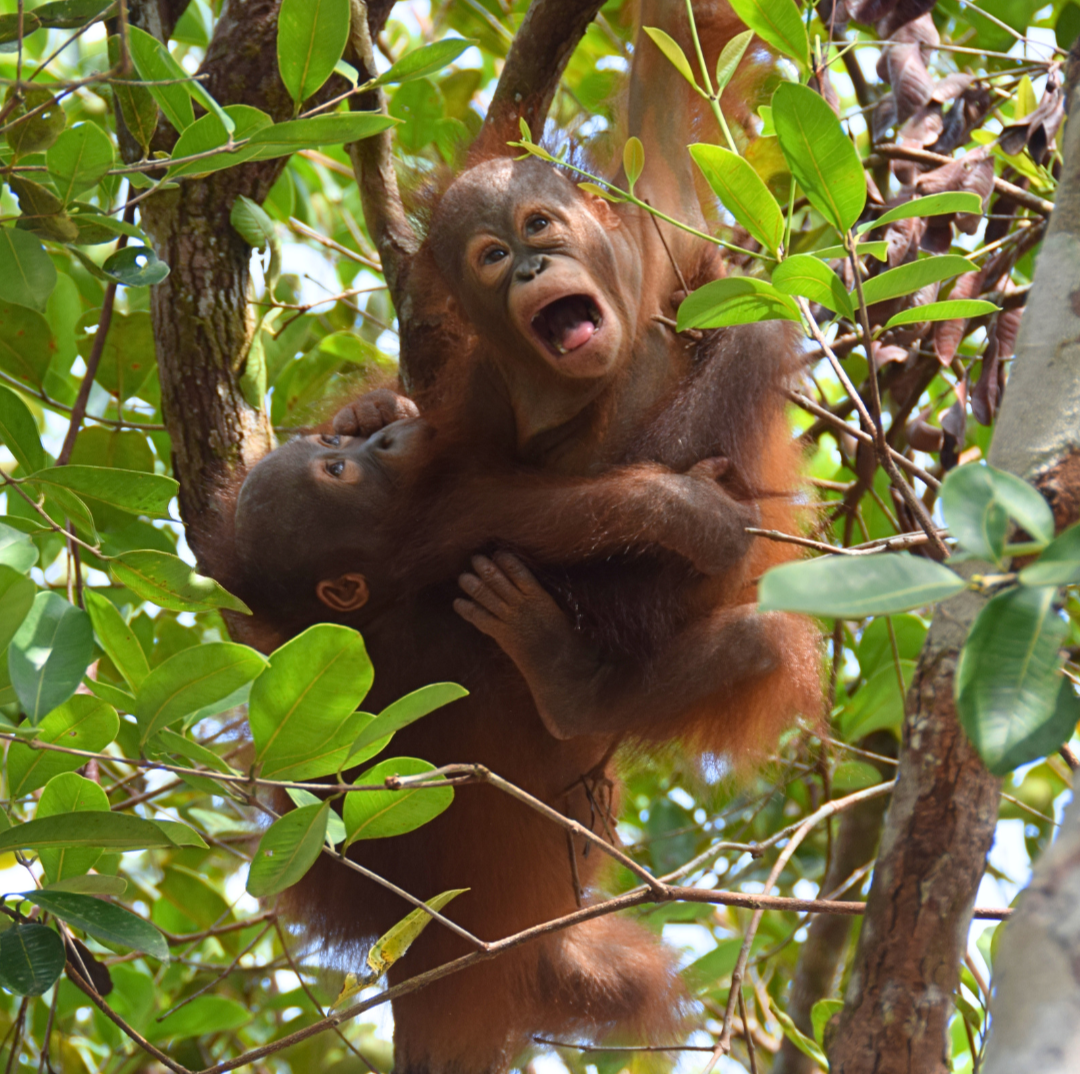
Orangutans are a semi-solitary species, rarely interacting as adults. But wild orangutan Sony has been seen helping his younger brother navigate the canopies whilst their mother is not around - an extremely unusual interaction!

Drones taking flight for habitat protection

The use of drones has been on the rise - they have become critical in conservation, enhancing our habitat protection efforts and changing the way we work.

Peat swamp forests: the critical home to the orangutan

Peat swamp forests support unique biodiversity not found anywhere else on earth - but less known is their critical role for our planet in mitigating climate change. With over 80% of peatlands already destroyed, we must do our part to protect those that remain… before it’s too late.

Orangutan Stories: finding a mate as a semi-solitary species

All living things - including orangutans - have an innate drive to meet their biological needs; water, food, oxygen, and shelter are all key to surviving in the forest. But what about the drive to reproduce? Learn how this semi-solitary species finds a mate in the forest.

Orangutan Stories: Death and Birth - The Circle of Life in the Wild

Death and birth are natural parts of the circle of life. Unfortunately, this month we were devastated by the passing of one of the infants in Lamandau Wildlife Reserve. But, we welcome three new pregnancies in the wild.