October 2015
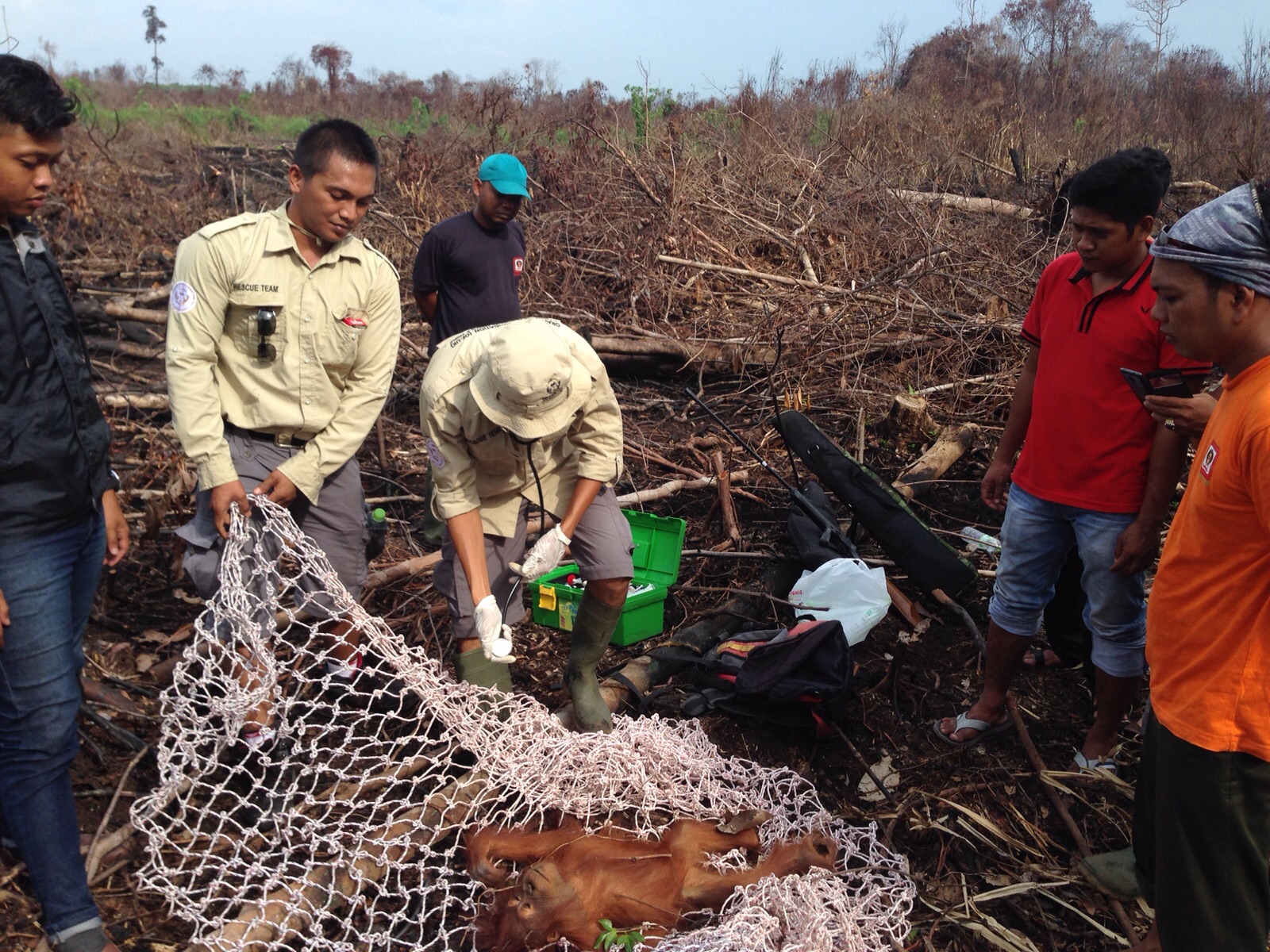
Last Monday the Foundation rescue teams received a report from landowners in Mendawai that several orangutans might be trapped in an area nearby. This area in question was a narrow strip of forest, completely surrounded by fire and smoke.

Our teams, alongside members of the BKSDA, swiftly headed to the scene and, though the haze was thick, they were able to make out a large male orangutan in the clearing. In spite of the vet darting him with an anaesthetic, the male was merely slowed down because of his size, and was still able to scale a tall tree.
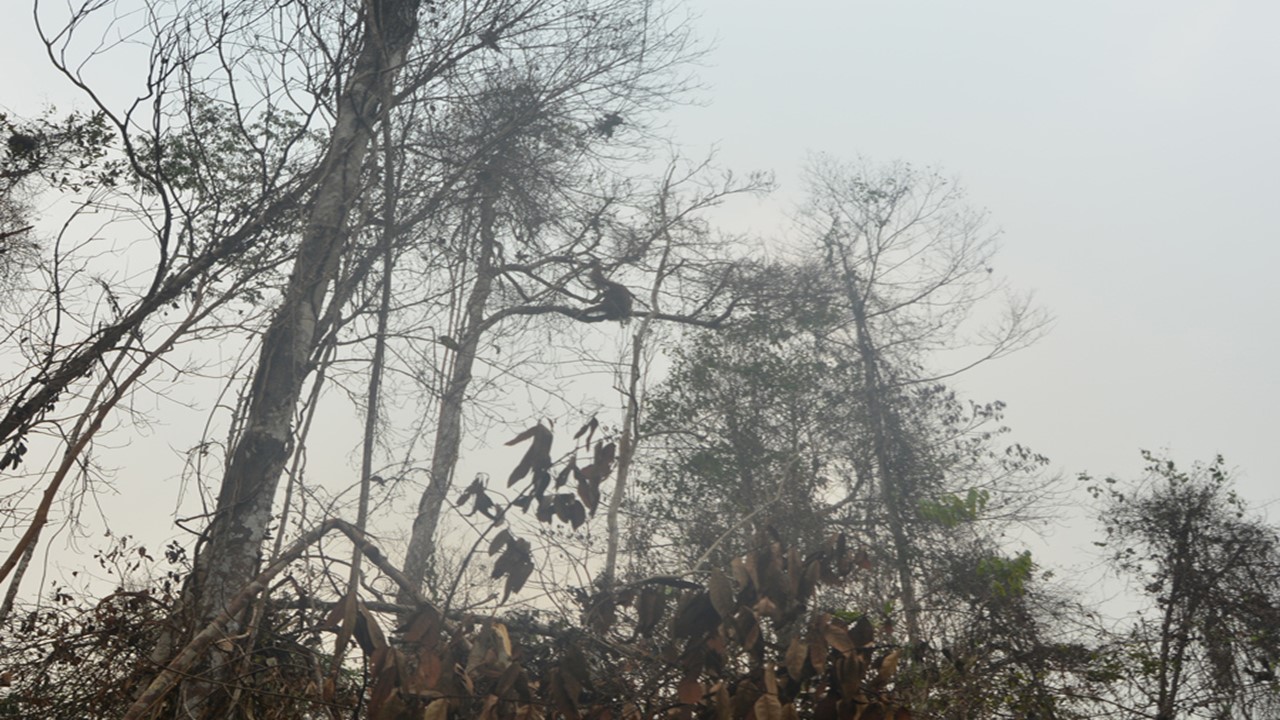
The height of the tree was too dangerous for our team members to climb, and before long the orangutan was once again on the move. Hours of following ensued, but eventually the thick haze from the fires overwhelmed the area and the atmosphere became too dark to continue. Though the rescue attempt failed, our rescue teams endeavoured to try to again the following day.
But on the following day, further reports were made to the Orangutan Foundation that, according to our staff, orangutans were “falling to the ground” because the forest was almost completely burned down. Trees were dried to a crisp and the air engulfed by heavy smoke. Despite these terrible conditions this rescue attempt was more successful, and our teams were able to rescue an adult female and her infant. The pair have now been named Vania and Venty, aged approximately 26 years old and 5 years old respectively.
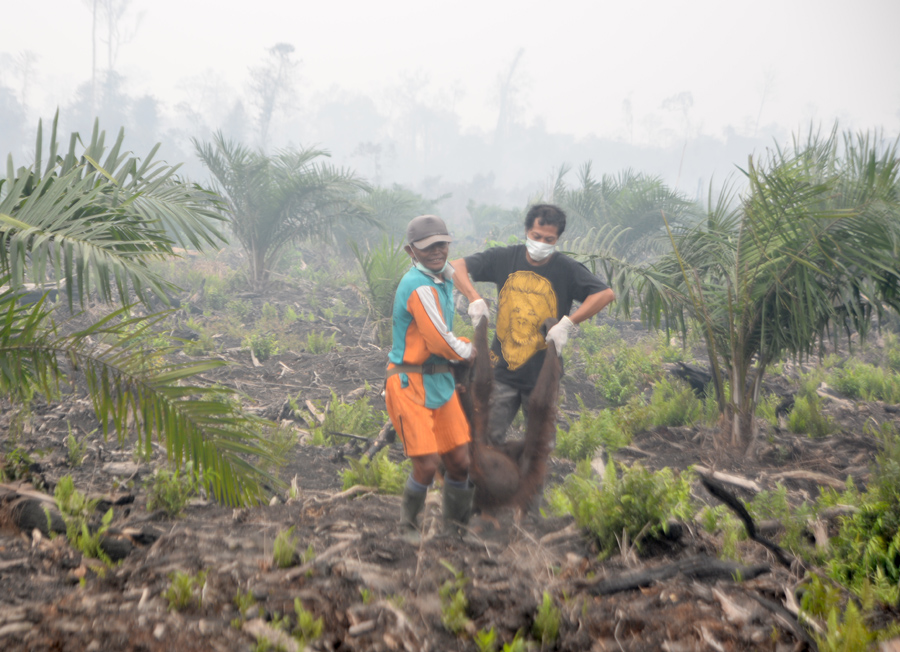
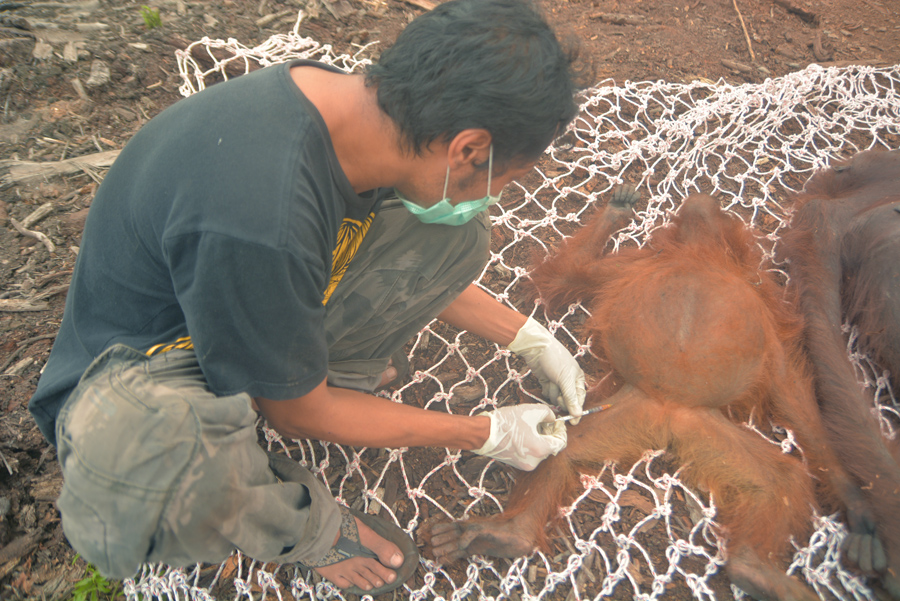

Though this mother and her infant will be released into the safety of our protected Reserve, this turn of events only demonstrates the immense devastation facing Kalimantan’s forest habitat. Because of the extreme haze cloaking the entire region, it is likely that many more orangutans are stranded in these fire-damaged areas of land. Unless reported to us, there is no way of knowing where these orangutans are that are so desperately in need of rescuing.
The conditions caused by Indonesia’s fires have posed serious problems for the local people, as well as for their eco-tourism. Now we know that the dramatic weather conditions are affecting the wildlife within the forests as well, with more and more of their habitat continuing to be lost every day.
Note: Since writing this post, another orangutan has been rescued by our teams. That’s one failed rescue and two successful rescues in three days. More details to follow.


 17.11.2015
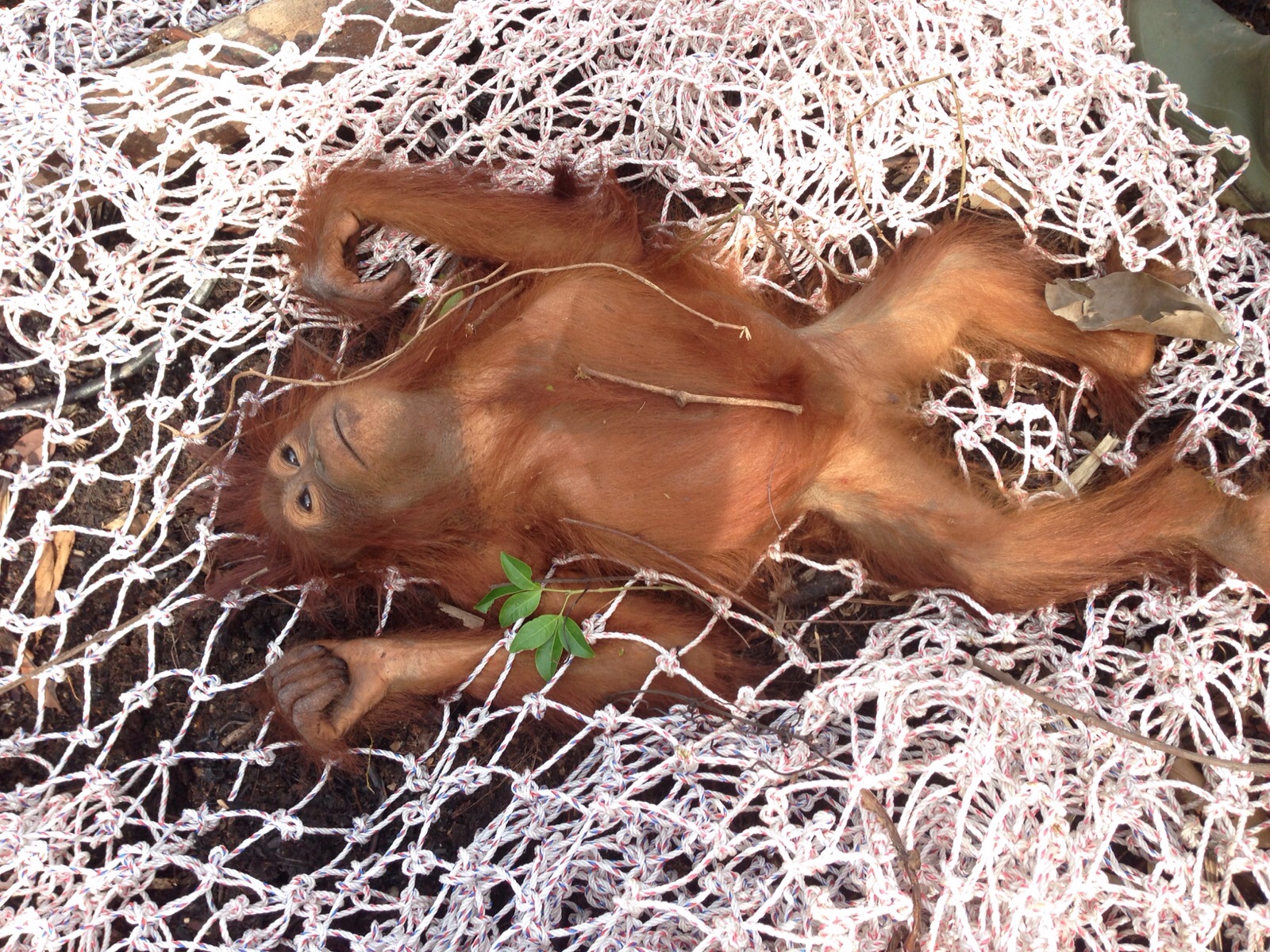
 As you can see in the images below, the habitat where this young orangutan was found has been very badly affected by the fires. Thankfully, the orangutan himself appeared to be in good health and will be released into the Lamandau Wildlife Reserve right away!