Orangutans in London.

Just received this photo and comment from Le Pain Quotidien (the sustainable and community-aware bakery and restaurant) who have been helping us celebrate Orangutan Awareness Week in London. Orangutan outside LPQ

I bet this wasn't in the job description!

"I worked very hard raising cash instead of hosting as it's impossible to do anything in that costume. I only had 1 banana and there was definitely no monkey business. Also I now stink."

Thank you LPQ!

Thanks Sheryl for spreading the word on your blog (http://nothoney.wordpress.com)and at work - much appreciated.

Orangutan Awareness: A Personal View

After my last my about the day at Camp Leakey I received a short email from the Office reminding me that I was supposed to be writing about Orangutan Awareness Week! Whoops. Sally and the Yayorin team will be able to tell you of all the activities. I thought I would offer a simple, personnel view on why I have always supported the week.

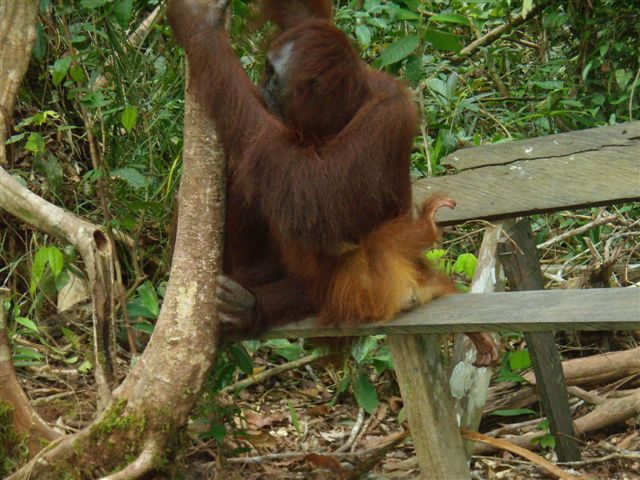
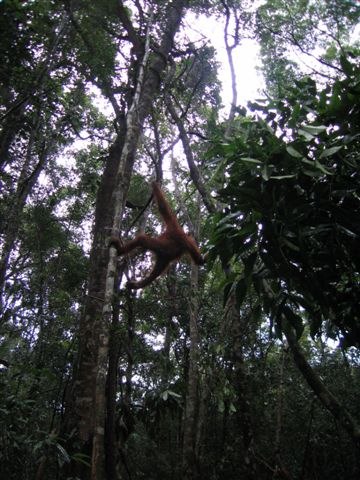
orangutan in tree

we all need trees!

We all need trees.

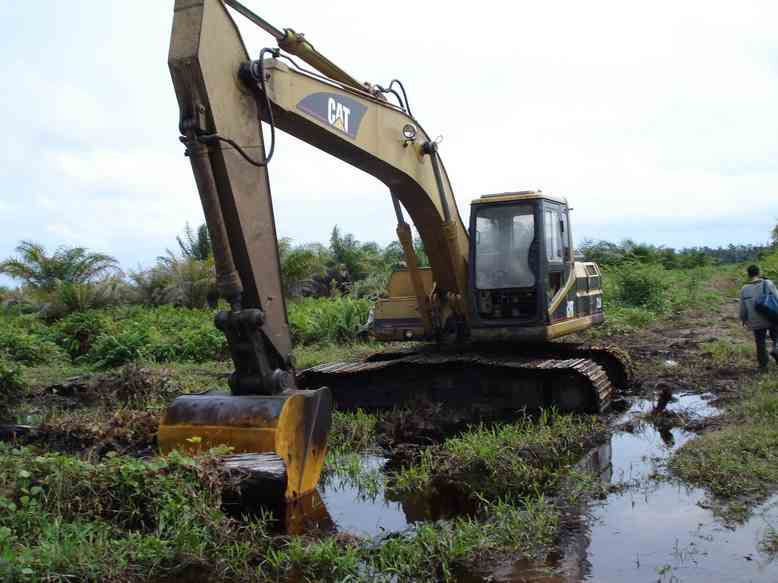
We know how to save orangutans – you just stop chopping down the forest and hunting them. Leave them alone and they will be just fine. But that isn’t happening. The situation here in Borneo and in Sumatra is very bad. Just yesterday, we were told of a proposal to convert another 10,000ha (100km2) into an oil-palm plantation. Not all of that land is forest, but a lot of it is and I guarantee there are still orangutans, monkeys, hornbills and a host of other birds and smaller mammals living there.

Spot the difference

Spot the difference.

What lay behind the local government’s decision to give up more forest? There are a host of reasons but perhaps the ultimate explanation is simply that the return from logging and palm oil translates to cash whereas the returns from standing forest are often intangible. That is a balance that has to be rectified. Which is exactly why Orangutan Awareness Week is so important:

- The loss of orangutans and their habitat is irreversible.

- Consumers need to be aware of the true cost of the products they buy. The driving force behind the move towards sustainable palm oil is consumer pressure.

- National governments need to be aware of the impact of the trade decisions they make. The US is to be applauded for its recent amendment to the Lacy Act which will go a long way to stopping the import of illegally felled timber.

- Here, the local Government needs to be aware that floods which plague the riverside communities are linked to deforestation upstream.

- Farmers need to know that there are alternatives to slash and burn agriculture, that their household income can improve by better use of the land.

- There are huge ethical issues involved in the loss of orangutans as a species let alone the abhorrent killing of individuals. I feel this keenly and am sure many of you do too. However, climate change has now made the loss of their habitat an ethical issue too: tropical forests can play a significant role in mitigating against climate change. Truly, saving orangutans can now help humankind.

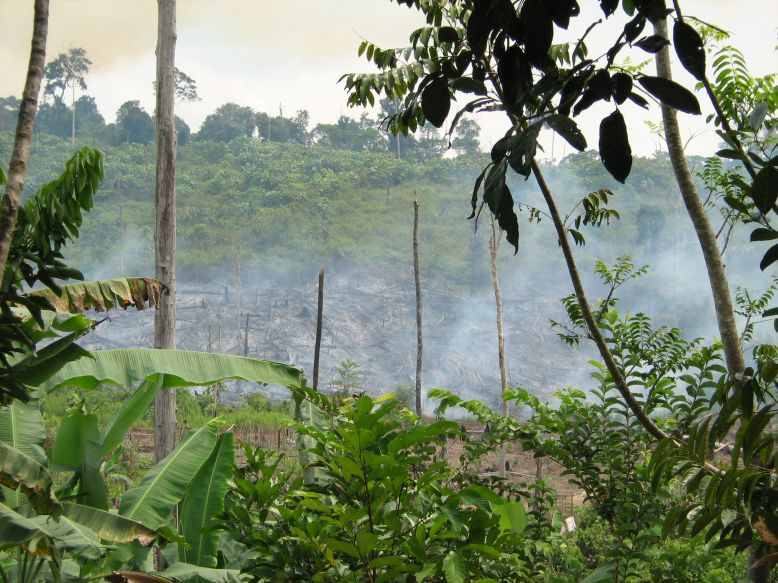
slash & burn

Without Orangutan Awareness Week how many people will know of the link between this smoke from forests and the rise in sea level? Without the work of groups like Yayorin how many people will learn it doesn't have to be this way?

We all have to be involved in this and that’s why Orangutan Awareness Week is international. The bottom line is whether to destroy forests or to save them will remain a choice that many people will have a hand in making. Only with complete awareness will we all make the best choice and orangutans are the perfect flagship or ambassadors for the forest.

orangutan

swamp

What we all need - forests "lungs of the planet"

There are half-a-dozen or so places, Tanjung Puting National Park and the Lamandau Wildlife Reserve among them, that are safer today than they probably have been at any time for the past thirty odd years. Saving them has been a battle and we are now working on securing the peace. We can be proud of those successes but they are not enough. Certainly, we can not be drawn into trading off a few parcels of safe forest for devastation elsewhere. As the 10,000ha mentioned above shows, the battle lines are still being drawn. That has to stop.

The battle lines

The battle lines

Male Bornean Orangutan

I was touched to see the blog by Art for Gorillas on the Wildlife Direct. ). If children in Rwanda can be galvanised to care for orangutans what can’t be done?

As always, thank you for your support,

Stephen

The Origin of Orangutan Awareness Week - by Gary Shapiro, Ph.D. Chairman, Orang Utan Republik Education Initiative.

Todays blog is a guest post by Gary Shapiro, Ph.D. Chairman, Orang Utan Republik Education Initiative. logo

Many orangutan groups work throughout the year to raise funds to support projects in Indonesia and Malaysia where wild and rehabilitant orangutans are found. But in 1995 when I was vice president of OFI, I began promoting the idea of a special week for orangutans as a way to focus collective attention on the plight of the species. While it was started under OFI’s banner, Orangutan Awareness Week became increasingly celebrated each year in November by more and more organizations and individuals.

At schools, zoos, malls, parks, restaurants and other public places, people learned about the orangutan and why its survival is being threatened. Importantly, people learned how they could help save the orangutan by participating with the various organizations that were doing the important work in the field.

In late 2004, my wife Inggriani and I started a new organization, the Orang Utan Republik Education Initiative (OUREI), and asked Parliament member and former Miss Indonesia, Angelina Sondakh to be our Indonesian “Ambassador”.

Angelina Sodakh

Angelina Sondakh - photo from Orang Utan Republik

One of the first things we did was lobbying the Indonesian government to recognize and support Orangutan Awareness Week through OUREI. During the process, it was suggested that the name be changed to Orangutan Caring Week as the Indonesian word for “awareness” did not sound as good as the word, “caring”. It also occurred to us that Orangutan Caring Week conveyed a more appropriate level of involvement we were seeking by the Indonesian people. We all agreed that being aware about orangutans was not enough. Collectively articulating a concern about orangutans would lead to the people demanding that more be done to save the species. So in November 2005, the Indonesian Minister of Forestry in a press conference at the Parliament Building, officially proclaimed “Pekan Peduli Orangutan” or Orangutan Caring Week.

Orangutan in Mall

Sumatran Orangutan Education Consortium pass out information and meet with visitors to Sun Plaza Mall, Medan. Photos from Sumatran Orangutan Education Consortium.

A dozen Indonesian conservation and orangutan groups held an exhibition in the lobby of the Parliament Building in celebration of the special week. The press and television media helped spread the message to millions of people throughout the archipelago.

With official recognition, Orangutan Caring Week has been celebrated in Indonesia each year since that time.
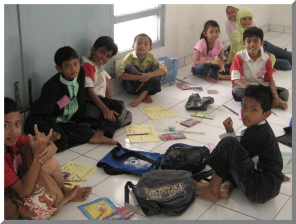
OCW 2007 - drawing

Children's drawing classes, OCW 2007. Photo from the Sumatran Orangutan Education Consortium.
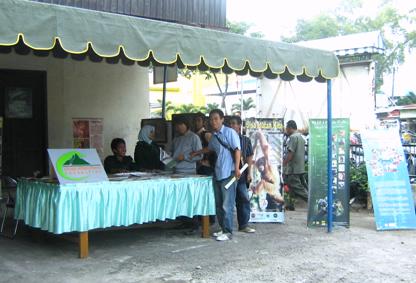
photo fair 2007

Photo fair at Islamic University of North Sumatra 2007 - Photo from the Sumatran Orangutan Education Consortium

Every year the event spreads to more cities and organizations including Java, Borneo, Sumatra and Bali. It is also acknowledged in other countries around the world including the UK, Australia, and the USA. While some organizations are still continuing to promote Orangutan Awareness Week, we should remember it is the collective message that is most important. Surely if we do our job well, we can enroll people to not only become aware of the species but to move them to action.

This year, Orangutan Caring Week and Orangutan Awareness Week are being celebrated over a 2 week period. From November 9-22 orangutan organizations and inspired people will be hosting a variety of events at various locales. On the island of Sumatra for example, the Sumatran Orangutan Consortium, an association of eight organizations (including Sumatran Orangutan Society, Sumatran Orangutan Conservation Program, Fauna and Flora International, the Orangutan Caring Club, Friends of the Orangutan, Leuser Foundation, the Orangutan Conservation Services Program, and OUREI Indonesia) will be holding a rally in Medan Square, passing out literature, screening films, and having open discussions on college campus.

Organizations in other countries will also be participating in events to draw attention to the great ape’s plight. In the UK , Orangutan Foundation will be holding “Orange for Orangutan Day” on November 14 and other awareness activities during the week. The Sumatran Orangutan Society will be holding events at Oxford University and surrounding areas. The Australian Orangutan Project has events taking place in a couple of their chapter regions: Western Australia and Queensland. Zoos such as the Greater Los Angeles Zoo are using the opportunity to increase awareness about all the apes including the chimpanzee, bonobo, gorilla, orangutan and gibbon (Ape Awareness Day: November 9). San Diego Zoo is holding Great Ape Awareness Days, November 13-16).

For more information about Orang utan Republik and how you can help visit www.orangutanrepublik.org

Thank you,

Gary Shapiro

Orangutans at Camp Leakey

I began my monthly report to the UK office by saying “as September was quiet, so October was busy” and I still think that was an understatement! We seem to have been on the go constantly since the holidays which marked the end of Ramadan at the start of October. You will be pleased to know however I have had the chance to spend some of that time looking at orangutans. And yes, I had my camera. Tom

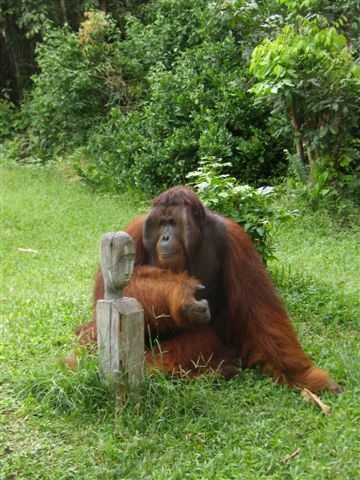
One afternoon spent at Camp Leakey, in Tanjung Puting National Park was particularly memorable. There were very few visitors and it felt as if we had the forest to ourselves. Tom, the dominant male, was around, looking as big as ever.

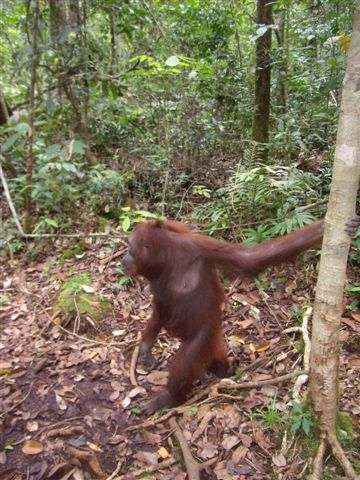
However, it was Princess and her baby Putri who made the real impression. Princess actually walked to the feeding site with us and when I say walked I mean walked. She was not bipedal (walking on two legs) the whole time but she did amble in front of us for a time. That was her chance to show off!

Princess - bipedal

Princess & Percy

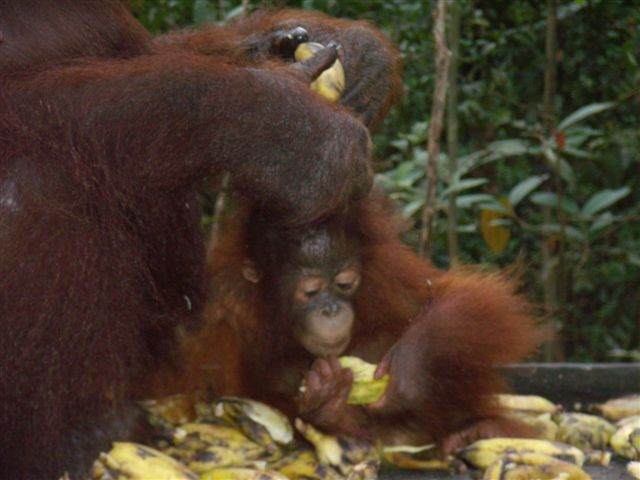
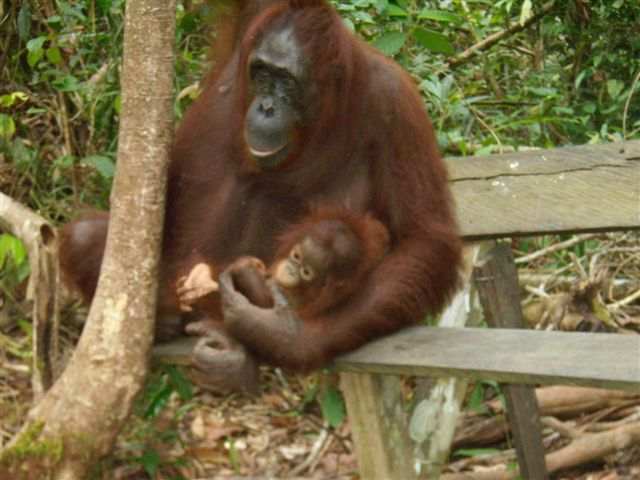
Next it was Putri’s. Once she and her mum had had their fill, they relaxed on the benches on which visitor’s usually sit. Princess began grooming Putri who lay back and loved it. No doubt, if she had been a cat she would have been purring. She got so comfortable when she rolled over she almost toppled off the bench.

Princess & Percy

Princess & Percy

Above us two other youngsters played high in the trees (apologies for the dark photo!).

two young orangutans

However, the sun was setting and storm clouds building, so we had to leave the orangutans in the forest and hurry back to camp. We made it just before the heavens opened.

Save The Tripa Swamps - Sumatran Orangutan Conservation Programme

Ian Singleton, Sumatran Orangutan Conservation Programme's (SOCP) Director of Conservation, has kindly written todays post for this blog to mark Orangutan Awareness Week 2008. This last few years we, at the Sumatran Orangutan Conservation Programme (SOCP), have been kept very busy trying to save the Tripa peat swamps on the west coast of Aceh. Our “normal” work tackles all aspects of orangutan conservation (SOCP photo gallery) in Sumatra including:-

1. Confiscation, quarantine and reintroduction of illegal pet orangutans 2. Research, surveys and monitoring of wild populations 3. Education and awareness raising 4. Habitat conservation, especially the Batang Toru Forests of North Sumatra and the remaining peat swamp forests of Aceh’s west coast.

The Tripa swamp forests probably harbored around 1,500 or more orangutans at the beginning of the 1990’s but in the years leading up to the fall of the Suharto government and the escalation of the Aceh separatist conflict much of these forests were allocated as oil palm estates. Some of these estates cleared their land, established drainage canals and even planted oil palms in parts of their concessions, but all were then left abandoned during the conflict between 1999 and 2005, during which time they became overgrown and drainage canals became blocked and stagnant.

Tripa Swamp - forest clearance (photo from SOCP)

Destruction of the Tripa Swamps (photo from SOCP)

Tripa Swamp -Digging drainage canals

Digging Drainage Canals (photo from SOCP)

Over the last year or two, however, some of them have resumed operations, meaning new forest clearance (logging, burning etc), new drainage canals, clearing some of the old oil palms and planting with new ones. Naturally, many of the activities of these estates is not consistent with existing laws. For a start, peat of greater than 3 m depth cannot legally be converted, and much of the area under these estates has been measured by SOCP and found to be up to 5 m deep or more. There is also a moratorium on all logging in Aceh, issued by the Governor in 2007, but implementation of this regulation in the field is still lacking.

Measuring depth of peat

Much of the peat due for conversion is more than 5 metres deep and stores huge amounts of carbon. (photo from SOCP)

The destruction of the Tripa peat swamps not only endangers the 250 or so orangutans still surviving there, but also has major implications for climate change and for local communities. The peat swamps store vast amounts of carbon, which will all be released to the atmosphere over the coming years if the clearance and drainage is allowed to continue. Drying of peatlands also results in subsidence of around 1 m in 20 years, extremely worrying in an area on the coast that is already only around 1 m above sea level. Given this, the development of these swamps makes no sense, not even economically.

Due to the urgency of this situation, SOCP has been working extremely hard to bring all these issues to public attention. We have been lobbying local and national governments and our education department has been focusing on the local communities in the area. The issue has already been broadcast on international TV programs and published in both national and international media. It seems now that people are beginning to take notice, but we must continue to be diligent.

For more information on this issue please visit our website and download the Tripa value report. Also see a recent article 'Urgent Action Needed Over Sumatran Peat Forest Logging' in the Telegraph.

Thank you,

Ian

Short film of Tanjung Puting National Park

Please take a few minutes to view this short video 'Fragile Haven' about Tanjung Puting National Park by David Willis (it may take a few minutes to load but is worth waiting for). Tanjung Puting National Park is one of the world's largest areas of protected tropical peat swamp and heath forest. The Park has more than 4,000 orangutans making it one of the largest remaining populations in Borneo. Please click on this link (Protecting Tanjung Puting National Park) to read more about the Park and our work there.

Make it an orangutan week!

It's Orangutan Awareness Week 2008! A focus for groups or individuals to hold fundraising events and raise awareness of the threats to orangutans and their rainforest habitat. Stephen will be blogging throughout the week and we will also bring you a couple of guest posts. Gary Shapiro, Orangutan Republik Education Initiative will blog about how Orangutan Awareness Week began and Ian Singleton from the Sumatran Orangutan Conservation Programme will report about their efforts to save the Tripa Swamps in Sumatra. This year we decided to highlight the important role the orangutan’s habitat, the tropical forests of Borneo and Sumatra, has in reducing global greenhouse gas emissions. Deforestation is the second largest cause of global warming. Andrew Mitchell, Director of the forest conservation organisation, Global Canopy Programme and a trustee of the Orangutan Foundation said, “If deforestation is the front line for forests in the war on climate change then orangutans are the ambassadors being burnt at the stake. Emissions from deforestation are equivalent to 36 million people flying from London to New York every day and unless this is halted we will lose the fight against Global Warming. The global community has one year to agree a workable mechanism for including forest emissions in the global climate deal to be agreed next year in Copenhagen. We along with our orange cousins watch with fear and hope." Read Andrew Mitchell's Director's Journal. Close up

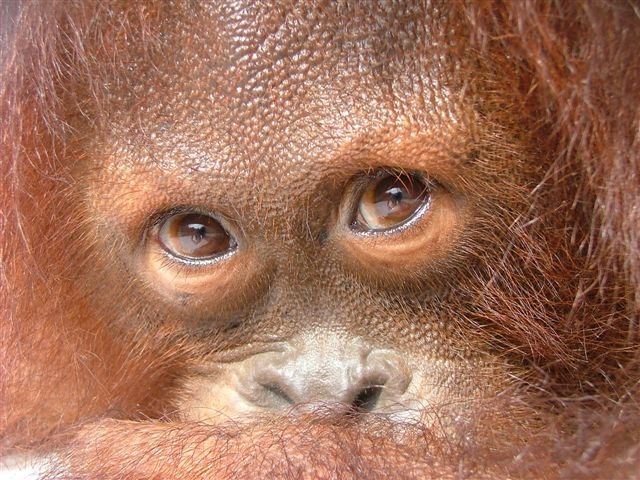
I know Stephen has used this photo before but I think it is well worth using again.

Orangutan Foundation programmes protect orangutan habitat by preventing the destruction and burning of the tropical forests and this helps to reduce global warming. We are also investigating whether it is possible to utilise carbon markets in order to conserve the Belantikan Hulu Forests. Please visit our website to find out more about what we are doing and how you can help. View short film on Tanjung Puting National Park   If you're doing something for orangutans this week we'd love to hear from you and it still isn't too late - go orange for orangutans this Friday!

Brigitta, many thanks for your monthly donation - this regular support is very important to us.

Thank you,

Cathy

Orangutan Foundation (UK Office).

Go orange for orangutans!

Hello again, Stephen is hard at work showing EU correspondents all of our programmes in the field at the moment, so I thought I would use the opportunity to a) ease his workload and b) let everyone know about Orangutan Awareness Week.

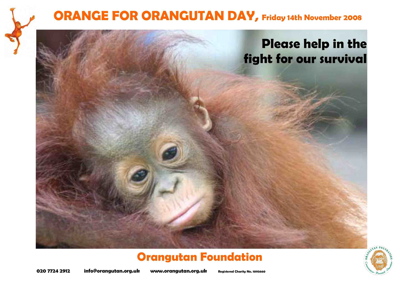
Orange Day Poster

Put the dates in your diary now!

The 10th - 16th November is Orangutan Awareness Week. This week was initiated over 10 years ago with the intention of creating a focal point for fundraising and awareness activities for our supporters. This year we decided that we want to make it easier for more people to be a part of this event and so I came up with the idea of “Orange for Orangutan Day” on Friday 14th November. The concept is simple: as an individual you wear orange clothing, an orange wig, or even dye your hair orange to raise awareness and generate funds for our conservation programmes.

To make it work even better, we ask you to organise your own Orange for Orangutan Day, maybe at work or at school. If everyone involved pays just £1 or $1.50 to do this then we will be able to raise huge amounts of money to invest in conserving the orangutans and their forest home. Interest so far has been amazing, and we are really excited about how people are cottoning on to the idea. In London, restaurants are putting orangutan dishes (tropical fruit salads or sweet potato "orange" mash) on their Special's menu and a London taxi cab will be driving around with an orangutan (not real of course) passenger!

In Indonesia, Yayorin, our partner organisation, are focusing their efforts for Orangutan Awareness Week in and around Pangkalan Bun. They are showing films at schools and villages; participating in a talk show on a local radio station; and putting up campaign banners in strategic points in the town of Pangkalan Bun.

On this blog, during 10th -16th November, we hope to bring you some guest posts. Ian Singleton, Director of Conservation, from the Sumatran Orangutan Conservation Programme is going to post for us. So make sure you check out this blog during Orangutan Awareness Week.

Go on, go orange for orangutans!

Please go to our website for more information about how you can become involved and for fundraising materials.

Many thanks,

Elly

Volunteering again…seven years on

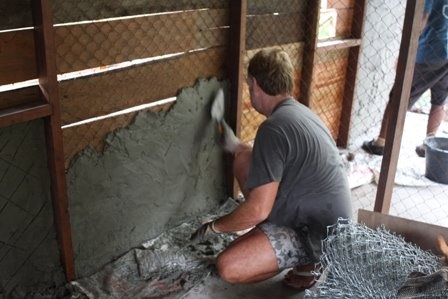
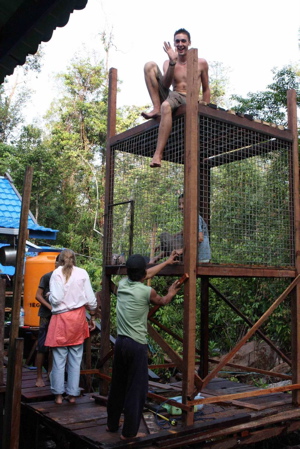
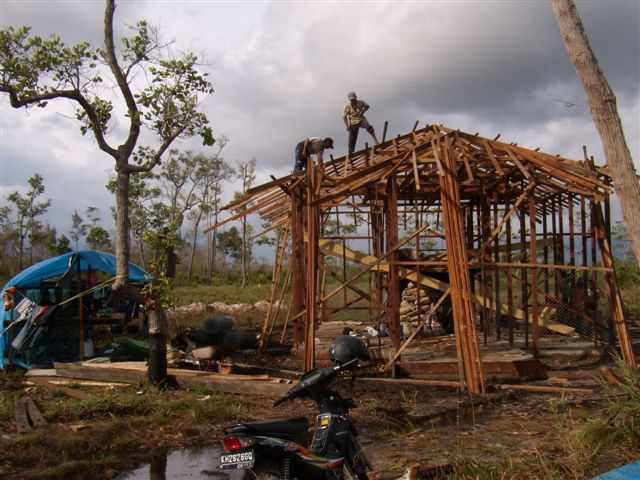
Our volunteer programme is now in its 10th year, which is testament enough to its success. Paying volunteers inject an income and workforce into our field projects and without volunteer participation our orangutan release sites would not be nearly as smooth-running or numerous as they are. In the past, volunteers have also built guard posts, constructed portal gates across rivers to block illegal loggers and constructed the Pondok Ambung Tropical Research Station. This year the teams have built a release site at Camp Mangkung (see former post “Orangutan Release Site Nearly Ready”). Building the release site.

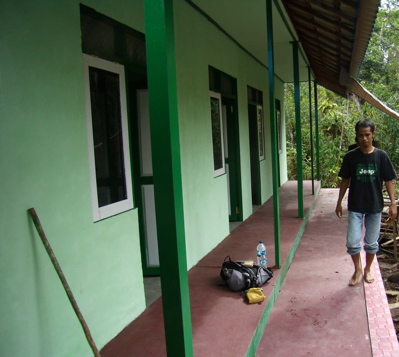
When I joined the programme the main buildings were all up and there was just cementing, attaching of doors/windows and a load of painting to do. I arrived mid-afternoon to the sound of hammering, sanding and Bon Jovi (music, preferably cheesy, is always a necessity for motivation in the afternoons!). The river had risen sufficiently to render the camp an island and it instantly reminded me of Big Brother just for the sheer lack of space.

Camp Mangkung -Vol Prog 2008

I always tell volunteers about the lack of “head space” when they are flung together as a group for 6 weeks with no email/phone etc, but even I myself was not quite prepared for the lack of physical space to move around. These guys had had it for four weeks, and yet they were still upbeat and working hard, joking and laughing (admittedly quite a few Oreos were eaten, but we all need a sugar fix every now and then). It just goes to show, provided you have passion for the cause for which you are working, you can keep motivated whatever.

Vol Prog 2008

I happily got stuck in to the work for the short while I was there and was delighted to manage not to remove any thumbnails, or cement anyone to the floor! It was so good to just get down to work, have a bit of chat, and not be stuck looking at a PC. The work is physically quite tough, but to be able to step back and see the finished product at the end of your time there really does make it worthwhile. This could explain why we had to take several pauses during the work…..

I can honestly say that the programme really has not changed at all since my first time; the only difference is that the Indonesians assistants are more into wearing boardshorts than combats these days and there is a greater range of chocolate snacks brought into camp to cheer up flagging volunteers.

Camp Mangkung -Vol Prog 2008

I was also pleased to slip back into the way of life there where evenings are spent drinking tea and chatting and learning Indonesian with the local guys working there. It really does make you re-assess how we spend our time back at home. In fact, the volunteer programme seems to make everyone take stock of their lives, motivations and beliefs when they get home. It may sound clichéd, but all of our feedback to date suggests that volunteers see the programme as a time when they saw another side to life as well as thoroughly enjoyed themselves whilst doing something constructive and beneficial for the orangutans and the forest.

Vol Prog 2008 - release site

I left the volunteers on the final stages of the building, safe in the knowledge that they would get their reward going to Camp Rasak to see an operational orangutan release site. Apparently they all loved it, which is perfect; the fruits of their labour should be echoing the activity of Rasak in a few months, and they can all be proud. Some people are even talking about coming back next year, so maybe they will be able to see it in action. Thanks to Jordi Clopes for all these photographs.

If anyone wants to know more about the volunteer programme then please have a look at the brochure on our website. Volunteer Brochure

I am now (sadly) back in the UK and the contrast to the Indonesian laid-back culture could not be greater. Madness seems to have hit, and the interest in Orangutan Awareness Week and Orange for Orangutan day (November 14th) is all consuming…..

Visiting Orangutan Foundation Programmes

As you will no doubt know from Stephen’s posts about a month ago, I recently ventured out of the London office and over to Pangkalan Bun (Borneo) or, more accurately “the field”. This was not my first time there; my employment here (for my part!) is the result of me being completely overwhelmed by the plight of the orangutans when I stumbled upon the Volunteer Programme in 2001. Amongst other things, I now run the Volunteer Programme here at Orangutan Foundation and continue to get enormous pleasure from arranging for people go over to Indonesia for what pretty much always ends up as a life-changing experience. The small size of the UK office means that I have my fingers in many of the Orangutan Foundation pies and so my trip out there was also to see the programmes that I write about day-in-day-out. In short, it was an amazing trip and reminded me that I work primarily to save the orangutans and their home, something that seems to slip the mind in hectic times.

The highlight was most definitely going to Camp Rasak (orangutan release in Lamandau Wildlife Reserve) and knowing that the orangutans I saw in the trees were primarily orangutans that would have been in the Orangutan Care Centre on my last visit in 2001. A close second was Belantikan. It really is a beautiful area and needs to be saved.

Belantikan Forest

Belantikan Forest

Belantikan Forest

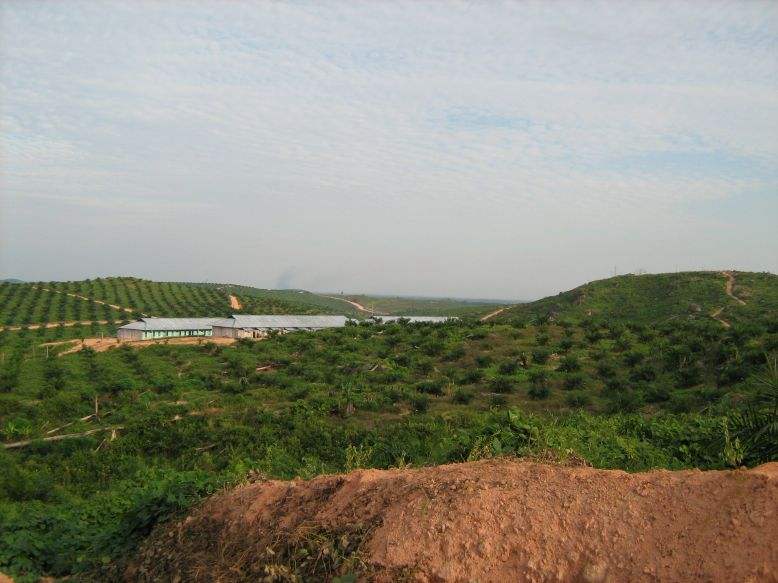
It not only has orangutans but is some of the most amazing forest that I have ever seen (and I have seen a lot). Time is key too – in an eight hour journey there we drove through oil palm for six hours and heavily logged areas for one hour.

oil palm plantations en route to Belantikan

oil palm plantations en route to Belantikan

oil palm plantations en route to Belantikan

Oil Palm Plantation

logging in the Belantikan

Logging on the journey to Belantikan

It really was quite surreal –little dumper trucks carrying kernels or actual palm oil were the only traffic on the road…..and they seemed to infiltrate EVERY bit of land….

Seeing this destruction on the way really enforced how important our work with Yayorin, our Indonesian partners, in Belantikan is for these forests, its wildlife and the local communties who live here.

Catching up with the Volunteer Programme seven years on was one of the main reasons for me to go to Indonesia. I said I'd try and post about my time on the programme so I'll do this in the next few days!

Thanks,

Elly

Development & Volunteer Co-ordinator UK Office

A New Guard Post in the Lamandau Wildlife Reserve

After the orangutan Zidane was brought back to the Care Centre in such an awful condition (A very sick orangutan) we promised we would take action. The subsequent Forestry Police patrol along the Buluh River and the community meeting we organised did not unearth the culprit but would have left no one in any doubt that the matter was being taken seriously. New Guard Post October 2008


The next stage was to prevent access into the Reserve from the western side. Jak, our Patrol Manager, has organised the construction of a new post (photo above) which is well on its way. I went over to have a look at the site last week. Its location is strategic and we are confident mobile patrols from this post will prevent people illegally entering the Reserve.

My apologies for my infrequent posts over the last couple of weeks; I am still here but find myself running just to stand still!

Best wishes,

Stephen

Sustainable Agriculture Can Help Protect Orangutan Habitat.

Other than Kampung Konservasi's simple facilities such as the library, theatre, etc., we also use most of the area as sustainable agriculture demonstration plots. We grow and successfully harvest tomatoes, chilies, cabbages, string beans…all organic! We also keep fish and cows. We believe that if sustainable agriculture is done correctly, it can actually improve the degraded environment, protect native species, as well as eliminating current destructive agricultural practices, such as slash-and-burn. Agricultural Demonstration Plot

Agricultural Demonstration Plot

Sustainable Agriculture Plots at Kampung Konservasi

Natural Fly Trap

Natural Fruit Fly Trap

Almost half of Kampung Konservasi’s ground used to be peat swamp; a few areas of this swamp were even as deep as grown man’s chest. Many local people believed that nothing can be done in peat swamp areas, and we already proved that we can farm fish very successfully there, using very simple materials to make the ponds such as bamboos and sand bags. We also bought a couple of cows because they are the best compost producers, and we can also sell them at the end when they grow bigger.

Below Organic Compost - the secret to our success!

Organic compost

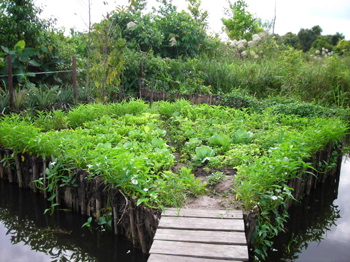
Aquaponic Demonstration Plot

Aquaponic Plots - Fish pond around the island where vegetables are growing.

Kampung Konservasi used to be a barren land it is now a thriving and lush place. We have encouraged the return of insect, bird, reptile and amphibian species. Through our agricultural practices soil and water quality has increased. In addition to growing vegetables we have also planted more than 100 tree species, ranging from fruit trees (mango, durian, rambutan, guava, papaya and pineapple) to Bornean endemic hardwood trees (ulin, gaharu, agates, and rattan, especially the local species). All plants have been labelled with signs showing the local, Indonesian, English and Latin names and information about the importance of the plant or its useful properties.

Nursery

seedlings

Nursery and seedlings

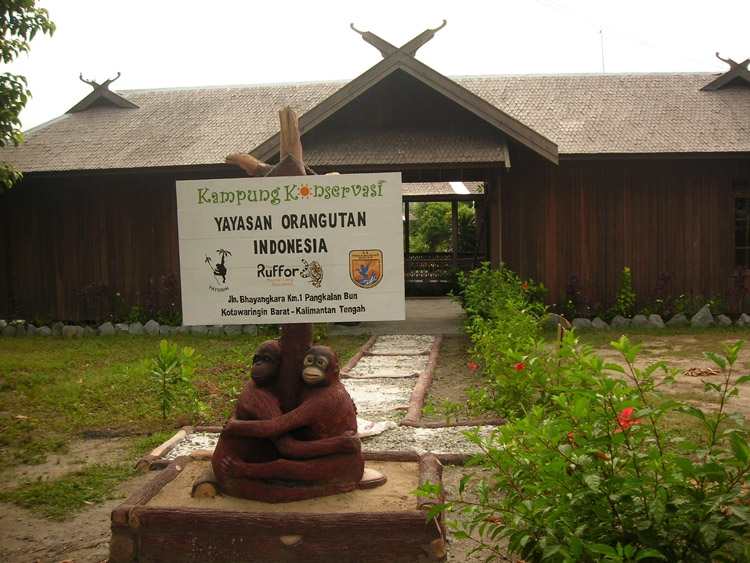
Kampung Konservasi Sign

Kampung Konservasi Entrance Sign

Everything is to demonstrate to the local people and farmers that sustainable agriculture is a very promising income-generating activity for them to do. We are proud to report that individuals and groups have already adopted our agriculture methods in their own gardens and areas.

Terima Kasih,

Sally (Yayorin)

Kampung Konservasi - Every Place Is A School. Every Person Is A Teacher.

Stephen only got back last night from being in the field and today left for Singapore to renew his visa - sorry no posts from him. So for this week over to Sally, from Yayorin..... Kampung Konservasi (Indonesian for Conservation Village) is an integrated environmental learning facility ran by Yayorin (Yayasan Orangutan Indonesia) at the city of Pangkalan Bun in Central Kalimantan, Indonesian Borneo. What started as a dream, now has become a dynamic place where people come to learn more about how to live “in harmony with nature”, a concept barely heard of in the area before.

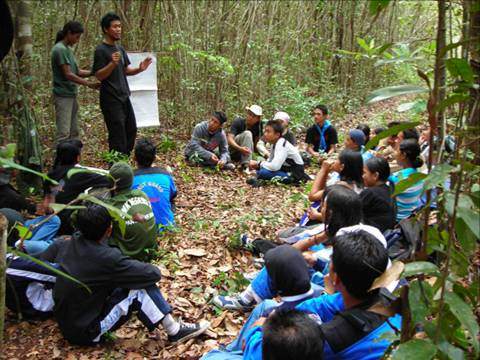
Forest Classroom

The idea of Kampung Konservasi is quite simple really. Because Yayorin believes that there will be no real conservation without education, we felt (and still do) that people, especially those who live surrounding the orangutan habitats, must be introduced to the idea of “nature conservation” in more direct, simple, personal ways. We need an education center; a place where people can actually go to. We cannot just preach and say “Do not cut the trees!” or “Do not kill the orangutans!” because most of those who did illegal logging practices or illegal wildlife trade in this area only did that out of necessity. They needed the money to survive. If we really want conservation to happen, if we really want people to take conservation seriously, we need to work with these people and offer them alternative ways to make a living.

Children reading at Kampung Konservasi

As I mentioned before, Yayorin believes that education empowers people. We believe that we must educate the young, and that is why in Kampung Konservasi we arguably have the biggest environmental library in the whole Kalimantan, regularly play environmental movies in our little theatre, offer small, informal “classes” for children to take part in and work together with local schools in many other environmentally-related activities. In addition to that, Kampung Konservasi receives visits from school teachers, student groups, youth groups, farmer groups, church groups, government groups and individuals almost every month.

Kampung Konservasi’s educational activities

Since its first opening for public in March 2006, Kampung Konservasi has grown so much. Through the Orangutan Foundation UK we have received operational funding from The Rufford Maurice Laing Foundation for three consecutive years; and some generous groups of people also donated funds for us to purchase more lands to enlarge our sustainable agriculture demonstration plots (more on this next time). There are still so many things to be done and so many people to be reached, but the future certainly looks promising for this exciting program. We hope that we can continue to bring you updates on Kampung Konservasi on a regular basis in this blog.

Visit us using this Virtual Tour

Terima kasih,

Sally (Yayorin)

Meet our partner, Yayorin (Yayasan Orangutan Indonesia)

We would like to introduce Yayorin (Yayasan Orangutan Indonesia) a grass roots conservation NGO. Stephen has mentioned their work in this blog because Yayorin are our partners on various programmes including the Belantikan Conservation Programme (see sidebar categories). Yayorin are an inspiring and committed organisation and we have learnt a great deal from their work. Because of this we want you to hear more about what they do. Once a month they will post an update here and hopefully, if time and resources enable them, they can increase the frequency.

We value our partnership with Yayorin, which stems from our shared vision that nature conservation benefits local communities and that the promotion of this idea is reliant on an educational infrastructure at a local level. We fully support Yayorin’s education and awareness programme REASON (Raise Education and Awareness to Save Orangutan and Nature).

Kampung Konservais is a major component of REASON. Indonesian for Conservation Village, Kampung Konservasi is an intergrated environmental learning arena. Its purpose is to encourage learning about environmental conservation issues and to demonstrate sustainable, alternative income-generating activities for people who live close to the forests.

I haven’t been to Kampung Konservasi but those who have visited are captivated by the place. Here is a sneak preview (link to virtual tour). Sally Tirtadihardja, from Yayorin will blog about the goings on at Kampung Konservasi and I hope you will enjoy reading them, as much I will.

Many thanks,

Cathy

Orangutan Foundation (UK)

New Vet For Lamandau Wildlife Reserve (orangutan release site)

Last month we were awarded a grant by the Gemini Foundation to implement a system of veterinary health care for the orangutans released into Lamandau Wildlife Reserve. This will mean recruiting our own vet, which is very exciting. In Lamandau there is a system of post release monitoring and the orangutans are given supplementary food to help with the transition back to the wild. However, approximately 5 – 6% of all released orangutans are taken back to Orangutan Care Centre & Quarantine at some point, most commonly for small injuries or skin diseases and very rarely for more serious conditions, like Zidane. In common with all orangutan rehabilitation centres the OCCQ is full to capacity so the return of orangutans only puts an extra burden on them. Having a vet in Lamandau will reduce the chance of orangutans returning to the OCCQ, thus minimising potential stress caused to the orangutans as well. Tigor (Lamandau Rehabilitation Camps Manager) and I have finalized the job description and the advert has now gone out. Interviews will begin at the end of the month.

On to less interesting matters, it is report time again. October marks the start of the final quarter for the year; this is the time when we panic about how much or how little money is left over and what is still to be done. The written reports I can handle, it’s the budgets that I struggle with!

How I feel tackling accounts! (Photo by Sarah Seymour)

I probably share the same expression when I have to tackle Excel! (photo by Sarah Seymour)

Back at University, I remember courses on cell structure and function, zoo-physiology, population genetics, the biology of animal adaptation. I do not remember Accounting 101! What on earth is the meaning of “=SUMIF ('General edger' !$C$49:$C$115,C72, ' General Ledger'!$F$49:$F$115)”?

How I feel tackling accounts! (Photo by Sarah Seymour)

I love the two photos in this post, courtesy of Sarah Seymour. While the orangutans are undoubtedly cuter, their facial expressions remind me of mine as I look at those Excel spreadsheets.

Are released orangutans really in the wild?

Bernadette thanks for your interest and yesterday’s question: Is the feeding site to ensure that the released orangutans can get food if they aren’t able to in the wild? I’d like to know more about how the release site will function? Is it a huge enclosure, or is it really the wild? Rehabilitated orangutans, released into the Lamandau Wildlife Reserve, are given supplementary feedings every day. This ensures they maintain their physical condition during the transition period from life at the Orangutan Care Centre & Quarantine (OCCQ) to life in the wild. The feedings also decrease potential competition with wild orangutans and they allow us to monitor the released individuals. Frequently, the only time they are seen is when they come in for food.

Orangutan in Lamandau

Orangutan in Lamandau

Orangutans in Lamandau (sorry the photos are so dark).

As for the question of how wild it is: it is definitely wild. The Lamandau Wildlife Reserve has no fences. It is 760km2 most of which is forested. As you can see from the attached map, our guard posts protect the buffer zone (between the Reserve and the Lamandau River) which adds to the area available to the orangutans.

Map Lamandau and Guard Posts

Just yesterday we counted six species of birds as we ate lunch on the jetty. During the time the volunteers were staying there they saw, red leaf-eating monkeys, proboscis monkeys, pig-tailed macaques (very rarely seen), a mouse deer and some snakes (admittedly the snakes were not so popular!).

They also saw leeches. However, let’s not be too hard on leeches as abundant leeches are a good indicator of a healthy mammal population; after all they do not exist just to prey on you and me. So even the leeches help answer your question. It is wild.

Thanks,

Stephen

Orangutan Release Site Almost Ready.

There is always something disconcerting about taking off your wet boots at the end of a day and having a big, fat leech drop out. The one that rolled out of my right sock yesterday, on my way to the new orangutan release site, was almost the size of my little finger. The one that was stuck to the inside of my calf (which I found later in the shower) was still filling up. That’s what you get walking through swamps in Borneo! Leeches don’t horrify my, the buzzing of mosquitoes and their annoying, itchy bites are, I think, worse. Anyway, the purpose of this blog wasn’t meant to describe the various blood-sucking invertebrates we encounter. Rather it was to tell you of yesterday’s trip to Camp Mangkung in the Lamandau Wildlife Reserve, our newest orangutan release site which was being built by our volunteer teams. The good news is the camp is just about finished. The volunteers have done another great job. Mangkung Vols Oct 08

Mangkung release site

Orangutan Painting Camp Mangkung

Orangutan Painting Camp Mangkung

Photos showing the almost finished release site (and some fine artwork) at Camp Mangkung in the Lamandau Wildlife Reserve.

Despite madly fluctuating water levels and pretty rudimentary construction skills the dining hall and sleeping accommodation are complete. All that still needs to be done is to build the toilet and wash rooms and then tidy the site.

We walked into the surrounding forest to scout potential feeding sites. Hanging the tyres won’t be a problem! Which reminds me to say thank you to everyone who has donated so far and to Brigitta, for your latest $20 donation; we already have enough for putting tyres up at Camps JL and Rasak. If you can continue to help us we will soon have enough for the remaining camps.

At the end of the day, rather than go back via the river, Dan Ward (volunteer coordinator) and I decided to walked out. I wanted to see what access would be like when the river is low. It was a great walk, except for the fact I did not find the leeches until I got home!

Update on Zidane

In haste, I was out at the Orangutan Care Centre yesterday and managed this time to catch up with Zidane. He was having quiet time with one of his carers. They say he continues to improve, being more lively and interested in food. Fingers crossed he keeps making progress.

Zidane 3/10/08

Zidane 3/10/08

Thanks,

Stephen

Sad and Rare Death of a Baby Orangutan Killed by a Pig.

Tragedy struck us again this week with the news from Camp Leakey, in Tanjung Puting National Park, that Tut, a female orangutan, had her two-year old baby killed by a pig. It appears the pig and orangutans were near to each other in Camp when the pig turned and snapped at Tiido, catching the young orangutan around the head. One bite was enough. Tut immediately picked him up and when the assistants rushed over they could see Tiido was still alive but, within an hour, he was lying limp in his mother’s arms.

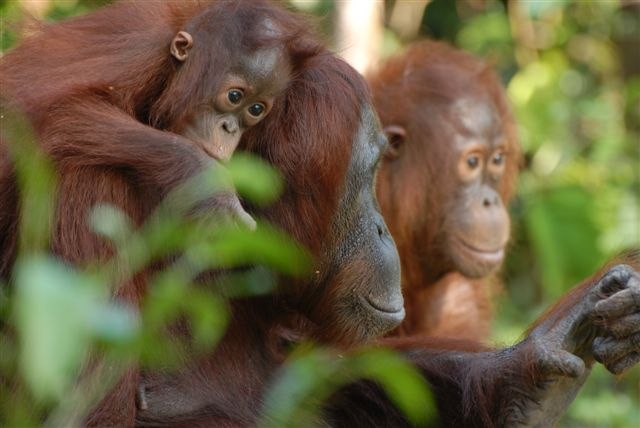
I am afraid I don’t have a recent photo of Tiido but if you zoom in on the photo below, of Tut sitting by the tree, you can see a tiny arm across her waist. That was Tiido when he was new born.

Tut September 06

Peter’s photos show him when he was a year old. I am afraid I don’t have more recent photos.

Tut -Peter Ellen

Tut and Tiido -Peter Ellen

Tut with her beautiful baby Tiido. Photo by Peter Ellen.

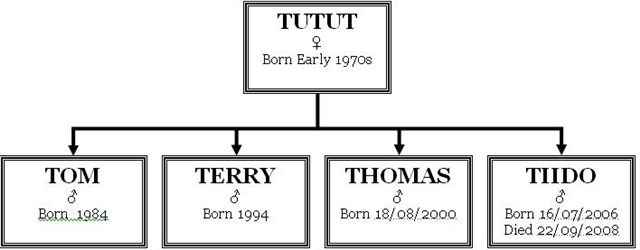
Tut was released at Camp Leakey in the very early days of Biruté Galdikas' research there. Indeed, she is the mother of Tom the present “King of Camp Leakey". Tiido was her fourth son.

Tut family tree

Bornean Bearded pigs are common in this area primarily because they are omnivorous; they will eat anything. This means they can survive in a wide variety of habitats including oil palm plantations – where they are considered pests – as well as in dense forest. They tend to hang around the orangutan feeding stations so they can scavenge left-overs or dropped fruit.

Bornean Bearded Pig

Bearded Pig

They are temperamental and have been known to chase orangutans, probably in the hope the orangutan will drop the food they are carrying. In 1985 Biruté Galdikas reported a pig killing a young orangutan. But this week’s incident was the first of its kind in over 20 years.

Regarding Tiido’s death, I know people will say “that’s life; it is nature red in tooth and claw”. In my heart of hearts I agree with them. But I still feel sick and a little heartbroken (I threw a branch at the first pig I saw on Saturday).

To end on a positive note, thank you very much Maciej G. for your donation of $130. This is hugely appreciated and will go towards our new feeding system in Lamandau.

Orangutan Making Good Recovery.

Thank you all very much for your kind and supportive comments on Zidane. Yesterday, I had to go out to the Care Centre again and so took the opportunity to look in on him. I couldn’t believe it – he wasn’t there!!! The vets said he had been so energtic in the morning, once his sleeping-cage door was opened he took his carers hand and wandered off into the nursery forest. Time was limited so I did not follow him out there. Clearly though he continues to go from strength to strength.

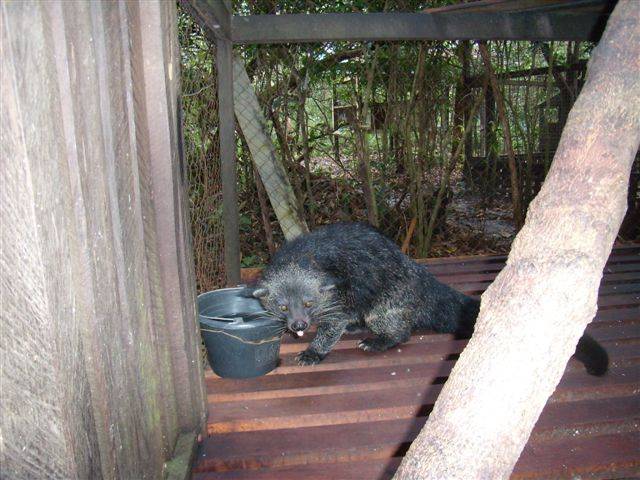
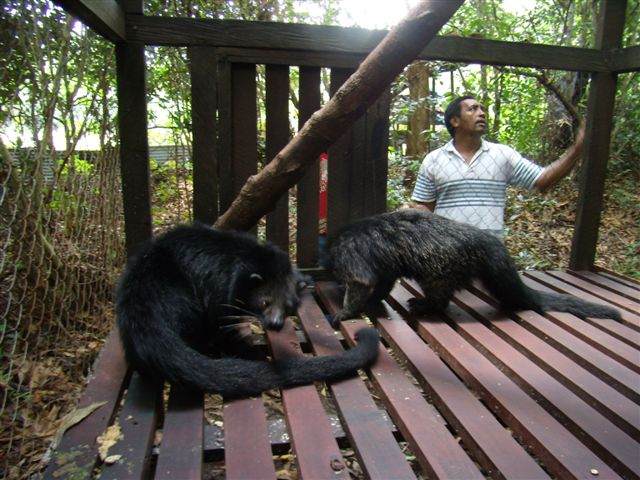
I did however pop over to see the binturongs.

binturong

They weren’t best pleased to be woken up in the middle of the day but did happily come down for a sniff around. I still think they are amazing. Scientifically, binturongs are classed as carnivores in the family viverrids, which includes civits and genet cats. It may be simpler for US readers to think of them as racoons with attidute or, for European readers, to imagine a badger with a prehensile (gripping) tail.

binturong & Mr Sehat

By the way, the man next to the binturongs’ cage is Mr Sehat, the senior assistant at the Care Centre. He is absolutely amazing with the orangutans and is, beyond all doubt, Montana’s best friend.

There have been a few comments asking about who shot Zidane. These are good questions and it is still being investigated so unfortunately I can't give you any more information at the moment.

Thanks again,

Stephen