
The only threat facing orangutans is habitat loss. In the last two months, two orangutans had to be rescued from community lands and returned to the forest. Though we try to avoid rescues at all costs, in some cases there is simply no other choice.
It is no secret that the human population is growing. According to Our World in Data, in just 70 years, Indonesia's population has more than tripled — equivalent to adding a new United Kingdom every decade.
As communities expand to support more people, neighbouring forests are becoming smaller and fragmented, placing wildlife such as ‘the forest ape’ more at risk to entering community land.
From a Coconut Tree to the Forest Canopy
On May 11th, our government partners BKSDA received a report from a local resident that an orangutan was stranded in a coconut tree in his garden. Once at the scene, our rescue team always tries to encourage the orangutan towards the forest as a non-invasive response.
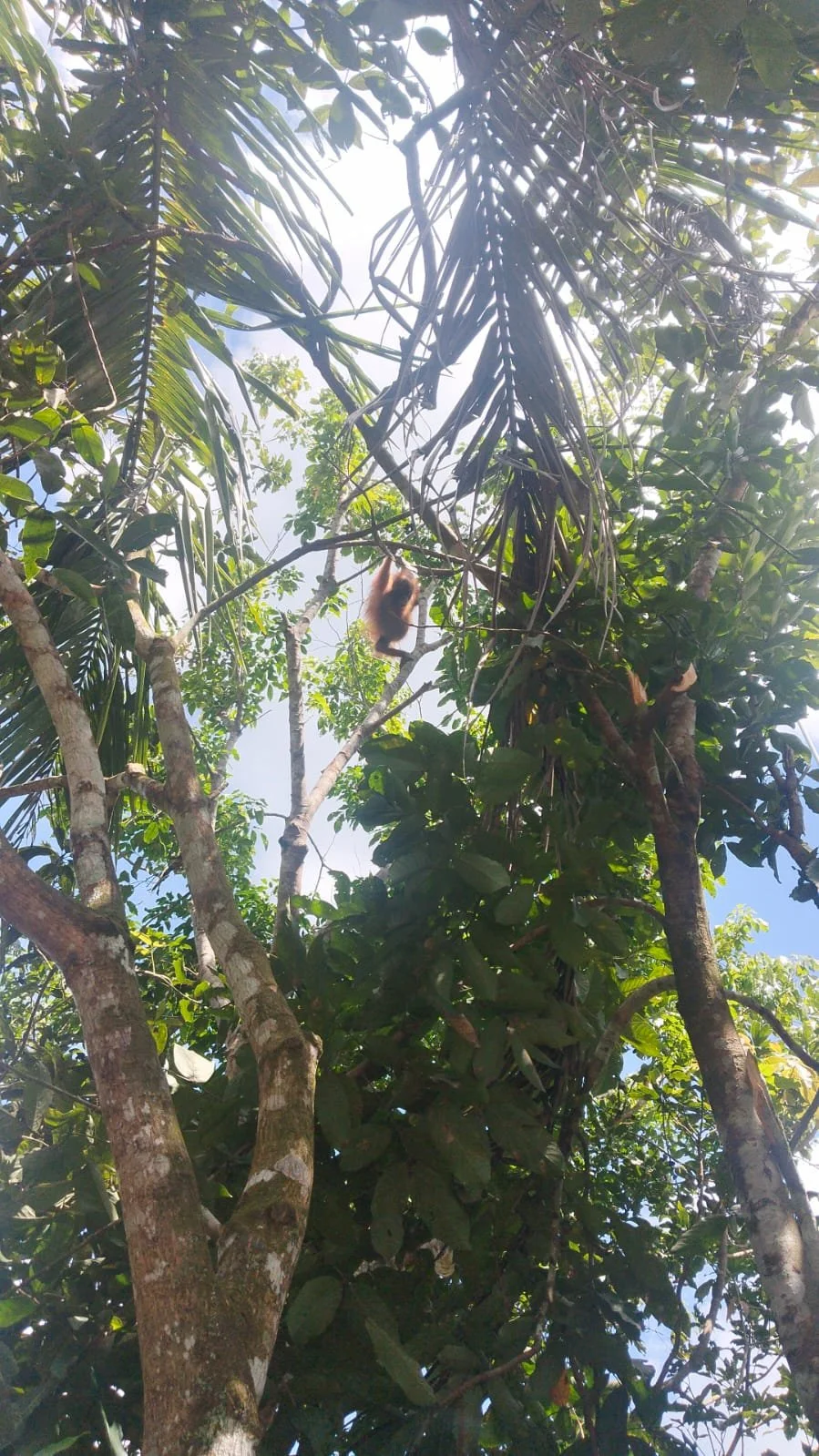
Mirna stranded in community garden
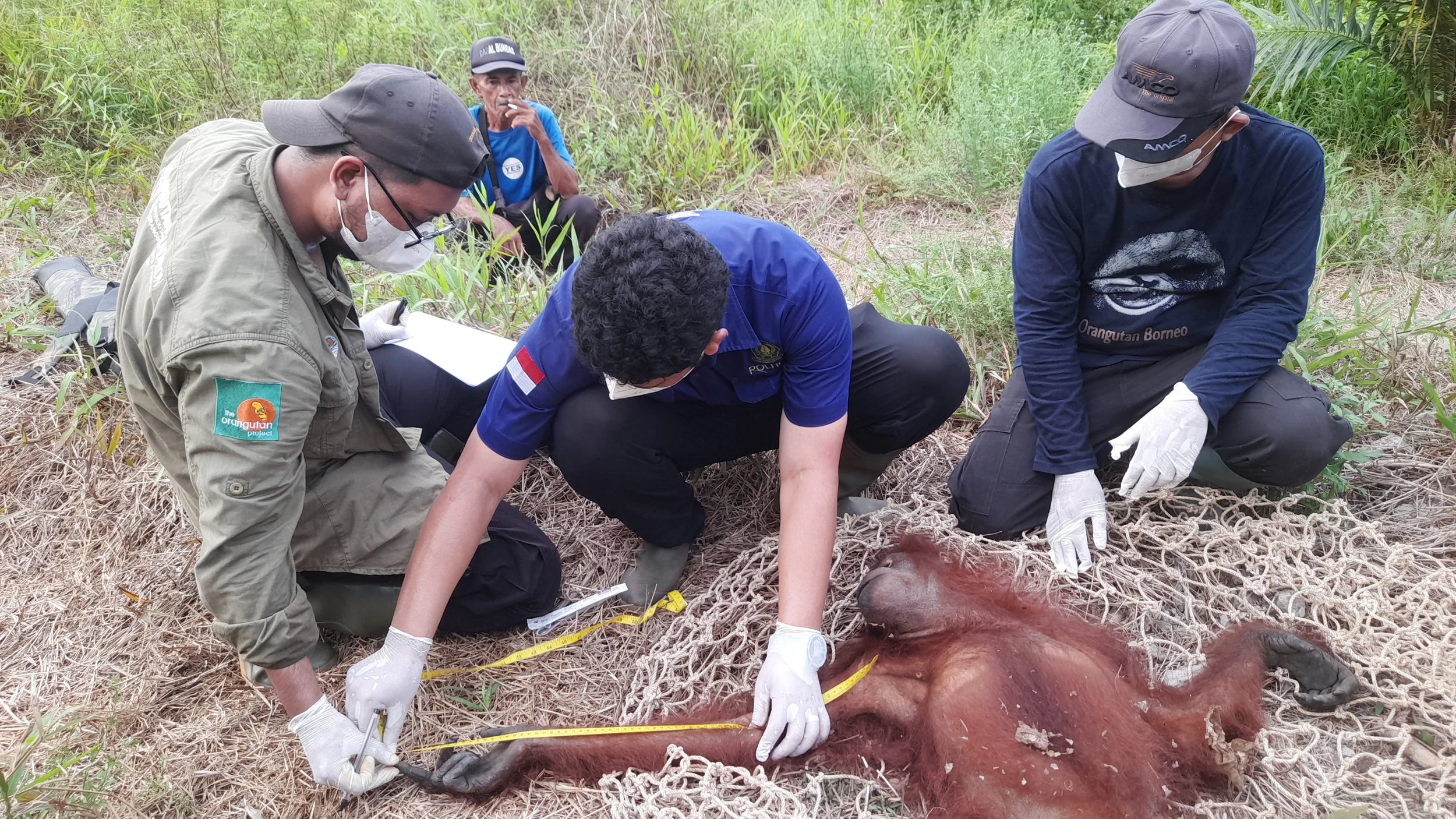
With no luck and no obvious routes back to the forest, the team decided that on this occassion a rescue was the best option. The orangutan was safely sedated, with a veterinary assessment revealing she was a 5-year-old.
At this young age, orangutans are usually with their mothers or only recently parted ways from her. It takes many years for orangutans to learn the map of the forest, and it is likely that in her early independence, this female had become lost.
The female was released into the protected Lamandau Wildlife Reserve, where she immediately disappeared up a nearby tree. We are grateful that with increased community outreach, individuals know how to report displaced orangutans, giving them a second chance at life in the wild.
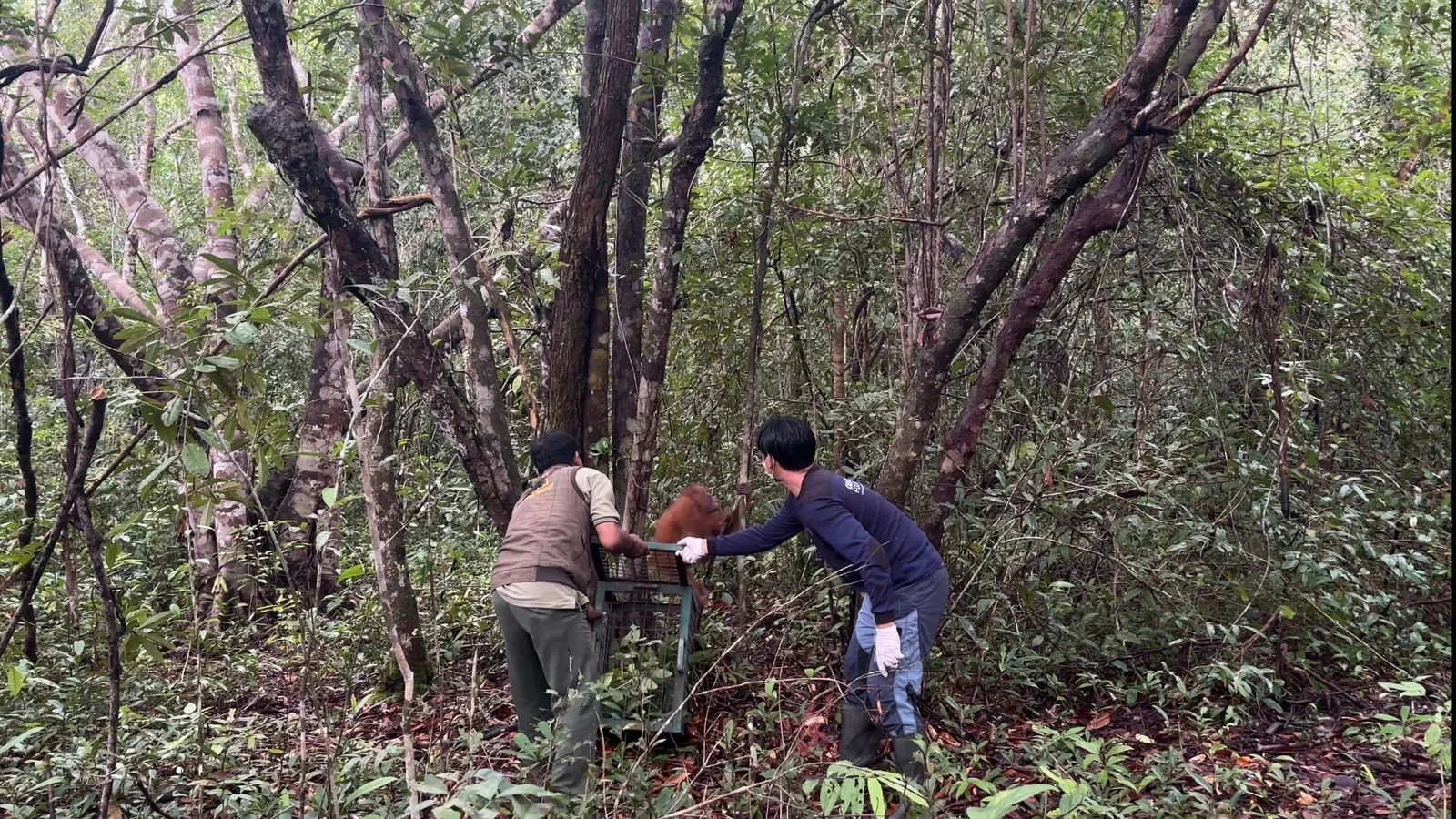
Mirna’s release
The Extraordinary Journey of Sanubari
For three days, an orangutan remain stranded in a rubber plantation, with no movement toward the forest. With no signs of the orangutan making it back to the safety of the forest, the plantation owner called BKSDA.
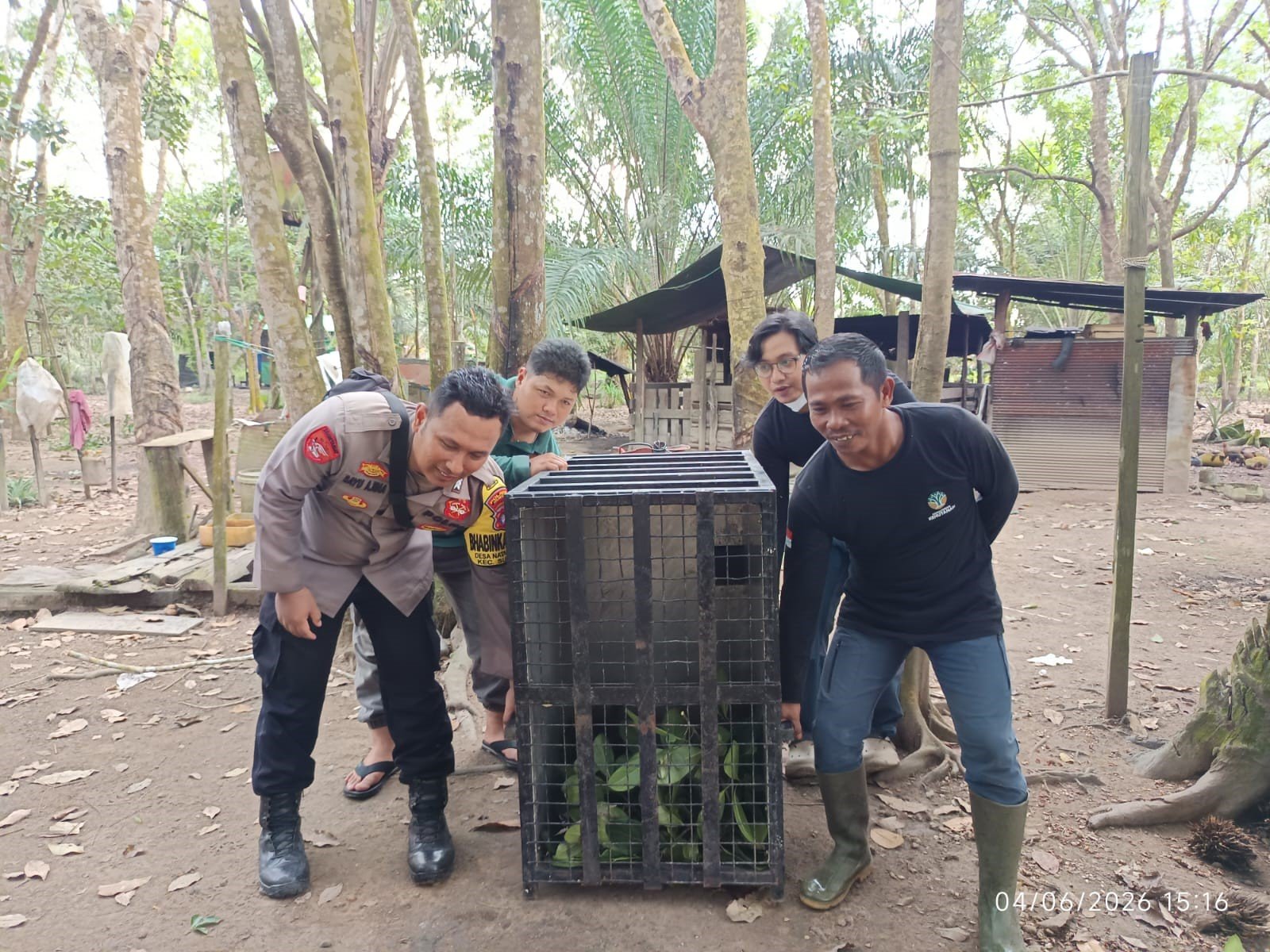
Staff rescuing Sanubari from rubber plantation
Unable to encourage the orangutan in the direction of the forest, the team decided that again a rescue would be necessary. The animal was safely tranquilised with the rescue taking 3 hours.
But this orangutan was already microchipped – it was a previously reintroduced orangutan, released into Lamandau Wildlife Reserve in March 2026. It has travelled 37km – nearly the length of a marathon - in just 72 days.
The orangutan was returned to Lamandau Wildlife Reserve and immediately began foraging on leaves as if it had never left. Sanubari's journey is a powerful reminder of the resilience of orangutans and the importance of collaboration between local communities, conservation partners, and wildlife authorities in safeguarding extraordinary biodiversity.
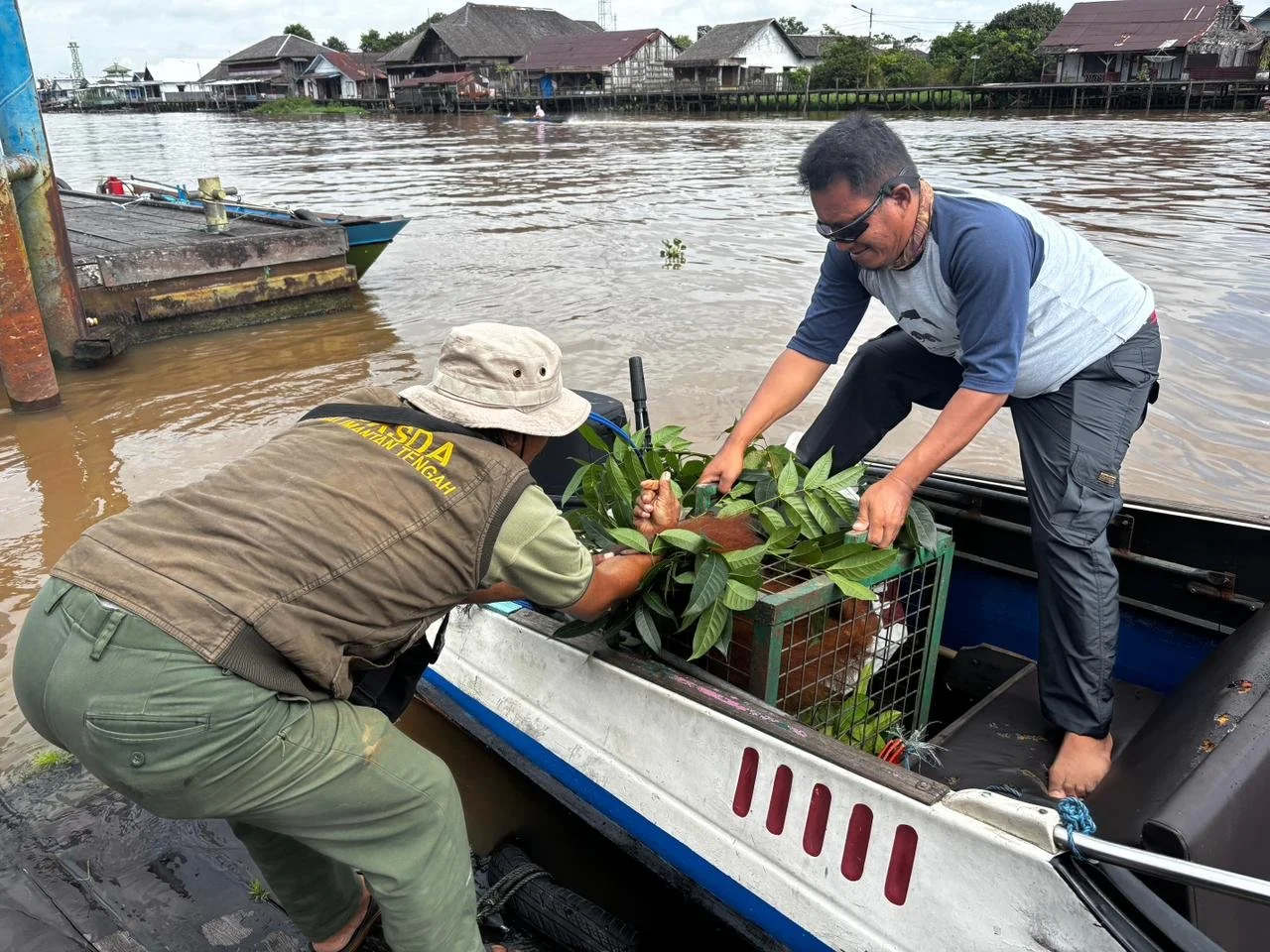
Sanubari being taken to Lamandau Wildlife Reserve
Every orangutan returned to the forest represents more than a successful rescue. It represents hope for a species facing habitat loss, human-wildlife conflict and countless challenges across Borneo's remaining forests.
Somewhere amongst the trees of Lamandau Wildlife Reserve, two young orangutans now have another chance to live the life nature intended for them.
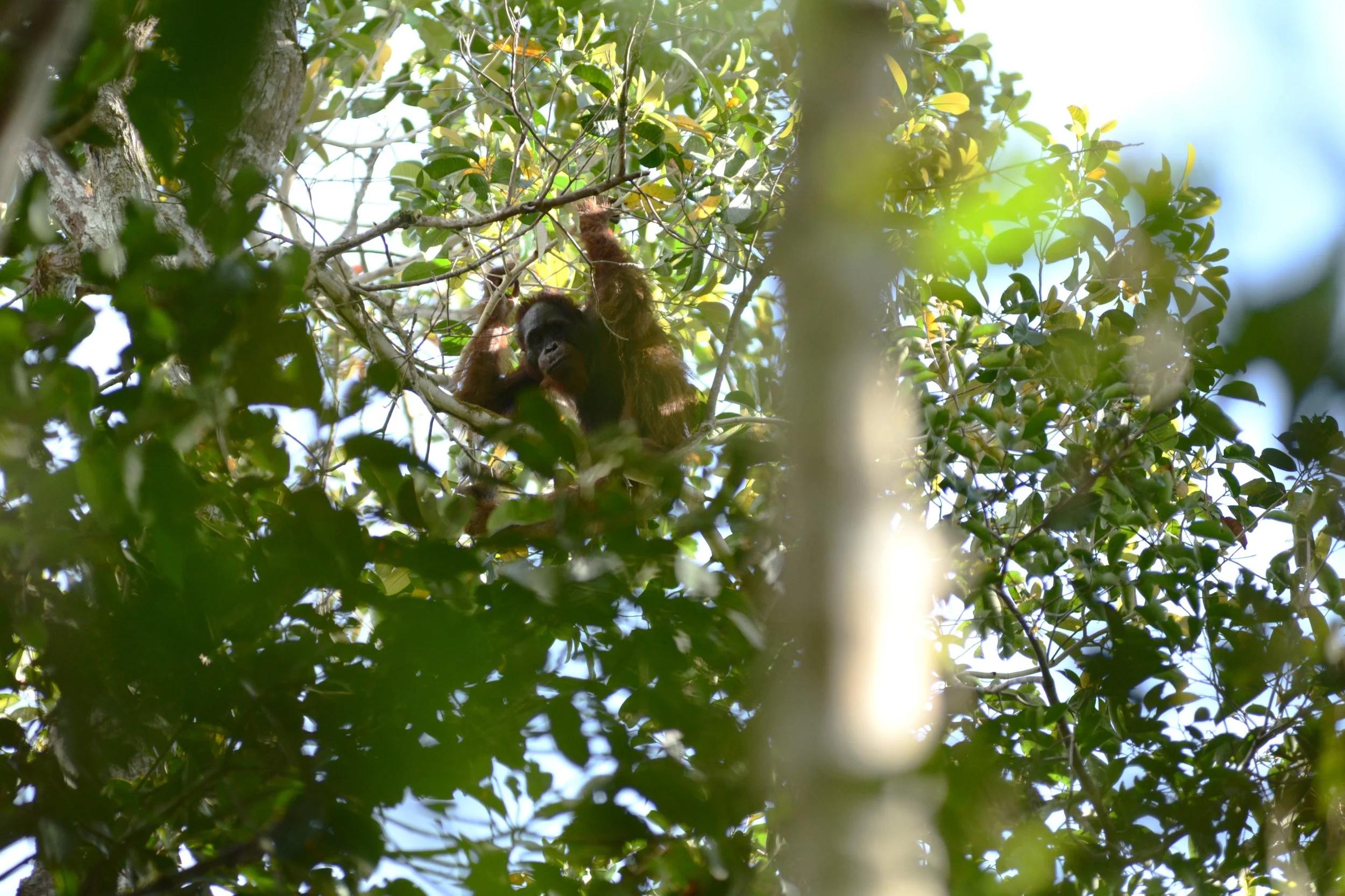
Sanubari moments after release in safety of forest