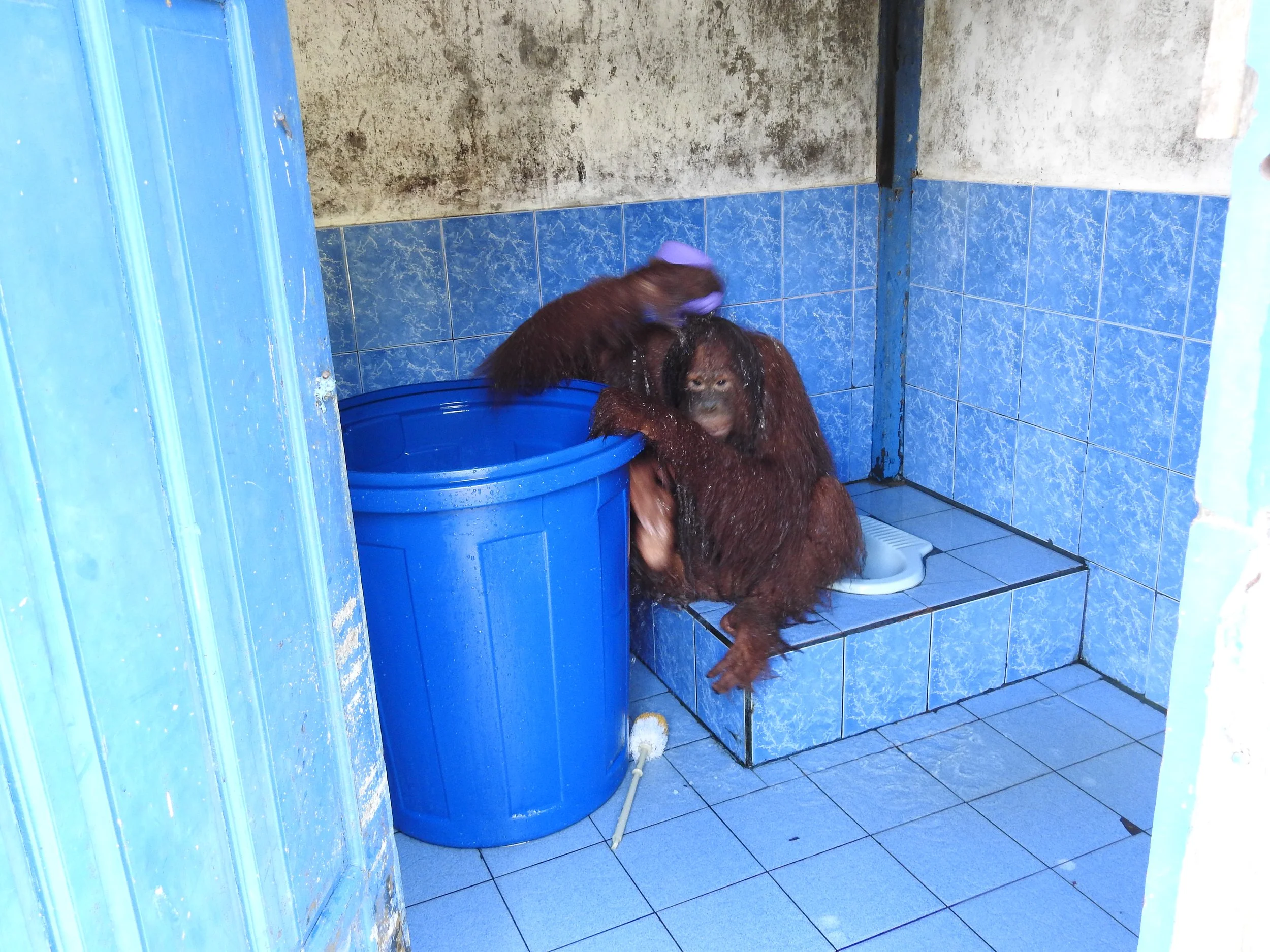
Timtom taking a ‘Mandi’ (the Indonesian word for a bucket shower)
At first glance, Camp Buluh doesn’t look like your typical orangutan monitoring and release site. Tucked deep within Lamandau Wildlife Reserve, the camp seems to float perched above waterlogged ground, where wooden walkways replace forest trails. It’s one of four release and monitoring camps managed by Orangutan Foundation and BKSDA (government conservation agency) - yet it stands out in character.
Life at Camp Buluh moves with the rhythm of the swamp surrounding it: unpredictable, untamed and always full of surprises. And on one particularly sunny afternoon, those surprises came in the form of two young orangutans: Timtom and Sinta.
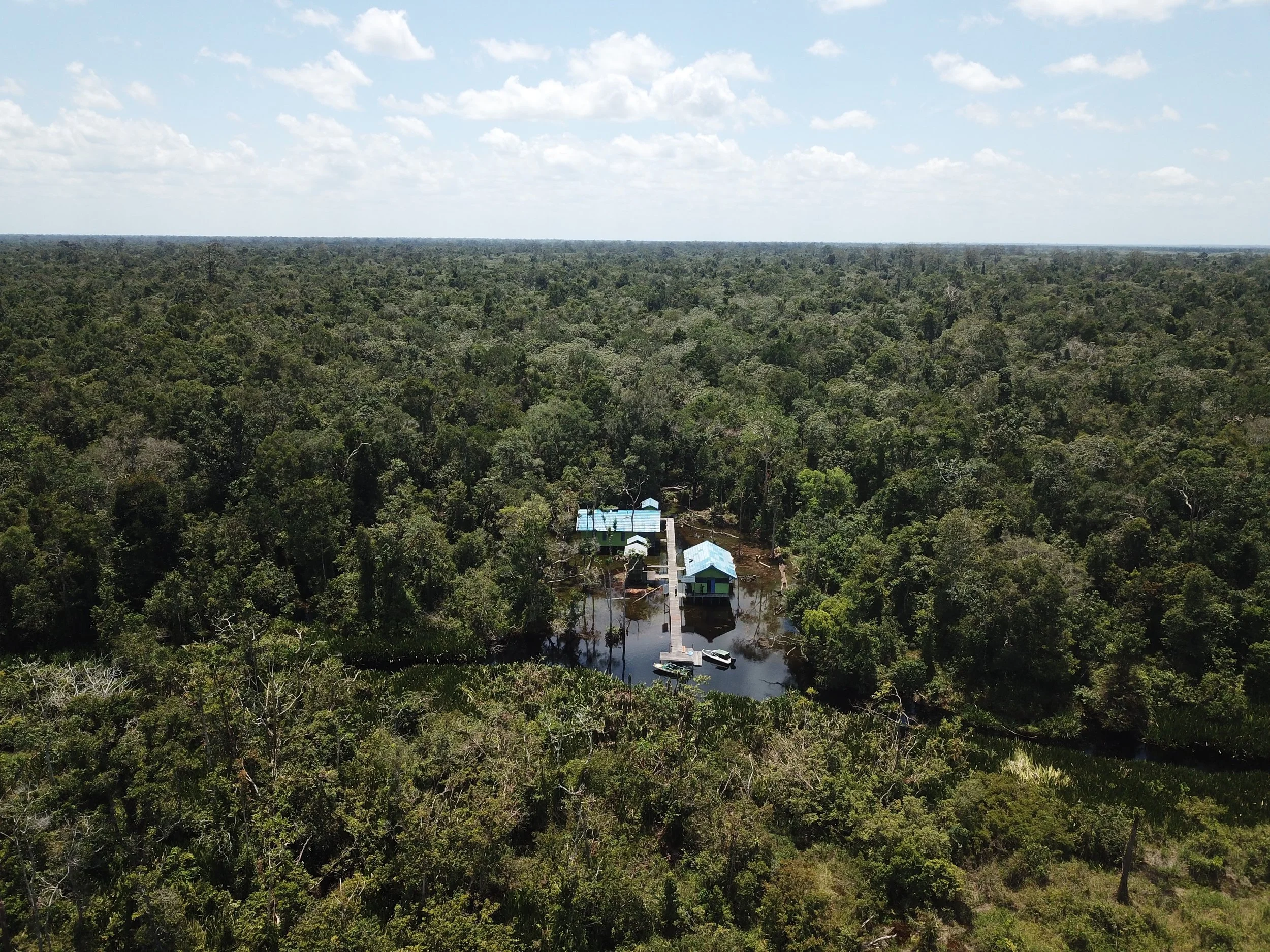
Camp Buluh, Lamandau Wildlife Reserve
Both orangutans are part of our soft-release programme where orphans gradually learn the skills they need to survive independently in the wild. For orphaned orangutans like them, this opportunity is everything. It’s where instinct is rebuilt; they learn how to forage, climb, build nests and navigate the forest canopy. But learning doesn’t always follow a neat schedule. Especially not on a day of veterinary assessments!
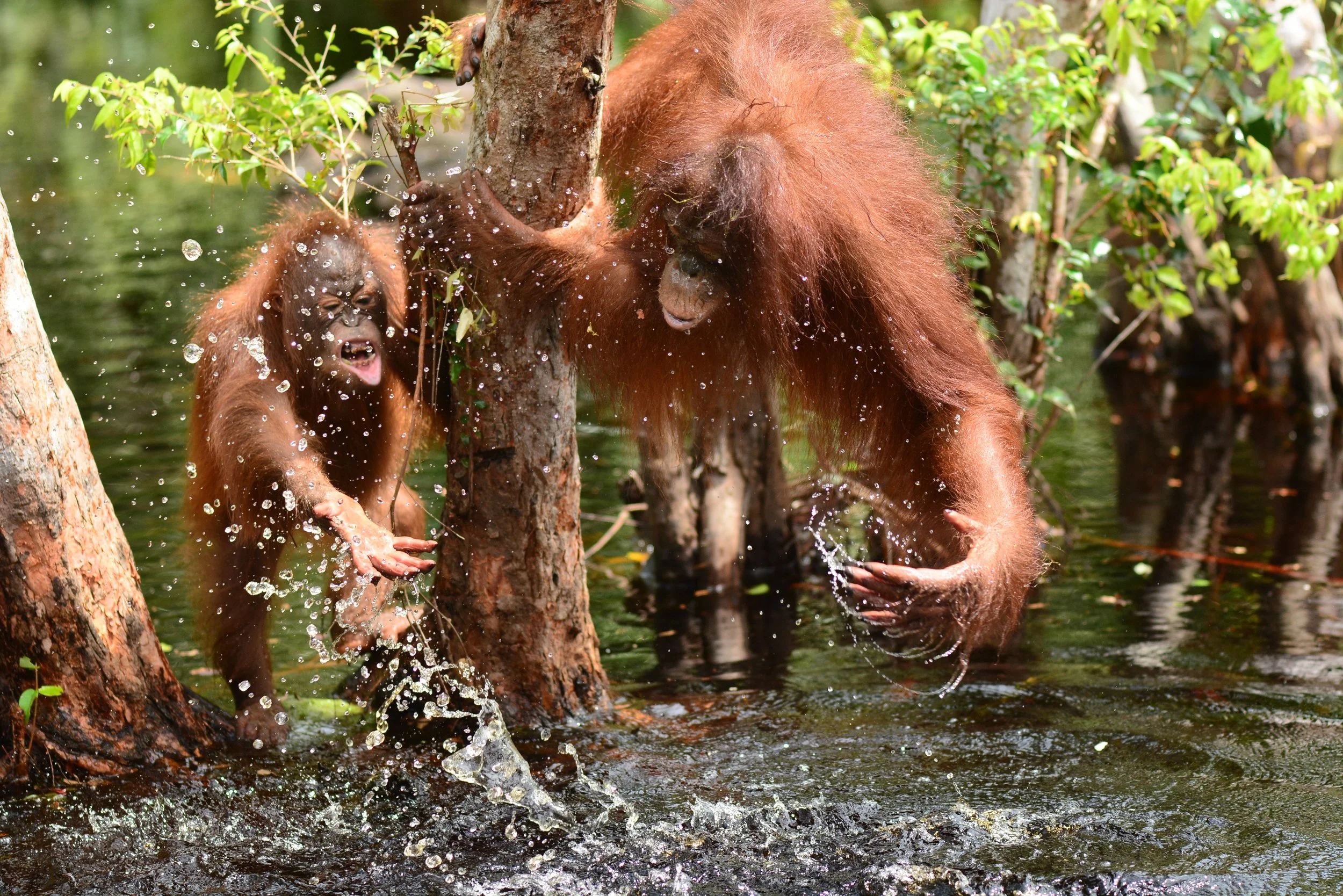
Sinta (left) and Timtom (right) playing in the river at Camp Buluh
Routine health checks are a vital part of the soft-release programme. At the beginning of each month, our veterinarians Dr. Wawan and Dr. Dimas visit each camp to ensure that the orangutans are in good health. It’s all very systematic... at least, in theory.
On the most recent assessment day, the vet team arrived prepared. Equipment was laid out, staff were ready and the first patient, Timtom, was brought in. The initial walk to the examination area went smoothly, raising hopes that this would be a routine, uneventful session. But Timtom had other plans.
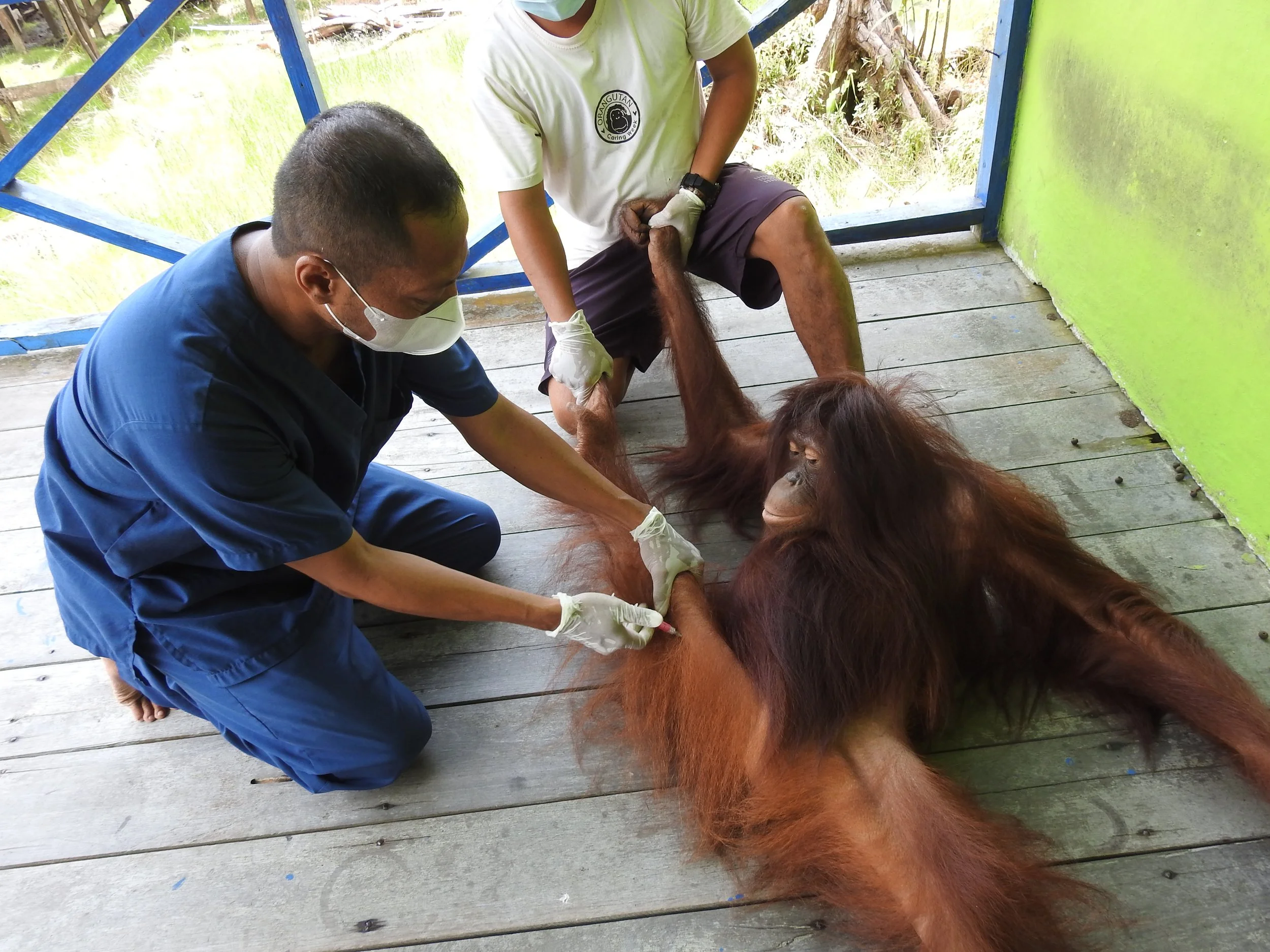
Timtom receiving veterinary assessment by Dr. Wawan
The moment Timtom reached the examination area, cooperation ended. She allowed Dr. Wawan to administer her vitamins but then refused to step on the scale, dodged every assessment attempt and quickly escalated the situation from playful resistance to full-blown rebellion. With surprising strength and determination, she broke free from the staff’s hold and made a swift getaway, hiding under the camp’s wooden jetty.
What followed was less of a medical check-up and more of a swamp-side adventure. Timtom played and revelled in her newfound freedom while staff tried, unsuccessfully, to coax her back. Then, just when it seemed things couldn’t get more chaotic, she disappeared into the camp bathroom. Inside, she discovered a treasure: a large tub full of water.
By the time the staff made it to the bathroom, Timtom was having a traditional Indonesian bath (Mandi), using a scoop to pour water over herself. Clearly not satisfied, she even attempted to drag the ‘bathtub’ out, breaking a pipe in the process. Health check? Postponed. Plumbing emergency? Activated.
Timtom had never been in the bathroom so must have been watching our assistants from afar, biding her time to try having a ‘Mandi’ herself! The intelligence of this critically endangered species never fails to leave us in awe. It is clear that Timtom is more than ready to be released!
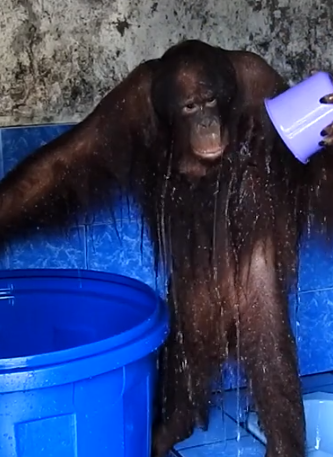
Timtom showering in a ‘Mandi’
Meanwhile, Sinta had been waiting her turn. But witnessing Timtom’s aquatic escapades was all the inspiration she needed to reject the idea of a check-up entirely. Once released, she too made a beeline to hide under the bridge. The result was much the same… double the fun, and zero cooperation.
Eventually, Timtom grew tired and was guided back into her enclosure. Sinta, however, was just getting started. She wandered off toward a nearby tree, climbed effortlessly to the top, and began foraging, plucking leaves and fruit with calm focus. In between bites, she attempted to build a nest, a key survival skill for wild orangutans. Orangutans typically build a new nest every evening high in the canopy, a behavior essential for rest and safety.
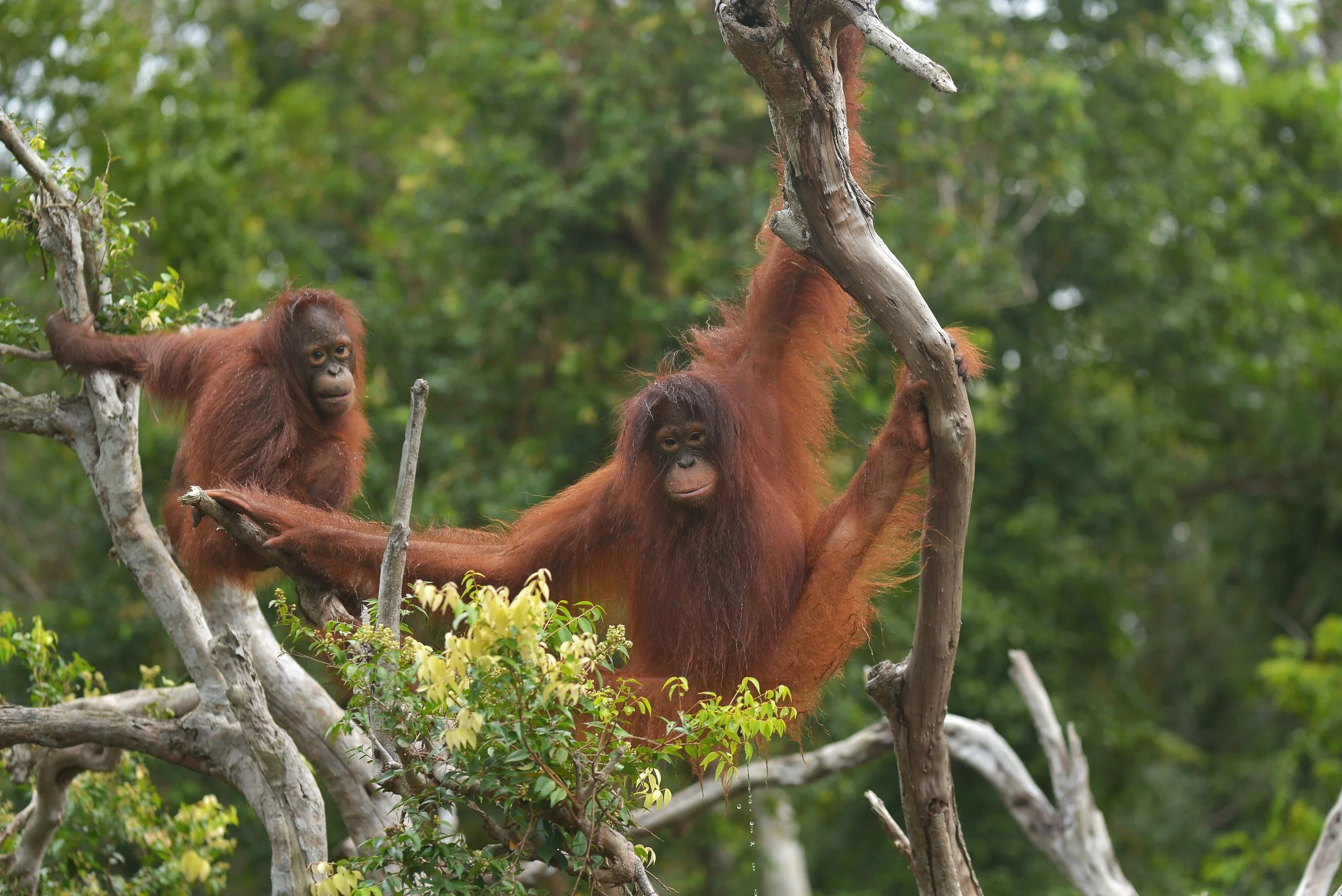
Sinta (left) and Timtom (right) learning in the trees at Camp Buluh (most leaves in this tree have been eaten or used for nests!)
While the day ended without a successful health check, it offered something equally valuable: insight. Timtom and Sinta’s behavior, though chaotic and humorous, reflects something deeply important about the orangutan soft-release process. Their curiosity, independence, and even their refusal to “cooperate” are signs of growing wild instincts. These are not animals meant to follow instructions. They are meant to think, explore, and survive on their own terms.
Soft-release is about preparing orangutans to return to the forest, where no schedules exist and no one asks them to step on a scale. Let’s ensure that Timtom, Sinta and countless others have a future where their days are filled not with enclosures and check-ups, but with the quiet rhythm of the wild.