Marathon des Sable in aid of Orangutan Foundation

Chris Smith is a life member of the Orangutan Foundation and he always pushes himself to the extreme to raise money for us, one year he climbed Mount Kilimanjaro. But this year's challenge, the Marathon des Sable (MdS), a seven day/151 mile endurance race across the Sahara Desert in Morocco, must have been the hardest yet. The event took place in March but between Chris and ourselves it's taken a while to get this post together! Thank you so much Chris for putting your poor body through such an endurance to raise almost £4,000 for us! We thoroughly appreciate your efforts and hope your feet are now better! MdS blow by blow - by Chris Smith

'Arrived on Thursday 26th March and went to our hotel in Ouarzazate. Next day travelled through the Atlas Mountains and into the desert (about six hours driving). Within an hour of leaving it started raining heavily and never stopped for the whole journey. Needles to say this took us all by surprise and caused a few issues for the journey. The coach stopped at the end of the road and we transferred to army trucks for the final 15km drive to the desert camp. Everyone was nervous of their kit getting wet as nothing was designed for rain!

Marathon des Sable -Day 1

Day 1 -The Dunes

We arrived at the camp which was a disaster with most of it heavily flooded. I was in flip flops in mud above my ankles. We found one of the few dry tents and got settled in. After going for dinner we were told to eat up quickly as we were all being evacuated to a local town and hotel. We made another body crunching journey in the back of the army trucks to the town and checked into some random hotel who had gone from having six tourists to 206 guests in an hour!

Saturday we were told by the organizers that they were unsure if the event would go ahead as the camp and equipment was badly damaged and the rain was still pouring down. We all sat miserably around the hotel with nothing to do. Sunday arrived, the day we expected to start the race and the rain stopped. We were told that we were all being transferred to another hotel for the administration formalities (medical and kit checks) and the event was starting on at a changed starting location. We went and did all the formalities, thankfully they were happy with my medical, ECG and equipment and I was through the process quickly. We then had another day of sitting around waiting to hear what was happening. Later that afternoon the race director informed us the event was going ahead but it would have to change each day as many areas of the course were impassible due to flash rivers having formed. The event would be reduced from seven to five days with four stages. There was uproar that the distance was being cut. They told us it would be difficult to maintain the 150 mile distance but they would see what could be done. I think they were also worried about the event loosing its reputation if it was cut too much.

Marathon des Sable -Tents

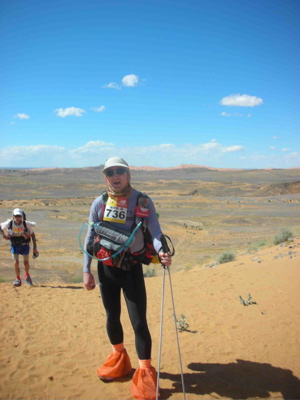
On the Monday we were driving out into the desert and the starting line placed about 2km before a huge range of dunes, Africa's second largest after Namibia we were told. Off we went running all the way to the dunes and then very quickly the reality kicked in just how hard the event would be. The weight of the pack, the soft sand and size of the dunes made it impossible to keep a quick pace and zapped your energy. The first day ended up being 20 miles with 10 miles of this being dunes. The temperature was a pleasant 28 degrees. I finished about mid pack and felt OK. My shoulders were badly swollen due to the pack and my feet were a little sore but otherwise I felt happy with the situation. I found my tent which we had organized before the start and was pleased to find I was third home of our tent of seven. I settled in the the rest of the day making some food and lazing about. I didn't sleep well at all, the night was really cold and the wind went straight through the tent which was open at both ends. I wished I had a better sleeping bag and more clothing.
Marathon des Sable

Day two was to be a circular route back to the same camp. We were woken at 6 am and told the event would start at 9 am and would be 23 miles with about 6 miles of dunes. The organizers informed us that due to the backlash to the race distance being shortened they were seeking to make the terrain tougher than normal, one part of this was the inclusion of dunes in each day. We started lively enough until we hit some rocky assent which spread the field and took the sting out of my lively legs and rested feet! My aim was to just keep moving as quickly as I could and just minimize the wasted time involved in following people of the assent parts and at checkpoints. We entered a field of dunes just as the the heat of the day kicked in, it was about 34 degrees today. There was a large stretch from CP1 to CP2 of flat rocky terrain and sand before we had more assent. The final leg back to camp involved flat ground with boulders which played havoc with your feet and ankles so I was actually quite relieved to get into the dunes which finished the day. I crossed the line much more tired today and was pleased the day was over. I headed to the tent and assessed the damage to the feet and shoulders. Things were not too bad but my body was starting to hurt and it was time for pain killers in a decent quantity. I cooked my dinner and settled and rested up having a laugh with the guys in the tent. Soon after settling down to sleep I felt sick and headed out of the tent to spend what was to be a long night being sick until the early hours of the morning watching the sun come up sat against the tent pole as the camp slept.

A mixture of painkillers and the dehydrated food packs had ruined my stomach. At 6 am the Moroccan camp helpers arrived to take the tents down and our group sat preparing breakfast and for the day's stage. I felt terrible and I could see them all looking at me thinking I was done for!!

To top things off the organizers came round the camp informing us that today's leg was to be 57 miles (91km). I quickly realized this was to me the worst day of my life so far. I got my kit together, missing breakfast and just made sure I had plenty of water and salt. We started at 9:30am and had a nice flat section to the first check point. I got some anti-sickness tablets from the doctors and carried on. I was miserable and dreadful company for my mate who was starting to suffer badly with his feet. We pushed the pace on as best we could to CP2 going through a sandstorm on an open part of this stage. We went straight through CP 2 and CP3 trying as best we could to keep moving and avoid the temptation to rest or sort our feet out that were really starting to suffer. At CP4 my mate (Dan) was in a bad way and we sat for a while to rest. I was talking to him and he was making no sense. I called a doctor over, who suggested he was dehydrated. Dan decided to rest for longer so I continued on my own. Now the stage changed for the worse. I still had 27 miles to do and ahead of me lay miles of dunes and a mountain to ascend and descend. These were the biggest dunes yet and seemed almost vertical in some parts. I felt knackered and tried to switch off and keep plodding on. I was dark now and trying to find a good route was impossible I took a bearing and plodded on alone listening to my mp3 I had taken for any low points. A couple of flares went off in the dune section from people who had got lost or given up.

I walked though CP 5 and CP6 just taking my water and keeping moving. I had eaten nothing all day and felt exhausted and like I could sleep standing up. I just kept taking my water, salt and lots of caffeine which made me piss like a camel! I made it back to the camp at 5:30am the next morning and stumbled to my tent. I was third back to our tent and really pleased with how well I had done in light of my condition. All the guys made it back to the tent including Dan. I was fed up as my body hurt so much that I could not sleep and I was too frightened to take any more pain killers. You have what is left of this day to rest so I just lazed about and had a few bits to eat. I binned the rest of my dehydrated food packs which made me feel sick just thinking about eating. My feet were in a mess and I patched them up as best I could.

We labeled the camp 'The Death Camp' as it looked like a POW camp with people being sick and suffering diarrhea, hobbling and groaning.

Final day, we were woken by the Moroccan guys again and we pulled ourselves together for the day ahead. One last pack of the rucksack and breakfast. I managed to beg some snacks to replace my dehydrated packs and thankfully managed to eat it and keep it down. Today was a marathon leg with some rocky assent, dunes and river crossing. My feet were in agony at the start and it took a good hour before I got used to the pain. Dan and I kept together and we pushed on a best we could trying to keep moving until the energy ran out. I managed until CP3 before the fatigue kicked in and I felt exhausted, I have never felt as tired in my life and it took everything I had to keep going. There was a long climb after the last CP and I kept hoping that the end would be over the next hill. After about the forth hill it was and there it was in the distance. It was amazing how seeing the finish line brought me round and Dan and I lit up our fat Cuban cigars in the last stretch to smoke across the line. We cross it together and got our hug and medal from Patrick, the race director. After a few pictures I headed straight to the doctors tent to get my feet sorted.
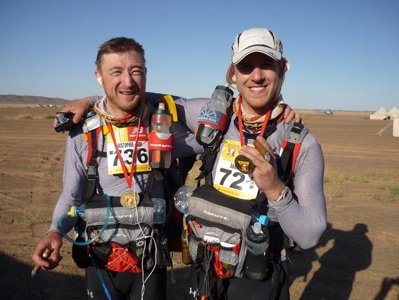
Marathon des Sable - Chris and Dan

Chris (left) and Dan at the finishing Line

We went to our tents for a final night in camp before leaving the next day back to civilization. I finished 500th of 870 starters. Everyone in our tent finished as well. I think about 70 dropped out this year which was mainly due to illness with the odd few getting lost on the long day.'

Marathon des Sable -feet

Chris' feet after medical attention!
Borneo’s Fires - Risk Remains High

Central Kalimantan, Indonesian Borneo, where our main programmes are based still remains extremely dry and fires pose a real threat to key orangutan populations. What this posts shows, is that if we have the resources to fight these fires they can be put out and controlled. June sent through this news today...

'There are fires in Tanjung Puting National Park and Orangutan Foundation are assiting the National Park authorities with logistical and transportation costs. Thankfully the fires that we were battling in Lamandau River Wildlife Reserve have been sucessfully put out. But it's raining ash right now here in Pangkalan Bun, I kid you not. Haze is very bad.'

Professor Jack Rieley, a world expert on tropical peatlands from Nottingham University, also sent through this information he received from the field about the fires in Sebangau Forests.

Palangkaraya's airport is closed and all the hospitals are full. Schools are closed and the fires and the smoke are getting worst. Fortunately Dr Suwido Limin, of CIMTROP, reported this morning that the research area in Sebangau is safe from fire, as Suwido's team have been sucessful in their operations to protect from fire. They are working still to install water pumps in another three locations.

Fighting Wild Fires

This is what June (Orangutan Foundation Programmes Manager) reported yesterday. The fires are about four hours from Camp Buluh, an orangutan release camp in the Lamandau River Wildlife Reserve and they are about 10 hectares wide. Currently there are 12 “Manggala Agni” (Forest Fire Prevention Brigade) fighting the fires since they were reported on Thursday night. There are also three teams assisting from our EC-Lamandau Programme and Pak Jakir, Patrol Manager has also been with them since Friday. They are currently using three machines to draw out water from the river to put out the fires.

Today, June is in Lamandau with the fire-fighting teams and so hopefully we’ll receive an update on the situation when she returns.

Thank you Gerhard R, Helen N, Jenny O, Brigitta S, Tal B and Matthew K for your recent donations – your support is much appreciated.

Thanks,

Cathy

Update on Fire Appeal

We have just heard from Ashley Leiman, Orangutan Foundation's Director, who is currently in Central Kalimantan, Indonesian Borneo that, as of today (27th August 2009), the local Department of Forestry has sent out fire fighting teams to localized fire hot spots. The area where our field programmes are based has received virtually no rain for seven to eight weeks and all the rivers are extremely low. Ashley, who was calling from the Orangutan Foundation office in Pangkalan Bun, said “there is the smell of smoke in the air”. Orangutan Foundation has guard posts equipped with fire fighting equipment and our employees are alert and ready to take action if necessary.

Over two weeks ago we launched an appeal on behalf of our partners, CIMTROP (Centre for International Cooperation in the Management of Tropical Peatland), working in the Sebangau Forests.  Thank you to everyone who responded so quickly and generously, your donations will be directed to CIMTROP, who are working around the clock to tackle the raging fires.

Orangutan Foundation is now widening this fire appeal to include other forest areas at risk.

Video of Fires in Sebangau Forests Orangutan Habitat

The link below has been sent to us by Dr Suwido Limin, Director of CIMTROP (Centre for International Co-operation in Management of Tropical Peatland). It is a short video on YouTube showing footage of the fires in Kalampangan, Sebangau Forest.  It highlights just how dangerous CIMTROP's work is. [kml_flashembed movie="http://www.youtube.com/v/ZMR1XLMmJio" width="425" height="350" wmode="transparent" /]

A huge thank you to Care For The Wild International for donating £3,600 through Orangutan Foundation to CIMTROP and to Orangutan Aid for donating £150. Thank you to our members, who have been very generous in donating to CIMTROP through Orangutan Foundation. Thank you David B for your donation through this blog.

If anyone is thinking of donating through Wildlife Direct please leave a comment stating your donation is for the Sebangau Fires.

Orangutan photos and thanks for the digital cameras!

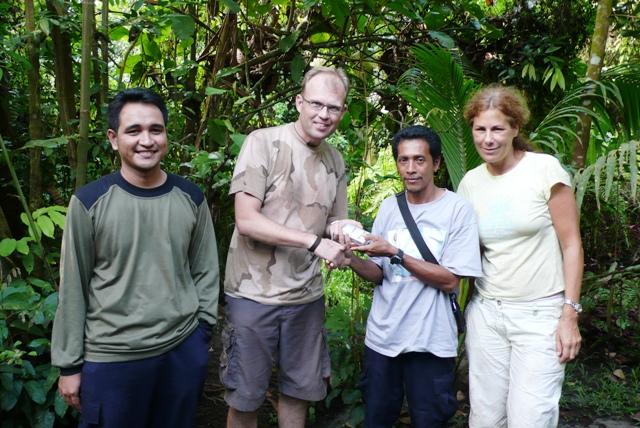
Huge thanks to Rachel and Kees for donating and personally delivering two digital cameras and err...some fudge (very tasty!). The cameras are now being used in Lamandau River Wildlife Reserve by Dr Fikri, our vet and Mr Tigor, Manager of Orangutan Re-introduction Programme (see photos below of orangutan Lady Di and her infant). Donation of digital camera From left to right: Dr Fiqri (vet), Rees, Pak Uduk (helps to manage the orangutan release camps) and Rachel.  

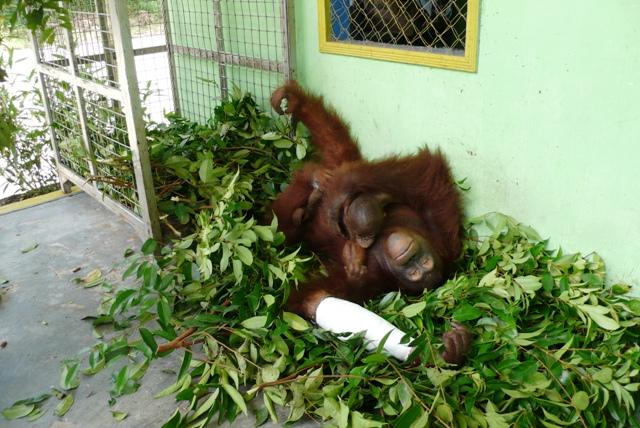
Bornean female orangutan -Lady DiBornean female orangutan, Lady Di with bandaged arm.

Bornean Female orangutan with infant - on the mendA mother's love - Lady Di and her infant

Bornean female orangutan -just having had her bandaged removedLady Di with bandage removed from her arm -now fully recovered and roaming free

Thanks,

June

 p/s  lighting actually struck the office the other day, luckily we had our plugs pulled at that time. Terrible rainstorm which means less computer productivity but on the bright side it lessens the risk of forest fires.

Sebangau Forest Fires Threaten Wild Orangutans

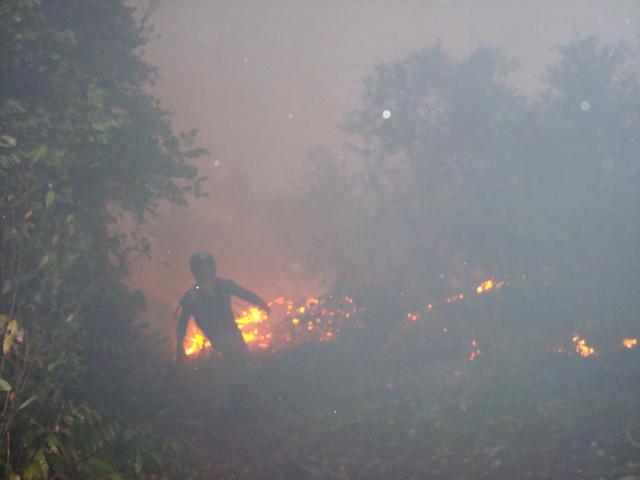
Some images sent through from Dr Suwido Limin, Director of CIMTROP, Centre for International Cooperation in the Management of Tropical Peatland. The work that Dr Suwido and his team are undertaking is very dangerous and Suwido has to provide insurance for his team (also expensive and not easy to get). His men are working away from roads and operate 24 hours a day transporting heavy equipment manually or by motor cycle to where it is needed. It is even more dangerous in the dark. As Dr.Suwido Limin reports, this is a hazardous job. “Peat fires are unique as they spread below the surface, on average 20-30cm below ground but sometimes as deep as 60cm, which makes fighting them both dangerous and unpredictable. You can put out fire in one place and then flames suddenly shoot up behind you.” Orangutan Foundation sent out £3,000 to CIMTROP last week. Thank you to Mara, of Hong Kong based Orangutan Aid, for your offer to donate US$200 and to thank you to Orangutan Foundation ambassador and member, Helen who donated £70 towards tackling the fires through Give As You Earn.  We will keep you updated this situation.

Sebangau Forest Fires

CIMTROP team tackling the fires. Photo by CIMTROP

Fire Fighting Sebangau

Fires at Sebangau Forest, Central Kalimantan. Photo by CIMTROP

Using motorbikes to carry equipment to fires -CIMTROP

Motorbikes are needed to carry equipment and access the fires. Photo by CIMTROP

Sebangau Fires 

Photo by CIMTROP 

For more information read the press release below.

PRESS RELEASE. RAGING FOREST FIRES THREATEN WILD ORANGUTANS IN BORNEO 

Forest fires are breaking out in the Sabangau peat-swamp forests in Central Kalimantan, Indonesian Borneo, threatening the lives of the estimated 8,000 wild orangutans living here.  This is exceptionally worrying during times of extreme drought caused by El Niño. This year Borneo is once again firmly in the grip of such a drought. During previous El Niño years several hundred thousand hectares of primary rainforest burnt in this area, destroying the habitat of thousands of orangutans and other endangered plants and wildlife. According to Dr. Suwido Limin, Director of the Indonesian peatland conservation organisation CIMTROP, management of the forest by forestry companies over the last forty years has led to the loss of forest rights for local people. In order to restore the local community’s engagement with the forest, these rights need to be returned.

Dr. Limin has witnessed out of contol fires many times before and is concerned that 2009 will see a repeat. He has spent the last twenty years studying and protecting this unique ecosystem and knows very well the risks involved. “These fires have started as a result of human actions; newcomers to the area have attempted to follow traditional Dayak farming methods for land clearance but they lack the experience to control the fires they start. When peat dries out it burns very easily and at great temperatures. Once these fires take hold, they burn and burn and can be almost impossible to put out until the rains come again. In that time huge areas of forest and irreplaceable peat deposits may be lost”.

Peatland fires are not only a major threat to the natural environment and the many species that live here but also to the health of the local population due to smoke inhalation. Nationally, huge clouds of smoke are blacking out the sun, affecting air and sea traffic and potentially causing millions of dollars of lost revenue. On a global scale, they are one of the largest sources of carbon dioxide and other greenhouse gas emissions, which contribute significantly to rising global temperatures and hence climate change.

To try and prevent this happening, CIMTROP run a rapid-response fire-fighting team (locally known as the Tim Serbu Api, or TSA) to tackle fires as soon as they are reported and before they get out of control. The team monitors an area of 100,000 hectares and is made up of local people who have received training and equipment from CIMTROP and are ready to be called upon when fires break out. But, as Dr. Limin reports, this is a hazardous job. “Peat fires are unique as they spread below the surface, on average 20-30cm below ground but sometimes as deep as 60cm, which makes fighting them both dangerous and unpredictable. You can put out fire in one place and then flames suddenly shoot up behind you.”

One fire hotspot is Kalampangan which borders both the NLPSF (the Natural Laboratory for Peat Swamp Forest), an international research site established by CIMTROP, and Sabangau National Park – home to the world’s largest orang-utan population. CIMTROP’s fire-fighting team have been battling fires in Kalampangan non-stop for the past ten days and will continue to monitor the fires until the rains come. Local residents report the fire took hold incredibly quickly, raging through the tinder-dry vegetation, decimating all in its path and burning down into the peat. Here orangutan sleeping nests can be seen in trees shrouded in smoke and rhinoceros hornbills fly through the haze overhead. On the ground, the TSA create fire breaks and pump water from nearby canals and bore-holes onto the fires. Bore-holes often need to be twenty meters or more deep to access sufficient water to tackle the fire, taking up to six hours and teams of three or four trained workers to dig. Extinguishing just one square metre of burning peat takes two to three hundred litres of water.

Alim, a long-term TSA team member, is enthusiastic to talk about their work and what they need. “We use water pumps and special fire-fighting hose to carry water from the water bores and canals to the burning areas. At the moment, we have twenty TSA rapid-response fire suppression team members, all fully trained specialists in fighting peat fires. They work alongside ten more people split between the River Patrol Team (Tim Patroli), which carry out daily patrols along the boundary of the NLPSF using the Sabangau river, and the TSA Ground Patrol Unit who use motorbikes to monitor the forest from the land. All our teams keep in contact with each other using two-way radios. Of course, it would be great if we could have more equipment so we can cover more ground. Ideally, I would like sixty permanent TSA members so we can set up more fire-fighting points working simultaneously in this fire hotspot while also allowing the team to get some rest! We need more water pumps, lots more hose and permanent bore-hole sites so we can channel water to burning areas more easily. Unfortunately, one of our patrol bikes was destroyed in the Kalampangan fire making patrolling much harder.”

Dr. Limin is proud of his team and their dedication in such difficult conditions. In 2006 they battled successfully for five months to save an area of pristine forest, and he expects a similar commitment this time around. But he echoes Alim’s calls for more equipment and personnel. “It is difficult to maintain funding for the TSA over the long-term because major fires occur maybe once every three or four years. We need to have the capacity to guarantee income and operational costs for the TSA and Tim Patroli and have funds permanently available for immediate use when fire hits. Disasters do not wait while mitigation strategies are discussed and put in place; they hit hard and fast, with little warning. We rely on donations, and are very grateful for the financial support we receive, but at the moment we simply don’t have the resources we need to tackle all the fires that are starting.”

Following Orangutans

Below is a post writen by Felicity Paget. It was meant to be put earlier this week but the Sebangau Fires post went up instead. Tomorrow we should have an update about the situation in Sebangau, Central Kalimantan and we will keep you informed of the urgent situation there.  Felicity is currently doing her undergraduate thesis in Camp Buluh for the summer and she is sponsored by the Australian Orangutan Project (AOP). Apologies for the poor quality images. Over to Felicity....

"Well, I’ve completed a total of 25 days of dawn to dusk follows on 5 orangutans at camp Buluh in the Lamandau Wildlife Reserve. I am collecting data for an evaluation study of the released males at camp Buluh. I will now go to camp Siswoyo to complete 25 days of follows there and this will serve as my comparison. These 25 data collection days took me well over 30 days in total. I wasn’t entirely sure at first, why AOP and my uni supervisor thought I could do it. Gradually, however, I became acclimatised and somehow learned to have fun. The fun part was largely due to the awesome staff members who were always happy and laughing. I wonder how many people are that happy at work and my guess would be not many.

These rehabilitant orangutans are all male and extremely social as far as orangutans are concerned. I must admit this was quite surprising. They love to wrestle with each other whether with those above or below them in their clearly defined and seemingly linear social hierarchy.

 Male orangutan Warsito

Photo: Male orangutan Warsito likes to sleep

Male Orangutan Wookie 

Photo: Male orangutan Wookie is the smartest of the bunch!

Zidane -male orangutan now very healthy

 Male orangutan Zidane - now back to full health!

There are two very small wild orangutans, one male and one female, who frequently visit the feeding platform. Betli is the female and as you can imagine is very popular among the Buluh inhabitants. She is still very very small though and although she seems to invite copulations, none have been observed. Doni is a wild male and is very timid but over the month he seemed to grow accustomed to my presence at the feeding platform.

Male orangutan Omang

Male orangutan Omang - King of Buluh 

The current King of Buluh is Omang. He is a magnificent creature. I really grew very fond of Omang even though he was the biggest, the naughtiest and potentially the most dangerous to me. All of the staff at Camp Buluh are amazing. I grew extremely fond of them all and will miss them dearly. On sick days Mrs Ussmini would look after me and give me therapeutic massages. During the follows I was closely protected by the extremely competent and knowledgeable young male staff. They were keen to study English with me and helped me tremendously with my ‘Bahasa Indonesia’. I have been extremely lucky to have their help and without them none of this research would have been possible.

Emergency Situation Facing Orangutans as Fires Break Out in Sebangau National Park.

We have just received a very worrying email from colleagues working near Sebangau National Park, Central Kalimantan, Indonesia. They report a sad and dangerous situation in Sebangau and Kalampangan, where there are big fires in both areas. There are orangutans in the forest where these fires are now threatening. Please donate whatever you can to help avert this desperate situation.   The size of the fire was approximately 400 X 500 meters and has been covering the Kalampangan area now for days. Mr Suwido and his team from CIMTROP (Centre for International Cooperation in the Management of Tropical Peatland) have been trying to dig wells but the budget is very limited. Their operations will have to stop in the next few days if they cannot generate a supporting budget. By Suwido's calculation, to continue the operation of protection against fire in Kalampangan , minimally, he needs a support budget of US $ 6.000. The situation is predicted to worsen over the coming weeks as conditions become drier.Again we ask you to please donate whatever you can to help avert this desperate situation. Please use the general donation button and leave a comment stating it is for Sebangau. From past experience this situation can be controlled, they just need the resources to do it.Further Information About Sebangau Forests

The Sebangau Forest is the largest non-fragmented area of lowland rainforest remaining in Borneo and supports the largest population of the Bornean orangutan (Pongo pygmaeus) with with 6,900 individuals estimated to occur here. This represents 12.5% of the estimated remaining world population of this endangered species.

The Sebangau Forest is of global importance as a major store of carbon. Underlying the forest is peat formed from partially decayed plant matter, which reaches a maximum thickness of 15m. If the peat is dried, cut or burnt, or if the overlying forest is cleared, the peat degrades by oxidation and carbon dioxide is released into the atmosphere, further exacerbating the problem of climate change.

Lamandau’s orangutans -a healthy growing population!

Thanks for your recent questions and sorry for the slow reponse! News straight from the field is that Lady Di is healthy and is well enough to be released this Saturday!  I visited her last week and took these pictures.

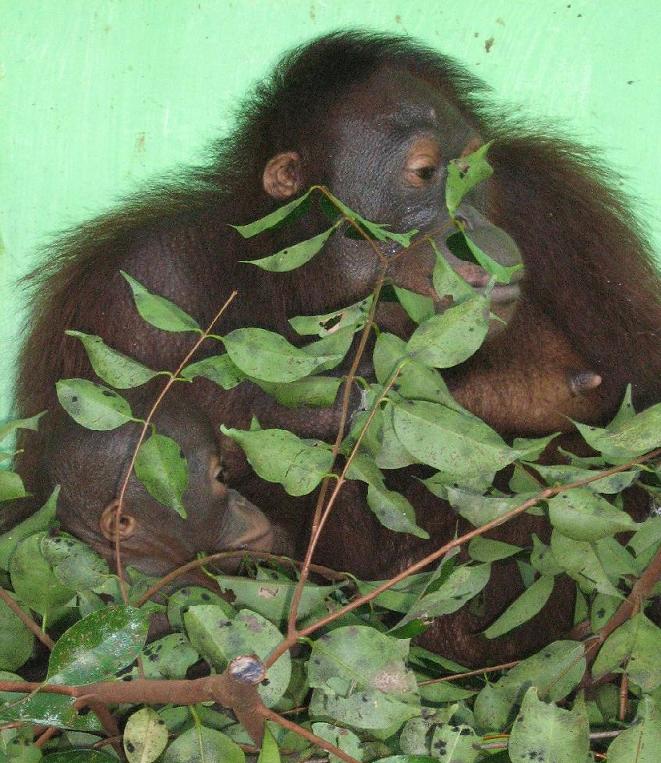
Bornean Female Orangutan -Lady Di and baby

Borneo female orangutan -Lady Di and infant (photo:Orangutan Foundation) 

Bornean Female Orangutan 

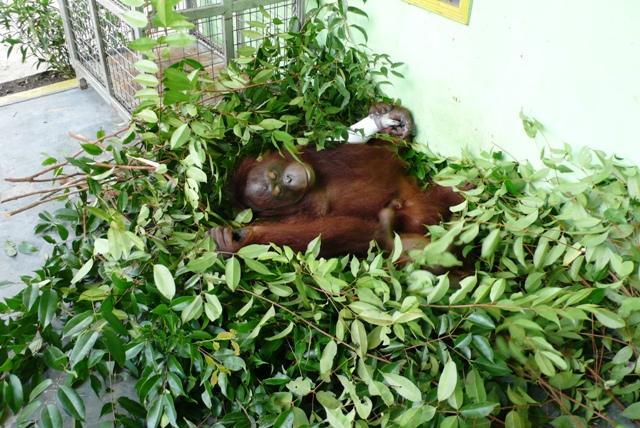
Dr Fikri and the camp staff have taken really good care of Lady Di and while she has had to spend nights in a cage so that she doesn't go off and cause further damage to herself, the staff let her out during the day and they keep a close watch on her! 

Regarding who is the father of Sawit's offspring. We know that it's a wild male, but he doesn't stay around camp. Dr Fiqri is delighted to report that Sawit has given birth to a healthy baby girl (Sawit was more pregnant than we suspected!). Our Field Assistants are looking for name suggestions for Sawit's new infant. It has to start with S and to be Indonesian. Please leave suggestions as a comments.

Thanks,

June

Programmes Manager

Protecting Lamandau River Wildlife Reserve’s Buffer Zone

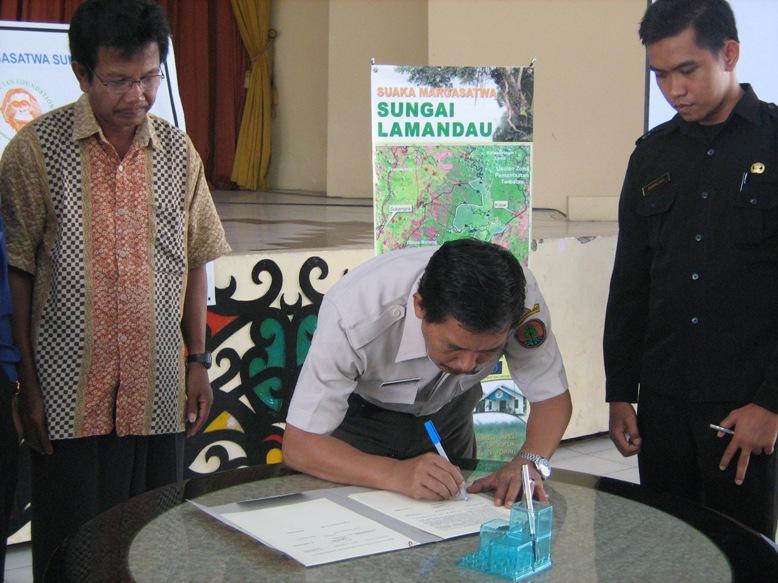
Lamandau Ecosystem Conservation Partnership (LECP) recently helped facilitate meetings in order to increase protection to the Lamandau River Wildlife Reserve Buffer Zone Area.   Meeting of BKSDA and oil palm company

 Meeting between government and oil-palm companies faciliated by Lamandau Ecosystem Conservation Partnership (funded by the EU).

Finally, on July 13 2009, the Indonesian Government Agency for the Conservation of Natural Resources of Central Borneo (BKSDA) and two oil palm plantation companies, which have their plantation area close to or on the border of Lamandau River Wildlife Reserve area, signed the Memorandum of Understanding and Memorandum of Agreement, witnessed by Kotawaringin Barat and Sukamara District Government. The two companies are Sungai Rangit, Co. Ltd. and Bumitama Gunajaya Abadi, (BGA) Co. Ltd. 

According to Chief of BKSDA of Central Borneo, Mr. Mega Hariyanto, the memorandum is  the first Memorandum of Understanding in Indonesia on a conservation area’s buffer zone, that has been established by government and private sector.

signing MOU buffer zone 

The companies, BGA and Sungai Rangit, are willing not to plant and do any business activities within a radius of 500 meters outside of Lamandau River Wildlife Reserve buffer area. This is also very important as the reserve is a government designated orangutan release site. 

Below is a translated quotation from a local newspaper, Borneonews, on the memorandum assignation:  

BKSDA and Company made MoU on Conservation of Lamandau River Wildlife Reserve Thursday, July 23, 2009 |

'Borneo News Lamandau River Wildlife Reserve which is situated at Kotawaringin Barat, Central Borneo is a conservation area which needs a protection. Related to its conservation, the management of Lamandau River Wildlife Reserve under coordination of the Indonesian Government Agency for the Conservation of Natural Resources has made a Memorandum of Understanding (MoU) with two companies which operated side by side with Lamandau River Wildlife Reserve.  Namely, Bumitama Guna Jaya Abadi (BGA), Co. Ltd which is situated at Kotawaringin Barat and Sungai Rangit, Co. Ltd. which is situated at Sukamara District are the two companies.  There are six important points that concluded within the agreement. Which are: BGA and Sungai Rangit are prohibited to do land clearing for plantation or any purposes in surrounding Lamandau River Wildlife Reserve.  BGA and Sungai Rangit is willing not to plant and doing any business activities within radius of 500 meters outside of Lamandau River Wildlife Reserve buffer area.  Both BGA and Sungai Rangit have to cooperate and accompanied by BKSDA to prevent forest fire in surrounding Lamandau River Wildlife Reserve. BGA and Sungai Rangit are obligated to make a report to BKSDA on the existence of orangutan and other protected wildlife if they were entering in plantation area.  BGA and Sungai Rangit also support BKSDA of Central Borneo socialization activity to community, and both companies should report to BKSDA of Central Borneo if there are any indication of illegal activity arround of Lamandau Wildlife Reserve appears.  Chief of BKSDA of Central Borneo Mega Harianto explained that one of reason to establish the agreement is issue on emission reduction caused by global warming that will harm environment.  "This understanding and agreement is an initial point in building socialization on environment awareness surrounding Lamandau River Wildlife Reserve and both companies" Mega said.  Continued by Mega, the agreement is necessary established since management of Lamandau River Wildlife Reserve has been doing more effort to handle problems within its area, compared to manage Lamandau River Wildlife Reserve natural resources it self.  

In the other side, Second Assistance Regional Secretary of Kotawaringin Barat Regency, M. Sayrifudin emphasized that rules on area are necessary built by government at province or higher level in order to keep Lamandau River Wildlife Reserve from residence.'

Thank you,

Astri

Orangutan Foundation Liaison Office

Newborn Orangutan - Lamandau River Wildlife Reserve

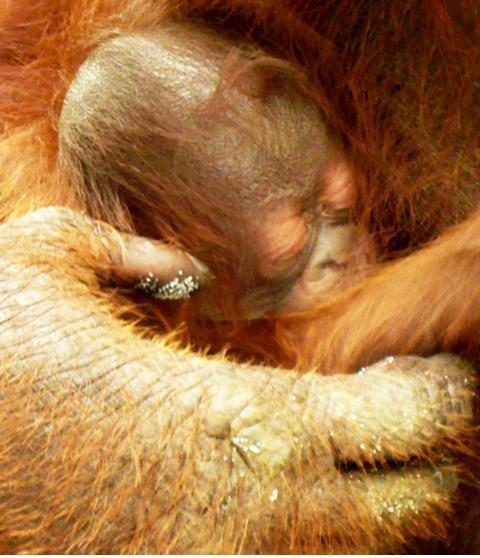
July is a month which makes those of us working in Lamandau River Wildlife Reserve happy because one orangutan has been born. Dedek, gave birth to a son and this is her second son after Delon. Based on information from staff in Camp JL, Dedek gave birth on July 10, 2009. Camp JL staff first saw Dedek, with her son, under the feeding platform around 3pm. Dedek and infant July 2009

Dedek and her newborn son born on July 10th 2009. Photo:Orangutan Foundation

Dedek's son looks well. We estimated that Dedek gave birth during the day because in the morning Dedek still came to feeding platform.

Dedek’s newborn son

Newborn male orangutan.  Photo: Orangutan Foundation

Before Dedek was pregnant and during pregnancy she always played with Jalas, dominant male orangutan in JL Camp. Dedek never plays with other males only Jalas. Other male orangutans are afraid of Jalas. So we predict that Dedek’s son is Jalas’s son. Dedek and her son are well . Dedek was released in October 2002 at Camp JL. Camp staff have not decided on a name yet but it is likely to be Indonesian and staring with "D"!

Please support our work protecting these orangutans and their forest home helping to ensure they spend the rest of their life in the wild.

Thank you Tal B, Brigitta S and Matthew K for your monthly donations.

Thank you,

Dr Fiqri

Orangutan Foundation Volunteer Programme

You're probably aware that the Orangutan Foundation runs a Volunteer Programme (see Categories for past posts)  This year's programme has been different in that we are working closely with our partners Yayorin on a water purification project in the Belantikan Arut region of Central Kalimantan. Belantikan is home to the largest remaning population of orangutans in an unprotected area and is a biodiversity hotspot. 

Our strategy involves community empowerment, education and agricultural management to help villagers protect their forests. This year’s Volunteer Programme fits in by working with the local communities and further improving our relationship with them, whilst gaining their respect and providing villagers with a cleaner, safer water-source.  Each team will work in a different village. At each village, a natural spring has been identified as an alternative source to the river which is currently used for transport, bathing, washing and as a toilet. The teams build a dam to harness the spring water and then a pipe system takes it down to the village.

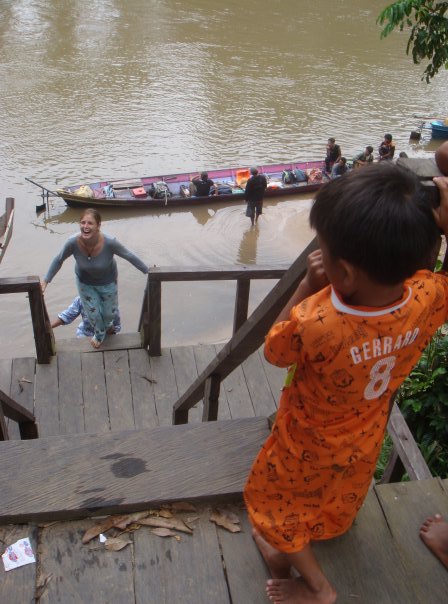
Volunteers return to camp after a hard days work

Climbing back up to the jetty after a hard days work 

Team 1 ended on 13th June and the village of Nanga Matu (home to Yayorin’s basecamp) now has taps providing clean water from a natural hillside spring on the other side of the river. The construction was no mean feat and massive thanks go to the hardworking volunteers and Volunteer Co-ordinators who made the project succeed.   Team 2 is already well into their work in the village of Bintang Mengalih and I was there to see the project commence. The team are living in a small community house where personal space is non- existent, and the movements and activities of us visitors is of most interest to the locals.

Volunteers are treated to a traditional party at one of the villages 

Volunteers are treated to a traditional party by a local village 

Whilst there, I encountered leeches, a scorpion, poisonous millipedes and lots of peat. Bathing is in a nearby river and we dug a long-drop toilet behind the accommodation. Before work began we had to go the village hall and formally meet the village head and some local villagers.

Village children keen to “hang out” with volunteers 

Local children were keen to "hang out" with the volunteers. 

The village were so appreciative of our work that they provided us with four local people to help on the project. They really were very excited and grateful about the work of Orangutan Foundation.  By 8th August Bintang Mengalih will have clean water to drink at the turn of a tap!!

Thanks, 

Elly (UK Volunteer Co-ordinator)

Lesson by MELU on Forest and Orangutan Conservation

Recently the Mobile Education and Library Unit (MELU), from our EC funded Lamandau Project, visited a local school to give a lesson about forest and orangutan conservation. More than 200 students of SMP 7 Middle First School in Pasir Panjang Village, Central kalimantan assembled in front of their school.    Melu visit to local school

 Enthusiasm was etched on their face as they listened to what Fadlik, our educator, had to say. The school yard, though clean, was barren with no big trees growing. So under the hot morning sun, Fadlik enthusiastically invited all the students to learn and understand the important of the forest and orangutan.    

Many questions were asked by the children including why forest and orangutan must be conserved, and what was the difference between orangutan and monkey?

  Melu visit to local school

Teachers watched the interaction between Fadlik and their students with interest. The teachers said their students must learn about conservation.  We hope the student’s love for their forests, their orangutans and other wild animals will increase with these efforts.

Update on Andi the Orangutan

Stephen blogged about the female orangutan Sawit and her adopted son Andi, back in January 2008, when they were released into Lamandau Wildlife Reserve. Andy was found injured in April and it is thought he was attacked by a male orangutan. He has been treated and kept in the quarantine enclosure at Camp Rusak. Having successfully recovered from his injuries he was given the okay at the end of May and he is now back in the forest and is doing well. We hope he will stay out off trouble! Another piece of good news is that Andy’s adopted mother, Sawit, is four months pregnant.

andi.JPG

Walk and Picnic Raised Over £2000 - Thank You!

My name is Trevor Wright. I have the great privilege of being one of the ambassadors for the Orangutan Foundation. I have been working hard all year trying to raise money for the charity, it is hard work but it has been worth every minute! On Saturday 6th June 2009 a group of 7 ladies (Stephanie Smith, Angie Jefferson, Alison Seymour, Deborah Jackson, Angie Lawson, Jo Bush and Kat Fahey) walked 13 miles from Ely to Waterbeach in Cambridgeshire, UK.

Fancy dress for charity walk

I would like to thank everyone for all of their fundraising efforts and great costumes they wore on the day.

They walked along the river and everything went well apart from a bull in one of the fields they walked through took a liking to them! Half way through the walk Paul and Nadine Bradley and their six children also joined the walk.

Charity walk

About four and a half hours later we all finished and tucked into a lovely picnic. Everyone's legs started to seize up until the gazebo my brother and myself put up decided to blow down in the wind so everyone soon moved!

I would like to thank Angie Jefferson and all of her work colleagues at Marshalls in Cambridge for all of their support and for organising the picnic. All together we raised over £2000.00 for the Foundation.

I hope we can all meet again soon for the next event. Milton Summer Fayre 2009, Cambridge Saturday 11th July 2009.

Oil boom threatens the last orang-utans

This article was published in the Independent newspaper today and covers the urgent situation in the Tripa Swamps, Aceh Sumatra. Read the full article with photos 'Oil boom threatens the last orang-utans'. 'A famous British company, Jardines, is profiting as the lowland forest – which shelters the few remaining orang-utans – is razed to make way for massive palm oil plantations, reports Kathy Marks in Tripa, Indonesia.

Tuesday, 23 June 2009

Perched halfway up a tree near a bend in the Seumayan River, a young orang-utan lounges on a branch, eating fruit. In the distance, smoke rises from an illegal fire, one of dozens lit to wipe out the virgin rainforest and replace it with oil palm plantations.

It's burning season on Indonesia's Sumatra island, where vast tracts of vegetation are being torched and clear-felled to meet the soaring global demand for palm oil. The pace is especially frenzied in the peat swamp forests of the Tripa region, one of the final refuges of the critically endangered orang-utan – and a company owned by one of Britain's most venerable trading groups is among those leading the destructive charge.

Prized for its productiveness and versatility, palm oil is used in everything from lipstick and detergent to chocolate, crisps and biofuels. Indonesia and Malaysia are the world's biggest palm oil producers – but they also shelter the last remaining orang-utans, found only on Sumatra and Borneo islands in the same lowland forests that are being razed to make way for massive plantations.

In Indonesia, one of the largest palm oil companies is Astra Agro Lestari, a subsidiary of Astra International, a Jakarta-based conglomerate which is itself part of Jardine Matheson, a 177-year-old group that made a fortune from the Chinese opium trade and is still controlled by a Scottish family, the Keswicks, descendants of the original founders.

Conservation groups are targeting supermarkets in Britain to alert consumers to the effects of the palm oil explosion. But The Independent can reveal that Jardines, registered in Bermuda and listed on the London Stock Exchange, is implicated through Astra Agro in ripping out the final vestiges of orang-utan habitat.

Environmentalists are dismayed by the activities of Astra Agro, one of the main companies operating in Tripa under permits that were awarded during the 1990s by the notoriously corrupt Suharto government. They point out that Tripa belongs to the nominally protected Leuser Eco-System, renowned for its exceptional biodiversity, and claim that the plantation businesses are contravening a logging moratorium as well as engaging in illegal practices including burning land.

Greenpeace UK says: "It's scandalous that a British company is bankrolling the destruction of Indonesia's rainforests and peatlands. We need to see big firms like Jardines withdrawing investment from companies involved in rainforest clearance."

Orang-utans are vanishing at an alarming rate in Borneo but in Sumatra their situation is even more precarious. The Sumatran orang-utan – more intelligent and sociable than its Borneo cousin and with a unique culture of tool use – is likely to be the first great ape species to go extinct.

There are believed to be just 6,600 individuals left, mostly living in unprotected areas of Aceh province. Their lowland forests remained relatively undisturbed during the long-running separatist war in Aceh, but since a peace agreement was signed in 2005, it has been open season.

The primates are now splintered across 11 pockets of jungle, with only three populations considered viable. Another three, including Tripa, are borderline viable. Elsewhere, the orang-utans – which use sticks to extract insects from trees and seeds from fruit – are effectively extinct. As their territory shrinks, along with their food supplies, the apes are increasingly coming into conflict with humans. Farmers shoot those caught raiding crops; babies are captured and sold as pets. Adults discovered in oil palm plantations may be hacked to death with machetes.

In Tripa, more than half of the 62,000 hectares of ancient forest has gone. As well as being home to endangered species including the sun bear and clouded leopard, the peat swamps acted as a protective buffer during the 2004 tsunami. They also hold gigantic carbon stocks which are now being released, exacerbating climate change. "If you can't save Tripa, what can you save?" asks Denis Ruysschaert, forest co-ordinator for PanEco, a Swiss environmental organisation.

Sumatra is a beautiful island, with jungle-clad mountains and picturesque villages where long-horned water buffalo wander. But it is difficult not to be shocked by the colonisation of the landscape by one short, stumpy tree: oil palm. The monoculture is a desolate sight, stretching for miles, relieved only by charred hillsides dotted with tree stumps – cleared land awaiting yet more oil palms. Trucks rattle past, laden with the prickly red fruit from which oil is extracted. In Aceh, they call it the "golden plant" – the cash crop that is lifting the province out of poverty and helping it rebuild after the tsunami. "Recently there's a frenzy to plant oil palm," says Fransisca Ariantiningsih, who works for Yayasan Ekosistem Lestari (Yel), an Indonesian conservation group.

On Sumatra's west coast, a small-time farmer, Raluwan, is nursing his seedlings. Ten families, he explains, have logged and burnt 100 hectares of land. Each hectare will yield four tonnes of fruit, fetching 800 Rupiah (47 pence) a kilo."I used to grow chilli, but palm oil is a very economical crop," he declares. "You don't need much pesticide or fertiliser." Raluwan knows orang-utans live in the nearby forests. "I don't care," he says. "I've got to feed my family."

However, many are missing out as the industry grows to meet demand from Europe, the US, China and India. Most plantation workers are migrants from Java and in Tripa, communities that depend on the swamps for water, fish and medicinal plants are suffering.

Kuala Seumayan is hemmed in by plantations. Villagers say they no longer have space even to bury their dead. "Since the forest has been chopped down, it's difficult to get food," says one elder, Darmizi. In the Seumayan River, youngsters dive for freshwater clams while children squeal and splash in the placid brown waters. It's an idyllic scene, but something is missing: the sights and sounds of the forest. The only wildlife consists of a hornbill and two long-tailed macaques. Indrianto, a forestry manager, says: "This used to be all peat swamp, with many trees and animals. Now it's all oil palm. Before, I heard animal calls. Now I hear only chainsaws."

By chance, we spot an orang-utan in a solitary tree. Tripa has just 280 apes left. The young male, its fur glowing in the afternoon sun, curls one arm lazily over an upper branch.

A black slick floats on the water: sludge from one of many canals dug to drain the swamps. The arduous procedure is considered preferable to planting on fallow land, which would require negotiations with landowners. This way, the companies also get to sell the timber. As you fly over Tripa, the scale of destruction becomes clear. The green tangle of the forest, in all its riotous variety, abruptly gives way to giant rectangles, laid out with geometrical precision and studded with thousands of palms.

Riswan Zen, a spatial analyst for Yel, last flew over in 2007. "So much forest gone, and all in two years, my God," he says, gesticulating at a satellite imaging map. "If nothing is done, there'll be no forest left in one to two years."

Tripa, designated a priority conservation site by the UN, could hold 1,500 orang-utans if the forest was allowed to regenerate. Prospects seem slim, although Indonesia – one of the world's biggest emitters of greenhouse gases, thanks to deforestation – claims to be committed both to saving the orang-utan and combating climate change.

Fewer than a quarter of Indonesian producers have joined the Roundtable on Sustainable Palm Oil, a global organisation promoting sustainable practices. (Astra Agro is not among them.) Even in Aceh, where Governor Irwandi Yusuf, a former rebel leader, has proclaimed a "Green Vision", authorities seem unwilling to crack down on the powerful oil palm companies.

So far, Jardines, whose colourful history inspired a series of novels by James Clavell, has resisted pressure to rein in its Indonesian subsidiary. In a statement to The Independent, Jardines – whose interests include the Mandarin Oriental hotels and Asian branches of Starbucks and IKEA – said Astra Agro's plantations "function in full compliance with ... environmental impact studies".

Astra Agro says it plans to develop only half of its 13,000 hectares in Tripa because of conservation concerns, and it denies any illegal activity.

Ian Singleton, a Briton who heads PanEco's Sumatran Orang-utan Conservation Programme, has no doubt that oil palm is the biggest threat to the orang-utan: "I see the orang-utan as a test case. Are we serious about trying to conserve the planet's eco-systems? If we are, let's prove it by saving a species like the orang-utan. We know where the orang-utans are; all we have to do is protect the forests. If we're serious about conservation, this is where we start."

At a glance: Jardine Matheson

*Founded by two Scottish traders in Canton, China in 1832, it was the first British trading company to smash the East India Company's Asian monopoly.

*Founder William Jardine was known as "the iron-headed old rat" for his toughness and asperity.

*The company's fortunes were founded on smuggling huge quantities of opium into China, creating millions of addicts.

*When the Chinese fought back, Jardine persuaded the British government to launch the First Opium War against China.

*Astra Agro, a subsidiary of the company, claims that "concern for the environment" is "an integral part of all the company's activities".

Indonesian Fundraising Evening

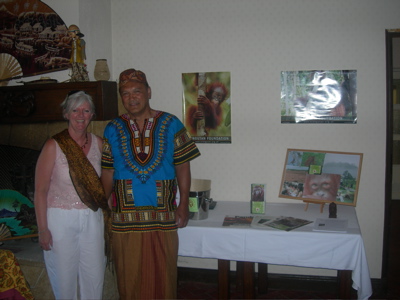
Please excuse another non-field related post but I'd like to say a huge thank you to Kate and Micky Walsarie Wolff who run a B&B called L’Orée des Bois (www.chambres-charente.com) in France. Kate and Micky - Indonesian Fundraising Evening

Kate and Micky, members of the Orangutan Foundation, visited Tanjung Puting National Park, Kalimantan, Indonesian Borneo a few years ago. It was Micky's first trip back to Indonesia in 50 years. The trip inspired them to get involved and help and so on Saturday they held an Indonesian evening in aid of the Orangutan Foundation.

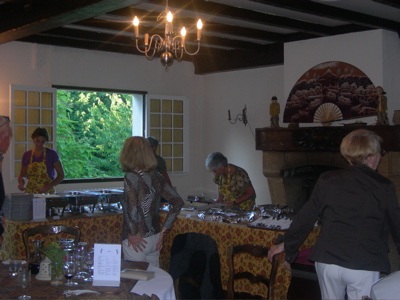
Indonesian Cuisine

I was lucky to be in a position to go along to the evening and sample the delicious authentic Indonesian cuisine on offer, such as my favourite dish Gado-Gado.

Indonesian buffet

All the food was prepared and cooked by their family who drove all the way from Holland!

Indonesian Fundraising Evening

Indonesian Cuisine

The evening ended with a raffle and everyone was very generous in buying plenty of tickets. Thank you to La Vallee des Singes who provided the first prize and thank you Kate and Micky!

Cathy - Orangutan Foundation UK office.

Orangutan Foundation out and about in the UK

The Orangutan Foundation office, in the UK, has been actively 'spreading the word' at recent fundraising events. Last Friday we were invited to have a stand at Thomas' Battersea School, London, summer fair. We are very proud to be Thomas's Middle School’s chosen charity for the next two years. The turn out was great and there was a great buzz with children dashing around taking part in various fun activities. Elly at Bristol Wildlife Fair

Elly from the office.

Last weekend Elly and I, from the office, travelled to Bristol, in the Southwest of England to man our stand at the annual Bristol Festival of Nature. In spite of torrential rain the turnout was very good and a lot of people took an interest in our stand!

Orangutan Foundation Bristol Festival of Nature

The Festival is incredible, an imaginative weekend of films, animal encounters, exhibitions, walks, talks, workshops and competitions for all ages and interests. Thank you to everyone who came along and said hello. We would also like to thank Matthew and Julie our fantastic volunteers who helped drum up interest!

Support our work by visiting our online shop for palm-oil free soaps & candles, soft cuddly orangutan toys and much much more....

Thanks,

Kristina - Project Co-ordinator