Restoring Orangutan Habitat

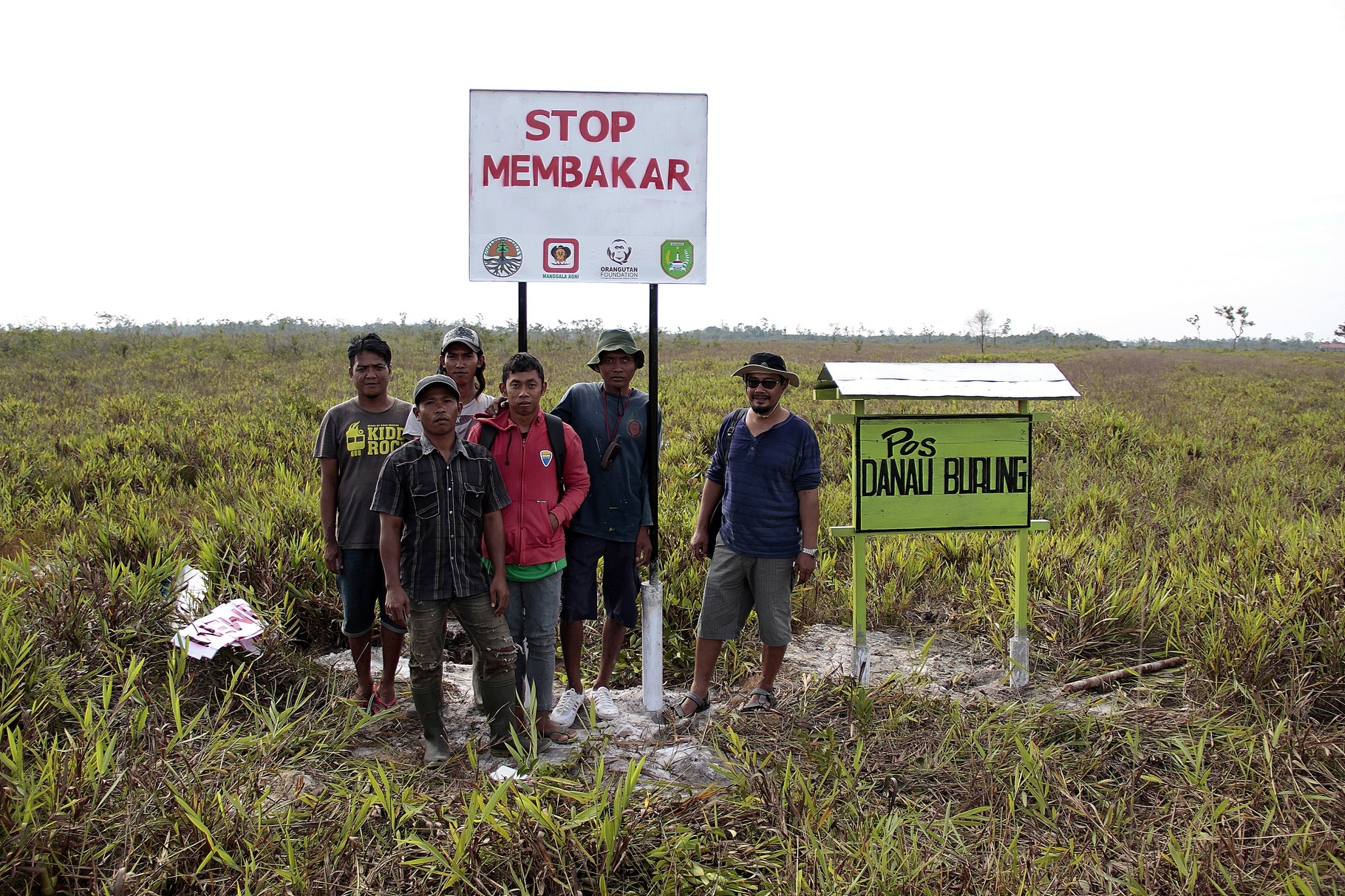
We bring you great news from Danau Burung, our guard post in the south-west of the Lamandau Wildlife Reserve!

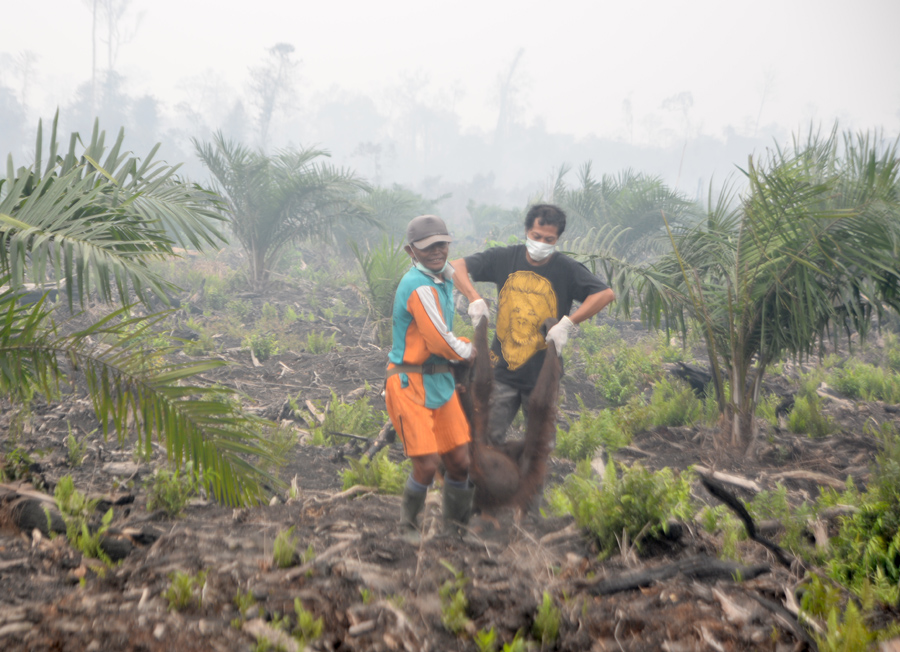
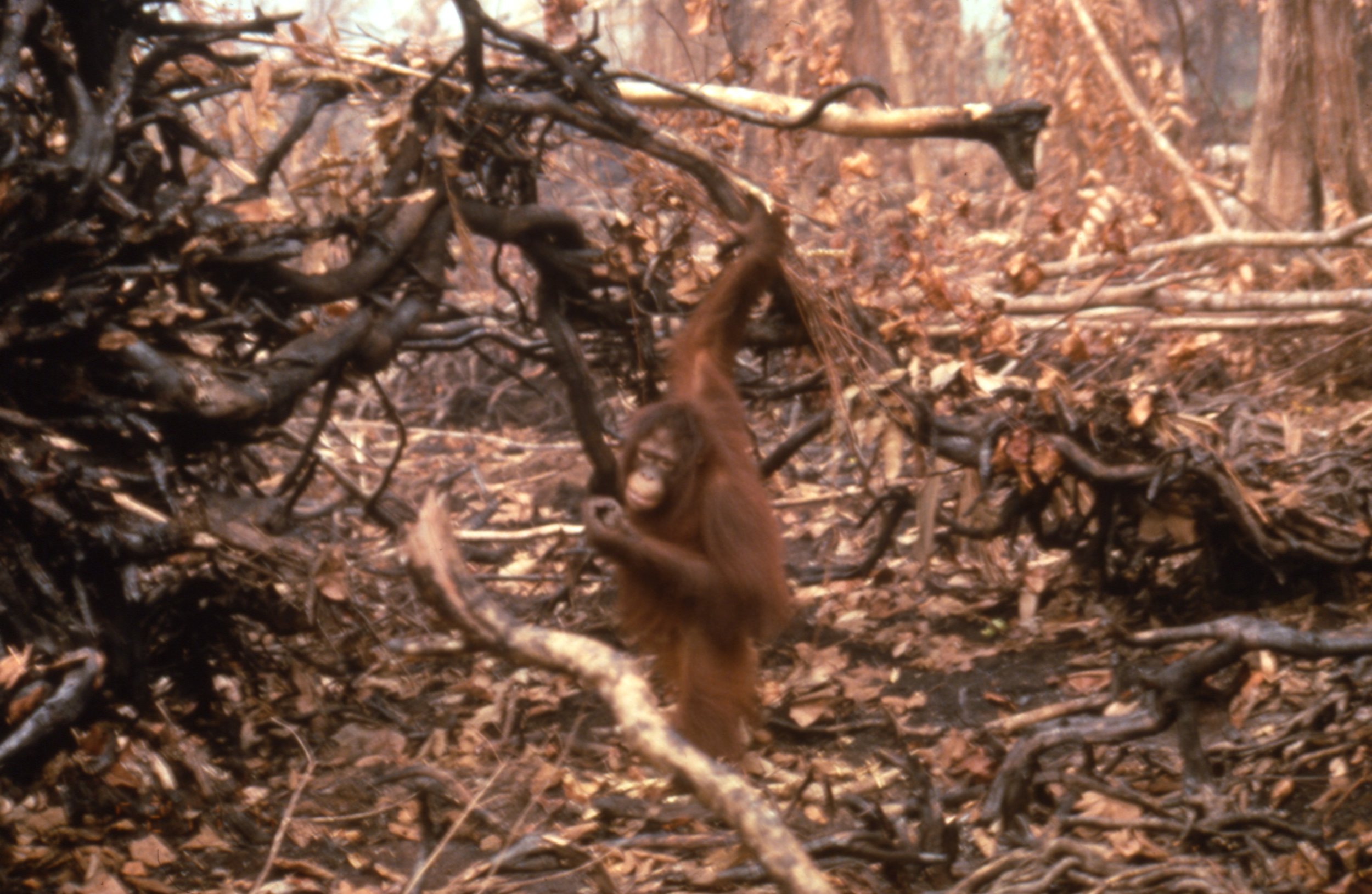
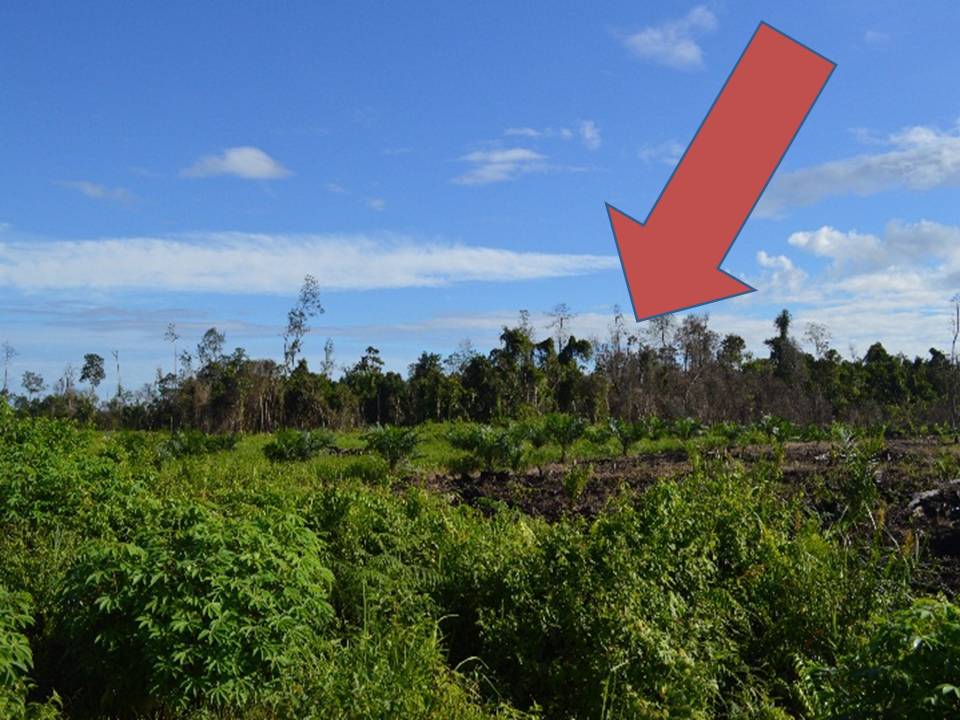
This area was badly affected by forest fires this summer, intentionally started by local inhabitants.  In this area people started fires in the forest to quickly clear land of trees in order to encourage grass to grow, to attract deer and pigs for hunting.  Fire is also used to clear land for "slash and burn" agriculture, in order to render it useful for farming.  These forest fires caused widespread devastation throughout much of Kalimantan in 2015 following a lengthy dry season, causing them to burn out of control.

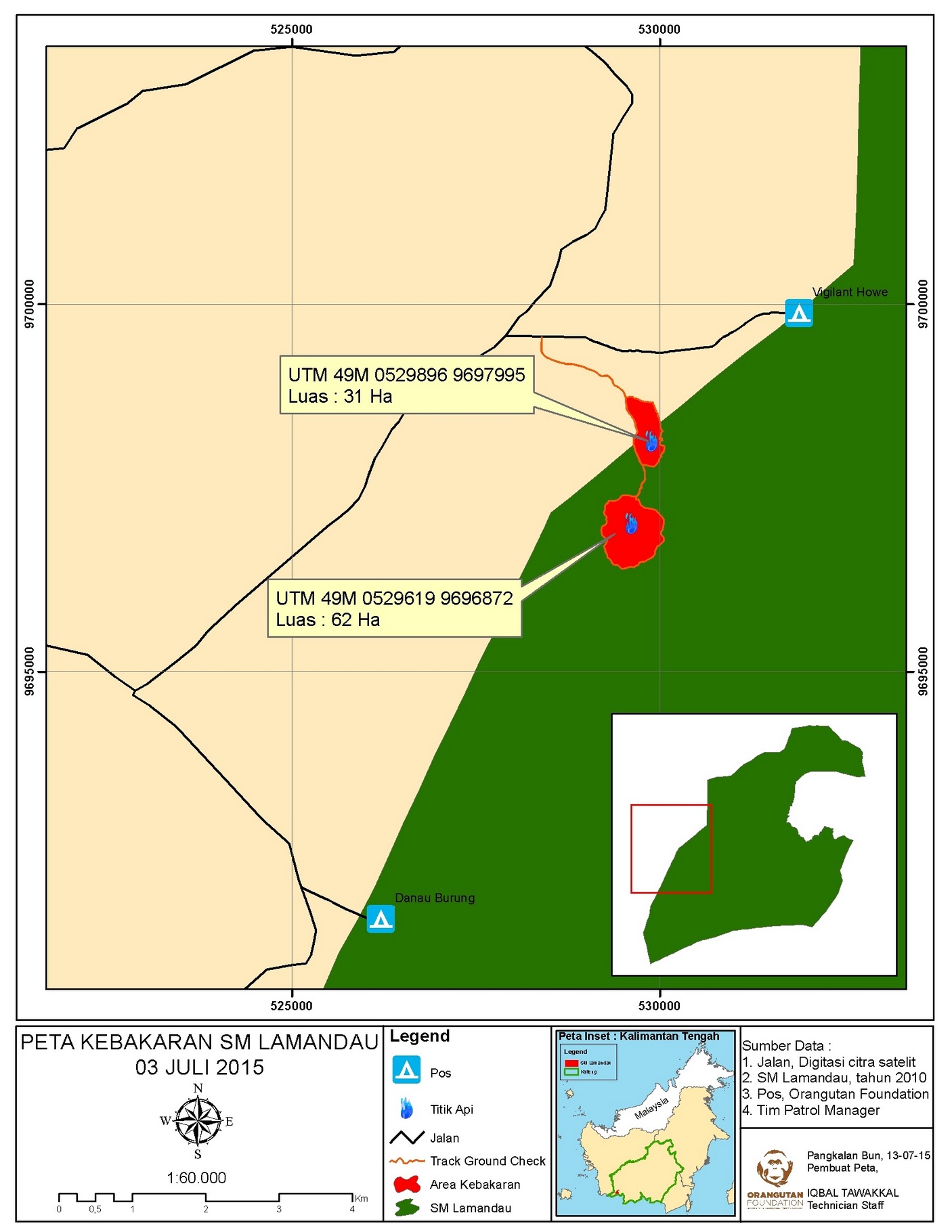
Areas nearby to Danau Burung were affected by forest fires. Areas nearby to Danau Burung were affected by forest fires (highlighted in red).

Thanks to two grants, from GRASP (Great Apes Survival Partnership) and Orang-utans in Not e.V (Orangutans in Peril, a German NGO) we were able to invest in a forest restoration project to enrich areas that suffered during the fires in 2015.  Ubar trees (Syzigyum spp.) were chosen primarily to replenish the area.  This is an endemic species to Kalimantan, which grows well in all forest types, and is less susceptible to burning than other species.  The leaves and fruit are also a treat for orangutans!

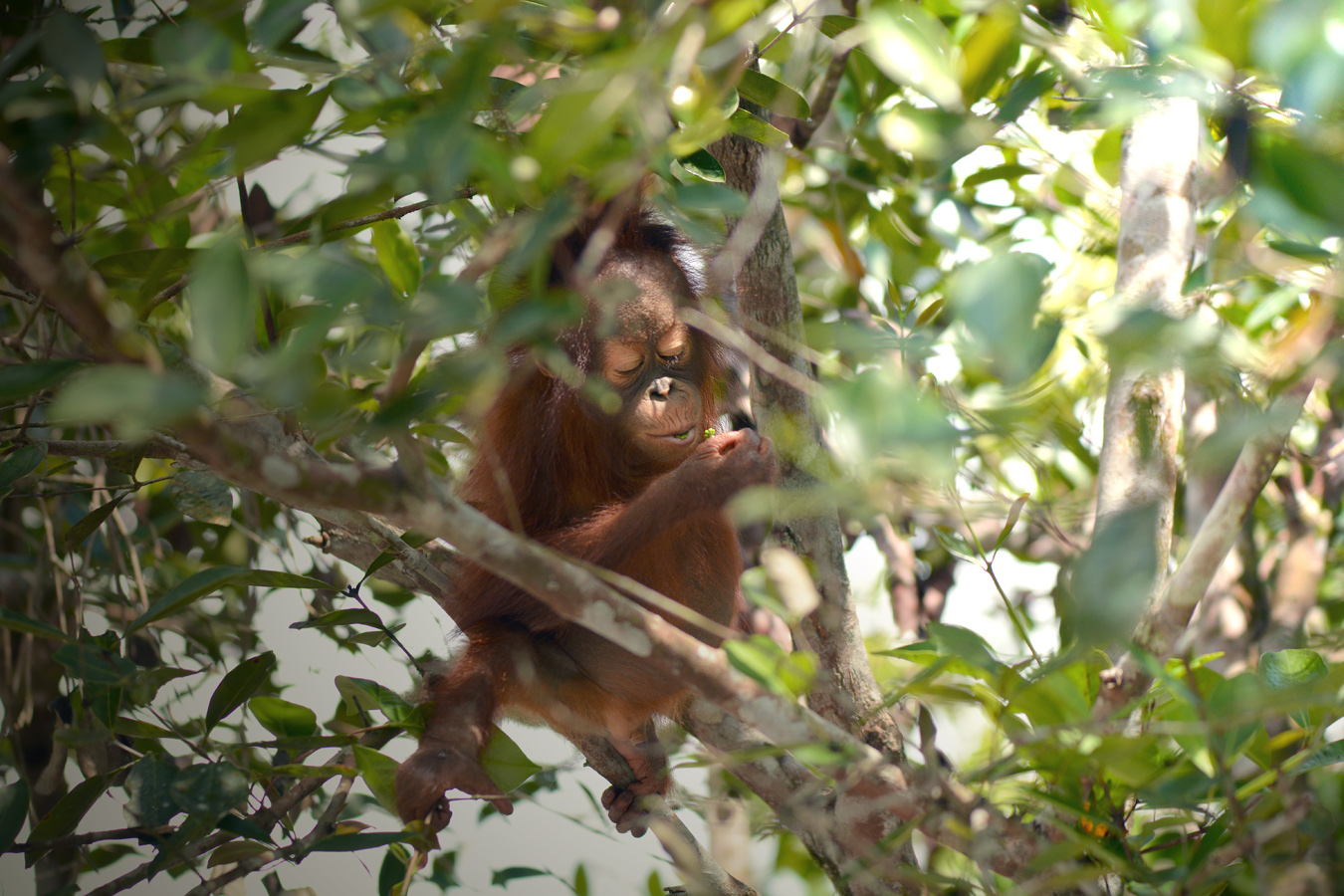
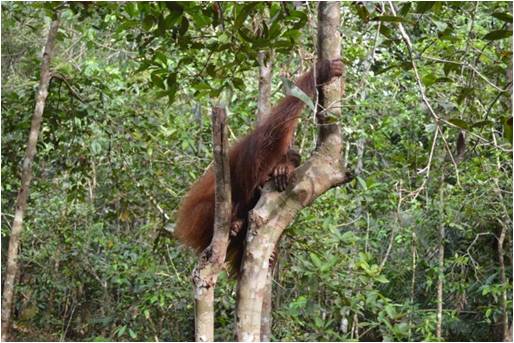
Okto, one of the orangutans undergoing soft release, enjoying Ubar fruit.

Our partners from BKSDA (Nature Conservation Agency, Indonesia) have provided us with a tree nursery, which our staff are using to plant and grow seeds into seedlings, which are then relocated to areas around Danau Burung.  Our Orangutan Foundation staff have now planted 1,500 seedlings in the area to restore the now barren areas of land.  Our target is to plant 5,000 seedlings in the Danau Burung area, and with this news we can successfully acknowledge that we are a third of the way towards reaching our goal!

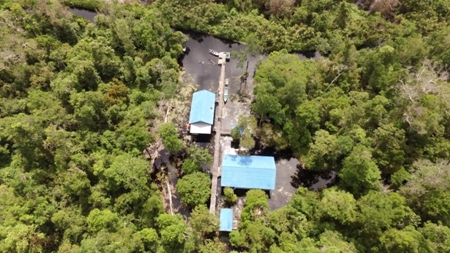
BKSDA tree nursery.

Forest restoration is paramount to the long-term survival of orangutans.  If forest habitats are lost, orangutans cannot feed or protect themselves, and populations will perish as a result.
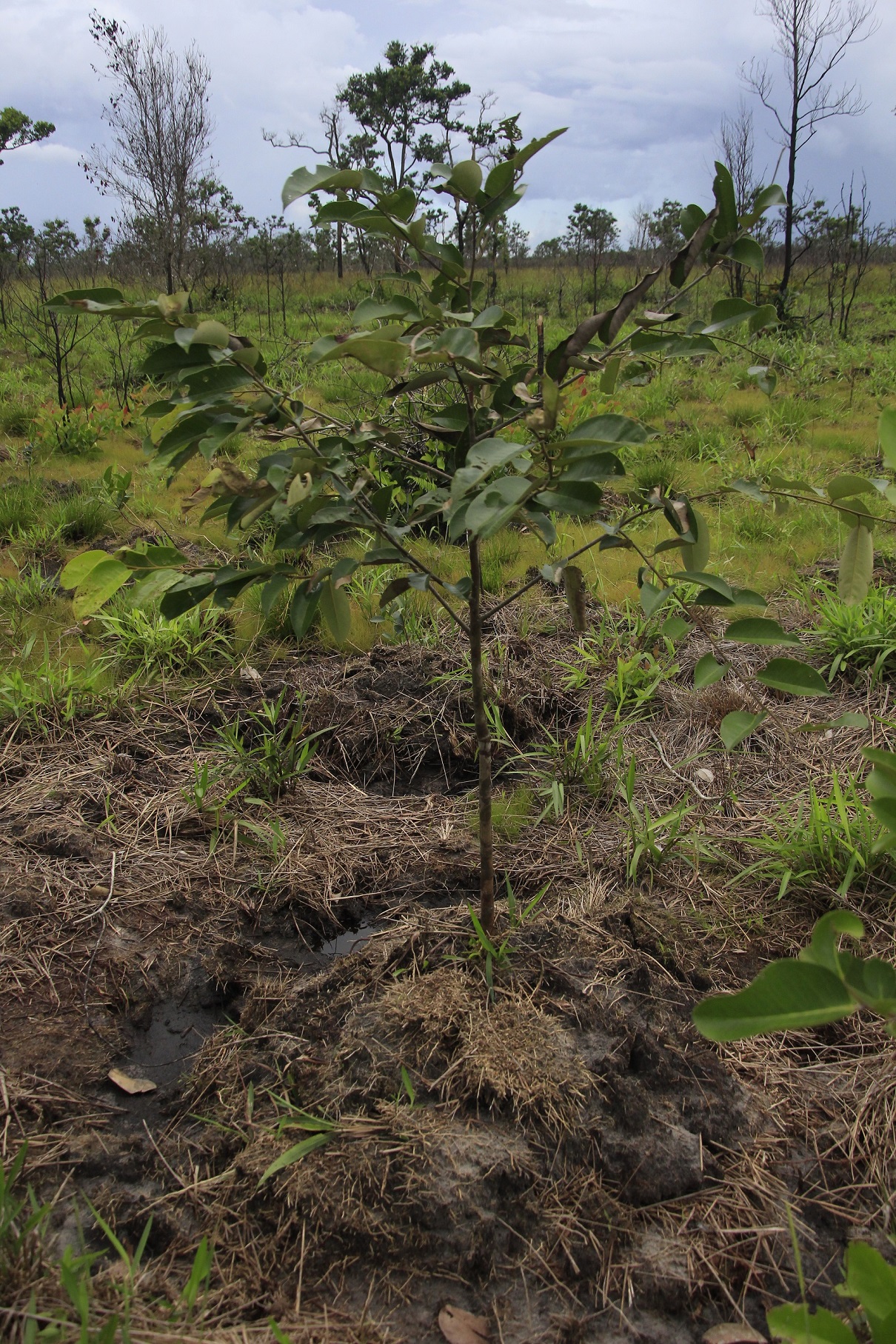
One of the seedlings planted by our Orangutan Foundation staff.

To DONATE towards our forest restoration project, quote "FOREST" with your donation!  All contributions are greatly appreciated!
 

Return to Safety

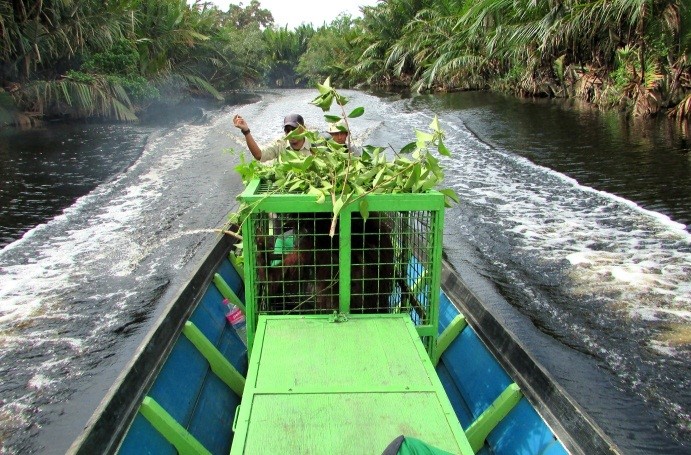
On 9th February, our rescue team celebrated the relocation of two orangutans, a gibbon, and four slow lorises at Camp Buluh, in Lamandau Wildlife Reserve.

Relocation site: Camp Buluh, Lamandau Wildlife Reserve, Central Kalimantan.

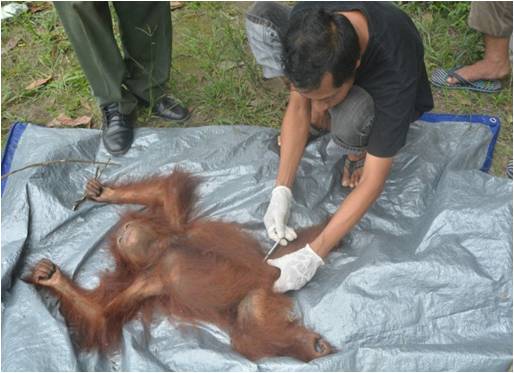
The two orangutans being released were both young females.  Narti, an adult of 15 years old, was previously rescued from a palm plantation, as documented in our last blog post ‘Last Tree Standing’. Ema is 6 years old, and was found in the Mendawai area.  She is still very young and although no longer dependent on her mother, will certainly benefit from monitoring and support provided by our teams in the Lamandau reserve.

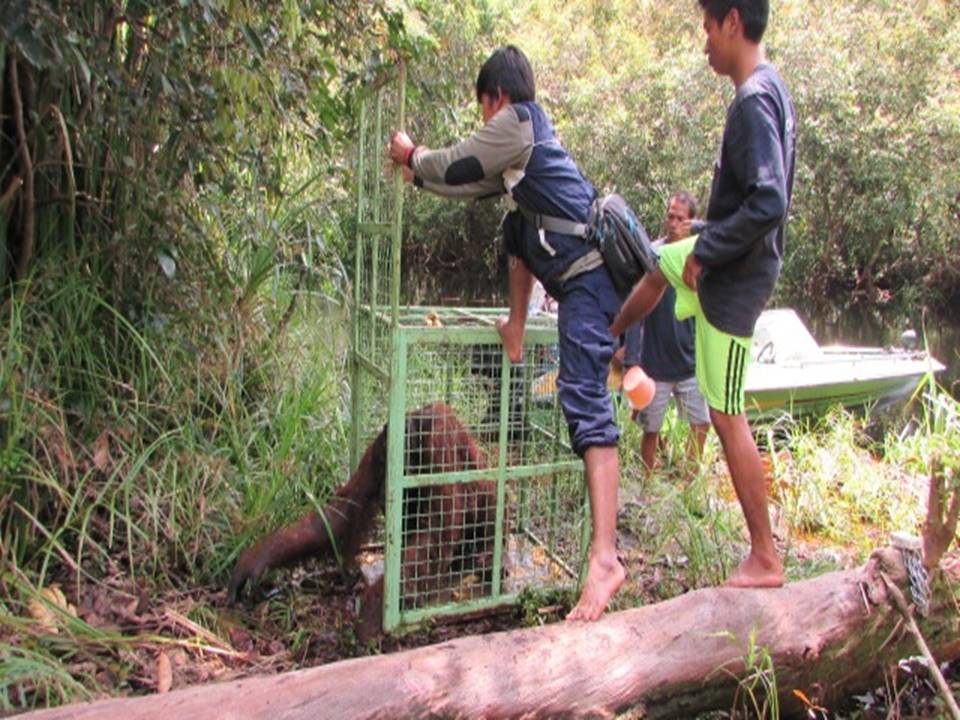
Rescuers releasing Narti into the forest.

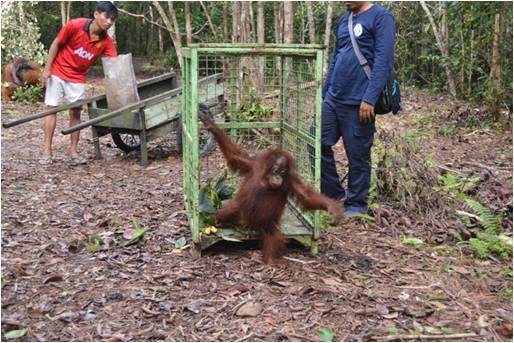
Ema, awaiting her turn to be released.

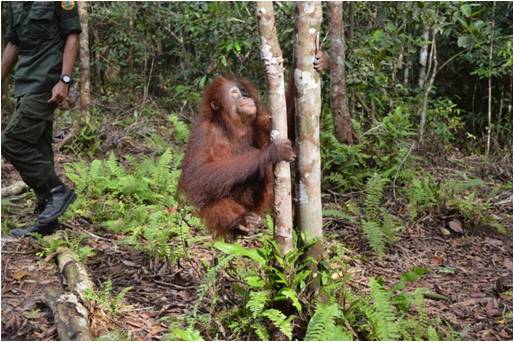
Both orangutans left their cages immediately once freed in the forest.  Narti climbed straight up a tree, whilst Ema nearly fell in the water before joining Narti up in the heights of their true home.

Narti climbed straight up into a tree following her release.

Gibbons are notoriously elusive primates, living high in the treetops, generally only detectable through their haunting songs throughout the forest.  Therefore, it is quite understandable that the gibbon was ill at ease leaving the crate on the forest floor.

The gibbon, pictured shortly after release.

After an hour however, the gibbon plucked up the courage to climb a tree back to where he felt most at home, high above rescuers heads.

As slow lorises are nocturnal primates, all four slow lorises were released in the evening, so as to give them the best chance to adjust to their new surroundings when they are naturally at their most alert.

The gibbon, pictured shortly after release.

This is a major part of Orangutan Foundation’s work, rescuing orangutans as well as other primates and animals from ever-changing areas of land they once called home, and returning them to the safety of the forest.  Well done to our rescue teams on another great success!


My Bornean Adventure

by Joanne Cotton Returning volunteer, Joanne Cotton, shares her experiences from the Orangutan Foundation's past summer volunteer programmes.

cozy klotok

June 2012

Yesterday was another great day as we travelled by boat for about 4 hours through the National Park. The scenery was stunning and the further into the journey we got, the more stunning the jungle scenery became. We saw wild orangutans, proboscis monkeys and many other animals which I can’t even remember the names of. I am really trying to commit everything to memory but the senses are completely overloaded!
The boat was moored up for the night and after eating our evening meal of fresh fish and stir fried vegetables with tempeh we were taken on a night walk. It gets dark at about half past five here but it turns out that there is as much to see during the night as there is during the day. One of the local Indonesians was obviously really keen to help us see as much as possible. He showed us a tarantula, smoking mushrooms and even our first leech of the trip!

Tomorrow we have a day at Camp Leakey where we will see orangutans of all ages up close, I can’t wait. Then, after a few days of getting used to the heat and the time difference we will head out to camp which will be our home for the next few weeks. That’s when the hard work building a boardwalk begins! But for now I am off to take a shower out of a bucket of river water with a hole in it!

SDC11301SDC11372

September 2015

I am so thrilled to be back here! Borneo really stole a piece of my heart during my first trip. This trip is completely different from the first time. This time, although the work is still physically hard, it’s not quite as dirty! We are helping to rebuild an education centre in the National Park which involves lots of hammering, sawing and painting.

Last night I slept outside in a hammock for the first time and as I was falling asleep I could hear the orangutan long call in the trees around me. We tend to wake up quite early here and today I was woken by the macaques playing in the trees next to me.

Today was our day off so a few of us took a Klotok down the river to a little village. Our camp is located right on the river and there is so much wildlife here, we have even seen a crocodile a little further up the river!

Our lifestyle is very basic here, but I don’t find myself left wanting for anything. We work hard, are well fed and have had many laughs. We have been learning a lot about the wildlife and local culture from the Indonesians and we are even learning a little bit of Indonesian along the way.

I can see that each volunteer project is very unique and offers a very different experience each time. It will never be the same experience twice…. but that’s all the more reason to keep coming back!

camp fame

Applications are NOW OPEN for the 2016 programme! To apply for this year's summer volunteer programme, click here


'Last Tree Standing'

At 5pm on the 4th of February, we received a moving and poignant photograph from the OF-UK rescue teams in Indonesia.

Untitled

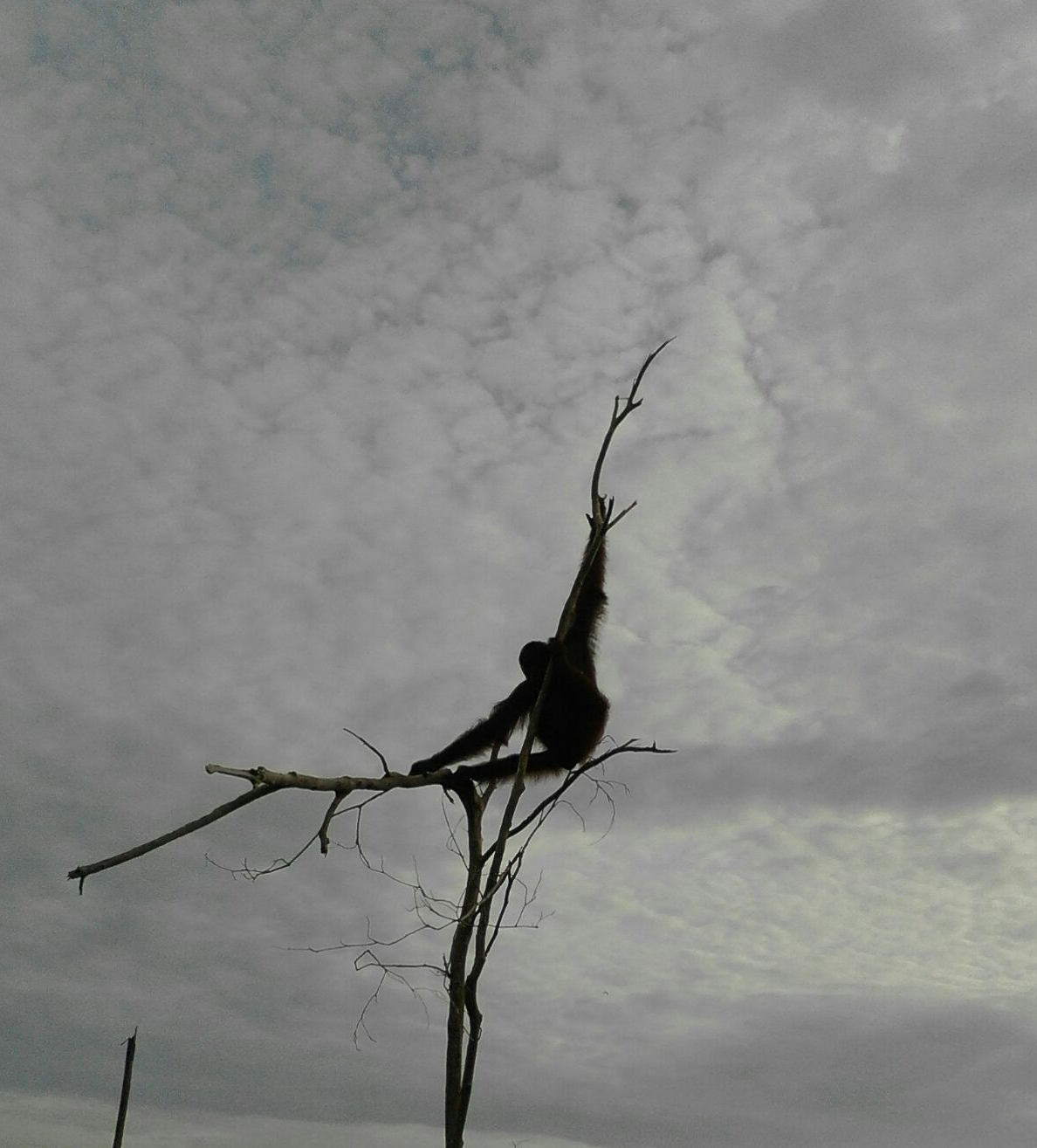
This orangutan was immediately visible, seen clinging to the top of a tall thin and burnt tree - the only tree in sight in an area overtaken by oil-palm.

bbce27471b6c47910b1f949fc13665eb

A heart-breaking image like this perfectly sums up the extent of the devastation caused by habitat destruction in Indonesian Borneo. Rainforest habitat is rapidly dwindling, leaving orangutans to search for shelter on community land or in sparse and fragmented areas of forest. Fortunately this 15-year-old female was one of the lucky few: found, rescued and soon to be released.

74b812cd9ab055c081c15fa602a3afc8

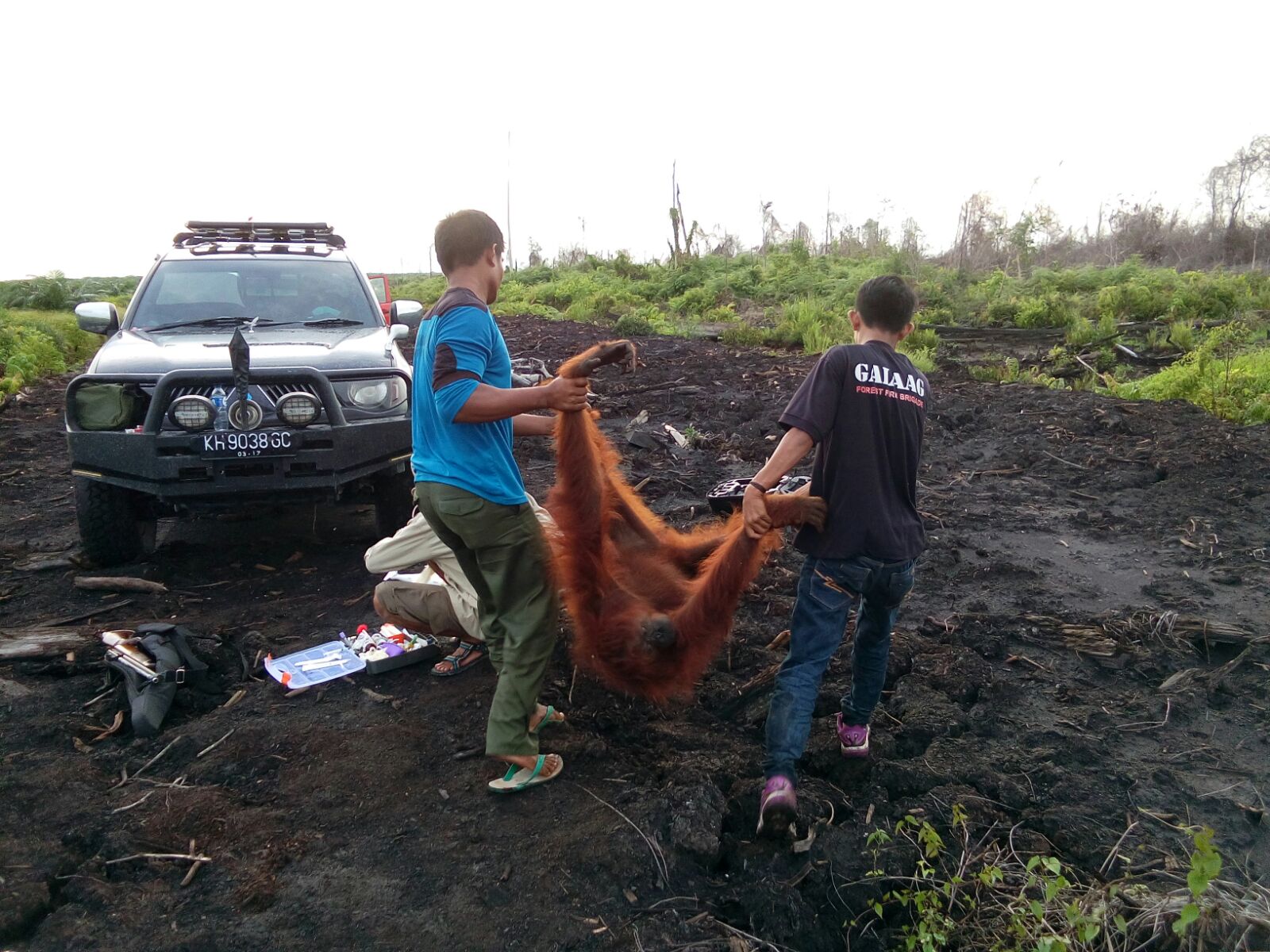
The female orangutan, now named Narti, was examined by the OF-UK vet, Dr Wawan, and thought to have eaten palm-shoots as there was no other food around. The shoots from oil-palm plants are not healthy food for orangutans, and are a struggle to digest. Luckily after medication and given time being fed the right foods, Narti will be safely released back into orangutan habitat within the Lamandau Wildlife Reserve.

dd470ca69f7786e728a4e02438b55dca

 Help us to provide stranded orangutans with a new and safe home: http://www.orangutan.org.uk/how-to-help

Share the hashtag #LastTreeStanding to help us build awareness for habitat destruction in Indonesia!

New year, New home

New Year's Day welcomed three new additions to the Lamandau Wildlife Reserve! Just days earlier, mother of two, Sera, and her infants Karno and Rano were rescued by OF-UK staff from a rubber plantation close to the local town of Sampit, and released into the reserve after a few days of quarantine! Because Rano is a new-born infant, thought to be only one or two weeks old, the rescue was trickier than most others, and OF-UK staff had to be extra careful not to injure Rano in the process. 1.1.16 rescue 1.1.16 rescue 3

1.1.16 release 21.1.16 release 3After all their check-ups from Foundation vet Dr. Wawan, all three orangutans were found to be in perfect health, and are now enjoying their life of freedom and security in the protected Lamandau Wildlife Reserve. 1.1.16 release1.1.16 release 41.1.16 release 51.1.16 release 61.1.16 release 7

You can watch the full release on video here!

Happy New Year Foundation supporters!

Orangutan found 500m from a main road

IMG_1047 17.11.2015

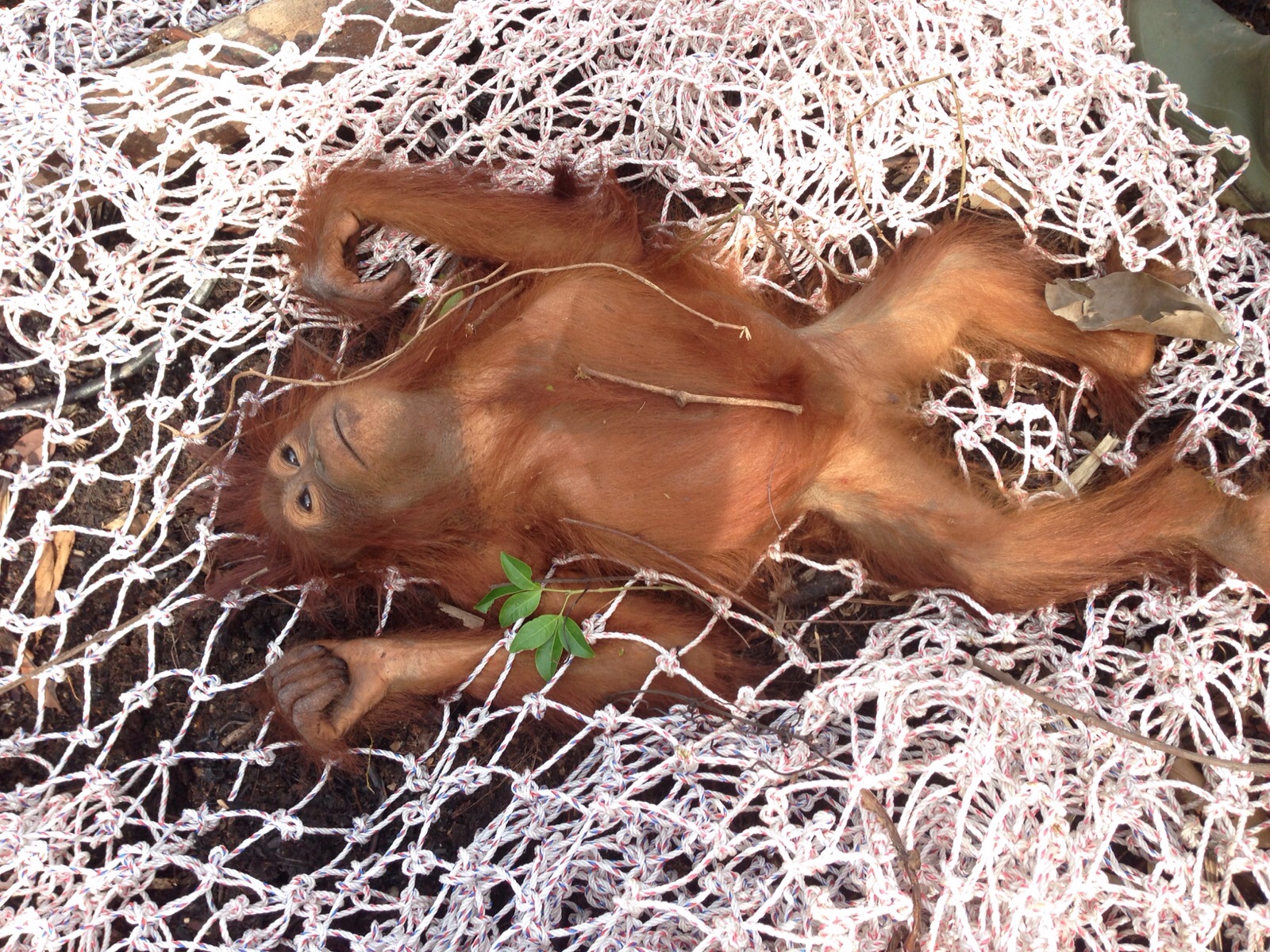
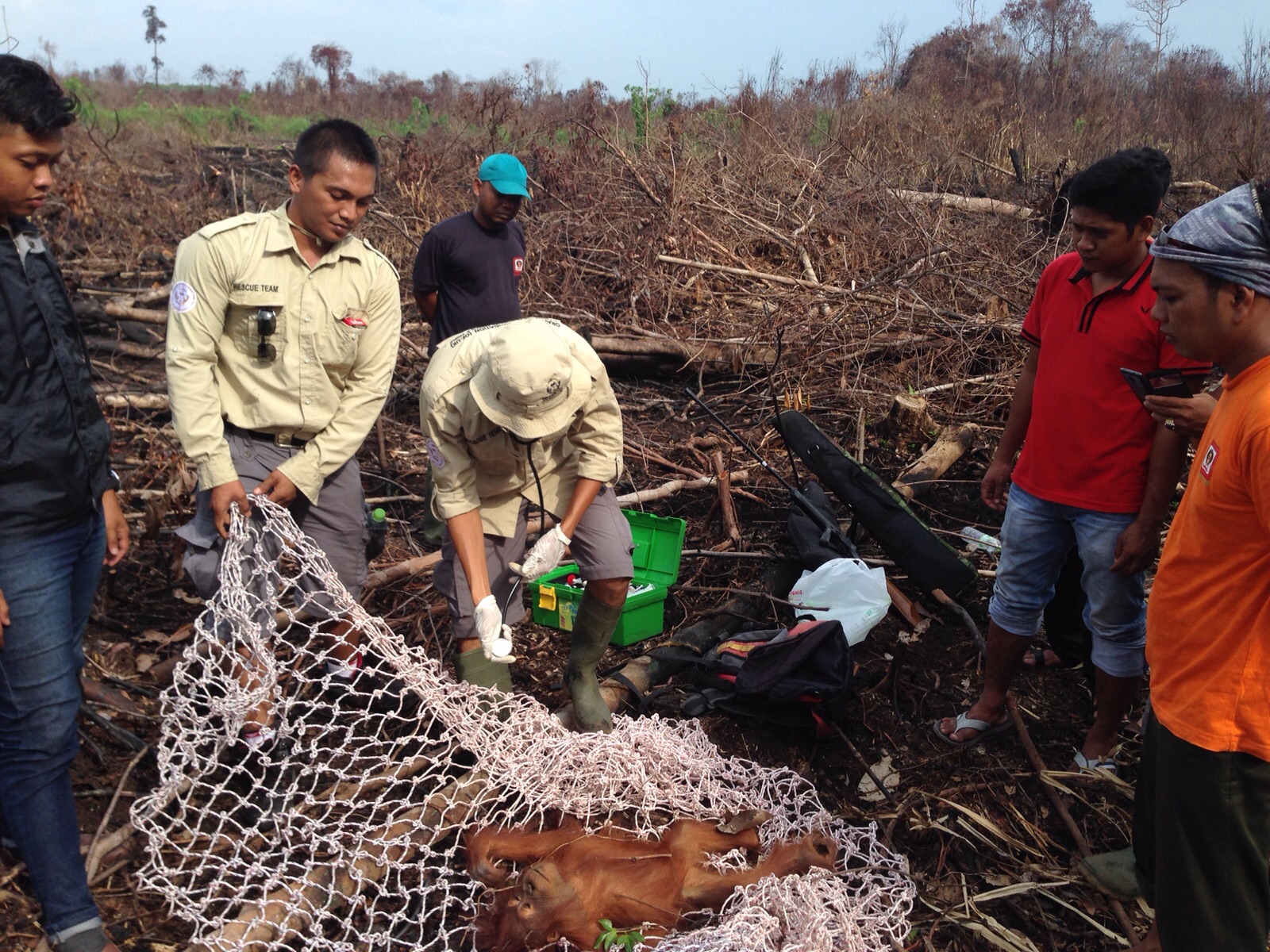
Though the flames that overwhelmed Kalimantan for months are now out, it seems the damage may have already been done. Since September, the Orangutan Foundation rescue team has rescued an orangutan from burnt and desolate forest on a weekly basis. Now, the fires may have come to an end but this rise in rescue activity has not.

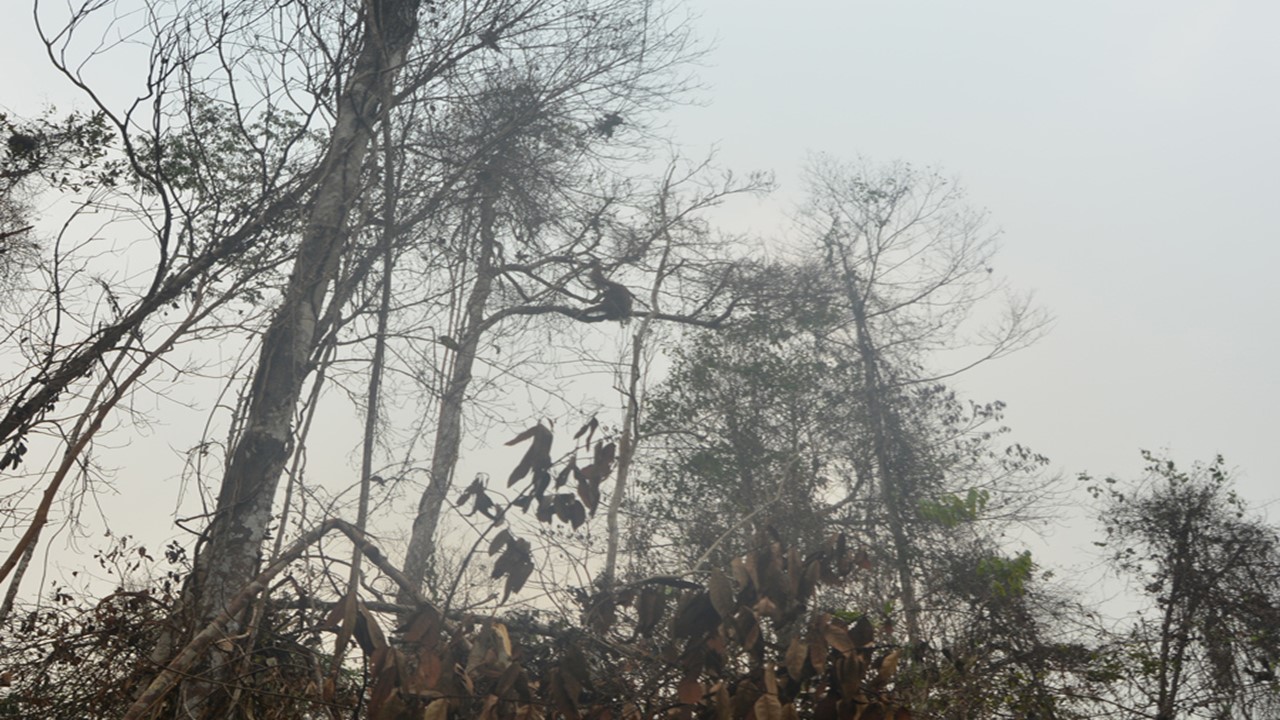
Orangutans are elusive creatures, and provided they live in optimum habitat, are relatively difficult to spot (much to the grievance of orangutan researchers!).  Yet this morning our teams rescued a young juvenile orangutan who could be seen at a distance, clambering the topmost point of an isolated tree just 500m from a main road. The proximity of this rescue to a public road is evidence of the devastation that wild orangutans will continue to face thanks to three months’ worth of wildfire.

IMG_1061As you can see in the images below, the habitat where this young orangutan was found has been very badly affected by the fires. Thankfully, the orangutan himself appeared to be in good health and will be released into the Lamandau Wildlife Reserve right away!

IMG_1048

IMG_1067

Untitled


Indonesia's fires rage on.

Sometimes images are more powerful than words. [video width="320" height="240" mp4="http://www.orangutan.org.uk/blog/wp-content/uploads/2015/10/IMG_0838.mp4"][/video]

These fires have resulted in a surge of orangutan rescues. To follow all of our orangutan rescue and release activity, please visit us on YouTube and Facebook.

Orangutan habitat continues to be under threat. You can make a difference by donating towards the Orangutan Foundation's fire-fighting team, or by sharing this video with your friends and family to help us raise awareness for these difficult times.

Fire and smoke surrounds orangutan habitat

October 2015 Last Monday the Foundation rescue teams received a report from landowners in Mendawai that several orangutans might be trapped in an area nearby. This area in question was a narrow strip of forest, completely surrounded by fire and smoke.

rescue fire

Our teams, alongside members of the BKSDA, swiftly headed to the scene and, though the haze was thick, they were able to make out a large male orangutan in the clearing. In spite of the vet darting him with an anaesthetic, the male was merely slowed down because of his size, and was still able to scale a tall tree.

rescue tree

The height of the tree was too dangerous for our team members to climb, and before long the orangutan was once again on the move. Hours of following ensued, but eventually the thick haze from the fires overwhelmed the area and the atmosphere became too dark to continue. Though the rescue attempt failed, our rescue teams endeavoured to try to again the following day.

But on the following day, further reports were made to the Orangutan Foundation that, according to our staff, orangutans were “falling to the ground” because the forest was almost completely burned down. Trees were dried to a crisp and the air engulfed by heavy smoke. Despite these terrible conditions this rescue attempt was more successful, and our teams were able to rescue an adult female and her infant. The pair have now been named Vania and Venty, aged approximately 26 years old and 5 years old respectively.

r DSC_1350r DSC_1362

r DSC_1383

Though this mother and her infant will be released into the safety of our protected Reserve, this turn of events only demonstrates the immense devastation facing Kalimantan’s forest habitat. Because of the extreme haze cloaking the entire region, it is likely that many more orangutans are stranded in these fire-damaged areas of land. Unless reported to us, there is no way of knowing where these orangutans are that are so desperately in need of rescuing.

The conditions caused by Indonesia’s fires have posed serious problems for the local people, as well as for their eco-tourism. Now we know that the dramatic weather conditions are affecting the wildlife within the forests as well, with more and more of their habitat continuing to be lost every day.

Note: Since writing this post, another orangutan has been rescued by our teams. That’s one failed rescue and two successful rescues in three days. More details to follow.

I Love Pangkalan Bun without Smoke

(Pangkalan Bun, Central Kalimantan, Indonesia) i love PKB

Due to the globally dramatic effects of El Niño, Indonesia is having a longer dry season than usual. Some areas are beginning to run dangerously low in water supply. Indonesia faces the very serious threat of rice crop failure. Fire is now a daily threat. With forest fires and open land fires becoming difficult to extinguish in peat land areas like orangutan habitat, they are easily spread to neighbouring areas. This is a problem so frequently faced by the majority of Central Kalimantan, but sadly it has now become a worry for the Foundation’s protected region, the Lamandau Wildlife Reserve. If orangutans aren’t safe in protected forest, where can they be?

fire damage aug 2015

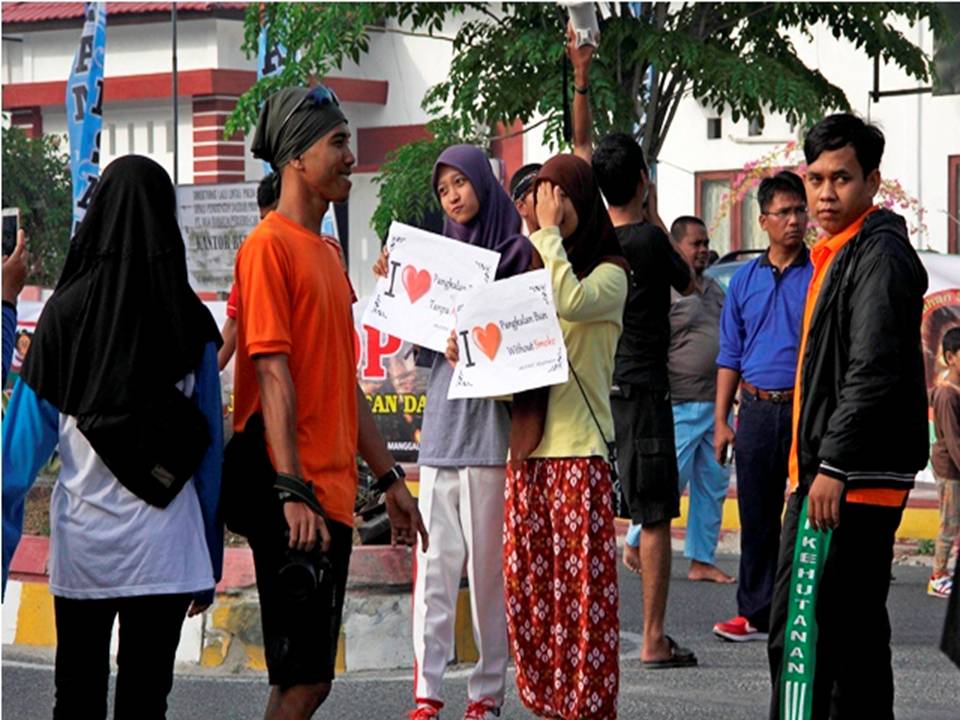
To prevent the spread of forest fires, we need the cooperation of local people. For this reason, the Orangutan Foundation, in cooperation with the BKSDA (Agency of Natural Resources Conservation) and Yayorin (Yayasan Orangutan Indonesia), have campaigned to raise awareness throughout the local town of Pangkalan Bun this month. Noting that August 9th was the town’s ‘Car Free Day’, Foundation staff toured the town with signage reading ‘Stop Forest Fires’ while orangutan mascots handed out brochures to the local people. Car Free Day is a weekly event in Pangkalan Bun, supporting the reduction of pollution and smoke in the local communities. With Indonesian communities making environmentally conscious steps like these, we are confident that we can harness their support to keep orangutan habitats safe.

car free day car free day 2

Capitalising on the extra foot traffic, and thanks to the hard work of Foundation staff, this campaign attracted a lot of attention, with people of the younger generation proudly taking photographs with our orangutan mascots and campaign posters which read ‘I Love Pangkalan Bun without Smoke’.

car free day 3

A huge thank you to everyone involved!
Fire Outbreak in Lamandau Wildlife Reserve

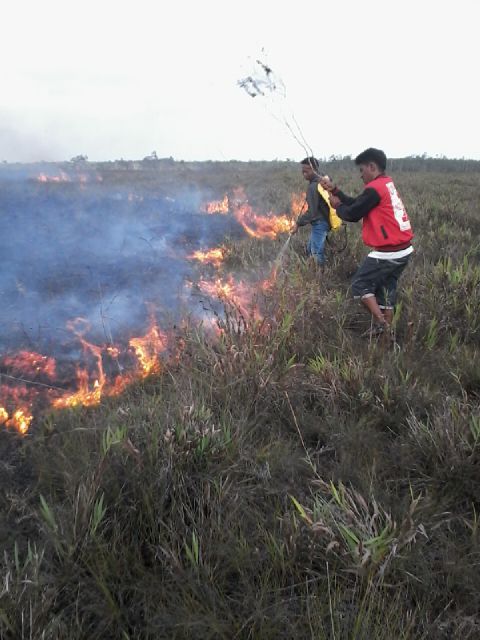
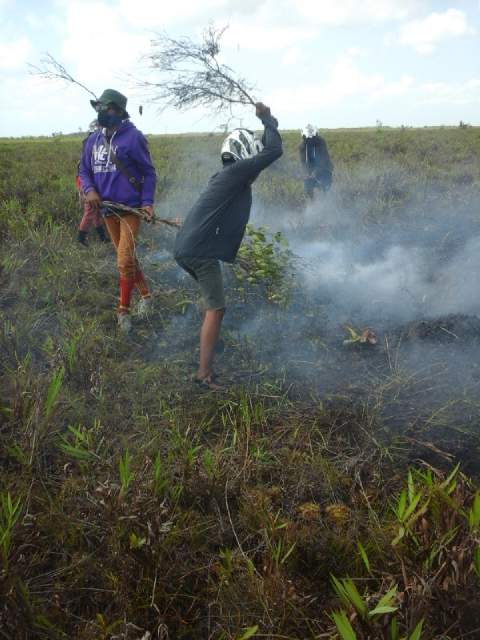
Untitled July has been met with an alarming number of fires in Central Kalimantan. Break outs have occurred worryingly close to our guard posts at Vigilant Howe, Danau Burung and Sungai Pasir. As you can see from the map below, these posts mark the outskirts of the Lamandau Wildlife Reserve, which means that these fires have encroached upon protected land. Kebakaran SM Lamandau Juli 2015_1 The damage found indicates that these fires were set intentionally by hunters hoping to attract deer to fresh grasslands. Foundation staff, alongside the BKSDA, has succeeded in putting out the bulk of the outbreak, but for now fire surges on in Sungai Pasir. Limited equipment and staff numbers in the area mean that our teams have to work that much harder to fight the spread of fire caused by high winds. We are confident in our ability to manage outbreaks such as these; however the proximity of these fires to our orangutan release camps requires constant monitoring.

Fire 17 juli 2015

[Limited equipment meant that our staff have had to extinguish the fires by hand.]

Fire 21 Juli 2015_6

Please DONATE and quote 'FIRE' to help us fund new fire-fighting equipment!
"STOP - FIRE"

  As we enter the dry season in Kalimantan, Indonesia, we're taking every precaution.

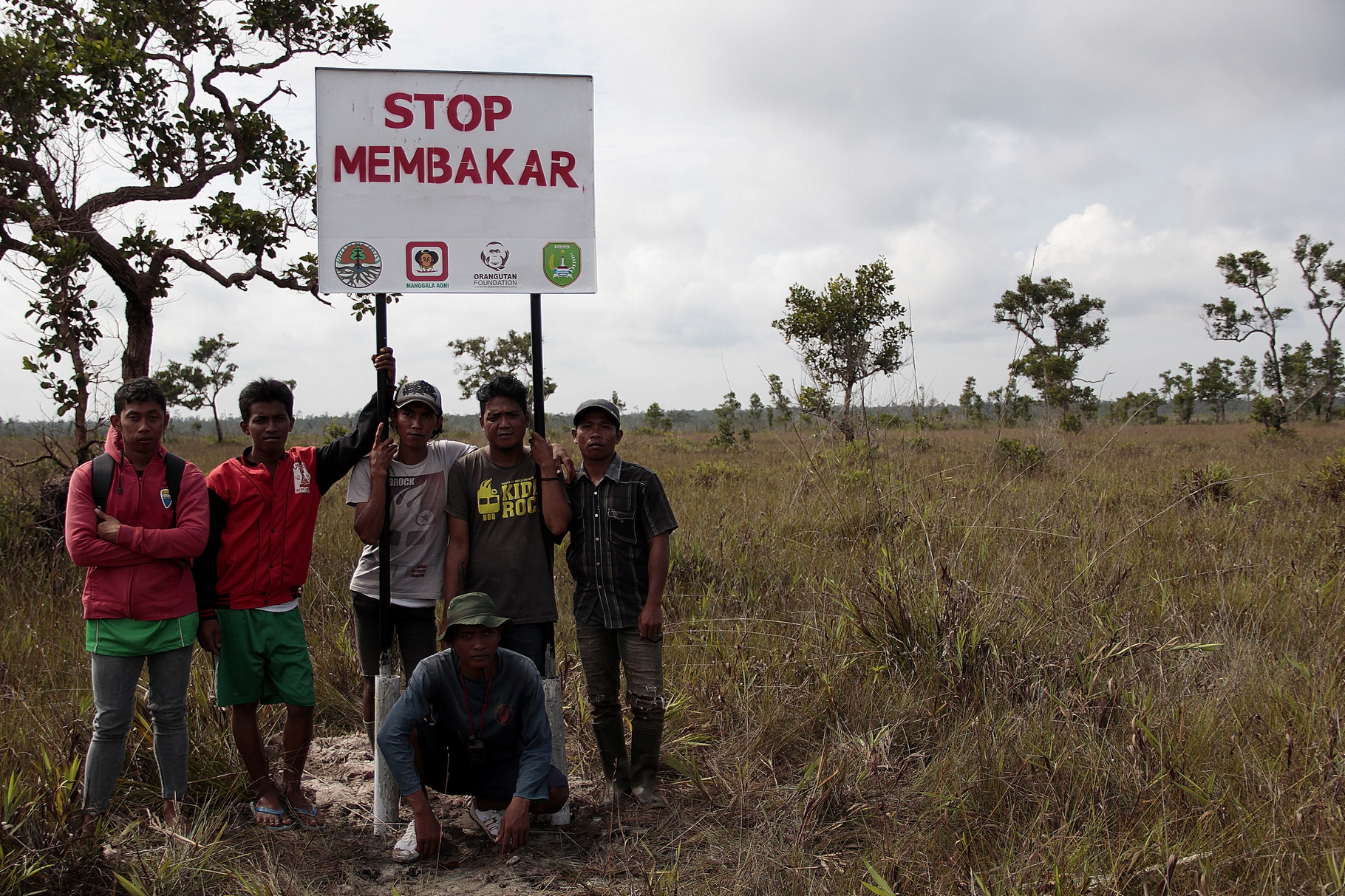
_MG_1691_2 Our field staff are going the extra mile to raise awareness and stop the breakout of fires in areas surrounding protected forest. Every year fire is a constant worry. Naturally occurring fires are prevalent throughout Indonesia, and the tradition of ‘slash and burn’ farming can also be used as a method to prepare for oil-palm plantations. In open stretches of land where the air doesn't hold as much moisture, these fires are a constant challenge to control. A fire that cannot be easily extinguished can wipe out forests that are home to thousands of species, including the endangered orangutan.

OU in forest fire damage high res

That is why the Foundation has always made fire prevention a priority. In addition to fire training for all guard post staff, our employees in the field have called for local people to stop clearing the land with fire through the implementation of signposts. These steps are especially important because dry and barren landscapes, such as those pictured below, surround the areas of forest in which we work. These patches of open land are especially susceptible to catching fire, and their vulnerability to wind only encourages fire to spread.

_MG_1601_2 In our efforts to raise awareness, we at the Foundation have built warning sign-posts all along the boundaries of particularly high-risk areas (highlighted in yellow). Through these actions, we hope to keep protected areas of forest, and all of their inhabitants, safe from harm. Sigboard Karhut

Please DONATE and quote ‘FIRE’ to help us fund new fire-fighting equipment!

RAINFOREST: LIVE! Why It's Important

Rainforest Live 2015 logo
It’s easy to disengage with the reality of a world so distant from our own. As a supporter of a conservation organisation, you can enjoy occasional updates from the field and take pleasure in new photographs of the species you love most. But what do these things tell you about the world these species actually live in? What does a supporter of the Orangutan Foundation truly know about life in the Indonesian rainforest?
 
We at the Foundation feel that it is important to show our supporters what their money goes towards – what environment it helps to sustain – what biodiversity it keeps alive. Rainforest: Live is the perfect opportunity for us to do this. With 24 hours of live updates, photos and videos from the field, you will be transported to the forests of Central Kalimantan, Indonesia through just a few clicks of a mouse.
 
We want to encourage the public to feel as though they are part of a global community, to engage with our planet and appreciate the natural wonders it offers – and we’re not the only ones who recognise the importance of this project! This year’s Rainforest: Live has 17 NGOs participating from all over the world!
 
Gunung Palung Orangutan Project
The Orangutan Tropical Peatland Project (OuTrop)
Kinabatangan Orang-utan Conservation Programme (HUTAN)
CREES Foundation
Selamatkan Yaki
Sumatran Orangutan Conservation Program (SOCP)
Zoological Society of London (ZSL)
SwaraOwa
Flora & Fauna International
Harapan
Orangutan Outreach
Orangutan Land Trust
Burung Indonesia
Tropical Ecological Assessment & Monitoring (TEAM) Network
Sumatran Orangutan Society (SOS)
Tamandua
 
TODAY you can look out for the hashtag #rainforestlive, or follow the compilation of live feeds from each of these organisations here: https://storify.com/outrop/rainforest-live. If you’re as excited as we are to see what wildlife makes an appearance today, then don’t forget to join the Orangutan Foundation, alongside these other NGOs, in celebrating RAINFOREST: LIVE!
 
Twitter: @OrangutanFndn     Facebook:  /orangutanfndn
rainforestliveforestpic2
JUNE 19TH #rainforestlive

Protection begins with education

This Tuesday a wild orangutan was found dead in an oil-palm plantation. The Foundation vet, Dr Wawan, performed the necropsy, from which it was clear that the orangutan had been lying dead on the ground for three days before plantation staff found her. The review also showed that she had died from two severe puncture wounds. As a result, this case is now under investigation by our partners at the BKSDA. Even with all the work we do to towards education and human-orangutan conflict mitigation, there continue to be cases like these. The plantation where the orangutan was found is located within the Lamandau district where the Foundation does the bulk of its orangutan reintroduction work. In such close proximity to an area that we strive to protect and make safe for the orangutans we release, it is always alarming to find such animosity.

penemuan orangutan IMG_7354Our work to raise awareness and to educate local communities about endangered orangutans is more important than ever.

Help us to protect wild orangutans from fates such as these.


RAINFOREST: LIVE! Why We Are Taking Part

The Foundation frequently receives e-mails from budding conservationists and passionate supporters displaying their frustration over not being able to visit Indonesia or join our summer volunteer programmes. This is one of the reasons we were so excited to take part in Rainforest: Live. If you are one of many who are unable to join us out in the field to experience the many wonders of Indonesian Borneo first-hand, we now invite you into this world through the lens of a camera. Thanks to the astoundingly connected world we live in, we’re able to take you inside Indonesia’s rainforests, to live amongst the trees and the tropics, and to catch a glimpse of some of its most elusive inhabitants. Live the life of a Foundation patrol: roam the forest in search of an orangutan sighting; get up close and personal with some of Indonesia’s most beautiful and fascinating plant life ; watch our live camera traps from within the exceptionally rich and biodiverse Belantikan Hulu region.

You can do all of this from the comfort of your own home – thanks to Rainforest: Live, you will receive updates on all of your favourite animals, without the hot and humid tropical air, the smell of exotic droppings, or the tickling sensation of some uninvited insect working its way up your arm. (That said - those experiences are all part of the fun!) By simply joining us on Facebook and Twitter for the day, you’ll get the chance to experience the forests of Borneo just as the endangered orangutan does.

[Below are photos taken in Spring 2014 by our camera traps set up in the Belantikan Hulu region; Top Left: A clouded leopard by nightfall; Top Right: A female orangutan climbing trees with her offspring; Bottom Left: A sun bear with her young; Bottom Right: A solitary red langur monkey]

Clouded Leopard Cam C21 20-03-2014 0457h Orangutan Belantikan (5) Red langur Belantikan (1) Sun bear Belantikan (1)

Join the Orangutan Foundation on June 19th for a 24-hour sneak peek into life in the rainforest!

June 19th #rainforestliveRainforest Live 2015 logo transparent

[Rainforest: Live 2015 logo designed by @BethAucott]

RAINFOREST: LIVE! Conservation Meets the Technological Era

The growing relationship between technology and conservation is one that seems to play an increasingly important role. The ease with which we can have instant contact with our staff in the field enables us to have up-to-the-minute knowledge of our work on the ground like never before. The ability to connect with one’s supporters directly, wherever they live around the world, is also an incredible luxury. It allows conservation organisations to see first-hand how much support they have and to thank their dedicated ambassadors every step of the way. Moreover, the unbridled nature of social media helps us all to extend awareness for important issues and campaigns far beyond our usual reach. Here in the UK office, receiving news from our field sites in the Lamandau Wildlife Reserve and Tanjung Puting National Park (both in Central Kalimantan, Indonesia), is often the best part of our day. To see photographs of rescued orangutans receiving the veterinary care they need provides unparalleled motivation to raise funds for such programmes. Being able to watch a video of an orangutan released back into the wild serves as great inspiration for us to continue working with the Indonesian government to protect large areas of critical habitat. When we see our Indonesian staff going to great lengths to take extraordinary photographs for the pure pleasure of it, it lets us know that we’re helping to engage the local communities with the wildlife around them.

fb Long-ledge Fly in LamandauDSC_6654

fb Sony DSC_6218

With the use of GPS and satellite mapping, the Foundation can constantly monitor areas affected by increases in deforestation, as well as map out protected borders. This also means that when our staff rescues an orangutan, we can see immediately where they were found, as well as what region is most suitable for their release.

Thanks to advances in technology, we needn't be detached from the work we do halfway across the world; and thanks to social media, the public can always be as engaged with our conservation work as we are.

That’s why the Orangutan Foundation is thoroughly excited to be able to share these moments with you, the public, LIVE on June 19th during an annual global project called Rainforest: Live! Throughout the day the Foundation, alongside several other prominent conservation NGOs, will be posting live reports, photos, and videos directly from our Indonesian field sites all over Facebook and Twitter. This will also be a unique opportunity for you to interact and engage with the Foundation directly, asking questions, sharing posts and showing how much you care about the world’s rainforests.

Last year, OuTrop (Orangutan Tropical Peatland Project) alone saw the hash tag #rainforestlive 120,000 times. Let’s try to top that this year, spreading our love of rainforests and the life that inhabits them as far across the globe as possible!

JUNE 19TH #rainforestlive


Rescued but Not Free

We think all concerned must have been surprised to find a 12-year-old male sun bear being kept as a pet by Mr Sutiyo, the vice-head of the district resort police. Mr Sutiyo had kept the sun bear for 12 years, feeding him a fattening diet of rice, sugar and honey. Upon the arrival of a translocation team, the bear was anaesthetised by the Foundation vet, Dr Wawan, and put into a large cage so that he could be transported to Pangkalan Bun. s drh. wawan DSC_8031

s drh. wawan checking DSC_8068

As Mr Sutiyo was leaving Sampit, for Jakarta, he finally made the decision to give his pet up to the authorities, and allow him be returned to the wild. Unfortunately, since the sun bear has been kept as a pet for so many years, and is very overweight due to its poor diet, it will not make a suitable candidate for release. Exotic pets lack the ability to feed, protect or more generally fend for themselves in the wild, and they face an extremely low rate of survival if released without these skills.

Sun bear DSC_7974

For this reason, our staff could not free the sun bear into one of the Foundation’s release sites. Instead it was coordinated that the sun bear be taken to Orangutan Foundation International’s (OFI) orangutan care and quarantine facility, where he will get the care he needs, yet sadly with little hope of eventual release.

This is a prime example of the unfair consequences of keeping wild animals as pets, and is sadly not the first case we’ve heard of people in authoritative positions being held accountable. Cases like these only highlight the importance of our educational programmes, through which the Foundation endeavours to teach local communities the implications of holding orangutans captive. We hope that these programmes continue to be met with great success.

Help us to continue this much-needed work by donating toward our educational programmes in Central Kalimantan, Indonesia. http://www.orangutan.org.uk/how-to-help/make-a-donation


The True Guardians of the Forest

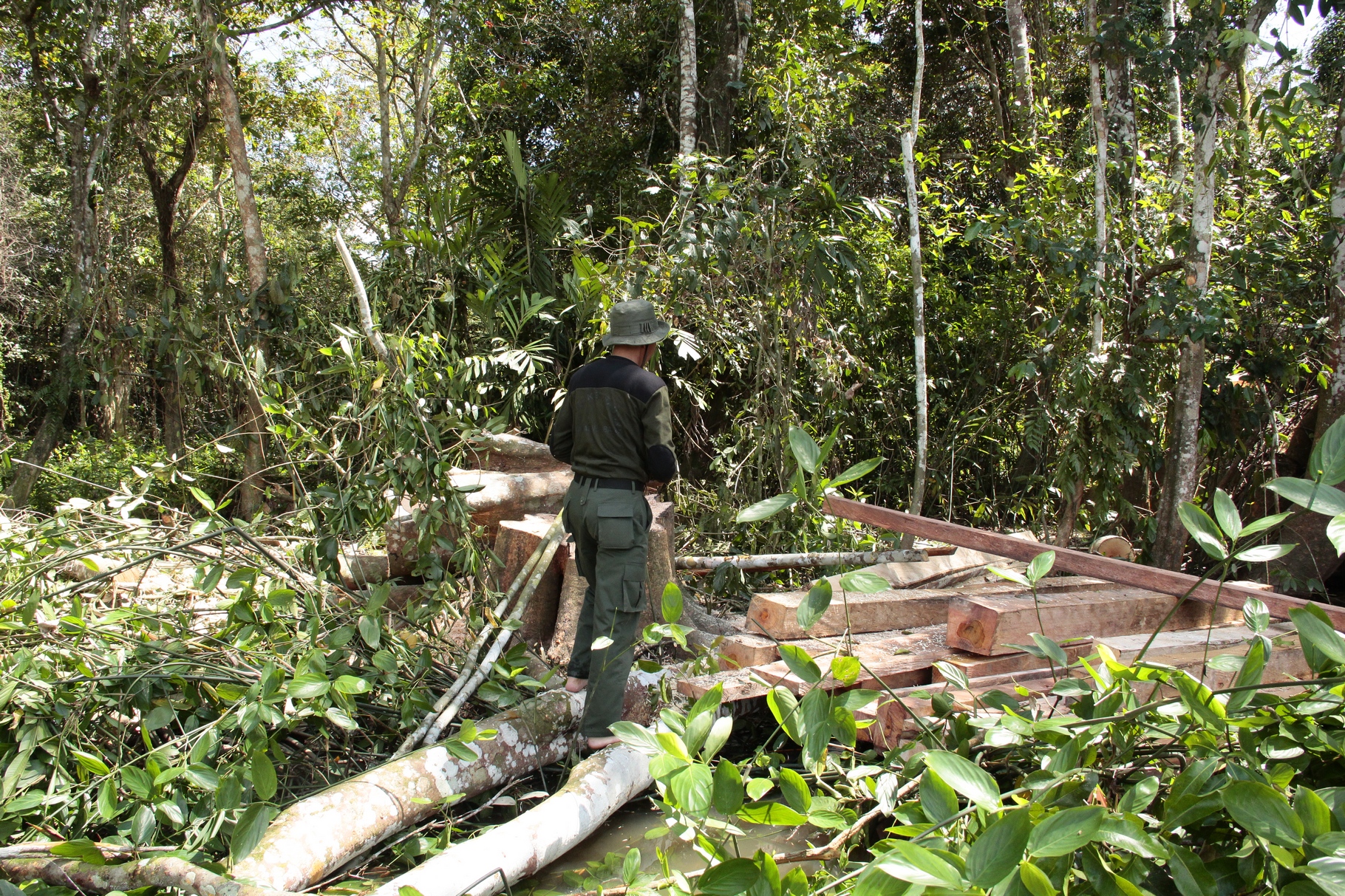
On the 30th April, Foundation staff ran their routine patrols. As most of you know, habitat protection is a core priority for the Orangutan Foundation: if the forests are not safe, neither are the orangutans. The use of guard posts and patrols to protect Tanjung Puting National Park and the Lamandau Wildlife Reserve from illegal logging, farming, mining and hunting has so far been extremely successful. Thus after hearing new reports of illegal logging taking place in Pos Rasau, Foundation staff hastily set out in a speedboat with 7 people from the BKSDA and the Department of Forestry, as well as 2 police officers.

Here they discovered the remnants of illegal logging activities.

Pic 1

pic 8


Though the perpetrators were nowhere to be seen, they had left behind 12 planks of timber, and 12 types of wood varnish. In a nearby location, many more planks of timber were found, as well as the personal cooking supplies of the loggers, who had again evaded being caught by our patrols.

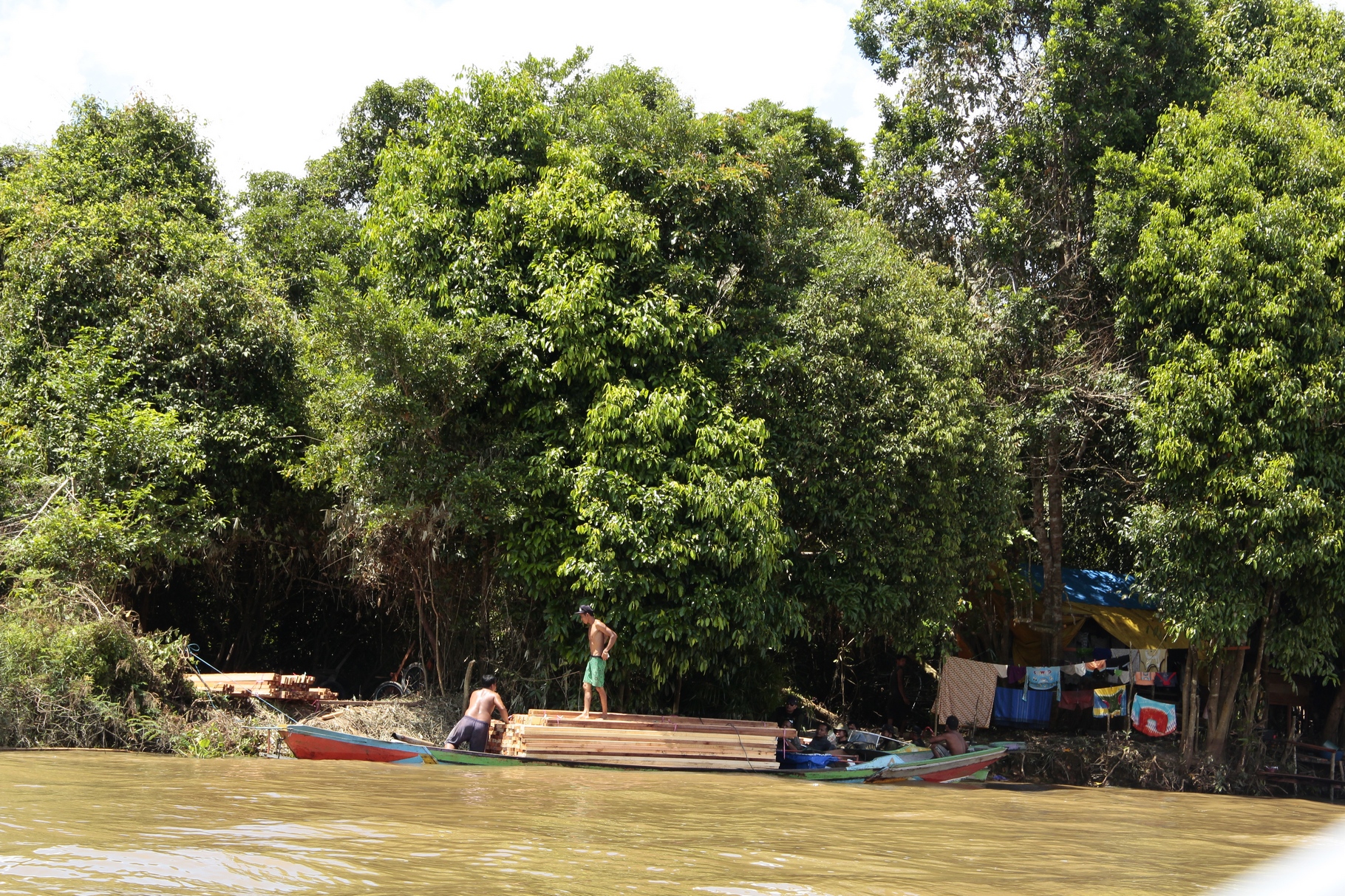
Yet while on the river towards Mangkung, our patrols found a group of people loading more planks of wood onto their boat.

pic 7

When they pulled up on site, the police and the Department of Forestry employees were able to order the workers to end their illegal logging in this location. Our patrols will continue to monitor this area in the weeks to come to ensure this order is taken seriously.

The Foundation is confident that thanks to our use of patrols, cases of illegal logging can be brought to an end before escalating any further in these critical areas of orangutan forest.


The Fruits of Our Labour

k OktoDSC_7119 Spring has brought with it a plentiful fruiting season to Lamandau Wildlife Reserve, meaning orangutans don’t need to be visiting our camp feeding sites to compensate for food shortages anymore. Because of this, our field staff aren’t seeing nearly as many orangutans as they did earlier in the year!

That is why we were especially excited to catch a glimpse of one of our rescued orangutans, Okto, playing in the trees this week. As a young juvenile, Okto has been part of our soft-release programme for the past 6 months. This programme is for young orangutans that need extra monitoring and care. They are taken daily to the forest to learn about their natural food resources and to practice their climbing.

Now that the fruiting season has begun, Okto has been seen to be enjoying climbing as well as finding all the right fruits to feed himself with. This comes as wonderful news to the Foundation, as it is proof that our soft-release programme is good preparation for an orangutan to survive in the wild.

fbDSC_7074

[Okto eating ubar fruits]

k Okto DSC_7067

[Okto not eating ubar fruits…]


Friday the 13th brings good luck for our rescue teams!

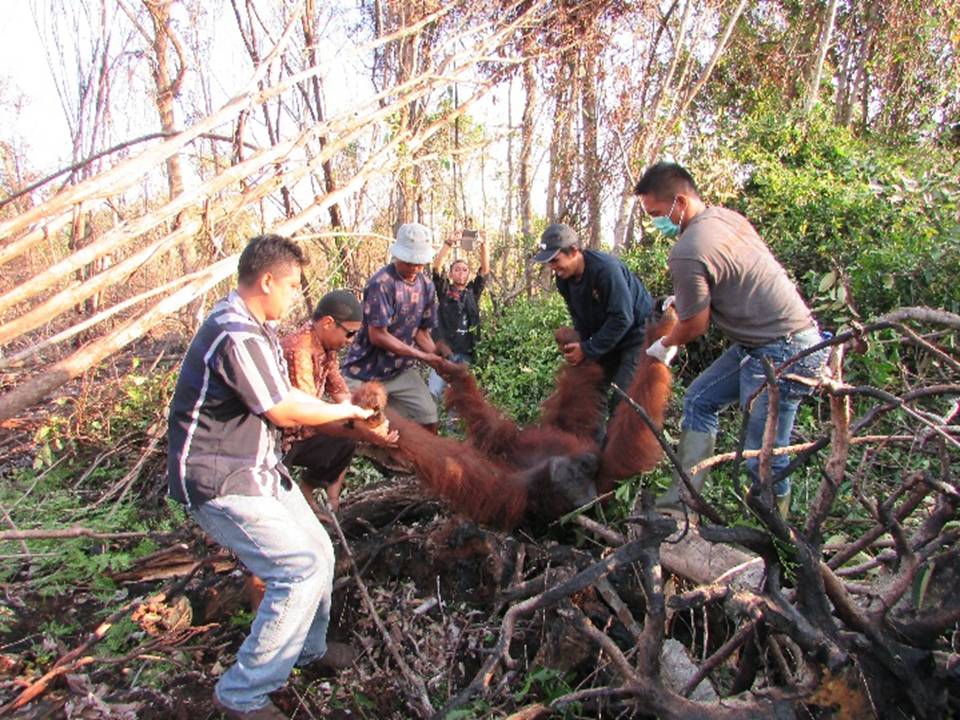
Friday 13th is a day infamously associated with bad luck, but fortunately in our case, the day brought us good fortune! After two earlier rescue attempts, the Foundation staff were finally able to safely and successfully release another orangutan left stranded by habitat destruction into a protected release camp. oil palm plantation with arrow

Orangutan Foundation staff, alongside the BKSDA rescue team, responded to a report that an orangutan was destroying the oil-palm trees on a farmer’s plantation near Pangkalan Bun.

staff raja rescue


Foundation staff quickly established that this plantation was within an area of now fragmented secondary peat swamp forest, the remnants of what would have been an orangutan’s preferred habitat. Such sites are proof that suitable orangutan habitats continue to shrink.


siswoyo rescue palm oil

raja nest

raja anaesthetised


Yet although Foundation staff were able to assess the site, it wasn't until the third time our rescue teams were contacted on Friday 13th that they were able to track down the orangutan.


Once they had found him, our rescue team then had to work particularly hard to manoeuvre the moist peat and scrubland habitat, as well as to anaesthetise the orangutan. With a large, strong and cheek- padded male, this was no easy feat!


A full physical health examination showed that the wild orangutan was healthy and aged +- 25 years, making him a perfect candidate for immediate release into one of the Foundation's release camp sites, all within 48 hours of capture.

raja vet

raja cage

Once the anaesthetic had worn off, our team, alongside staff from Camp Siswoyo, opened the adult male’s cage doors and watched as he quickly assessed his new environment before disappearing into the tall tree-tops. The Foundation is excited to welcome a mature and healthy male into a protected reserve, and has decided to name him Raja! Good luck Raja!

raja release

raja trees

From fruit garden to forest refuge...

Whilst orangutans are found in oil palm plantation or community land, it means their habitat is still shrinking. However these orangutans can still have a safe future in the Lamandau Wildlife Reserve.  Already this year two orangutans have been rescued and translocated into the Reserve. This is Kuala’s story, sent by one of our staff,  a six year old male, he had been damaging the village garden of Mr Joko. Mr Joko kept him for over a week, before a neighbour pointed out that orangutans are a protected species.  Mr Joko then contacted the BKSDA who, with the Orangutan Foundation's vet and staff, travelled to the village 'a 10 hour journey from the Foundations office', where Kuala (named after the village) was handed over.

Kuala in grdn

After all the required health checks were clear he was able to be transferred to the Reserve.

Kuala health

Seemingly impatient to be back in the forest, Kuala stood rattling his cage and looking upwards at the trees. Once the cage door was opened he surveyed his surroundings and then without hesitation was straight up a tree. He was moving so quickly from tree to tree that it was difficult for the staff monitoring him to keep up, but by the end of the day, they were able to see he had already made his night nest, back in the wild where he belongs, and safe.  He was monitored for the next ten days.

leave cage Kuala

Kuala climb

Kuala released